When you click on links to various merchants on this site and make a purchase, this can result in this site earning a commission. Affiliate programs and affiliations include, but are not limited to, the eBay Partner Network.
I've been dinking around with this diy 5-link design for late model C3s, and this question came to mind. Would deleting the top links and keeping the halfshafts as a suspension member be much of an detriment on a car that will see mostly road use with occasional tracktime?
Where did you find this setup? It's very interesting. Looks fairly easy to fab.
-Stroke
Got it in dwg format from one of the guys over on VetteMOD. Made all the parts in Solidworks and have been messing around with it ever since. I have a version where the sheet stainless steel stuff is replaced with all machined aluminum parts, but that was gonna be crazy $$$ to go that route.
Last edited by C3DeedlyDee; Mar 12, 2019 at 12:40 AM.
These things seem to be hard to understand! Basically you are just trying to keep the tire flat on the pavement and allow enough movement with suspension travel, compression, extension for the tire flat to stay firmly planted on the tire flatto the ground!
The half shaft and U-joints, Axle play (inner and outer) has enough movement in them, that you are trying to eliminate that top and bottom potential slop with positive and predictable joints, that have sufficient movement for suspension travel to maintain max grip ideally or sufficient grip, and predictability of grip for handling.
The stock no upper link has been an adequate design that has successfully been tracked! It is wise to keep everything tight, and with minimum deflection and play, movement for consistency in performance handling! The support that holds essential the axle that holds the rim/tire is best if not tied to sloppy anything. It is enough that the tire force is exerting variables on the support, and it needs a suspension to give you the best range of handling what the car is encountering roadwise!
The determinant is how the tires are tracking and gripping! You can have the highest dollar suspension etc and struggle to marry it, dial it into your preferred driving arena to that road and it’s conditions! In doing that, you are looking for more speed overall! Somewhere you will have to compromise with a non-active ride type suspension!
The best to study is Formula One, and looking at the back ends of the various eras and those designs! Those guys are the top theorist and designers and they in the mid to latter 60s evolved with some of their designs to a top link! The next evolution was retractable halfshafts on those cars! I have seen swivel loose heims, spherical and I have seen some of those washered or shims to restrict to more vertical only rotation! With the advent of lower profile tires, less tire roll or sidewall, things have gotten more consistent up thru these dated suspensions. So your tire choice for the chosen suspension could be made compatible or you are just throwing away money, but you can still brag it up, also is what most do!
Last edited by TCracingCA; Mar 12, 2019 at 12:53 AM.
What destroys an IRS posi unit is the terrific side loading on the yoke to posi pin. You can do things that help the posi last, but the cure is the upper link holding the trailing arm in position during side loading.
I used to go through posi units until I figured out the problem
What destroys an IRS posi unit is the terrific side loading on the yoke to posi pin. You can do things that help the posi last, but the cure is the upper link holding the trailing arm in position during side loading.
I used to go through posi units until I figured out the problem
Thing is, doesn't the top link limit rear suspension travel? That's what has me kind of hesitant about having it on a roadcar.
Originally Posted by dmaxx3500
google ''greenwood'' susp
john did some great work on the corvette susp
Oh yeah, I've been doing some research. The diy one I found bears a strong resemblance.
Last edited by C3DeedlyDee; Mar 12, 2019 at 01:07 AM.
Thing is, doesn't the top link limit rear suspension travel? That's what has me kind of hesitant about having it on a roadcar
No the upper link compliments the lower link. So the trailing arms have vertical movement without camber gain. Just look at the rear suspension on a side by side ATV. You might have 12 inches of travel. I personally use a 520# rear mono spring to limit my tires travel
The early versions of the 5 link came out in the mid 70's and were required to still maintain the halfshaft as the upper link by race rules. This allows maintaining toe through travel which is not available with the single pivot trailing arm that's stock. 5 link has a hinge point and toe link. Removing the halfshaft as the upper link has benefits as mentioned.
The C4 uses the 4 link but still uses the halfshaft as the upper link to save cost.
I started with a 5 link build but then went with an A arm arrangement which required a lot of fab including removing the rear compartments.
2020 Corvette of the Year Finalist (performance mods)
2019 C3 of Year Winner (performance mods)
2016 C3 of Year Finalist
Hinges and links add play and slop. The stock design has on hinge point at the front for the trailing arm so you can get away with the axles as the upper cross load. With your design your adding in 8 more hingbpoints. I wouldn't eliminate any cross bracing at the top. Maybe the joints at the rear, I dont see how that is benefitting the design since its mid point in your lateral flexing each trailing arm. I think it's over kill. The f1 cars had your system years ago except for that extra link
Last edited by Rescue Rogers; Mar 12, 2019 at 11:04 AM.
This is a photo of Factory Five Racings IRS set up for their cars.
Its nice, works well on the track and for street driving.
I know this is a Ford set up so don't bash me too hard.
From: I tend to be leery of any guy who doesn't own a chainsaw or a handgun.
Originally Posted by gkull
No the upper link compliments the lower link. So the trailing arms have vertical movement without camber gain. Just look at the rear suspension on a side by side ATV. You might have 12 inches of travel. I personally use a 520# rear mono spring to limit my tires travel
A properly built system will incorporate camber gain. Zero camber gain is for drag racing or those who like oversteer.
A properly built system will incorporate camber gain. Zero camber gain is for drag racing or those who like oversteer.
Are you using something like VB&P smart struts with a lower differential mounting point. They claimed that their SS would nearly eliminate camber gain which is an advantage with lower profile tires. I can see how camber gain is good for tall side wall tires that roll under the wheel going around turns
From: I tend to be leery of any guy who doesn't own a chainsaw or a handgun.
Originally Posted by gkull
Are you using something like VB&P smart struts with a lower differential mounting point. They claimed that their SS would nearly eliminate camber gain which is an advantage with lower profile tires. I can see how camber gain is good for tall side wall tires that roll under the wheel going around turns
I trashcanned the C3 suspension about a decade ago, and put a C4 suspension under mine. Lighter and better geometry.
It doesn't matter if you're using high or low profile tires. Anytime the body leans/rolls during cornering, the frame (that the suspension is obviously tied to) leans too. The camber gain function is there to react in the opposite direction to keep the tires perpendicular (or slightly cambered) to the road.
I trashcanned the C3 suspension about a decade ago, and put a C4 suspension under mine. Lighter and better geometry.
It doesn't matter if you're using high or low profile tires.
I don't agree with the tire statement. 30+ years ago it was common practice at SCCA events to put a white shoe polish strip from the tread up. It would show you how much those 60 series tires rolled under in the turns. A camber gain would have been helpful. Today my 30 and 35 series tires just slide across the road and none of the sidewalls ever ware off. So you're better off having no camber gain and use tire temperature gauge to determine the perfect camber setting
From: I tend to be leery of any guy who doesn't own a chainsaw or a handgun.
Originally Posted by gkull
I don't agree with the tire statement. 30+ years ago it was common practice at SCCA events to put a white shoe polish strip from the tread up. It would show you how much those 60 series tires rolled under in the turns. A camber gain would have been helpful. Today my 30 and 35 series tires just slide across the road and none of the sidewalls ever ware off. So you're better off having no camber gain and use tire temperature gauge to determine the perfect camber setting
Doesn't matter if you agree or not. It's simple suspension geometry. If the car leans in a corner, and you have zero camber gain, your outside wheel/tire (the one doing the majority of the work back there!) goes into positive camber relative to the road surface. Positive camber is not the hot setup for cornering traction (your tire contact would just be the outside portion of the tread, not the whole tread).
Camber gain is the whole reason for the SLA suspensions in most vehicles. (IIRC, old Volkswagens had zero camber gain setups in the front ends.)
You can add static negative camber back there, but you're just bandaiding a geometry shortfall.
Once camber is set to the tire's maximum grip the optimum cornering is to have the camber gain match the body roll angle. VB&P's "smart struts" always seemed to be a misleading marketing gimmick. It improves longitudinal grip for drag racing but reduces cornering performance. I tried in vain to find actual data on (say) coefficient of friction vs camber angle for a modern autocross tire to get an idea how much this matters. I know I've seen it published in some older handling books.
But, changing the discussion parameters a little, since it is not so easy to change the camber gain in the front, how can the mismatch of reducing the rear camber gain vs. the front not make the car a bit tail happy in corners? i.e. "for those who like to oversteer".
The first thing I would do on a design is either a wishbone lower, double connected adjustable to the support or upright or the latter Riley link unit/tweeked into the Guldstrand 5 link that has two parallel camber rods, essentially these allow toe adjustability with no upper in play! These also by usage of dual radius rods or trailing rods instead of a single trailing arm give some rear caster adjustability and anti-squat. I have these suspensions and also I have the mid 70s CVC-Apex design, that went on DePirro IMSA racer and on the first few Mancuso road machines, ala Greenwood! This has one camber rod, and no upper in the true sense, but a link that runs parallel and at the same plane as the half shaft! This rid not being above the half shaft, is an easier design to replace the half shaft as a suspension member, and allows a toe. That design bracket off of the crossmember and out to the upright (gabbed from cut trailing arms).
The thing we are trying to accomplish like my earlier post said, is to eliminate the half shaft as a suspension link. Next would be giving toe, camber, and caster adjustability. The next would be a non-binding triangulation that can operate in the range of suspension travel limited by the shocks or stops, and spring compression, extension. And last a rotational, non-defection style of tire footprint tracking for road irregularities!
Last edited by TCracingCA; Mar 12, 2019 at 10:35 PM.
My research has turned up modified Corvette rear multi-link setups in the Hot Rod world as early as 1968. As the Corvettes in the SCCA and FIA weren’t allowed to be exotic, Corvette people weren’t going exotic yet, until IMSA. Greenwood worked on a cut trailing arm unit, hoping the stock component usage and picky points would pass scrutineering! During the BFG era, he tried to get Zora aboard with an evolution of the rear suspension. It ended up sitting in the shop getting shelved. Then came the European racing hot rods, and the Corvette was allowed to match. Therefore Greenwood went after the then current Can Am, running Formula One styles suspensions, so Riley came in and designed the Greenwood A-arm set up up under our beloved Corvette. This suspension was allowed in IMSA and not initially in the Corvettes inclusión into TransAm! As IMSA was drawing competitors, from SCCA, the SCCA agreed to allowing these next gen rear suspensions if made in quantity for homologation within the rules, but had to be stock suspension pick up point based was the compromise. Thus the A-arm was not scrapped entirely and was available to order from Greenwood on his hottest street rods, but essentially was forced off of the track due to rules. Greenwood a second time tried to get Zora on board again. The Greenwood/Mancuso customer race cars, the street wide body Sebring GTs etc and Greenwood’s 1976 BiCentennial year LeMans effort were all an attempt at Homologation of a high end Corvette race ready package GT car! The decaling on Greenwood’s car was due to the Chevrolet Anniversary packaging and advertising campaign related to our Nation’s 200 year anniversary! Greenwood had the marching Patriots on his race car hood. To meet the numbers, enter Mancuso and the Greenwood hot rod wide bodies! Basically that old early BFG unit was pulled out and patterned from by Tom Ryding vía Zora along with the wide panels. Greenwood due to his racing commitment and hard schedule, they went out and looked for an outfit to make these (go into production for the Greenwood/Mancuso cars), so enter CVC- Apex! This outfit further tweeked the design and they prototyped this old Greenwood base design unto the track! This was when the rules of IMSA became highly tolerant, trying to close what was an American GT car and class inequality to the dominant Porsche’s and the entrance of other European exotics! As the Dekon Monzas were multi-link, it was permitted on the Corvettes and Camaros! Then everyone jumped in on the game, with different race teams doing designs and evolutions from Sloma to Pickett, to Chamberlain, Valentine etc. As these were the fad suspensions on the track, Riley penned up a new design to sell to racers and enthusiasts, and this evolved into the Guldstrand unit, after Greenwood tried to make his own cut trailing arm units, copied from the CVC-Apex evolution of the old Greenwood idea! Guldstrands early cut arm unit, was a failure and never got in his catalog. He offered them word of mouth, and my Father almost bought one of those, but it was too high priced, for something that we thought we could make at home. One of the Northern California Corvette hot shots, Vic Hubbard (guy who was an Organizer of the Vette Drags events and in with the NCCA club guys- PS I was an NCCA guy there while stationed in the military up there in those early 80s doing some slaloming. He offered his own mocked up units for a short time, he was doing these too, based from the crude Guldstrand units! By the time the Guldstrand unit was out, the racing had evolved to tube framed GT-1 class and the essential elimination of AP and BP SCCA class. The stock production based Corvette chassis race cars suddenly were dinosaurs! Therefore Guldstrand on having a racing market! At first tried to target the slalom enthusiast crowd! Enter me and my purchase of one in 1982 of his 5 link. In 1985, I acquired an older CVC Apex setup for my second C2. In conversations as Guldstrands long term friend and customer going back with my family to the 1950s, he wasn’t selling many of these rear suspensions! Therefore he added bling with his own tapered rods, and to cut costs when down in the heim/spherical joints for a lower priced unit, and pushed them for the Street hot rod Guys! I learned CVC Apex did about 25 suspensions. Guldstrand things he had only sold less than 50 and primarily to street rod guys of his suspension. Greenwood thought he did about 10 a-arm suspensions! The Mancuso cars weren’t selling, but they already were doing a second batch run of another 15 cars, so those got cost cutting things, to bring the cars price point down, and most of these got a more conventional better performance shocks, Higher spring rate, and sway bar suspension!
I hope you guys enjoy this History summary! This is written into articles wrongly! Greenwood’s early missing link set up is missed in that history! Then there is a dispute on who and when these various designs got done, and who was first, but this post is the actual historical order! I once shared this with the author of those articles to have others think I was attacking that well liked Corvette enthusiasts! Had some nasty exchanges! But enjoy the story! I bought and own these suspensions, was there back in the day! I was not a much later Corvette convert, who joined the hobby after all of this!
Last edited by TCracingCA; Mar 13, 2019 at 12:50 AM.
Once camber is set to the tire's maximum grip the optimum cornering is to have the camber gain match the body roll angle. VB&P's "smart struts" always seemed to be a misleading marketing gimmick. It improves longitudinal grip for drag racing but reduces cornering performance. I tried in vain to find actual data on (say) coefficient of friction vs camber angle for a modern autocross tire to get an idea how much this matters. I know I've seen it published in some older handling books.
But, changing the discussion parameters a little, since it is not so easy to change the camber gain in the front, how can the mismatch of reducing the rear camber gain vs. the front not make the car a bit tail happy in corners? i.e. "for those who like to oversteer".
I agree- VB smart rods a poor excuse for performance, as I don’t like sloppy, play in movement!
Camber is the cheat dial in, when you don’t know what you are doing! The inner tire lift not being dealt with and handled, causes most to go excessive on camber! When the car is at max cornering and hopefully still with grip, you are rocked over onto the tire flat by setting excess camber on just the outside tires! That outside tire being flat and in contact is the saving grace for most, as they long ago negated the inner tire, as the excessive opposite camber is worthless knife edging that second tire! But anyways entire rear grip is essentially lost as you attempt to corner in a lean on just one cambered outside tire, then it breaks and going to a slide oversteer! Therefore the next solution is even going wider rear tires! This type of caveman thinking, is why many European designs kick the Corvettes butt! Why the Corvette is thought of as the crude unsophisticated American car!
I call excess Camber racing, two wheeled (not four wheel) handling!!!!!
Body roll!!!! Ouch!!!! Nothing worse than feeling the car is at the max of its limits, the roll is unweighting a good and firm inside tire contact patch, if any contact is even still happening, while you death grip the steering, your body orientation, is fooled or the cockpit stability feeling about your car is destroying confidence. Some seat of the pants out of control, can be benefitted by a good high side bolstered racing seat! If you don’t have the shock extension and suspension tracking range on the inners, then just buy massive sway bars, and be Johnny cool bad ***! Most don’t understand double adjust shocks and the static mountings! Thus focus on compression is where most focus, and then on recovery, but they don’t tune rebound to be effective! It is throw away by most! The Bilsteins, Konis, KYBs and all of the others are name gimmick, unless you take these units and engineer them onto your car appropriately! As tracks are generally flat, you can be Joe hero on the weekend, and be semi-unhappy in your weekly street driving. ,
Last edited by TCracingCA; Mar 13, 2019 at 12:49 AM.




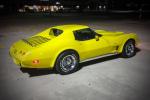




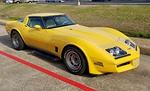


 5-Link Design Consideration











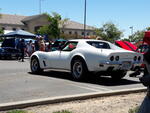




 If you don’t have the shock extension and suspension tracking range on the inners, then just buy massive sway bars, and be Johnny cool bad ***! Most don’t understand double adjust shocks and the static mountings! Thus focus on compression is where most focus, and then on recovery, but they don’t tune rebound to be effective! It is throw away by most! The Bilsteins, Konis, KYBs and all of the others are name gimmick, unless you take these units and engineer them onto your car appropriately! As tracks are generally flat, you can be Joe hero on the weekend, and be semi-unhappy in your weekly street driving. ,