When you click on links to various merchants on this site and make a purchase, this can result in this site earning a commission. Affiliate programs and affiliations include, but are not limited to, the eBay Partner Network.
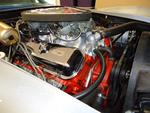
Although not a high dollar item, if my L-36 block needs to be resurfaced, the machine shop said they could not guarantee the numbers would be saved, and they had no way to stop short of the numbers. Is this really a problem for a machine shop? Does it depend on the type of machine they use where the cutting tool can't be stopped short of the numbers? I checked the deck with a straight edge and could only fit a .0025 feeler under the biggest gap but I'm no machinist. I asked if he knew a shop that could resurface but save the numbers but he didn't know of any. I took pics of my block (casting # and stamp pad) just in case and specifically said not to resurface the block deck. I should probably get this in writing, base on some of the posts I've searched. Does anyone know if it takes a certain type of machine shop to deal with vintage blocks? Since I'm in the process of the rebuild, I'll be looking for all kinds of advice. Thanks in advance
Although not a high dollar item, if my L-36 block needs to be resurfaced, the machine shop said they could not guarantee the numbers would be saved, and they had no way to stop short of the numbers. Is this really a problem for a machine shop? Does it depend on the type of machine they use where the cutting tool can't be stopped short of the numbers? I checked the deck with a straight edge and could only fit a .0025 feeler under the biggest gap but I'm no machinist. I asked if he knew a shop that could resurface but save the numbers but he didn't know of any. I took pics of my block (casting # and stamp pad) just in case and specifically said not to resurface the block deck. I should probably get this in writing, base on some of the posts I've searched. Does anyone know if it takes a certain type of machine shop to deal with vintage blocks? Since I'm in the process of the rebuild, I'll be looking for all kinds of advice. Thanks in advance
You can always do like most people do and have your numbers re-stamped onto the block after it is decked.
I agree.....but you can really kick a hornets nest with this statement.......
I, as a hobbiest cannot see why the whole numbers match thing has taken such a second following...........to me it does not alter nor tarnish the experience of the car as a whole........I just do not understand it.
But, as a slave to the hobby........I sold my L-36 5 years ago for an outstanding number due to the fact it had the complete original drivetrain........it is just the way it is.
Ask yourself.....why is a diamond valuable? Because DeBeers manipulated the public into thinking so........just as the vintage car hobby manipulated themselves into thinking so.
Ok....now that I spoke my mind......let me just say that a BBC has a thick deck and very few become warped. The smart thing to do would be to straight edge the deck in different spots to determine if it is in fact warped. Todays composite head gaskets are VERY forgiving..........this may solve a problem for you unless you have to have zero deck. I would never have a block decked unless it needed it...in fact most are just not square side to side, front to back......
It can be done with the correct machine to deck the block. It is not a common machine though. If you need me to, PM me and I will check with my machinist for the type of machine that can do it.. I'll be there later today.
Todays composite head gaskets are VERY forgiving..........this may solve a problem for you unless you have to have zero deck. I would never have a block decked unless it needed it...in fact most are just not square side to side, front to back......
Jebby
That's what I was thinking...machinist said that might make a weak spot in the gasket– I knew I could get valuable input on the forum.
I'm replacing the numbers matching 454 in my 73 when I begin the body off resto/mod and dropping in a 496.
I would not build a new engine without decking the block, at the least, to insure everything is squared up.
Are you keeping the engine all OEM and rebuilding it to OEM specs for judging?
My 73 was mostly all original when I purchased it except the radiator, waterpump, alt, ps pump, carb, fuel pump, distributor, brake calipers, 2 rotors, belts, hoses, trim rings, tires and the list of small maintenance items continues.
If my 73 was 1 of 12 73's produced and a high valued car, then I would strive for all numbers and date code matching.
How many high dollar 32 Ford 3 window coupes do you see at car shows selling for high dollars, that are running the numbers matching flathead?
Most are running sbc in a Ford
Build the motor correctly, document the original numbers and if your machine shop can do it, ask them to re-stamp the block with the original numbers.
Just my opinion.
If you are that worried about numbers matching maybe the original engine should be put on a stand and a replacement rebuilt... assuming you are not doing NCRS judging.
When I had my 327 L79 machined. We discussed this same concern. The deck was square with no warp. We did not dress the block. After reassembly, I had the shop break in the motor on their dyno. That little 327 produced 383hp and 423ft tq. ran to 6200 rpm. So I'd say you do not always have to deckma block as long as you are with in spec.
I was there when my machinist decked my LS5. He was able to save the numbers but it did take him quite a bit longer than a normal deck so be prepared to pay some extra. The way decking works is that the block is indexed off the crank journals so the deck height will be referenced to the crank. The cutter is mounted on a large wheel so the leading edge of the cut is a curve. The machine can auto-feed or manual feed. Once it got close to the numbers he had to stop the auto feed and switch to manual.
The problem is that once the cutter is at the numbers it will not have cut the entire surface the head gasket contacts due to the curve. The cutter head is not adjustable in any direction except straight fore-aft so the end of the cut is what it is. At that point he had to stop and finish the last area by hand with a die grinder. Luckily the area that was left is not close to a cylinder or coolant passage so it's not a problem that the surface isn't perfect. It just can't stick up. The machinist said that if the numbers are too close to the head gasket he can't save them, too much uncut area left.
The current buyer demographic that will pay lots more for a numbers matching C3's may not last forever. On the other hand if I had the option to save my original block with the GM stamping I'd do it in a heartbeat. My NOM 68 L71 had a CE stamped block so I went for zero deck and a nice tight quench when I did my build.
When I had my 327 L79 machined. We discussed this same concern. The deck was square with no warp. We did not dress the block. After reassembly, I had the shop break in the motor on their dyno. That little 327 produced 383hp and 423ft tq. ran to 6200 rpm. So I'd say you do not always have to deckma block as long as you are with in spec.
Those are fantastic dyno numbers. Could you explain your build.
Good info from all!
I heard from Leigh1322 today that his machinist said it's possible to clean up to about .003" and still save the numbers. This is good news since I may only need .001 or .002 taken down to be in range. I had been wondering how deep the punches are from the factory so this was a possibility. He also made it clearer the reason why it's tough for most shops to do– a broach machine would be used but is not very common, whereas regular surfacing equipment would have to stop short and leave a circular swath that would need grinding down to finish the rest.
Awesome info I could not find anywhere online.
Thanks all
Glad to help. Many machine shops use either a revolving flat stone or a bit for decking, and it travels from one end of the block to the other, one cylinder at a time, while rotating in a circle. So if you stopped short of the pad area, the "cut" would have a rounded edge and not work for the last cylinder. Touching that last cylinder area up some other way is not a recommended option.The surface texture or finish itself is varied by changing the speed, travel rate, stone coarseness, bit size, etc.
Note that I am not a machinist, but my friend is. Jeff is officially retiring now after his stroke. The shop is for sale. It turns out my current engine build is the 5000th one he has machined and built himself over the last 40 years. The math says that is 125 engines per year for 40 yrs! He does all his own machining except for balancing cranks. After the last three customer motors, he's done! He usually doesn't share this much information except one on one. Why am I doing this for him? I guess because guys like him that have been doing this since these cars were new, are quickly fading away into retirement, and a lot of the information is being lost along the way. And he doesn't mind reminiscing now, he's not as busy, and I think it's good for him.
Last edited by leigh1322; Aug 2, 2019 at 11:37 AM.












 Machine shop advice- resurfacing big block