When you click on links to various merchants on this site and make a purchase, this can result in this site earning a commission. Affiliate programs and affiliations include, but are not limited to, the eBay Partner Network.
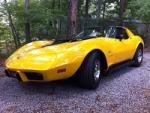
I have a 1978 L82 Pace Car and when I turn on the A/C, the idle goes from 700 rpm to 1,500 rpm.
All the A/C is working fine, its just that the idle goes up much more than it used to.
Previously, I'd see maybe a 100/200 rpm change, now it really shoots up.
Whilst I dont understand exactly how the idle up is supposed to work in my car, I have to assume there's some kind of air leak when it's activated that's causing this
Would appreciate a simple explanation of how the idle up is supposed to work, then some physcic analysis why its doing this?
Thanks
Last edited by puzzigully; Oct 2, 2019 at 06:49 PM.
When the AC is turned on, it puts additional load on the engine, which will reduce the idle The idle-up solinnoid will activate, and increase the idle with the compressor. That is the only thing that will increase the idle. It could be working inconsistantly.
Thanks for the reply..
My simple brain says that if the idle stop solenoid isn't working properly, it'd be a lower idle, not higher?
Some years (not sure which) may have a the same solinoid as an idle stop, so that when the car is turned off it will reduce the idle so it won't "diesel".
When the AC is turned on, it puts additional load on the engine, which will reduce the idle The idle-up solinnoid will activate, and increase the idle with the compressor. That is the only thing that will increase the idle. It could be working inconsistantly.
Not sure what an "air leak" is.
Some of my A/C idle up experience comes from Japanese cars (dont hate me), where they use increased air flow that bypasses the butterfly to achieve the idle up - usually with a solenoid that may be plumbed via air lines...
Kinda thought it might be a similar logic, given there's heaps of vaccuum lines on my car
My knowledge has now increased to understand that the idle up on my car is achieved only by the electrical activation of the solendoid which mechanically increases the butterfly to allow more air in.
It seems that the solenoid doesn't have enough "strength" to open by itself at idle if you just turn on the A/C and relies on the accelerator pedal to open the butterrfly first and then upon return, the solenoid holds it open just enough to increase rpm to compensate for A/C compressor drag.
So knowing that, I guess I need to confirm the A/C solenoid is the culpri by opening too far??
"My knowledge has now increased to understand that the idle up on my car is achieved only by the electrical activation of the solendoid which mechanically increases the butterfly to allow more air in. It seems that the solenoid doesn't have enough "strength" to open by itself at idle if you just turn on the A/C and relies on the accelerator pedal to open the butterrfly first and then upon return, the solenoid holds it open just enough to increase rpm to compensate for A/C compressor drag."
This is correct, I would pull the solenoid (2 screws & connector) pull the plunger in and out to check for internal interference. The travel length won't be much. Check the electrical connection at connector & solenoid. The RPM speed (when energized) is set by the length of the plunger shaft. These are tight to turn, so the set length doesent usually change by itself.
When the Idle Solenoid (Kick-up solenoid) engages it will increase the RPM on these years of cars when the A/C is on. Un-hook the plug to it and see if the rpms are normal when the A/C is on. If they are, then the solenoid is out of adjustment, see if you can adjust it out a little when it is engaged. If disabling it doesn't help, then you know that the problem lies somewhere else....
If your car has an idle solenoid on it and it is working when A/C is turned on, you can adjust that rpm to any idle speed you want by turning the adjustment screw which contacts the carb throttle linkage. You may have to hold some portion of the solenoid with another wrench while making that adjustment, as the screw threads may be designed so it won't 'move' under normal operation.
You make no mention of whether automatic or manual transmission.
Below is the emissions sticker for an automatic which has the instructions for setting the idle speed. Your sticker may be different. https://www.ebay.com/i/173379166937?...iABEgKfYPD_BwE










 A/C Idle up