When you click on links to various merchants on this site and make a purchase, this can result in this site earning a commission. Affiliate programs and affiliations include, but are not limited to, the eBay Partner Network.
Long time ago I removed a sway bar that was on my car in order to do some other things, and never put it back on (some said you don't need it on a small block). Anyway, I decided to put it back on, seems I had a reason but can't remember it now. Anyway, when I put it back on, and set car on ground, the weight of the car pushed the bar down, which then made the link come in contact with the bracket on the end of the trailing arm. Then of course, there is no give in the rear end, no bounce, which is not correct. Since I had everything installed anyway, I decided to turn the sway bar over and reattach it, which worked out fine. But I still don't know why it will not work when it is installed 'correctly'. The only other thing I have done to the rear suspension is replace the trailing arms, strut rods (to adjustables), shocks and half shafts..... This isn't a big deal since I believe it is doing what it needs to, just can't figure out why. Also, it's like a 5/8 or 3/4 bar, which I know is waaaaay more then it needs, don't know why the PO installed it, it's a stock looking one, not an aftermarket one. Thanks
Seems pretty big, the factory ones are almost rinky-dink.
That said, there should be nothing that pushes the link down other than the opposite side T/A. If the bar is the same shape as a stock one, there is a bend in both legs that go to the links, it is possible that it's installed the wrong way (I don't think you can install it upside down but if it's an aftermarket one maybe it can be). That might push the links in the direction you're describing.
Oh, one more thought
If the T/A were hanging way down when you installed the linkage, the bar to link may have gone over center (pivot back towards the rear of the car) and when the car is lowered onto the wheels the link tries to pivot backwards rather than towards the front of the car. This will cause it to lock up the way you describe, also locks the rear suspension from being able to move up into the proper location (car sits too high in the rear)
Thanks for all the responses, I will try and get some pictures today and post them. That last message from Mooser does sound like what is happening. Just wish I could remember how it looked installed. Sure looks stock to me (except for the size of the bar). Pictures forthcoming.
Bad combo! Are you sure its 3/4" in front? Didn't think they made one that small. I'm running a 3/4" bar in the rear but have a 1 1/4" in front. With the combo you have you will have a bad case of oversteer
Not sure what is going with your car but a quick refresher on C3 sway bars and their effects on handling for these cars.
The later 70's gymkhana sport suspended C3 like my 78 had a 1 1/8 inch stock front sway bar and a rear 7/16 inch GM style endlink rear swaybar. ALL C3's are designed and setup from the factory to UNDERSTEER, not oversteer, including gymkhana sport suspension C3's like my C3. ALL the base suspension C3's with no rear bar understeered badly, much more than the sport suspension cars.
All SBC gymkhana C3's ONLY had a 7/16 inch rear bar. The BB C3's only had a rear 9/16 inch rear bar to help counteract the severe understeer from the nose heavy BB engine. No SBC C3 ever came from the factory with a 9/16 inch rear bar.
My 78 with the stock 1 1/8 inch front factory sway bar AND the 3/4 inch MidAmerica OEM GM type rear sway bar (replaced the 7/16 inch factory rear bar years ago) does NOT OVERSTEER but is almost perfectly neutral at the limit. These cars should have come with a bigger rear bar to dial out the inherent understeer mandated by GM at the time.....The reason vendors sell the 3/4 inch rear GM style replacement swaybar is to allow the use of a bigger front bar and/or to help dial out the inherent understeer with C3's like mine with the giant (for the time) front 1 1/8 inch front factory swaybar. Some of the best handling C3's of the 68-82 cars were the 78-82's with the gymkhana suspension and big front bar and the 7/16 inch rear bar along with the 255/60/15 tires...
The C3 oversteer myth is mostly from novice drivers unaccustomed to a 50:50 weight distribution sportscar (almost unheard back in the 60/70's) and/or poor throttle application during turns connected with incorrect steering inputs......
Hope this helps!
Last edited by jb78L-82; Nov 16, 2019 at 06:51 AM.
Well it's been a while since bringing this subject up, hope I don't anger another who has offered advice, but I just removed that fat bar and likely won't reinstall it anytime soon unless I get too curious. With your comments, I may try and see whether I can in fact install it 'correctly' someday. I have been told and read on more than one occasion that the SBC does not need that bar; only the bb. So for now, adios to the sway bar.
I certainly will not be angered by what you choose to do with your car. It is your car and clearly you can do as you see fit.
I would suggest you reread my post #16 again for the the actual reasons that GM included a rear 7/16 (SBC gymkhana suspended cars) or 9/16 sway bar (BB C3 cars only). No C3 needs a rear sway bar including the BB C3's. The bar is designed and put on certain cars by GM to improve the handling and this rule applies to the C3's.
In summary, all C3's will understeer when pushed, handling wise, including the SBC C3's with the gymkhana suspension and a rear bar but less so than the base suspended SBC C3's. All BB cars, due to a front sway bar and the BB engine changing the weight bias to a nose heavy attitude, will understeer much more than a SBC C3's with 50:50 weight distribution and the reason GM mandated all BB C3's come with a rear bar to balance the car better away from understeer.
If you plan to just cruise with your C3 and don't push it ever on the highway, off ramps, backroads etc then removing your rear bar will have little to no meaningful effect, in the everyday driving of your car. I have found with my car that the 3/4 rear GM Style bar in conjunction with my stock poly mounted 1 1/8 inch front bar really does not noticeable effect the handling reducing the front end push/understeer until about 60-70% handling capability of the car. Another words, I need to push the car significantly on an off ramp where the nose would begin to push if I had no rear bar before I feel the rear bar's effect on that dynamic....
I certainly will not be angered by what you choose to do with your car. It is your car and clearly you can do as you see fit.
I would suggest you reread my post #16 again for the the actual reasons that GM included a rear 7/16 (SBC gymkhana suspended cars) or 9/16 sway bar (BB C3 cars only). No C3 needs a rear sway bar including the BB C3's. The bar is designed and put on certain cars by GM to improve the handling and this rule applies to the C3's.
In summary, all C3's will understeer when pushed, handling wise, including the SBC C3's with the gymkhana suspension and a rear bar but less so than the base suspended SBC C3's. All BB cars, due to a front sway bar and the BB engine changing the weight bias to a nose heavy attitude, will understeer much more than a SBC C3's with 50:50 weight distribution and the reason GM mandated all BB C3's come with a rear bar to balance the car better away from understeer.
If you plan to just cruise with your C3 and don't push it ever on the highway, off ramps, backroads etc then removing your rear bar will have little to no meaningful effect, in the everyday driving of your car. I have found with my car that the 3/4 rear GM Style bar in conjunction with my stock poly mounted 1 1/8 inch front bar really does not noticeable effect the handling reducing the front end push/understeer until about 60-70% handling capability of the car. Another words, I need to push the car significantly on an off ramp where the nose would begin to push if I had no rear bar before I feel the rear bar's effect on that dynamic....
Hope this helps!
Yes, it does help. Thanks! Have a great day! Happy Leap Year.




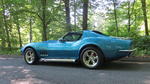



 Sway bar 1972 small block


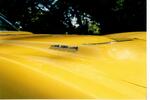


 Seems pretty big, the factory ones are almost rinky-dink.