When you click on links to various merchants on this site and make a purchase, this can result in this site earning a commission. Affiliate programs and affiliations include, but are not limited to, the eBay Partner Network.
Hi all, I would like to improve the handling of my C3, starting from the rear axle. Now I have a standard rear setup without sway bar.
I read of a lot of people that reduced the jacking effect installing a smart strut kit like this one:
Try and understand your suspension as a whole before making changes. These are commonly recommended, and the same effect can be achieved by fabricating a spacer to bolt between the strut rod mount and the diff. I did that (added a spacer between diff and strut rod bracket) when I initially put my suspension together, but looking at photos of my car on track the rear wheels were going into positive camber when cornering hard (very bad for grip). I went back to the standard geometry and the rear wheel remains much better upright when cornering. Reduced camber gain (which is what you get with this bracket or by spacing the strut rod bracket lower) is generally good for straight line acceleration, but may not be ideal (depending on the rest of the cars setup / suspension) for cornering / handling.
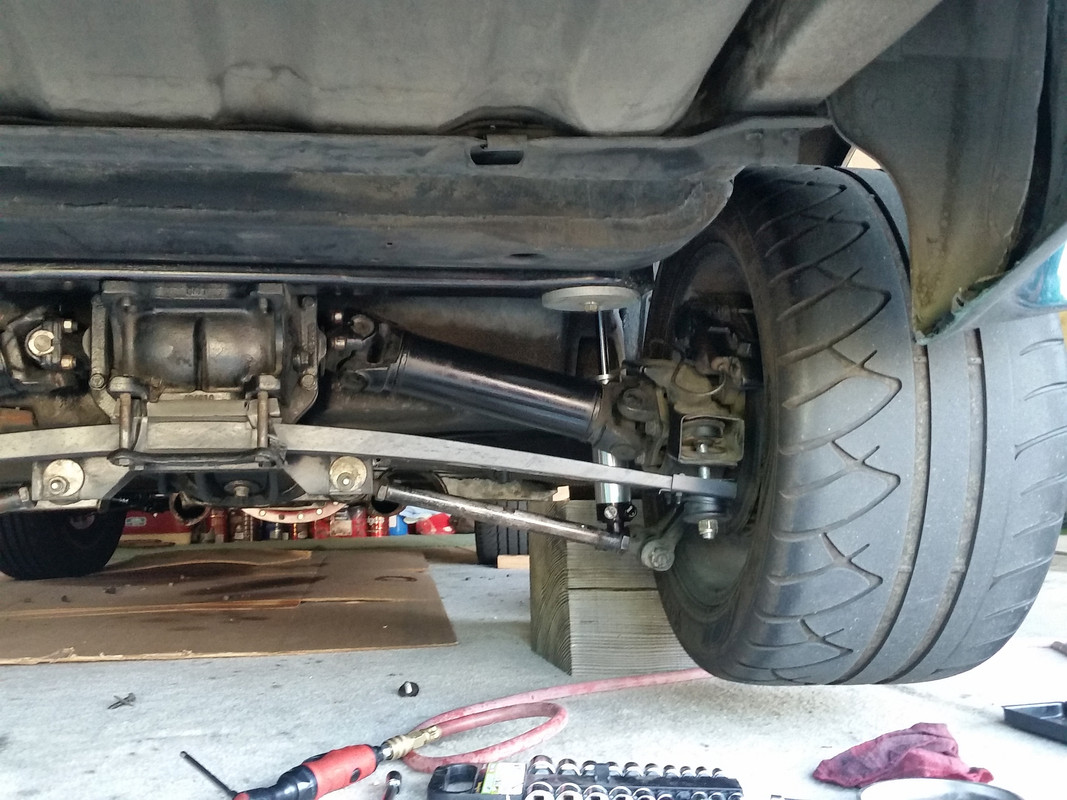
Smart struts are a great item. The camming eccentric at the diff is how you adjust the camber. It is so much better than stock! See these aluminum disks at the ends of the diff crossmember? Another good idea
Try and understand your suspension as a whole before making changes. ..... looking at photos of my car on track the rear wheels were going into positive camber when cornering hard (very bad for grip). I went back to the standard geometry and the rear wheel remains much better upright when cornering.
To add to this, the camber cam also controls camber gain. The rear suspension links form a polygon and the angle of the side attached to the wheels changes according to the length on the side of the differential. That length is controlled according to the setting on the cam. I would not recommend "smart struts" myself, in my opinion it is a gimmick to sell people stuff.
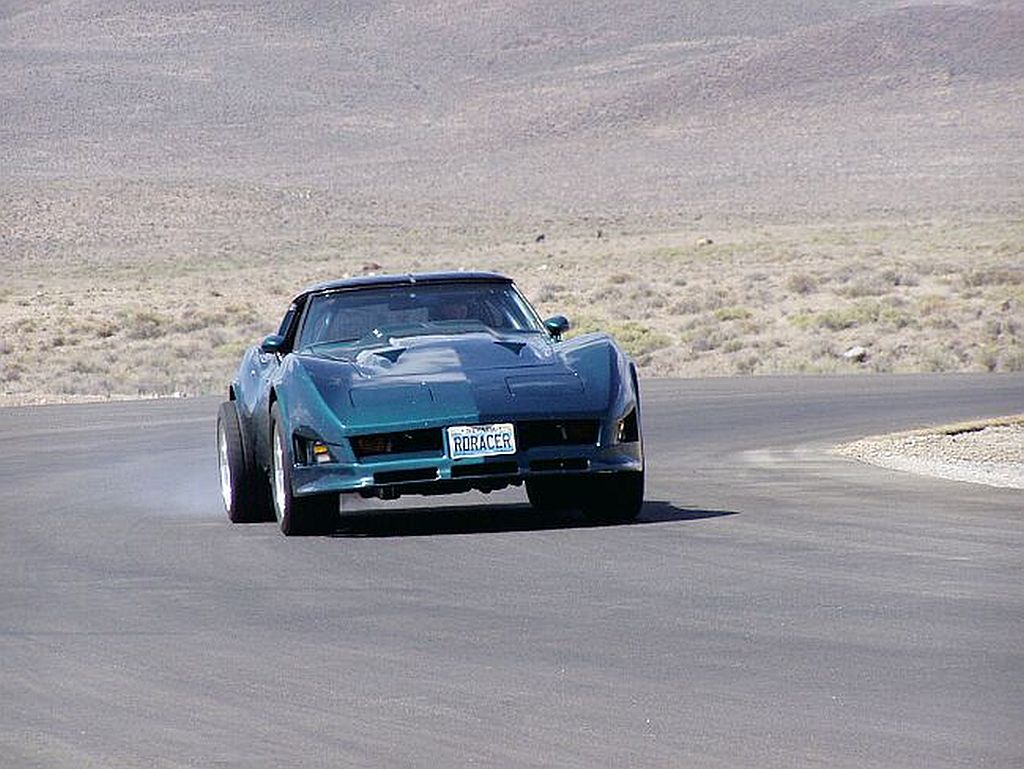
Here is a picture of my car from back when I was figuring out what my car was doing
This is a near 20 year old picture out at the road racing track before I put on wheel flares. This is an off camber turn. Front 550# with 1 1/8th sway Koni adjustable shocks. Rear 500# custom steel, Smart Struts, 3/4 rear bar, Koni adjustable shocks. 335/17 rear 275 /17 F Michelin Pilot sports. I puncture a Rear road racing slick in practice or qualifying and I had to put my street tires back on to use up my entry fee.
This is at WOT probably doing about 75 mph with my back then about 550 hp 383 ci 7500 rpm motor. The front is lifted way up because Im on the gas and starting to flat track a little. The terrific bending forces are rolling the tires under and took the negative camber out
Alignment settings have always been about the same from the 80's track time.
I don't like toe out because it makes the car to nervous.
"Zero" Toe
.52 negative camber
6.5 caster I modded my stock cross link bar.
Rear.
.48 neg camber
1/8th total rear toe
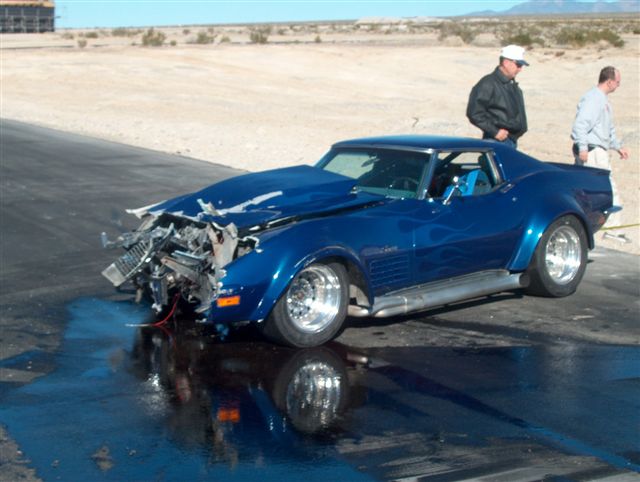
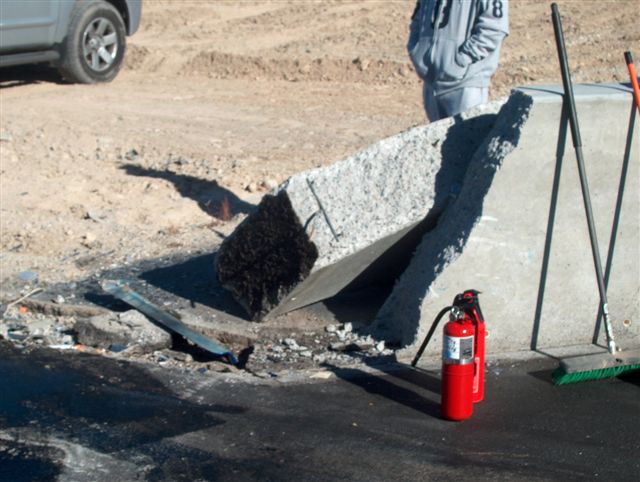
This is what happened when you are flat tracking and don't let off soon enough. One of my fellow road race vetters!
Without knowing how your suspension is set-up now, and how far you want to take it, it's pretty hard to give advice.
However "Good Handling" is very much a "package deal" and changing one thing at a time may not give you the results you want.
Search for JBL82 's suspension setup for a well thought-out setup on a well handling street car.
Without knowing anything else I would probably start with good tires, then shocks, then sway bars, in that order.
Smart struts are a great item. The camming eccentric at the diff is how you adjust the camber. It is so much better than stock! See these aluminum disks at the ends of the diff crossmember? Another good idea
.
What are these aluminum disks at the ends of the diff crossmember?
Those rubber mounted disks hold the entire rear cross-member and basically the entire rear suspension, spring, diff, etc. The rubber moves a good amount when under load and cornering, It doesn't affect camber because all that stuff moves with it. But the front of the trailing arms DO NOT MOVE. Thus the rubber disks cause rather sudden & large "toe-out" changes when cornering hard. This makes the rear of the car very twitchy. The solid disks eliminate all that. The car feels much more stable and planted.
Conversely the lower strut rod takes 90% of the cornering load according to Duntov. The factory rubber mounted strut ends deflect under load and cause very undesirable positive camber change on the heavily loaded tire when turning. Poly ones are better but also have some issues. The real high performance fix is to use two adjustable solid metal heim joints on the strut bars like GKulls above. Drivers report almost no effect on ride quality because all the bump forces are straight up 90 degrees to the joint, and it rotates easily. The complete lack of horizontal movement prevents the positive camber changes.
Those two mechanical changes will have a much greater impact on the handling feel than the lowered strut bracket.
Last edited by leigh1322; Dec 8, 2019 at 04:01 PM.
Those rubber mounted disks hold the entire rear cross-member and basically the entire rear suspension, spring, diff, etc. The rubber moves a good amount when under load and cornering, It doesn't affect camber because all that stuff moves with it. But the front of the trailing arms DO NOT MOVE. Thus the rubber disks cause rather sudden & large "toe-out" changes when cornering hard. This makes the rear of the car very twitchy. The solid disks eliminate all that. The car feels much more stable and planted.
Conversely the lower strut rod takes 90% of the cornering load according to Duntov. The factory rubber mounted strut ends deflect under load and cause very undesirable positive camber change on the heavily loaded tire when turning. Poly ones are better but also have some issues. The real high performance fix is to use two adjustable solid metal heim joints on the strut bars like GKulls above. Drivers report almost no effect on ride quality because all the bump forces are straight up 90 degrees to the joint, and it rotates easily. The complete lack of horizontal movement prevents the positive camber changes.
Those two mechanical changes will have a much greater impact on the handling feel than the lowered strut bracket.
From previous threads about my 78 handling modifications over 30+ years:
Front:
550 lbs front coil springs/1 inch lower than stock- 1 1/8 inch front sway bar (OEM Bar size)- poly upper and lower control arm bushings- Bilstein HD shocks- Front Spreader Bar- Custom blueprinted/rebuilt OEM steering box- GTR 1999-Gary Ramadei- This modification will make your OEM box about as good as it gets with the OEM steering and very close to a borgeson.....not quite but close 255/45/17 ZR ultra high Performance tires
Rear:
360 monospring- Bilstein Sport shocks- OEM Style Rear Sway bar (not the aftermarket type bars. I highly discourage NON OEM/GM style rear sway bars)-7/16 or 9/16 or 3/4 inch (I have this one replacing the stock 7/16 inch bar)- Competition adjustable strut rods with heim joint ends- 255/45/17 ZR ultra high Performance tires





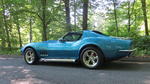
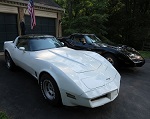



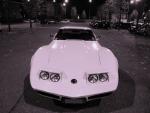


 About jacking effect and smart strut kit
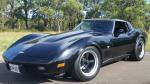


 See these aluminum disks at the ends of the diff crossmember? Another good idea