When you click on links to various merchants on this site and make a purchase, this can result in this site earning a commission. Affiliate programs and affiliations include, but are not limited to, the eBay Partner Network.
From: At my Bar drinking and wrenching in Lafayette Colorado
Here is some info I have previously published about this topic:
During my interviews and research for tech articles at GM back in the late 70's, I had several discussions with GM design engineers regarding Tripower (aka "Triple Power Pak") versus 4-barrel. Here are the key comments that came from this:
Originally, the multiple carb setups (2x4 and 3x2) were used due to the limited cfm capacity of then-available single 4-barrels (since the Rochester 4GC and the Carter AFB were the only things the auto makers had going in the 50s and early 60s). Thus, the Tripower became associated with performance.
With the advent of large-cfm 4-barrels (Holley & Q-Jet), there was no technical justification for multi-carb setups.
Marketing liked Tripowers and could sell a performance image. Tripowers in the late 60s were marketing tools - not engineering performance tools.
A Tripower (3 2-barrel carbs) cannot feed 8 cylinders as uniformly as a single 4-barrel. Given equal cfm flow through a Tripower and a 4-barrel, the 4-barrel actually has the advantage due to more even fuel distribution.
Tripowers utilizing individual air cleaners have severe cfm flow restrictions due to air filter size. Single large air cleaners for the entire setup flow much better than individual air cleaners for each of the carbs.
Tuning is cumbersome due to the inaccessibility of the center and end carb float bowls on the Holley carbs. This makes quick track tuning almost impossible. But Tripowers still look cool and sound great...
With regards to total cfm airflow through the Tripower, the cfm flow numbers and ratings on the Tripower cannot be directly compared to the cfm ratings of a 4-barrel carb, and there are some other factors to consider as well, making the “1200 cfm” rating questionable and somewhat irrelevant.
First, keep in mind that the SAE standard for testing and rating 4-barrel carbs is at 1.5 inches of Mercury, while the test pressure for 1-barrel and 2-barrel carbs is 3 inches of Mercury. This higher delta test pressure (twice the delta pressure) for the 2-barrel carb makes the 2-barrel appear to flow much higher, and the numbers for the 4-barrel cannot be compared to the numbers for the 2-barrel. The reason for this pressure difference in the rating is that it is assumed that a 2-barrel carb is used on a modest passenger car, which will pull vacuum even at WOT, whereas a 4-barrel carb used in a performance application will pull very little vacuum at WOT. For racing purposes, the flow ratings get even worse, since a properly-sized carb for a racing engine will pull almost no vacuum at WOT. On the other end of the spectrum, the little 390 NASCAR carbs, used at extreme rpm, pull so much vacuum at WOT that the carb actually flows about 3 times its "rated" flow rating. The large 2-barrels on the low-rev'ing 427 will not be exposed to anywhere close to 3" Hg vacuum at WOT, and will not, therefore, flow anywhere close to the 1200-cfm rating.
To add a little more confusion to the whole "cfm rating" thing, most flow benches in the racing industry (such as those used by Holley and Demon) measure dry air at low pressure drops (about 10 inches of water) one venturi at a time. This result is multiplied by a factor to arrive at what that bore would flow at a higher vacuum (i.e. 1-1/2 or 3 inches of mercury), then that figure is multiplied by the number of barrels to get the C.F.M. rating. This rating is usually much higher than it actually is, since the interaction between the barrels prevents them from achieving their individual flows once they are working together, so use of the manufacturer's "rating" is not a reliable yardstick for running the common "carb sizing" calculators: The calculators usually end up showing that the engine needs a very small carb, when, in fact, the engine, when used in a performance application, can make good use of a carb significantly larger that what the "calculators" would indicate.
So knowing all this, let's take an educated look at the 2-barrel carbs on the 427 Tripower: The center carb on a tripower is rated at 350 cfm. The end carbs are rated at 466 cfm, for a total advertised cfm rating of 1282 cfm… Wow.
Now, consider that those carbs achieved that rating with twice the test pressure of a 4-barrel carb. The flow through the carb is not linear with pressure, so the 350 carb will probably flow a little over half that at half the delta-P, so give it the benefit of doubt and say it will flow roughly 75% of its 3-inch rating when tested at 1.5" of Hg. In fact, the actual conversion factor to convert the 2-barrel flow rating to the equivalent 4-barrel standard (with a very small percentage of error) is to simply use the square root of 2 (1.414).
Thus to convert a two-barrel rating into a four-barrel rating, divide the two-barrel rating by 1.414.
To convert the four-barrel rating to a two-barrel rating, multiply the four-barrel rating by 1.414.
That puts the center carb at a "4-barrel equivalent comparative flow" of 247 cfm. The end carbs flow a 4-barrel equivalent of 329. Add it all up, and you get roughly 900 cfm... 900 cfm with vacuum secondaries on a performance 427 sounds just about right.
To create additional disadvantage to the Tripower, the low-profile air cleaner, fitting tightly over the carbs, creates additional flow restriction and decrease in total cfm flow. Also, 6 barrels simply cannot feed 8 cylinders as evenly as a single center-mounted 4-barrel: The Tripower manifold creates a difference in cylinder-to-cylinder filling, putting the manifold at a disadvantage to a good 4-barrel intake. So although the Tripower looks fantastic, and was a great marketing tool for the Corvette Performance image, fact is that a single 850 cfm 4-barrel will outperform the "1200 cfm" Tripower when set up correctly on a good manifold.
From: At my Bar drinking and wrenching in Lafayette Colorado
Here is some info I have previously published about this topic:
During my interviews and research for tech articles at GM back in the late 70's, I had several discussions with GM design engineers regarding Tripower (aka "Triple Power Pak") versus 4-barrel. Here are the key comments that came from this:
Originally, the multiple carb setups (2x4 and 3x2) were used due to the limited cfm capacity of then-available single 4-barrels (since the Rochester 4GC and the Carter AFB were the only things the auto makers had going in the 50s and early 60s). Thus, the Tripower became associated with performance.
With the advent of large-cfm 4-barrels (Holley & Q-Jet), there was no technical justification for multi-carb setups.
Marketing liked Tripowers and could sell a performance image. Tripowers in the late 60s were marketing tools - not engineering performance tools.
A Tripower (3 2-barrel carbs) cannot feed 8 cylinders as uniformly as a single 4-barrel. Given equal cfm flow through a Tripower and a 4-barrel, the 4-barrel actually has the advantage due to more even fuel distribution.
Tripowers utilizing individual air cleaners have severe cfm flow restrictions due to air filter size. Single large air cleaners for the entire setup flow much better than individual air cleaners for each of the carbs.
Tuning is cumbersome due to the inaccessibility of the center and end carb float bowls on the Holley carbs. This makes quick track tuning almost impossible. But Tripowers still look cool and sound great...
With regards to total cfm airflow through the Tripower, the cfm flow numbers and ratings on the Tripower cannot be directly compared to the cfm ratings of a 4-barrel carb, and there are some other factors to consider as well, making the “1200 cfm” rating questionable and somewhat irrelevant.
First, keep in mind that the SAE standard for testing and rating 4-barrel carbs is at 1.5 inches of Mercury, while the test pressure for 1-barrel and 2-barrel carbs is 3 inches of Mercury. This higher delta test pressure (twice the delta pressure) for the 2-barrel carb makes the 2-barrel appear to flow much higher, and the numbers for the 4-barrel cannot be compared to the numbers for the 2-barrel. The reason for this pressure difference in the rating is that it is assumed that a 2-barrel carb is used on a modest passenger car, which will pull vacuum even at WOT, whereas a 4-barrel carb used in a performance application will pull very little vacuum at WOT. For racing purposes, the flow ratings get even worse, since a properly-sized carb for a racing engine will pull almost no vacuum at WOT. On the other end of the spectrum, the little 390 NASCAR carbs, used at extreme rpm, pull so much vacuum at WOT that the carb actually flows about 3 times its "rated" flow rating. The large 2-barrels on the low-rev'ing 427 will not be exposed to anywhere close to 3" Hg vacuum at WOT, and will not, therefore, flow anywhere close to the 1200-cfm rating.
To add a little more confusion to the whole "cfm rating" thing, most flow benches in the racing industry (such as those used by Holley and Demon) measure dry air at low pressure drops (about 10 inches of water) one venturi at a time. This result is multiplied by a factor to arrive at what that bore would flow at a higher vacuum (i.e. 1-1/2 or 3 inches of mercury), then that figure is multiplied by the number of barrels to get the C.F.M. rating. This rating is usually much higher than it actually is, since the interaction between the barrels prevents them from achieving their individual flows once they are working together, so use of the manufacturer's "rating" is not a reliable yardstick for running the common "carb sizing" calculators: The calculators usually end up showing that the engine needs a very small carb, when, in fact, the engine, when used in a performance application, can make good use of a carb significantly larger that what the "calculators" would indicate.
So knowing all this, let's take an educated look at the 2-barrel carbs on the 427 Tripower: The center carb on a tripower is rated at 350 cfm. The end carbs are rated at 466 cfm, for a total advertised cfm rating of 1282 cfm… Wow.
Now, consider that those carbs achieved that rating with twice the test pressure of a 4-barrel carb. The flow through the carb is not linear with pressure, so the 350 carb will probably flow a little over half that at half the delta-P, so give it the benefit of doubt and say it will flow roughly 75% of its 3-inch rating when tested at 1.5" of Hg. In fact, the actual conversion factor to convert the 2-barrel flow rating to the equivalent 4-barrel standard (with a very small percentage of error) is to simply use the square root of 2 (1.414).
Thus to convert a two-barrel rating into a four-barrel rating, divide the two-barrel rating by 1.414.
To convert the four-barrel rating to a two-barrel rating, multiply the four-barrel rating by 1.414.
That puts the center carb at a "4-barrel equivalent comparative flow" of 247 cfm. The end carbs flow a 4-barrel equivalent of 329. Add it all up, and you get roughly 900 cfm... 900 cfm with vacuum secondaries on a performance 427 sounds just about right.
To create additional disadvantage to the Tripower, the low-profile air cleaner, fitting tightly over the carbs, creates additional flow restriction and decrease in total cfm flow. Also, 6 barrels simply cannot feed 8 cylinders as evenly as a single center-mounted 4-barrel: The Tripower manifold creates a difference in cylinder-to-cylinder filling, putting the manifold at a disadvantage to a good 4-barrel intake. So although the Tripower looks fantastic, and was a great marketing tool for the Corvette Performance image, fact is that a single 850 cfm 4-barrel will outperform the "1200 cfm" Tripower when set up correctly on a good manifold.
Great info and second on the air cleaner......but a Tri-Power is going to make more power than a LS6 pancake intake.
But the original L-88 intake or modern Performer RPM would kill it.....
Jebby
Last edited by Jebbysan; Mar 15, 2020 at 12:13 PM.
From: At my Bar drinking and wrenching in Lafayette Colorado
True. And therefore my caveat about the single 850cfm 4-bbl making more power "when set up correctly on a good intake." This is what Chevy did with the L88 427, and why it didn't use a Tripower.
From: At my Bar drinking and wrenching in Lafayette Colorado
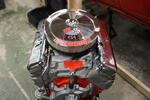
I just finished rebuilding and setting up this tripower on a '69. The previous "builder" had sandblasted the carbs and painted the entire setup with metallic bronze urethane paint... You can't beat a tripower for the "cool factor:"
Lorenzo (where I had my LS6 dyno'd) has built and dyno'd dozens of 100pt restorations on L78, L72, and L71 C2 vette engines.
The L72 (4 bbl high rise) runs about +10HP up on the L71 (tri-power) engines. Both are in the neighborhood of 460-480HP. depending on the engine. With headers.
My LS6 (pancake manifold) was the first one he had ever tested. The two engine builders both estimated it about 20-30HP behind the Hi-Rise, (on an equivalent 100pt correct engine.) That would make it 10-20 HP behind the tri-power.) They were positive my pancake manifold 780cfm motor would have gained 40+ HP with a Victor Jr single plane and 850 on it, which is their more common dyno'd setup. But then of course there would be a "little" hood interference.
BTW his 99pt NCRS 65 L78 396 Vette vert makes 488HP at a lofty 6800 rpm on a 100% correct engine.
So basically on a C2 the tri-power might give-up 10HP over a hi-rise, but you can't beat the cool factor.
But a high rise won't fit under a stock C3 hood. The Tr-power will. On the lower hoodline of a C3 It is 10-20 ahead of the LS6 intake.
Last edited by leigh1322; Mar 15, 2020 at 02:41 PM.
From: At my Bar drinking and wrenching in Lafayette Colorado
Both. The 400hp 427 Tripoower was oval port. The 435 was rectangular.
Edit -
Damn... Jebby types faster than I do...
But it's still funny how we both typed almost the same thing, verbatim, without seeing each other's post...
A very interesting read - thank you Lars for explaining. I suppose the only thing missing is the 'actual' rpm related cfm figure the engine is using on load as measured on the dyno. I was really surprised when my 850 DP'd oval ported 571hp 489 cu in came off the dyno how low the maximum measured CFM was 681
It would be very interesting to understand your logic using a BBC engine in comparing the following MPI injected sets-ups
Latest Edelbrock or simliar self learning carb bodied MPI system on a single plane inlet
Edelbrock Ram Jet equivalent MPI inlet
Modern Borla (or Chinese) small port Individual runner 'stack' MPI set-up (Fast controlled)
Old school 'small port' Enderle stack system
Old school 'large port' Crower/Kinsler MPI stack system
Last edited by roscobbc; Mar 15, 2020 at 03:55 PM.
I know that there were at least 2 versions of the tri-power intake. Oval port, and rectangular port.
But since the C2 had a little higher hoodline than a C3, are the respective rectangular port intakes the same height ? Say 67 vs 69?
I ran the Tripower for a while, both Corvette vacuum secondary and Mopar mechanical secondary carbs. Did it to keep the stock hood. Worked OK. Was a lot of fun and very responsive with the mechanical carbs, but with modern brake pads, wanted to die on hard braking (fuel slosh).
Solution was custom 3x2 EFI. Manifold based on Edelbrock dual quad. Port injected so good mixture distribution. A single 4bbl throttle body on a good single plane would probably work better but I am also liking the look.
One advantage is with the shorter throttle bodies, I can run a taller filter. K&N made me a Tripower filter that is 3/4” taller than stock. That is almost 50% taller than stock.