

C3 ticking / knocking sound.

Thread Starter
Intermediate

Joined: May 2020
Posts: 46
Likes: 6
From: Netherlands
 C3 ticking / knocking sound.
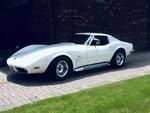
My Corvette from 1977 with a engine from 1968 makes a ticking sound which goes with the revs.
https://photos.google.com/search/_tv...IkkMV2y6rhyiXx
What I have already done:
* New oil and oil filter
* Valves adjusted
* Valves lift checked
* Flex plate checked
* All bearings checked
* Fuel pump is new
* Exhaust gasket is new
* Octane fuel is 98
* Oil pressure at warm engine 800 rpm is 60/65 psi
* Compression is between the lowest and highest setting 4%
* Pre-ignition is 12 degrees at 800 rpm and 36 degrees at 3500 rpm
https://photos.google.com/search/_tv...IkkMV2y6rhyiXx
What I have already done:
* New oil and oil filter
* Valves adjusted
* Valves lift checked
* Flex plate checked
* All bearings checked
* Fuel pump is new
* Exhaust gasket is new
* Octane fuel is 98
* Oil pressure at warm engine 800 rpm is 60/65 psi
* Compression is between the lowest and highest setting 4%
* Pre-ignition is 12 degrees at 800 rpm and 36 degrees at 3500 rpm
Last edited by Corvette 1977; May 10, 2020 at 10:29 AM.

Dr. Detroit


Joined: Mar 2012
Posts: 10,097
Likes: 4,027
From: New Braunfels Texas
Have you changed out the fuel pump rod? Believe it or not.....I built a $5000 406 and decided the original fuel pump rod was ok. After breaking in the cam....I heard a tick coming from around the front. Knowing full well that I lashed and built my engine proper, I decided to change out the fuel pump rod for an ARP as a hail mary......and viola', no more noise.
BTW....your oil pressure at idle is way too high......I would fix this as it just put strain on all of the components that run the pump.
Jebby
BTW....your oil pressure at idle is way too high......I would fix this as it just put strain on all of the components that run the pump.
Jebby
Last edited by Jebbysan; May 10, 2020 at 12:13 PM.
Thread Starter
Intermediate
Joined: May 2020
Posts: 46
Likes: 6
From: Netherlands
Le Mans Master


Joined: Aug 2017
Posts: 8,336
Likes: 2,810
From: Cool Northern Michigan
First thing I thought of you already took care of. Exhaust gasket.
These annoying sounds are very difficult to trace. Could be from a simple loose exhaust manifold bolt, to a more expensive issue such as rod knock.
There is an "old school" test, that requires a pair of insulated handle pliers, rubber gloves and nerves of steel. Carefully pull one plug wire at a time and note any difference in RPMs / sounds.
And it doesn't hurt to be standing on a rubber mat also.
These annoying sounds are very difficult to trace. Could be from a simple loose exhaust manifold bolt, to a more expensive issue such as rod knock.
There is an "old school" test, that requires a pair of insulated handle pliers, rubber gloves and nerves of steel. Carefully pull one plug wire at a time and note any difference in RPMs / sounds.
And it doesn't hurt to be standing on a rubber mat also.
Thread Starter
Intermediate
Joined: May 2020
Posts: 46
Likes: 6
From: Netherlands
Have you changed out the fuel pump rod? Believe it or not.....I built a $5000 406 and decided the original fuel pump rod was ok. After breaking in the cam....I heard a tick coming from around the front. Knowing full well that I lashed and built my engine proper, I decided to change out the fuel pump rod for an ARP as a hail mary......and viola', no more noise.
BTW....your oil pressure at idle is way too high......I would fix this as it just put strain on all of the components that run the pump.
Jebby
BTW....your oil pressure at idle is way too high......I would fix this as it just put strain on all of the components that run the pump.
Jebby
How can I see if the fuel pump rod is no longer working properly?
The high oil pressure is because it contains a Chevrolet high volume oil pump.
Thread Starter
Intermediate
Joined: May 2020
Posts: 46
Likes: 6
From: Netherlands
Corvette Stories
The Best of Corvette for Corvette Enthusiasts

Top 10 Most Expensive Corvettes Ever Sold on Bring A Trailer
Brett Foote
10 Things Every Corvette Owner Needs (2026 Edition)
Michael S. Palmer
8 Most "Only Corvette Owners Understand" Quirks and Problems
Pouria Savadkouei
10 Reasons the C6 Z06 is Still A Performance Benchmark After 20 Years
Joe Kucinski
How Much Horsepower Every Corvette Engine "LOST" in 1972
Joe Kucinski
Top 10 DOs and DON'Ts for Protecting Your Convertible Top!
Michael S. Palmer
Top 10 Most Explosive Corvettes Ever Made: Power-to-Weight Ratio Ranked!
Joe Kucinski
150 hp to 1,250 hp: Every Corvette Generation Compared by the Specs That Matter
Joe Kucinski
8 Coolest Corvette Pace Cars (and Replicas) of All Time
Verdad Gallardo
Thread Starter
Intermediate
Joined: May 2020
Posts: 46
Likes: 6
From: Netherlands
Dr. Detroit
Joined: Mar 2012
Posts: 10,097
Likes: 4,027
From: New Braunfels Texas
I do not run HV pumps on 90% of my builds......that high oil pressure is going to wear out components over a period of time. Just too much at idle.......should be around 30 and sweep free to 60-65 when revved.....this is what I like to see.
Not a single small block that revs to under 6000 RPM needs an HV pump......it is a myth that has stuck for over 40 years and one I wish would die.
Jebby
Last edited by Jebbysan; May 10, 2020 at 01:27 PM.

Le Mans Master
Joined: Sep 2001
Posts: 7,739
Likes: 630
From: Unreconstructed, South Carolina
All true ... I'd be measuring all lifts to determine if a lobe(s)/lifter(s) are failing ... as above, FP rod's cheap & easy to do ... as above, HV pump's usually not the best option.
https://www.melling.com/aftermarket-...u-k/technical/
https://www.melling.com/aftermarket-...u-k/technical/
Dr. Detroit
Joined: Mar 2012
Posts: 10,097
Likes: 4,027
From: New Braunfels Texas
Yes.....remove the pump and the plate and it will slide right out.....in the front of the block, there is a bolt....remove this and insert a longer bolt in there....slide the new pushrod up (Lube first!) and thread your new longer bolt in while holding up the pushrod....now thread the bolt til it stops finger tight.....install the plate and pump and MAKE SURE you remove the long bolt and put the short bolt back in.
Jebby
Jebby
Thread Starter
Intermediate
Joined: May 2020
Posts: 46
Likes: 6
From: Netherlands
Yes.....remove the pump and the plate and it will slide right out.....in the front of the block, there is a bolt....remove this and insert a longer bolt in there....slide the new pushrod up (Lube first!) and thread your new longer bolt in while holding up the pushrod....now thread the bolt til it stops finger tight.....install the plate and pump and MAKE SURE you remove the long bolt and put the short bolt back in.
Jebby
Jebby
Thread Starter
Intermediate
Joined: May 2020
Posts: 46
Likes: 6
From: Netherlands
Dr. Detroit
Joined: Mar 2012
Posts: 10,097
Likes: 4,027
From: New Braunfels Texas
Thread Starter
Intermediate
Joined: May 2020
Posts: 46
Likes: 6
From: Netherlands

Le Mans Master

Joined: Dec 2006
Posts: 8,837
Likes: 1,028
Dr. Detroit
Joined: Mar 2012
Posts: 10,097
Likes: 4,027
From: New Braunfels Texas
We back to back tested a 540hp 383 in 2007 with STD and HV pumps from Moroso in a Moroso pan.....
The 383 made 5 horsepower more with a standard volume pump and revved to 6400 rpm to make that power.
This is how much power the average lawn mower makes just to turn the shaft......I never looked back after that.
Truth is that modern heads are so good now that just about any 383+ cube engine makes peak power under 6500 rpm.....where the STD pump is still working just fine (Assuming correct pickup depth, steel sleeve shaft, shaft welded or brazed to pump to prevent aeration).
Tight clearances make an HV pump a foe rather than an ally......and the main passages of your typical GM block can't flow what the pump puts out anyhoo.....I used to have to drill even the Bow-Tie blocks oil galleys with a 3 foot long drill bit in the late 90's to make an HV pump happy on a 7000 rpm engine.....if they were not drilled they would score bearing and we found out from GM that they needed to be drilled by an insider....when asked why the damn thing were not drilled that way to begin with...it boiled down to $$$$$ as usual.
Jebby
The 383 made 5 horsepower more with a standard volume pump and revved to 6400 rpm to make that power.
This is how much power the average lawn mower makes just to turn the shaft......I never looked back after that.
Truth is that modern heads are so good now that just about any 383+ cube engine makes peak power under 6500 rpm.....where the STD pump is still working just fine (Assuming correct pickup depth, steel sleeve shaft, shaft welded or brazed to pump to prevent aeration).
Tight clearances make an HV pump a foe rather than an ally......and the main passages of your typical GM block can't flow what the pump puts out anyhoo.....I used to have to drill even the Bow-Tie blocks oil galleys with a 3 foot long drill bit in the late 90's to make an HV pump happy on a 7000 rpm engine.....if they were not drilled they would score bearing and we found out from GM that they needed to be drilled by an insider....when asked why the damn thing were not drilled that way to begin with...it boiled down to $$$$$ as usual.
Jebby