When you click on links to various merchants on this site and make a purchase, this can result in this site earning a commission. Affiliate programs and affiliations include, but are not limited to, the eBay Partner Network.
Hi guys. After a lot of messing around with bits and pieces I had from year's of owning these old cars, and being to cheap to just keep buying parts. I finally got my replacement distributor dialed in.
for those of you whom didn't see my distributor thread a short time ago. Let me recap.
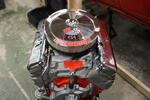
I have a 350, flat top pistons, Edlebrock head's, 180 ports. 2.02 intake valves 1.6 exhaust. Running approximately 10.1 compression. RPM intake .
HEI distributor, standalone Fi Tech fuel injection system.
got my timing, and yes it's been checked and checked again. 15 degrees at idle. Starts to advance at approximately 1,300 , all in at 2,800 - 2,850. Have 10 degrees of vacuum advance. Starts coming in at 8 inches all in by 11 inches. Car idles at 850 with 13 inches of vacuum with vacuum advance connected to full manifold vacuum.
O.K.. so my tuning issue. Car runs fantastic, except,.... 3 or 4th gear. Running along in 4th gear say, just under 50 miles an hour. Floor it hard. Huge hesitation, then takes off, studders through about 2,600 RPM through 2,800 RPM. Then cleans up and runs great to redline.
if I roll the throttle on. No studder. So Im thinking it's not timing.
opened up the program for the fuel injection to see where the electronic accelerator pump was set. Preset was zero. I'm thinking that's my big lag when nailing the throttle open. But, what to set it to? 10 percent?? More ? Less ?
studder through 26 - 28hundred RPM
AFR targets are 45 KPA, 75 KPA and 95 KPA. all 3 with 1100, 3000 and 6000 RPM adjustments. Im thinking I need to readjust the 1100 and 3000 at 95 KPA targets richer. Thoughts? Suggestions?
1st and second gear. No issues what so ever. Just go's. third gear low R's and fourth gear low R's and just nail it. It hesitates and studders till it clears about 2800. If I roll into the throttle instead of nailing it, you'd have a hard time catching me.
oh, and trans is the super T10 4 speed that came in the car. 3.70 -1 rear diff.
Thanks again for any ideas or suggestions.
Well, so far no input. I've put 10 - 12 percent fuel in at various points for electronic accelerator pump. Richened up the wide open throttle range a fair bit. Only got to drive it once as it's now at the body shop getting a crack in the glass repaired.
complete stall when nailing the throttle open is pretty much repaired as far as I can tell in one run.
Stutter through 2,600 -2900 is definitely still there.
Thinking of putting stronger springs in the distributor and slowing the advance rate.
again. Looking for suggestions.
Thanks.
From: Some days your the dog and some days your the hydrant.
Royal Canadian Navy
Originally Posted by 4-vettes
15 degrees at idle. Starts to advance at approximately 1,300 , all in at 2,800 - 2,850. Have 10 degrees of vacuum advance. Starts coming in at 8 inches all in by 11 inches. Car idles at 850 with 13 inches of vacuum with vacuum advance connected to full manifold vacuum.
15* at idle is with or without vacuum connected to vac can? Is your total (initial + mech'l, vac can disconnected) advance 36* at 2800?
Last edited by resdoggie; Jun 15, 2020 at 08:23 AM.
I am clueless when it comes to tuning fuel injection. But I fail to see how timing could make it stutter like that. I remember your distributor curve, it seems very good.
So that leaves ignition spark or fuel. Can't see how spark would die out at 2600 and then come back all the way to redline.
So that leaves fuel.
Do you have a way of carefully logging AFRs? Under widely different conditions? In the fuel injection unit or with an LM1 meter or similar?
If it was a carb I would say the main jet is kicking in too late, it's lean in that range, then the main jet kicks in. and you need to adjust tis timing lower by changing the air bleed. But on a fuelie?
Thanks guys, yes there is a way to do a data log with this system. But if your familiar with FiTech. You know that instructions are very poor at best. I'll have to have a play around with it. Right now it's in the body shop for a little paint repair. But I should have it back Saturday if all go's well.
as per the timing question. 15 degrees with vacuum line unhooked and plugged. 36 degrees with vacuum line unhooked and plugged.
Vacuum can has been modified to pull only 10 degrees of crank timing. Vacuum advance connected to full manifold vacuum.
So at idle with vacuum can connected running 25 degrees of timing.
Will endeavor to get a data log and figure out how to play it back. Hopefully that will give me some answers. Putting it on a dyno is just outside my budget.
Last edited by 4-vettes; Jun 16, 2020 at 04:58 AM.
Hi Guys, I thought I'd revisit this thread and let you all know what finally fixed my 2,600 -2,900 RPM studder.
I can and did run a data log off of my EFI system.
Unfortunately, about all it told me was my AFR's were perfect. Running right where I had them set. And I had already tried running it richer, than leaner. No difference.
So I turned my attention to the Proform Distributor I installed a few months back. And I now know I bought the wrong one, should have bought the GM performance one. However, not to spend even more money, and my biggest issue with the Proform "Race" Distributor was the weights were **** and my factory one's wouldn't fit the pins. So I pulled the shaft from my original distributor, repaired the worn out weight arm gliders. Welded in the slots on the "Idle" side. The slots were 14.25 mm. Approximately 9/16th's of an inch. After welding I filed them to 11 mm. About 7/16th's of an inch. Put the original shaft in the new distributor. Shimmed the end play. And started over with the factory weights and football.
ended up with, 20 degrees at ldle. 35 degrees at full mechanical advance, 15 degrees of vacuum timing. After playing around with springs, settled on all in at 3,500 RPM.
running better than it has in years! Studder is gone and replaced by an engine that pulls HARD from Idle to redline in all 4 gears. Running brilliant!
On to the next project.
Wowo I am glad you fixed it. And are as surprised as others that it was a timing issue.
Initial Before: 15 After :20
Total Before: 35 After: 35
All-in: 2800
Wow! I am glad you fixed it. And are as surprised as others that it was a timing issue.
Initial Before: 15 & After :20
Total Before: 35 & After: 35
All-in Before: 2800 & After 3500
These seem very similar and just does not seem like it would make that much difference, until you mentioned you changed the shape of the curve by changing the football:
That made it click for me.
This is from the TI Specialties site and it shows how big of an impact the football can have on the shape of the curve.
I marked up their chart curve with a dotted line to show how much difference the advance could be at 75% of "all-in" say 2600 out of your 3500 (1800 out of 2500 on their chart)
A low -performance football (lower) could easily give you 7 degrees less timing at those speeds versus a high-performance football (upper)
7 degrees vs 14 degrees distributor advance.
7 degrees retarded certainly sounds like enough to make it run different! In your case it even stuttered
So it sounds like the Pro-Form distributor has unusual shaped weights and delays the advance, (like curve 2) then kicks it all in at once. This is contrary to what GM recommends in the Performance Book. They recommend linear advance by the football, or a curve like curve 1.
I had previously measured and graphed the curve from the football on the std and hi-perf replacement c3 tach drive distributor shafts and got almost exactly the same results.
Your engine "wanted" the hi-perf curve football shape.
Glad you figured it out!
Last edited by leigh1322; Aug 2, 2020 at 01:28 PM.
All very interesting for certain, I don't have a great way to graph out the differences. But I know ever since I put in the new distributor I've been fighting with getting it to run properly. Out of the box it ran ok at light throttle, but accelerating particularly above 3 grand was awful. I kept trying everything but all I seemed to do was move the problem around. The weights and football that came in this "Race" Distributor are just like the ones you get in a cheap distributor recurve kit. The kind you only use the springs out of. The weights had no bushings, and there were no glider buttons, only a raised up portion of the pivot arm floor.
also with all of my playing around, I did learn that my engine combination really likes a fair bit of timing at idle and low RPM's. Thus I welded in and refiled the slots to limit total timing.
bottom line is that GM made up a much better centrifugal weight assembly than the Taiwanese.








 Another Tuning Question