When you click on links to various merchants on this site and make a purchase, this can result in this site earning a commission. Affiliate programs and affiliations include, but are not limited to, the eBay Partner Network.
Hi, was reading in another thread about battery drain and courtesy delay came up..
back story I’ve previously fried a tach, and have never really found the issue for erratic tach sometimes with ignition on etc..
i also had great help here checking grounds cranking etc thread to no smoking gun..
so to my question..
my courtesy light works fine including the spare tire area..
also works on and off with headlight switch..
but it has no delay (which i never knew til today) and then obviously no shut off with ignition on..
it never did since i had it. Reading threads its like its bypassed..it is not..looks original.
i also replaced the dome light with led as i never liked how hot those get...worked fine once I installed correct direction..but here’s something weird..when i click off key the ignition from running or not..the led flashes for just a very brief split second.
with regular bulb it does not...
i dont see anything but wondered after reading all the threads that it could fail like its bypassed? Anything to measure? I have a dmm..
ill go ahead and try the willcox board...
thanks for input..
Last edited by interpon; Sep 20, 2020 at 02:53 PM.
Before installing the new timer module check the wiring. There re two black wires on the connector. One is ground, the other is constant power from the STOP/HAZARD fuse. Verify. The pink with black strip wire should get power ONLY with the ignition "ON". Again verify.
The hot black (I can't understand why there is a hot black wire) is the power for the circuitry. The pink/black is a control lead that turns off the lights immediately once the key is turned. One of the white wires comes from the door switches--it tells the module when a door has been opened. The other white wire provides ground to the courtesy lamps using the black ground. This is why connecting the white wires together produces normal operation as now the door switches (that provide ground) are directly connected to the courtesy circuit.
Before installing the new timer module check the wiring. There re two black wires on the connector. One is ground, the other is constant power from the STOP/HAZARD fuse. Verify. The pink with black strip wire should get power ONLY with the ignition "ON". Again verify.
The hot black (I can't understand why there is a hot black wire) is the power for the circuitry. The pink/black is a control lead that turns off the lights immediately once the key is turned. One of the white wires comes from the door switches--it tells the module when a door has been opened. The other white wire provides ground to the courtesy lamps using the black ground. This is why connecting the white wires together produces normal operation as now the door switches (that provide ground) are directly connected to the courtesy circuit.
correct thanks..
yes it worked just like bypassed..but no delay .. no issues other than that..i wish i never knew about it.. another mission lol
it is unplugged now and i can still turn it on with the headlight switch..if i need to..
ordered from willcox.. will update.
Mr. Fixit:
This may or may not be a repair you would be interested in.
The Transistors circled in yellow are failure prone.
For kicks (and I also hate giving up) I found the bad transistor on my low fuel light module and crossed the 6681E to the newer ECG159 for a successful repair.
If you're interested and you have a jewelers 10 power loop see if you can read the transistors numbers? The numbers should be on the flat side.
They are cheap if I can find a cross for the original numbers.
The Low Fuel Module Repair:
Mr. Fixit:
This may or may not be a repair you would be interested in.
The Transistors circled in yellow are failure prone.
For kicks (and I also hate giving up) I found the bad transistor on my low fuel light module and crossed the 6681E to the newer ECG159 for a successful repair.
If you're interested and you have a jewelers 10 power loop see if you can read the transistors numbers? The numbers should be on the flat side.
They are cheap if I can find a cross for the original numbers.
Thanks for the photos....
I'm trying to get an exact cross to that RCA HN-7752 TO220 case Transistor in the last photo, Lot of Dead ends...
I suspect this to be the problem after looking at the board a little more.
It has a maximum collector current rating of about 3.5amps.
For this application that transistor is used as a switch/reset trigger for the module.
The only guaranteed way to know is to pull it and have it tested.
If you want to take a shot at a replacement and up the current limit to 10amps these MJE3055T should work as a replacement.
If it smokes then a bad choice... I think you will be fine... https://www.ebay.com/sch/i.html?_fro...205+transistor
I also spent some time looking for those transistors and can't find specs or direct replacements for any of them.
That said, the two TO-92 (plastic case) transistors are obviously 20-30V or so very low current germaniums. I got the best results from the 2363 which seems to be 20V, .005A PNP but I can't verify. If so I expect the other is an NPN with very similar ratings
The TO-220 is almost certainly a MOSFET with a fair current rating as it opens the ground path for the lamps. 10A would be generous given the current ratings of the three switched lamps.
I doubt ratings are critical in that circuit but you definitely need to know the general type of those bipolar TO-92s.
I'm far from an electronics expert but I did build a lot of Heathkits in the 80s.
I also agree that the board shows some overheating of the MOSFET.
I recall reading anecdotes here that leaving the door open for a long period would "burn out" the original units.
Thanks all.. until i get my @Willcox Corvette order....
ill pull it and check...i only have multimeter though..
i do have a frys by me..is it this? Says in. Stock by me in Indiana..
Update..
got willcox board today.
plug and play..
i have a timer and seems to work correctly..
fyi timer is 37.5 seconds..
timer to off after turning ignition off is 24 seconds? https://willcoxcorvette.com/corvette...er-board-78-82
Bet that spike before with led was the old timer trying to turn dome light on when ignition turned off
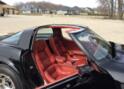
kinda stupid little thing and anticlimactic until i look back and see that original design in 1979 of oyster elegance...
These seats are the most comfortable i have sat in..
Delay times:
Did you try the new board with ALL incandescent courtesy lamp bulb(s)?
Both boards are using a resistor that slowly discharges the capacitor through the delay portion of the circuit.
My theory, if you're using LED bulb(s) the delay off time will be longer because of the cap discharge rate.
If I understand correctly, once both doors are closed and (When) the ignition key is turned on (Pnk/Blk Wire to board) the board circuit changes bypassing the delay circuit and the lamps should immediately turn off?
What I understand you are experiencing that when the key is turned on you have a second delay off time of 24 seconds?
Delay times:
Did you try the new board with ALL incandescent courtesy lamp bulb(s)?
Both boards are using a resistor that slowly discharges the capacitor through the delay portion of the circuit.
My theory, if you're using LED bulb(s) the delay off time will be longer because of the cap discharge rate.
If I understand correctly, once both doors are closed and (When) the ignition key is turned on (Pnk/Blk Wire to board) the board circuit changes bypassing the delay circuit and the lamps should immediately turn off?
What I understand you are experiencing that when the key is turned on you have a second delay off time of 24 seconds?
hi
yes i only had one led bulb i changed out months ago.. then went back to regular..my timer NEVER worked.. it functioned by door open and close AND manually by headlight switch no delay on and off..ignition off, light would NOT come on..
with new board..
as described timer works and shuts off when ignition on..36 second delay on door, and less delay when turning off ignition (light comes on now when ignition off timed)..
i did not have the stay on battery drain condition many talked about..
hi
yes i only had one led bulb i changed out months ago.. then went back to regular..my timer NEVER worked.. it functioned by door open and close AND manually by headlight switch no delay on and off..ignition off, light would NOT come on..
with new board..
as described timer works and shuts off when ignition on..36 second delay on door, and less delay when turning off ignition (light comes on now when ignition off timed)..
i did not have the stay on battery drain condition many talked about..
Nice to know you had good results with the new Willcox board.
The reason I highlighted the battery drain condition portion, if you ever start to have a drain problem don't overlook the Headlight On/Key In Ignition buzzer. These little units have a mechanical set of contacts in them that can stick together from carbon buildup.
Nice to know you had good results with the new Willcox board.
The reason I highlighted the battery drain condition portion, if you ever start to have a drain problem don't overlook the Headlight On/Key In Ignition buzzer. These little units have a mechanical set of contacts in them that can stick together from carbon buildup.
You do mean the plastic enclosed unit attached to the fuse box, right? If so I'm very glad to know that as I thought it was solid-state.
You do mean the plastic enclosed unit attached to the fuse box, right? If so I'm very glad to know that as I thought it was solid-state.
Yes,
The buzzer unit 77-78 and some 79 used part number #377596 then the number was superseded to #14004971.
Although the Buzzer did advance in the circuit it was used as a replacement years 77-82.
I bought a new unit way back and later opened up the original and found the problem.
The photo on left is my repaired 77 original and the right photo is of the #14004971 unit both showing the mechanical set contacts between 1&2.
I believe Circuit #40 (Hot At All Times) somehow was back feeding just a small amount voltage and was the cause of the drain with the contacts fused with carbon.
The contact points are #2 Circuit #237 Seat belt warning light.
I would like to add that this set of contacts are N/C. The other end of the tiny resistance wire wrapped around the contact lands at Circuit #150, the common ground. When the ignition switch is turned to on or start the Contacts should open after a brief delay turning off the seat belt light. Doesn't make sense that this caused the battery drain but cleaning the Contacts resolved the problem.
I would like to add that this set of contacts are N/C. The other end of the tiny resistance wire wrapped around the contact lands at Circuit #150, the common ground. When the ignition switch is turned to on or start the Contacts should open after a brief delay turning off the seat belt light. Doesn't make sense that this caused the battery drain but cleaning the Contacts resolved the problem.
For what it is worth, I found the timer module behind the glove box on my 79. The module is working on my test bench so I have not yet discovered why my dome lights stay on. Attached are photos of the circuit board and a schematic that I created of the circuit board. The photo of the board is flipped left to right so that you can look at the component side of the board and view the connections.
Hi, was reading in another thread about battery drain and courtesy delay came up..
back story I’ve previously fried a tach, and have never really found the issue for erratic tach sometimes with ignition on etc..
i also had great help here checking grounds cranking etc thread to no smoking gun..
so to my question..
my courtesy light works fine including the spare tire area..
also works on and off with headlight switch..
but it has no delay (which i never knew til today) and then obviously no shut off with ignition on..
it never did since i had it. Reading threads its like its bypassed..it is not..looks original.
i also replaced the dome light with led as i never liked how hot those get...worked fine once I installed correct direction..but here’s something weird..when i click off key the ignition from running or not..the led flashes for just a very brief split second.
with regular bulb it does not...
i dont see anything but wondered after reading all the threads that it could fail like its bypassed? Anything to measure? I have a dmm..
ill go ahead and try the willcox board...
thanks for input..
in transistor to be replaced is this on the photo, with this abbreviation and numbers. it works great.
Designer Imagines A Corvette That Looks More Like a Corvette Than the Corvette
Slideshow: A Jaguar designer's personal project imagines what a modern front-engined Corvette might look like if Chevrolet revisited the golden age of the Stingray.







 Courtesy light delay feature 79 question




 I think you will be fine...