



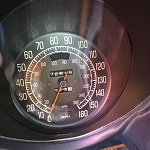

Dyno results, before and after!

Is my vette stock?? HAHA


Joined: Oct 2015
Posts: 20,209
Likes: 9,347
From: Im not allowed to tell you
2020 C3 of the Year Finalist - Modified
2020 Corvette of the Year Finalist (performance mods)
2019 C3 of Year Winner (performance mods)
2016 C3 of Year Finalist

we are talking max horsepower not along a curve, not accelerating down the road, not anything but what his max number is and what his max to the road number is.Thats all we car about is that magazine cover blurb. I've got a 800 hp motor in my Prius, its awesome!! do we care how much power it takes to accelerate from a stop light, how much power loss I experience as i melt those little 13 inch hard rubber high mileage tires as i put it in gear and take my foot of the brake...no its just the number that we are told when you get it back from the dyno. When we dont have the engine dyno numbers we want to try and figure it out. The only way to do it is to know what your drive train actually needs to spin at to get your max number at the wheel. IF it takes 100 hp to get your tires spinnning it will always take that same amount of horsepower to get there. 100hp from a 150 hp motor is not the same percentage as 100 hp from a 500 hp motor....it just cant be.

Tech Contributor


Joined: Jun 2004
Posts: 20,894
Likes: 962
From: I tend to be leery of any guy who doesn't own a chainsaw or a handgun.
we are talking max horsepower not along a curve, not accelerating down the road, not anything but what his max number is and what his max to the road number is.Thats all we car about is that magazine cover blurb. I've got a 800 hp motor in my Prius, its awesome!! do we care how much power it takes to accelerate from a stop light, how much power loss I experience as i melt those little 13 inch hard rubber high mileage tires as i put it in gear and take my foot of the brake...no its just the number that we are told when you get it back from the dyno. When we dont have the engine dyno numbers we want to try and figure it out. The only way to do it is to know what your drive train actually needs to spin at to get your max number at the wheel. IF it takes 100 hp to get your tires spinnning it will always take that same amount of horsepower to get there. 100hp from a 150 hp motor is not the same percentage as 100 hp from a 500 hp motor....it just cant be.
At the same speed or acceleration rate, the drivetrain will eat up the same absolute power (as I said before, I don't say "percentage") regardless of the engine maximum capability. I believe we have been in agreement there. (Correct me if I am mistaken.)
Just so we can be on the same page, when you say "get your tires spinning", are you taking into account time or acceleration rate to that particular tire speed?

Heel & Toe

Joined: Dec 2020
Posts: 19
Likes: 12
I have no idea how this got this complicated with acceleration down the road, air resistance, acceleration dependent stuff, or aero drag or anything else. No dyno can measure aero drag, air resistance, or any type of road resistance. So when talking dyno numbers all of these are irrelevant, LOL. Having actually owned and operated a chassis dyno at one time in my life, I saw nothing wrong with the 153 RWHP on the 165 HP rated engine if a couple of mods had been done. Just removing or emptying the pellet cat on those engines will make a huge improvement, and a manifold carb change could easily get him there... First no 2 dynos are equal, and there will be differences even on the same dyno on different days with different atmospheric conditions. An engine dyno will measure crank HP, a chassis dyno will measure rear wheel HP with all drivetrain loses.
It has been long accepted by the industry that a 15-20% HP loss is normal from an engine dyno to a chassis dyno. Most use a 15% figure as their baseline. This number has come from hundreds and hundreds of vehicles that have had their engines dynoed and then they were put on a chassis dyno to do final tuning. The tuning on the engine dyno will not be the same as when the engine is in the car with full exhaust, air cleaners, under hood hot air etc... The op is correct to assume about a 20% HP loss to what he would see on an engine dyno. We usually used the 15% figure, but it is impossible to know exactly what it is.
When an engine is on a dyno, there are no parasitic engine loses, there are no power steering pumps, AC compressors, alternators, engine fans, and even the water pump is normally run with an electric motor, There is no exhaust and no mufflers. You also do not run an air cleaner or filter, but a huge velocity stack that is open. The PS, AC, ALT, fan, and water pump take quite a bit of HP to run. When you are on a chassis dyno all that stuff is connected to the engine and is creating parasitic loses. Then you have your air cleaner, air filter and hot under hood air. On top of that you have the loses from the transmission, and if you have an auto transmission you have loses from the slippage of the converter. You have your mufflers and exhaust, your differential, and your bearings, brakes and everything else that slowly adds up. You could have a car that from an engine dyno number to a chassis dyno numbers could be less that 15% loss, but it is usually an outlier. If you have no PS, AC, an electric water pump, electric fans, an underdriven alternator, a manual transmission, a small differential, drum brakes etc... you will probably be under that 15% but normally 15-20% is about right. Auto trans and lots of engine driven accessories, full exhaust you will be closer to 20% losses, manual trans with little engine driven accessories closer to 15%.
At the end of the day dynos are tuning tools, they are not there to tell you exactly how much power your engine has, but to help you get the most out of your present combination.
It has been long accepted by the industry that a 15-20% HP loss is normal from an engine dyno to a chassis dyno. Most use a 15% figure as their baseline. This number has come from hundreds and hundreds of vehicles that have had their engines dynoed and then they were put on a chassis dyno to do final tuning. The tuning on the engine dyno will not be the same as when the engine is in the car with full exhaust, air cleaners, under hood hot air etc... The op is correct to assume about a 20% HP loss to what he would see on an engine dyno. We usually used the 15% figure, but it is impossible to know exactly what it is.
When an engine is on a dyno, there are no parasitic engine loses, there are no power steering pumps, AC compressors, alternators, engine fans, and even the water pump is normally run with an electric motor, There is no exhaust and no mufflers. You also do not run an air cleaner or filter, but a huge velocity stack that is open. The PS, AC, ALT, fan, and water pump take quite a bit of HP to run. When you are on a chassis dyno all that stuff is connected to the engine and is creating parasitic loses. Then you have your air cleaner, air filter and hot under hood air. On top of that you have the loses from the transmission, and if you have an auto transmission you have loses from the slippage of the converter. You have your mufflers and exhaust, your differential, and your bearings, brakes and everything else that slowly adds up. You could have a car that from an engine dyno number to a chassis dyno numbers could be less that 15% loss, but it is usually an outlier. If you have no PS, AC, an electric water pump, electric fans, an underdriven alternator, a manual transmission, a small differential, drum brakes etc... you will probably be under that 15% but normally 15-20% is about right. Auto trans and lots of engine driven accessories, full exhaust you will be closer to 20% losses, manual trans with little engine driven accessories closer to 15%.
At the end of the day dynos are tuning tools, they are not there to tell you exactly how much power your engine has, but to help you get the most out of your present combination.
Is my vette stock?? HAHA
Joined: Oct 2015
Posts: 20,209
Likes: 9,347
From: Im not allowed to tell you
2020 C3 of the Year Finalist - Modified
2020 Corvette of the Year Finalist (performance mods)
2019 C3 of Year Winner (performance mods)
2016 C3 of Year Finalist
I believe we are in agreement in the "big" picture, but differing in the details.
At the same speed or acceleration rate, the drivetrain will eat up the same absolute power (as I said before, I don't say "percentage") regardless of the engine maximum capability. I believe we have been in agreement there. (Correct me if I am mistaken.)
Just so we can be on the same page, when you say "get your tires spinning", are you taking into account time or acceleration rate to that particular tire speed?
At the same speed or acceleration rate, the drivetrain will eat up the same absolute power (as I said before, I don't say "percentage") regardless of the engine maximum capability. I believe we have been in agreement there. (Correct me if I am mistaken.)
Just so we can be on the same page, when you say "get your tires spinning", are you taking into account time or acceleration rate to that particular tire speed?

Had a 1976 L-82, 4-sp

Joined: Mar 2011
Posts: 5,338
Likes: 1,213
From: Some days your the dog and some days your the hydrant.
Royal Canadian Navy
The drivetrain is a set number of loss not a true percentage. If it absorbs 30 hp to turn it it doesnt matter what amount is in front of it to turn it, it will never change. So if a 195hp motor gets 165 to the wheels, then it needs 30 hp to turn all those gears and thats it, but that low a number is hard to believe if just a mechanical fan can eat 20 hp.... So a 276 rwhp would be a 306 hp motor? So without getting an actual dyno number for the original motor it would be just a guessing game. But I agree, a 350 cu motor only making 195hp would be a really low performer. I would think it takes closer to 60 to 75 hp (Maybe more, I'll have to go see if a more realistic number has been posted) to turn all those gears so that would be a more reasonable number which would get you closer to the predicted number and make the original motor a more believable 235hp base motor and this new one closer to 346hp.
Last edited by resdoggie; Dec 31, 2020 at 11:21 AM.

Team Owner


Joined: Jan 2006
Posts: 37,637
Likes: 3,118
From: Crossville TN
If the drivetrain behind the engine does not change, the losses due to that drivetrain will be the same amount, regardless of the engine. You could put an electric motor on the driveshaft and it will absorb the same amount of work (horsepower, watts, whatever measure you choose to use) regardless of the power SOURCE.

Drifting

Joined: Nov 2013
Posts: 1,572
Likes: 486
From: Loud, Raw and Dangerous 1968 327 4S in Southern California
Corvette Stories
The Best of Corvette for Corvette Enthusiasts

Top 10 Most Expensive Corvettes Ever Sold on Bring A Trailer
Brett Foote
10 Things Every Corvette Owner Needs (2026 Edition)
Michael S. Palmer
8 Most "Only Corvette Owners Understand" Quirks and Problems
Pouria Savadkouei
10 Reasons the C6 Z06 is Still A Performance Benchmark After 20 Years
Joe Kucinski
How Much Horsepower Every Corvette Engine "LOST" in 1972
Joe Kucinski
Top 10 DOs and DON'Ts for Protecting Your Convertible Top!
Michael S. Palmer
Top 10 Most Explosive Corvettes Ever Made: Power-to-Weight Ratio Ranked!
Joe Kucinski
150 hp to 1,250 hp: Every Corvette Generation Compared by the Specs That Matter
Joe Kucinski
8 Coolest Corvette Pace Cars (and Replicas) of All Time
Verdad Gallardo
Thread Starter
Burning Brakes


Joined: Dec 2017
Posts: 1,043
Likes: 414
2023 C3 of the Year Finalist - Modified
Last edited by randallsteel; Dec 31, 2020 at 12:40 PM.
Burning Brakes
Joined: Jun 2010
Posts: 1,165
Likes: 93
From: Bellmore NY
Just ordinary info... I had a couple of late 80s k5 blazers/Jimmy’s. Tbi 350 factory ratings were something like 210 hp and 300 tq. To me that should be the basic standard of what an effortless, not trying, not caring run of the mill 350 should make as a flywheel power baseline. Gm must have tried very hard to bring those numbers down to 165.
Le Mans Master

Joined: May 2007
Posts: 5,024
Likes: 1,120
From: North tonawanda NY
Just ordinary info... I had a couple of late 80s k5 blazers/Jimmy’s. Tbi 350 factory ratings were something like 210 hp and 300 tq. To me that should be the basic standard of what an effortless, not trying, not caring run of the mill 350 should make as a flywheel power baseline. Gm must have tried very hard to bring those numbers down to 165.
Last edited by augiedoggy; Jan 1, 2021 at 02:45 PM.
Burning Brakes
Joined: Jun 2010
Posts: 1,165
Likes: 93
From: Bellmore NY
I think its just showing how hard they tried to meet new emissions standards at the time.. from what Ive read power was down quite a bit on pretty much every make american car and it was just getting worse from there for the next few years for performance until it forced engineering to catch up.
Last edited by Big Block Dave; Jan 1, 2021 at 03:24 PM.
Old Pro Solo Guy

Joined: Dec 2017
Posts: 8,076
Likes: 4,430
From: Marlton NJ
I was buying my first new car at the time, 1975, and 1975-1980 were some dark years for performance cars. The Vette and the Trans Am were it. 75 was the first year for the new "save the air" catalytic convertors, and they were really bad in the beginning. The O2 sensors would reportedly only last 20-30k miles, the convertors could easily glow red-hot when run behind a carb, that typically did not have good enough fuel control, The cars kind of regularly caught leaves and grass on fire. Even the owners manuals warned you not to park over that stuff. And the first convertors were literally pellets of ?? something that was poured into the container and while they worked for air quality, it absolutely killed performance. You may have as well had a 3/4" opening for a tailpipe!. They would clog up solid kind of frequently, stopping the engine from running, and requiring replacement. If you poured those pellets out of the convertor it was like waking up a caged up tiger, that literally had a cork up his butt. Yeah we did that.
By the 1980's all of that changed. The convertors got better, the cars got fuel injection, the computers got better, and a second O2 sensor appeared. The convertors even went to low restriction honeycomb at some point. The convertors were no longer a big liability, and performance came back!
If you put a 1985 convertor on a 75 engine I would bet it would gain an easy 30-40+HP.
By the 1980's all of that changed. The convertors got better, the cars got fuel injection, the computers got better, and a second O2 sensor appeared. The convertors even went to low restriction honeycomb at some point. The convertors were no longer a big liability, and performance came back!
If you put a 1985 convertor on a 75 engine I would bet it would gain an easy 30-40+HP.
Last edited by leigh1322; Jan 1, 2021 at 03:42 PM.



Dr. Detroit
Joined: Mar 2012
Posts: 10,097
Likes: 4,027
From: New Braunfels Texas
I was buying my first new car at the time, 1975, and 1975-1980 were some dark years for performance cars. The Vette and the Trans Am were it. 75 was the first year for the new "save the air" catalytic convertors, and they were really bad in the beginning. The O2 sensors would reportedly only last 20-30k miles, the convertors could easily glow red-hot when run behind a carb, that typically did not have good enough fuel control, The cars kind of regularly caught leaves and grass on fire. Even the owners manuals warned you not to park over that stuff. And the first convertors were literally pellets of ?? something that was poured into the container and while they worked for air quality, it absolutely killed performance. You may have as well had a 3/4" opening for a tailpipe!. They would clog up solid kind of frequently, stopping the engine from running, and requiring replacement. If you poured those pellets out of the convertor it was like waking up a caged up tiger, that literally had a cork up his butt. Yeah we did that.
By the 1980's all of that changed. The convertors got better, the cars got fuel injection, the computers got better, and a second O2 sensor appeared. The convertors even went to low restriction honeycomb at some point. The convertors were no longer a big liability, and performance came back!
If you put a 1985 convertor on a 75 engine I would bet it would gain an easy 30-40+HP.
By the 1980's all of that changed. The convertors got better, the cars got fuel injection, the computers got better, and a second O2 sensor appeared. The convertors even went to low restriction honeycomb at some point. The convertors were no longer a big liability, and performance came back!
If you put a 1985 convertor on a 75 engine I would bet it would gain an easy 30-40+HP.

Jebby

Le Mans Master
Joined: May 2007
Posts: 5,024
Likes: 1,120
From: North tonawanda NY
In a forum dedicated to 40+ year old cars there isn't much left to talk about that hasn't already been discussed many times over... What does change is the owners/members here and their knowledge. So what might be a dead horse to you, some young vette owner might be learning for the first time.
At least this is a bit more enticing than reviving 15 year old threads on the topic which is not encouraged here and thus would not promote this knowledge to be "rehashed" at all unless a new discussion comes up.
At least this is a bit more enticing than reviving 15 year old threads on the topic which is not encouraged here and thus would not promote this knowledge to be "rehashed" at all unless a new discussion comes up.
Last edited by augiedoggy; Jan 5, 2021 at 11:05 AM.
Tech Contributor
Joined: Jun 2004
Posts: 20,894
Likes: 962
From: I tend to be leery of any guy who doesn't own a chainsaw or a handgun.
I have no idea how this got this complicated with acceleration down the road, air resistance, acceleration dependent stuff, or aero drag or anything else. No dyno can measure aero drag, air resistance, or any type of road resistance. So when talking dyno numbers all of these are irrelevant, LOL. Having actually owned and operated a chassis dyno at one time in my life, I saw nothing wrong with the 153 RWHP on the 165 HP rated engine if a couple of mods had been done. Just removing or emptying the pellet cat on those engines will make a huge improvement, and a manifold carb change could easily get him there... First no 2 dynos are equal, and there will be differences even on the same dyno on different days with different atmospheric conditions. An engine dyno will measure crank HP, a chassis dyno will measure rear wheel HP with all drivetrain loses.
It has been long accepted by the industry that a 15-20% HP loss is normal from an engine dyno to a chassis dyno. Most use a 15% figure as their baseline. This number has come from hundreds and hundreds of vehicles that have had their engines dynoed and then they were put on a chassis dyno to do final tuning. The tuning on the engine dyno will not be the same as when the engine is in the car with full exhaust, air cleaners, under hood hot air etc... The op is correct to assume about a 20% HP loss to what he would see on an engine dyno. We usually used the 15% figure, but it is impossible to know exactly what it is.
When an engine is on a dyno, there are no parasitic engine loses, there are no power steering pumps, AC compressors, alternators, engine fans, and even the water pump is normally run with an electric motor, There is no exhaust and no mufflers. You also do not run an air cleaner or filter, but a huge velocity stack that is open. The PS, AC, ALT, fan, and water pump take quite a bit of HP to run. When you are on a chassis dyno all that stuff is connected to the engine and is creating parasitic loses. Then you have your air cleaner, air filter and hot under hood air. On top of that you have the loses from the transmission, and if you have an auto transmission you have loses from the slippage of the converter. You have your mufflers and exhaust, your differential, and your bearings, brakes and everything else that slowly adds up. You could have a car that from an engine dyno number to a chassis dyno numbers could be less that 15% loss, but it is usually an outlier. If you have no PS, AC, an electric water pump, electric fans, an underdriven alternator, a manual transmission, a small differential, drum brakes etc... you will probably be under that 15% but normally 15-20% is about right. Auto trans and lots of engine driven accessories, full exhaust you will be closer to 20% losses, manual trans with little engine driven accessories closer to 15%.
At the end of the day dynos are tuning tools, they are not there to tell you exactly how much power your engine has, but to help you get the most out of your present combination.
It has been long accepted by the industry that a 15-20% HP loss is normal from an engine dyno to a chassis dyno. Most use a 15% figure as their baseline. This number has come from hundreds and hundreds of vehicles that have had their engines dynoed and then they were put on a chassis dyno to do final tuning. The tuning on the engine dyno will not be the same as when the engine is in the car with full exhaust, air cleaners, under hood hot air etc... The op is correct to assume about a 20% HP loss to what he would see on an engine dyno. We usually used the 15% figure, but it is impossible to know exactly what it is.
When an engine is on a dyno, there are no parasitic engine loses, there are no power steering pumps, AC compressors, alternators, engine fans, and even the water pump is normally run with an electric motor, There is no exhaust and no mufflers. You also do not run an air cleaner or filter, but a huge velocity stack that is open. The PS, AC, ALT, fan, and water pump take quite a bit of HP to run. When you are on a chassis dyno all that stuff is connected to the engine and is creating parasitic loses. Then you have your air cleaner, air filter and hot under hood air. On top of that you have the loses from the transmission, and if you have an auto transmission you have loses from the slippage of the converter. You have your mufflers and exhaust, your differential, and your bearings, brakes and everything else that slowly adds up. You could have a car that from an engine dyno number to a chassis dyno numbers could be less that 15% loss, but it is usually an outlier. If you have no PS, AC, an electric water pump, electric fans, an underdriven alternator, a manual transmission, a small differential, drum brakes etc... you will probably be under that 15% but normally 15-20% is about right. Auto trans and lots of engine driven accessories, full exhaust you will be closer to 20% losses, manual trans with little engine driven accessories closer to 15%.
At the end of the day dynos are tuning tools, they are not there to tell you exactly how much power your engine has, but to help you get the most out of your present combination.
At high vehicle speeds, the aero drag is sufficiently high to where the acceleration rate is small, reducing the amount of horsepower/energy being added to the "flywheels". At top/terminal speed, the drivetrain losses are purely frictional, as there's no additional horsepower/energy being stored into the "flywheels".
I do agree with your concluding sentence.

Old Pro Solo Guy
Joined: Dec 2017
Posts: 8,076
Likes: 4,430
From: Marlton NJ
