When you click on links to various merchants on this site and make a purchase, this can result in this site earning a commission. Affiliate programs and affiliations include, but are not limited to, the eBay Partner Network.
Just bought an LT-1. I found an old thread regarding this (2006) but figured there’s been a lot of advancements since then. I’ve read that I should stay in the 104 range.
There’s a VP fuel near me where I can get 110 drums. Is this the best option?
Would plain old 92 non-ethanol be ok?
Even considering putting in a different cam to help.
Any and all opinions and thoughts welcome.
Thanks
The ONLY reason for high octane fuels is to stop detonation..... The reason you might get detonation is from high compression. If you are looking for more "power" don't look for it in high octane fuel. The reality is, is that lower octane fuel has more power, as long as you are NOT getting detonation. If your compression is like 15:1 then you need "higher octane fuel" . I have a 327 HP with 11:1 compression and it runs well on 95 octane. I see these guys pulling up to the high octane race fuel pumps with their Honda's and Toyota's for the weekend of sport racing thinking they are getting super performance fuel,,,,, total waste of money.
Your LT-1 should not need 104 octane fuel. It may like it, but doesn't need it. If you want maximum performance, you will need more than 93 octane (to prevent detonation). If not, retard the spark a bit and run on 93.
The ONLY reason for high octane fuels is to stop detonation..... The reason you might get detonation is from high compression. If you are looking for more "power" don't look for it in high octane fuel. The reality is, is that lower octane fuel has more power, as long as you are NOT getting detonation. If your compression is like 15:1 then you need "higher octane fuel" . I have a 327 HP with 11:1 compression and it runs well on 95 octane. I see these guys pulling up to the high octane race fuel pumps with their Honda's and Toyota's for the weekend of sport racing thinking they are getting super performance fuel,,,,, total waste of money.
Some of those import guys dial up the boost alot once they get to thier event. I wouldn't be laughing too hard.
An 11-1 compression may well need more octane than you think it needs. I can show you a mild 350 that will drop 25 horsepower by dropping 6 degrees of timing. That's alot to leave on the table.
Just bought an LT-1. I found an old thread regarding this (2006) but figured there’s been a lot of advancements since then. I’ve read that I should stay in the 104 range.
There’s a VP fuel near me where I can get 110 drums. Is this the best option?
Would plain old 92 non-ethanol be ok?
Even considering putting in a different cam to help.
Any and all opinions and thoughts welcome.
Thanks
I mix ultra 93 with 112 leaded in my stock 70 LT 1. Probably overkill, but I know when it's running best.
Plus the blue gas smells great.😁
Just bought an LT-1. I found an old thread regarding this (2006) but figured there’s been a lot of advancements since then. I’ve read that I should stay in the 104 range.
There’s a VP fuel near me where I can get 110 drums. Is this the best option?
Would plain old 92 non-ethanol be ok?
Even considering putting in a different cam to help.
Any and all opinions and thoughts welcome.
Thanks
This is one of 'those' topics. Not quite the same but similar; I run my high compression L-46 on 93 octane E10. Performance and pinging were lack of understanding and improper adjustment of the carb and timing. Took me a while to sort it out - it was death from a thousand cuts, not one big problem. I imagine really high octane racing fuel masks a lot of that. The PO of my car certainly thought it did - whoever was working on the car told him it's 'today's gas' and got him out of the shop. In my experience as long as you don't let the E10 sit for more than six months it has yet to corrode a fuel line, develop any sludge, start speaking in tongues, any of that. No doubt it can but I am careful about maintenance. I usually dump a can of Seafoam in the tank before winter storage - I know it's not a stabilizer but it IS one of the few additives that actually do something. Don't think those octane boost ones do much.
The L-46 will run on good pump gas. The '70 LT-1 will not so you will need better gas. The LT-1 cam timing makes higher dynamic compression which makes it more sensitive to octane.
it was 11:1 to begin with and is .030 over. Compression gauge shows 215 psi per cylinder. Haven't had the motor open but assume it to be a near-stock cam.
All I can get around here is 91 at the pumps. I've recurved the mechanical advance and tuned the vacuum advance (Adjustable advance) , jets and power valve.
Results are it runs fine, no pre ignition at any speed. If I "putter" around too much, it needs a run thru the gears at wot, and I get some knock then, however the second time thru, it's clean.
The L-46 will run on good pump gas. The '70 LT-1 will not so you will need better gas. The LT-1 cam timing makes higher dynamic compression which makes it more sensitive to octane.
I agree 100%, It is the Dynymic Compression that one has to pay attention to!
I heavily raced my stock 70 LT1 at Auto Crosses for 27 years and drove it on the street too. (I'm a chemist and a hot rodder) Here was my tune:
I ran an aggressive 36 degree curve all in at 25-2700. Initial was around 14 IIRC Just a little vac advance, maybe 10 degrees. This is a high-performance tune, not a factory tune. I never drove it with the OEM emissions factory curve, I used the one in the Chevy Powerbook.
It liked 100 octane pump gas when that was available.
93 didn't cut it. I would add 1-2 cans octane booster, still no good. I tried a few other things, then wound up adding 3-5 gal of 114 Octane race gas. That ran great. I would keep a small gas can in the trunk.
I figured out it needed around 97-98 octane with this tune.
Finally got tired of the race gas so I figured out how to re-tune it to run on 93 octane pump gas for the street.. Wound up retarding the timing to 28 degrees total. That worked fine. Initial dropped 8 degrees to 6.
It still ran great that way, but honestly felt like it was down 20HP, it probably was. The high rpm surge was stronger on the good gas & tune.
So I would drive it 100 miles to an out of town Pro-Solo on pump gas, bump up the timing, add the can of race gas, bolt on the race rubber, and I was good for the races. Re-set the timing to drive home or around town.
I would recommend 100LL avgas. It has the octane that engine requires and the lead the pre-unleaded valve seats need.
Another upside is the fuel is very stable for long term storage and won't cause the problems associated with unleaded ethanol pump gas and carburetors.
100LL is available at my local municipal airport for $4/gal and they don't prohibit you from walking in and pumping fuel into a can. Some airports may be more restrictive.
Last edited by RatRacer; Feb 15, 2021 at 10:40 PM.
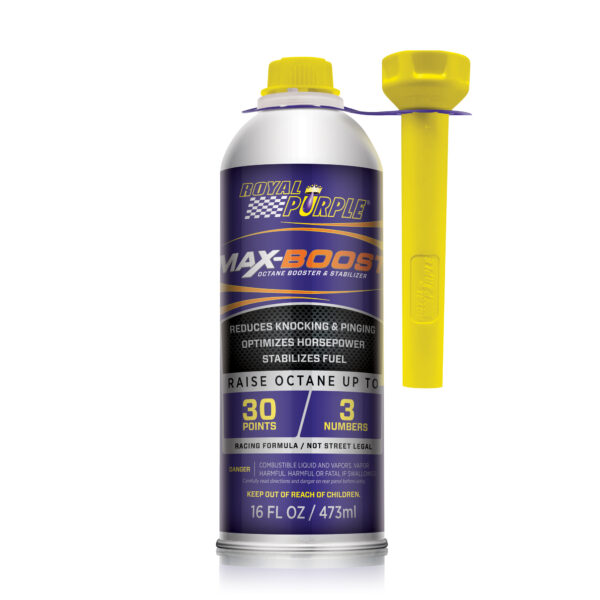
Most the auto parts store octane boosters are garbage their labels are misleading
When they say "raises it 3 points" they mean from 91 to 91.3. LOL
VP makes decent stuff, jbsblownC5 is a Torco dealer here on the forum. Just ordered a 6 pack of Accelerator, 120 bux.
Run it where the timing is supposed to be and adjust octane accordingly (after making sure the tune is spot on)
Pulling timing out, running hot to save a few dollars per tank makes no sense to me.
AVgas in a car that has a catalytic converter or O2 sensor is really bad. 100LL will ruin them. And if your car doesn't have higher that stock compression,,,, total waste of money. And there is the issue with higher altitude areas. I am at 5000 ft. Even less compression in the engine.
AVgas in a car that has a catalytic converter or O2 sensor is really bad. 100LL will ruin them. And if your car doesn't have higher that stock compression,,,, total waste of money. And there is the issue with higher altitude areas. I am at 5000 ft. Even less compression in the engine.
Correct, dont run leaded gas with O2 sensors or catalytic converters.
For a 1970 LT-1, 100LL avgas is a good option.
Last edited by RatRacer; Feb 16, 2021 at 11:52 AM.
Someone mentioned pulling timing out that the car would run hot. Well, that depends on how much. And which timing curve you start with.
Time for a little History Review:
This factory OEM timing curve was last used on a production car in the 1964 L79 327/365HP.
Interestingly it is exactly the same curve as noted in the Chevy Powerbook for many years to use for "Performance" use for all SBC.
In 1965 emission standards began, road draft tubes were eliminated, PCV valves were introduced, and the "timing retard" era began.
By 1970 here is the OEM curve for their hottest smallblock, the LT-1
BTW these two engines have near identical camshafts, both had T.I. and these are the curves from Chevy's T.I. data.
There is a reduction at idle from 10 to 8 degrees.
There is a reduction in total from 36 to 34 degrees.
The huge difference is how slowly it comes in, not until 5000, vs 2500 in 1964.
Notice particularly at your common 2500-3000 rpm zone how much timing has been pulled out.
36 degrees at 2500 (1964) to 23 degrees (1970) It lost 13 degrees! in the mid-range
BTW this 2500-3000 is where it commonly :detonates" due to low octane and near peak torque / efficiency. So a factory curve has a lot of "room" between "normal" operation and "detonation" in 1970. The 70 is a little more tolerant of octane and many different environmental conditions like desert/mountains, etc vs the 64. Unless you run the "performance" curve in it.
Then you basically add 10 degrees to all of these numbers for the vacuum canister advance, unless you are at full throttle.
So Total Advance at light load starts at 20 degrees (low rpm) and goes to as high as 46 (high rpm) That smooths the idle even more and gives you the gas mileage.
Now introduce the TSC/ CSSC setups in 70/71/72 where you put the vacuum advance on manifold vac only, one of those years, and then wouldn't let it kick in until high gear, the next year.. So you lose another 10 degrees advance at idle and/or at all rpms until high gear.
That loss of that 23 degrees of timing in the midrange is what causes all of these 71-74 "emission" motors to run hot. Hotter than their older cousins anyway. And it's exactly in the rpm range they normally run at.
I have heard some people say they can almost get away with pump gas if they have a stock ignition curve in these engines. Maybe. It is heavily retarded. But I would not bet on it for a 11:1 motor. On certain days, at certain altitudes, under 5000 rpm, yeah maybe.
However if you have a good "performance tune" timing curve in it, you will need the octane (97+ or so).
Pulling back the initial (lowering the whole curve by 6-8) saves the engine from detonation (on pump gas) and puts it somewhere near/slightly below the factory curve anyway. And it is easily switched back in like a minute or two. And it will not run hot enough more to notice. (It's only 6-8 degrees less vs the 23 degree factory experiment in 72). Easy to setup. Easy to change. But it will lose HP. (I estimated 20+HP down)
I would estimate even a factory curve would need 4-6 degree retard at initial to stop detonation at high rpm on pump gas.
Last edited by leigh1322; Feb 16, 2021 at 04:08 PM.






 1970 LT-1 Fuel Octane Question