When you click on links to various merchants on this site and make a purchase, this can result in this site earning a commission. Affiliate programs and affiliations include, but are not limited to, the eBay Partner Network.
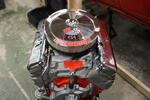
I purchased a rebuild Q-jet to use until I could get original carb rebuilt while I am getting my engine detailing completed. Also I have a new distributer for the same reason - rebuild the original and stuff back in later. The car starts and goes to high idle then dies. After feathering the throttle it will remain running well until it moves to low idle. Any sudden movement of the throttle it begins to bog down and will give a slight back fore through the carb. I did make sure #1 was at TDC with rotor pointing to # 1 plug wire. I called the place that sold me the rebuilt car and they review and rebuild if needed. I plan to put my old one back on to see if it does the same thing. Any thoughts to what the issue is - too lean - power valve not working ? Thanks
The accelerator pump is out and god knows whatever else. Put your old unit back on. Was this a commercially "rebuilt" unit? If so.....have your money refunded and move on. Even a local shop may give you the run around.......
The amount of people who really know how these carbs work shrinks by the day. It wasn't strong in the 70' and 80's either when morons would scream "Quadrabog" or "Quadrajunk"........
I just pulled a good core off my shelf yesterday, disassembled, cleaned, set new float and accel pump, reassembled and tested on my Camaro in four hours. This included an hour for chem dip.
A lot of people are putting their original carbs on the shelf these days........not sure why this is. If your unit is original and has all of the original parts, it is the best one to use and refurbish.
Let me add that there is really no such thing as "rebuilding" a carb. You clean it and freshen it with new parts but nobody is "rebuilding" ****........
If you make the carb as clean as it was new and the float/accel pump work.......99.9% of the time, it will function as intended.
The rebuilt was a from a shop in CA that was recommended - right. I plan to clean up the original carb and replace anything that requires it. Thanks for the feedback
Original Carb # 17057204 0667 AYN - Carter Q - jet
Last edited by jeff84red; Apr 12, 2021 at 10:51 AM.
Send it to Lars get it fixed.
Gets Lars' papers from him directly.
Or you can buy Cliff Ruggles' book and learn about the Q-jet.
I chose option 3. Because guess what? ultimately YOU need to know your carb if you want it to run correctly over time. It will need tuning eventually and maybe even mods depending on what you do with your engine, where you live and how you drive it.
Last edited by REELAV8R; Apr 12, 2021 at 10:54 AM.
From: At my Bar drinking and wrenching in Lafayette Colorado
If you'd like to see a list of everything that is wrong with that "rebuilt" Q-Jet you bought, just send me an e-mail request for my "Commercially Rebuilt Q-Jet Problems" paper. Commercially rebuilt Q-Jets are, almost without exception, complete junk. The builders don't even test them. Use it to practice your hook shot to see if you can hit the trash can...
Lars V8FastCars@msn.com
I was l little intimidated at of the thought of my first Quadrajet rebuild.
Took a lot of photos and recorded stock measurements.
Before rebuilding mine 2 years ago I also purchased Cliff's book and also contacted him for a kit and went with the SR kit for my 17057204.
You should also replace the choke vacuum pull-off that is separate from the kit.
Because I have 2.5" exhaust Cliff recommended his .044 rods to replace the stock 52K primary's.
The car never ran as good as it does now and I have owned it since 1982.
Here are basic Quadrajet Rebuild instruction. LINK:https://cliffshighperformance.com/wp...10/1975-up.pdf
With the exception of dropping the cold start idle speed from 1600 to 1250 RPM these factory recommended numbers worked for me.
Thanks everyone for the great advice. I cleaned my original Q-jet (Carter) and removed the rebuild one and sent it back. Car fired up and after a little timing tweak she runs great. I have the restore kit on the way and will follow the book I received from Cliff plus all the advice from everyone here. Glad to be getting my hands busy and dirty again. Cheers
Thanks everyone for the great advice. I cleaned my original Q-jet (Carter) and removed the rebuild one and sent it back. Car fired up and after a little timing tweak she runs great. I have the restore kit on the way and will follow the book I received from Cliff plus all the advice from everyone here. Glad to be getting my hands busy and dirty again. Cheers
Good job.....now keep a kit handy for when you need it.
If you have a book.....it is easy.
Like I mentioned....I can go through one and clean in 4 hours....off car and back on.....
You can too!
One thing I make certain to record when I pull the top off is the primary rod height.
Once you pull the APT screw out (adjustable part throttle) it may take a few adjustment to get the primary rods set where they should be.
Here is how I do it, others may have different ways but this is my method:
Once the top is off and gasket removed I re-align the primary rods so they enter the primary jets, (on your 17057204 they should be 77)
You will need to keep a little down pressure on the rod hanger to keep the rods in the jets.
I then press the rod hanger and power piston down until it stops.
I then take my digital caliper and measure from the top of the jet to the top of the primary rod tip.
I record both sides, they should be the same.
When I put the carb back together I now have a really good starting point for the correct APT setting and primary rod height.
Not sure that is in Cliffs book, I don't have it in front of me.
From: At my Bar drinking and wrenching in Lafayette Colorado
The problem with that is that these cars and carbs are 50 years old, and everyone who has opened up the carb over the past half-century has screwed around with the APT setting. There's not a chance in hell it's set to its correct stock setting. Setting it back where it was when you pulled the top off is just mimicking the last guy's assembly error...The challenge in all 50-year-old carb rebuilds is to find all the errors and screw-ups that people have done to the carb over its life, and correct all those errors. If you can't identify and correct the errors, slapping a carb kit in it won't do any good at all.
As an example, here is a list of the things I just found wrong with a very nice carb I received for setup a few days ago. It was not "running quite right" according to the owner, but it was running and appeared to be "correct":
Choke pulloff misadjusted - too lean
Incorrect hardware installed in throttle plate
Secondary airvalve rod altered/bent causing airvalve to stick in wide open position
Secondary actuation linkage altered, eliminating "crack-open" feature which may prevent secondary opening
Choke linkage sticky & gummed up - fast idle cam not dropping freely
Accelerator pump diaphragm swollen - pump not providing full pump shot
Choke pulloff housing broken
Extreme lean hot idle mixture setting - 19:1 air/fuel setting - carb will not idle correctly
Wrong accel pump return spring installed, limiting pump shot
Primary rod retaining spring intentionally bent/altered/mangled - spring destroyed by builder
Incorrect fuel filter installed - filter is 1967 filter
Filter installed backwards
Throttle plate gasket installed and glued on with weatherstrip adhesive
Secondary actuation spring assembled incorrectly
Primary & secondary throttle blade screws mixed up and reversed
Very low secondary rod height - Hanger bent & altered
Low speed air bleeds drilled out
If you don't identify and correct the errors and bad settings previously done, your "rebuild" is meaningless if you just record and duplicate the existing errors. In the case of this carb, the APT setting was way off, and measuring it for re-assembly would have just caused the same problem that the carb had before.
The problem with that is that these cars and carbs are 50 years old, and everyone who has opened up the carb over the past half-century has screwed around with the APT setting. There's not a chance in hell it's set to its correct stock setting. Setting it back where it was when you pulled the top off is just mimicking the last guy's assembly error...The challenge in all 50-year-old carb rebuilds is to find all the errors and screw-ups that people have done to the carb over its life, and correct all those errors. If you can't identify and correct the errors, slapping a carb kit in it won't do any good at all.
Lars
Got it, Thanks!
My Original 204 Rochester was set at 1.9935
I have (2) other 204.
Carter is 1.9935
Rochester is 2.0100
All three carbs still had the limiter caps installed.
Last edited by bmotojoe; Apr 14, 2021 at 09:25 PM.
From: At my Bar drinking and wrenching in Lafayette Colorado
Question everything.... Trust no "mechanic" (or at least very few...).
Originally Posted by bmotojoe
Got it, Thanks!
My Original 204 Rochester was set at 1.9935
I have (2) other 204.
Carter is 1.9935
Rochester is 2.0100
All three carbs still had the limiter caps installed.
The other thing you have to consider now, in addition to the fact that every screwball "mechanic" has messed around with the APT adjustment, is the difference in pump gas between the 1970's and now. Currently, pump gas at most locations in the country is "enhanced" with 10% ethanol. This will change the carb's air/fuel mixture roughly .5:1 to the lean side. So if the carb was running correctly on straight pump gas in 1977 at 14.7:1, that same carb with the same settings will be (effectively) running at the equivalent of 15.2:1 on our current pump gas. A carb now needs to be set to run at about 14.2:1 to compensate for the ethanol, so stock APT settings and other settings do not work well. You have to set up and adjust for current conditions to make the car run right.
Lars
From: At my Bar drinking and wrenching in Lafayette Colorado
I didn't take it that way at all - I'm just pointing out some issues that many people don't consider when rebuilding and setting up a carb. You can set things up "exactly" the way it was set up in 1969, and you can end up with a car that runs pretty poorly... Likewise, you can set the carb up "exactly" as it was when you took it apart, and end up with something that runs just as badly as it did before you took it apart. Back in 1977, you could disassemble a Q-Jet, without knowing anything about it, make note of how things were assembled, clean it up, and put it back together the same way it was. It would run great. Those days have been gone for about 40 years...
That's where I got the idea from, your tuning papers you sent me a few years back.
I needed a jewelers loop to actually see what you were talking about with the acceptable depth range thing...lol
That was a pain...









 Rebuild Q-Jet Issues