When you click on links to various merchants on this site and make a purchase, this can result in this site earning a commission. Affiliate programs and affiliations include, but are not limited to, the eBay Partner Network.
it isn't miles, it is years with the nylon teeth. and it was 5 to 10. then a missed shift or other high rev will strip all the teeth. we find these occasionally in 45 year old vettes cuz they were babied all their lives. it was designed-in failure point meant to make people buy a new car.
Just some proof of how bad a nylon timing gear can end.
Caught this one just in time!
Glad you replaced yours early before a big failure. I'm really surprised that yours didn't completely slip.
Mine:
Originally Posted by ddsmith60
If anyone thinks they have one of these pieces of crap in their engine, it needs to be replaced before bad stuff happens. I did the turn the crank by hand thing and the distributor had a long pause before it started moving. I rebuilt the engine and sure enough I found all the little plastic pieces in the pan and oil pump suction and a ton of slop in the timing chain due to the missing plastic. Replaced it with a Cloyes all metal gear and chain set and won't need to worry about that anymore.
Cloyes double roller is the way to go.
Originally Posted by 7t9l82
Not one of chevys best ideas for sure... Catch em early guys.
I posted a thread when mine failed to warn others. Back in the early '70's I was hearing from friends to replace the plastic coated cam gear. Of course I was like others and just waited.
Last edited by 71 Green 454; Aug 31, 2021 at 11:22 AM.
See this (linked) excerpt from a 1977 Pop Mech magazine ... where Smokey Yunick writes about BOTH Nylon cam sprockets AND checking slack via distributor's rotor ... priceless.
See this (linked) excerpt from a 1977 Pop Mech magazine ... where Smokey Yunick writes about BOTH Nylon cam sprockets AND checking slack via distributor's rotor ... priceless.
I wish I had not read the part where he says he has used them in his racing cars and has had little trouble with them. Just knocked the guy down about four notches on my legend meter.
Jebby
Last edited by Jebbysan; Aug 31, 2021 at 12:31 PM.
Concerning this not being one of GM's better ideas, one needs to consider this not by today's standard of vehicle lifetime, but by the standard of the 1960's through about 1980. As Heads Up said, any car with 90k back then was ready for the bone yard. So, the nylon gear was appropriate. Here's a post from my thread on a timing chain replacement.
Most times engineers do not design something to fail in X time. They will design stuff to a minimum life. Given that most cars in the 70's and early 80's were rust buckets by the time they had a 100k miles on them, there wasn't a lot of value in designing a timing set to go more than that. And this isn't just an American car thing. Consider the great Honda reliability mystique. A wonderful thing. But well into the 2000's, and maybe still, I don't know, on their engines if you failed to replace the timing "belt" at 60,000 miles (80k in later models) you would find yourself replacing an engine instead. And that was a $600 job back 20 years ago. So, whose timing set was better?
Don't take this to mean I think this was a good timing set. But looking at the lifetime of the rest of the car's components, there was a good chance it would outlast the useful life of the car. The reason it's a problem for us is that these survivor vettes may have racked up a lot of miles, but they weren't often out in the rain, and snow, and salt. The 87 Olds I had that ate its 3800 V6 thanks to one of these plastic toothed cam sprockets had 111,000 miles. At that point though it had rust holes right through the rocker panels and lower fenders both front and back, suspension was in sad shape, etc. I bet most of the cars of that vintage and earlier still had the original plastic toothed sprocket when they were junked.
If you go to my thread you'll see that at 90k miles on my vette there was very little wear on and only a couple cracks in the nylon teeth. This might be because I always used STP back then when oils were not as good as today.
On the issue of replacement I used an Edelbrock double roller. Per my thread, there is some bulge on block behind the cam sprocket which will need to be ground down some to clear the wider chain.
Last edited by vince vette 2; Sep 1, 2021 at 12:16 PM.
Why are we complaining about a gear that actually lasted 40+ years? The all-steel replacement cam gear makes the timing set much more durable. Then all you have to worry about is chain stretch from use. Age will have no effect on it.
Chevy Power Manual recommended cam timing gear. Also used for HD marine applications. If you have your timing cover off you should put one of these gears on to replace the plastic toothed gear. If the chain is shot you can do that while you are at it too.
it isn't miles, it is years with the nylon teeth. and it was 5 to 10. then a missed shift or other high rev will strip all the teeth. we find these occasionally in 45 year old vettes cuz they were babied all their lives. it was designed-in failure point meant to make people buy a new car.
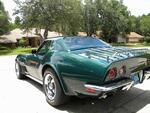
I disagree. I drove my 80 like a banshee since I got when I was 21 in 1980. I'd push it to 6000 RPM just because I was stupid and didn't realize it would get to 60 fastest if I just let it shift itself which it did around 5,200 RPM. I drove it regularly for 10 years, then intermittent for the next 10 - that's 20 - still didn't break. Then hardly drove it for 15 years. Then put on a few hundred miles over the most recent 5 or 6. That's 41 years, still didn't break. And here's a photo of it at that point.
41 years, 90k miles - how'd that happen.
And that's not a one off. My cousins had a '74 also bought new. One of them was 18 years old when he bought it. 2 years later he sold it to his brother who was 16 years old at the time, same age as me. Imagine highschoolers in a vette. Believe me, we beat it, yes we. My brother had it one day for running around our high school. I had it for a couple dates. We put headers on it and ran it with open headers until for a few days. Later we snapped a motor mount. Then blew the TH400 tranny out of it. In '79 my cousin was in college in Vegas and wanted the car out there. Covered all my expenses to drive it out there from NY. I was 20 years old - How to you think I drove it. He kept it for another 5 years then sold it still running.
Basically my whole extended family was driving GM cars - the cousins I mentioned above owned a Chevy dealership. I don't recall a single one ever toasting an engine due to cam sprocket failure - and we would have known since my grandfather and his cousin owned a garage, so I pretty much knew what all my extended families cars were up to. The only one I ever saw fail was in my own 1987 Delta 88. And per my previous post that was at 111k miles and 11 years old, at which point it was a rusted hulk.
The gear did it's job relative to the expected lifetime of cars of the era.
Chevy Power Manual recommended cam timing gear. Also used for HD marine applications. If you have your timing cover off you should put one of these gears on to replace the plastic toothed gear. If the chain is shot you can do that while you are at it too.
I see where the steel GM 340235 cam timing gear is still available but the 346261 timing chain is not available anymore. What chain is a suitable replacement?
Use Cloyes 9-1100 Street True Roller for small block
9-1110 for big block
9-1145 for small block factory roller
As far as it being a bad design....that answers itself.....in the 80's about everyone I knew had one fail.....100,000 miles was the number....some sooner. Add a cam and better springs and you are flat out just an idiot for using it.
Not worth debating as it didn't do the number one job it was supposed to.....cut down on noise. It makes me laugh how GM and others thought they could run these reliably......they must of been in contract with manufacturer and couldn't get out. Just a complete piece of **** idea that we are all glad is dead.
I don't care what Chevy Power book says either....that single chain is a piece of **** too.
I disagree. I drove my 80 like a banshee since I got when I was 21 in 1980. I'd push it to 6000 RPM just because I was stupid and didn't realize it would get to 60 fastest if I just let it shift itself which it did around 5,200 RPM. I drove it regularly for 10 years, then intermittent for the next 10 - that's 20 - still didn't break. Then hardly drove it for 15 years. Then put on a few hundred miles over the most recent 5 or 6. That's 41 years, still didn't break. And here's a photo of it at that point.
41 years, 90k miles - how'd that happen.
And that's not a one off. My cousins had a '74 also bought new. One of them was 18 years old when he bought it. 2 years later he sold it to his brother who was 16 years old at the time, same age as me. Imagine highschoolers in a vette. Believe me, we beat it, yes we. My brother had it one day for running around our high school. I had it for a couple dates. We put headers on it and ran it with open headers until for a few days. Later we snapped a motor mount. Then blew the TH400 tranny out of it. In '79 my cousin was in college in Vegas and wanted the car out there. Covered all my expenses to drive it out there from NY. I was 20 years old - How to you think I drove it. He kept it for another 5 years then sold it still running.
Basically my whole extended family was driving GM cars - the cousins I mentioned above owned a Chevy dealership. I don't recall a single one ever toasting an engine due to cam sprocket failure - and we would have known since my grandfather and his cousin owned a garage, so I pretty much knew what all my extended families cars were up to. The only one I ever saw fail was in my own 1987 Delta 88. And per my previous post that was at 111k miles and 11 years old, at which point it was a rusted hulk.
The gear did it's job relative to the expected lifetime of cars of the era.
Pretty much every GM product from mid 60's through the 70's
From the NCRS site dated October 2015
Just so everyone understands this. ALL 1966-91 Corvette PRODUCTION small blocks used an aluminum camshaft sprocket with nylon teeth, a powder metal crankshaft sprocket, and a Morse-type chain. ALL, every one ever made. GM ceased selling the nylon tooth camshaft sprocket in SERVICE more than 40 years ago in favor of the cast iron sprocket. But PRODUCTION applications used the nylon tooth. If one finds a 1966-91 small block that doesn't have one, then that engine has a replaced sprocket.
ALL 1965-74 Corvette big blocks used an aluminum, nylon toothed camshaft sprocket, a powder metal crankshaft sprocket, and a Morse-type chain. This includes L-88, ZL-1 and LS-6. GM NEVER offered a cast iron camshaft sprocket or steel crankshaft sprocket for big blocks in OEM SERVICE. The only sprockets ever available were nylon camshaft and powder metal crankshaft. If one finds anything but the foregoing in a 1965-74 big block, then it's been replaced with non-GM parts. For the better, of course.
there are some exceptions to the rule, but whenever i saw an engine cranking and saw accel pump gas blowing up out of the choke horn, i knew teeth sheared and chain jumped. and this was in the mid-late 70's. maybe they made better nylon teeth aftyer the 60's-early 70's ones.
Last edited by derekderek; Sep 2, 2021 at 09:24 AM.
I see where the steel GM 340235 cam timing gear is still available but the 346261 timing chain is not available anymore. What chain is a suitable replacement?
The new GM number for the HD chain is 14087014 but I just looked for one and the going price has gone out the roof so it might be time to consider alternatives.
New engine take-off timing sets from GM circle track crate engines were available 2 years ago and they were affordable at that time. I just can't justify the current cost for these anymore. Keep your eyes peeled and you may find a good deal.
I actually bought a Cloyes C-3001K replacement timing set and it looks like a screaming bargain by comparison. Steel gears and heat treated chain. Should work well on your flat tappet engines.
Aluminum.... You sure were lucky. Mine made it to 49 1/2 years and 55,380 miles.
I think the big issue on these was how many thermal cycles. Since the plastic expands at a different rate than the metal, each thermal cycle is another stress cycle. Ten 10 mi trips is 10 times worse than 1 hundred mile trip. In my case during the heavy driving years I lived in TX, FL (a couple months), NY, and PA, and traveled a lot between them visiting family. And a lot of the time I had other cars for daily driving. So likely half or more of the 90k miles on the vette were from trips over 100 miles. Thus I probably had a lot few thermal cycles at 90k than most people.
Also, it wouldn't surprise me if the wear on the teeth is not continuous, but instead they look good like mine for some period and then fail catastrophically. You can see the cracks on some of teeth in mine. I suspect once one of them snaps, the ones on either side would go to hell pretty quickly and it would progress rapidly from there. In other words, maybe I was 10k miles from a problem hitting the 100k magic number in Jebby cited in his experience. Or maybe I was just 1 mile.
I mentioned in a few other threads that my job is failure analysis, so I can fun with this all day. But on whether or not it was good design, certainly not by today's standards. But back then it provided the lifetime most people expected. My only real bitch about the design in general was that unlike the Hondas which listed timing belt replacement at 60k miles, GM never listed a timing set replacement at say 80k. Despite my 87 Delta 88 being a rust bucket at 111k miles, it still ran well and got be back and forth to work. I would have been OK dropping a couple hundred into it to keep going for a couple more years.
Last edited by vince vette 2; Sep 2, 2021 at 09:07 PM.

































 You sure were lucky. Mine made it to 49 1/2 years and 55,380 miles.