When you click on links to various merchants on this site and make a purchase, this can result in this site earning a commission. Affiliate programs and affiliations include, but are not limited to, the eBay Partner Network.
Got to replace the alternator in my car looks like it might be original delco remy 1100 142 k63a looking at auto zone they seem pretty cheap 34 /74 for delco has anyone use the off the shelf reman . I looking for temporary solution because I think I going to send this one off to be restored with all new parts and dated code correct diodes. About 260 with shipping . I also looked at summit and all I see is one wire internal regulators not sure how that works . What happens to the existing regulator and associated wiring any on-site should be great
2020 Corvette of the Year Finalist (performance mods)
2019 C3 of Year Winner (performance mods)
2016 C3 of Year Finalist
If you go one wire you can buy a plug in adpater or make one that bypasses the external regulator. If you go higher voltage, say 100+, then you need to remove the original alternator power lead, tape it off and go with a bigger gauge wire to the battery lug on the starter. Leave the rest of the wiring alone to plug on the firewall.
Are you leaving the car all original or upgrading things like HP. Cooling, alternator output, lighting, suspension, etc? All of that can be upgraded with no permanent changes. Just lots of storage crates for the old stuff
If you go one wire you can buy a plug in adpater or make one that bypasses the external regulator. If you go higher voltage, say 100+, then you need to remove the original alternator power lead, tape it off and go with a bigger gauge wire to the battery lug on the starter. Leave the rest of the wiring alone to plug on the firewall.
Are you leaving the car all original or upgrading things like HP. Cooling, alternator output, lighting, suspension, etc? All of that can be upgraded with no permanent changes. Just lots of storage crates for the old stuff
I not so concerned with original with the exception of the body . As for the rest I’m more concerned with proformance and reliability . The car has some up grades all ready the motor has been given a mild cam not sure what else it has and edelbrock intake Holley electric fuel pump and a unknown up dated distributor. I only owned the car a couple weeks but feel that it may need a high torque starter as it is struggling at start . Speedometer is dead and Gauges an light switch seem to be in need of replacing dash lightsI are dim and both gauges and light flicker when touching the light switch so I think new Dakota anolog/digital gauges might be on the future and of course the radio dead so the joy of owning 54 yr old car begins
Thank you for your input here . I’m going with rescue Rodger here, ordered a summit racing 100 amp internal regulator they have a wire kit they claim to be fairly plug and play to by pass reg. As for a high torque starter couldn’t order one because I did not know how many teeth I have on my fly wheel . Can only guess because not sure anything has been done to it or the clutch it does have a hurst shifter so going to have to count I guess thanks again
I too have a 1968 C3 made in October of 1967. I switched to a larger alternator many years ago and have learned a few things.
On the 1968 Corvette All of the power made by the alternator goes through the dashboard's ammeter which as you probably remember is set up for +40 to-40 amps. Pushing 100 amps through the factory charge wiring will not work very well. I added a 4 gauge wire going from the alternator output to the starter motor Battery Positive wire. This now allows the power to get to the battery without too many problems but presents other issues.
When I start the Corvette with the wiring like it is the fuse panel does not get any power as it comes from the alternator to the Horn relay and from there to the fuse panel. To make the fuse panel work I had to add a wire from the alternator output to the horn relay. But when you do this the fuse panel is powered 24/7 and can draw current from the battery. I currently use a 40 amp relay that gives power to the Horn relay while activated allowing the fuse panel and dashboard to see full power.
I was concerned about pushing the 100 amps through the wiring system designed for a fraction of the power. The best thing to do would be get rid of the ammeter and replace it with a larger power capacity ammeter or better yet an accurate volt meter. My car started life as a L71 so it came with a 42 amp alternator which would not keep up with my electric fans let alone the EFI system I installed on the beast. Having a 100 amp alternator is great on these older Corvettes but we need to be sure that we are not making a future problem by forcing too much power through the wiring harness.
Electricity like water will seek the path of least resistance and I just want to be 100% sure it is going where I want it to go.
The power does NOT all go through the ammeter. It is a parallel monitoring set of leads to the ammeter just for approximating amps. You can actually take the ammeter out of the wiring and everything will still work (well, except for the ammeter).
Originally Posted by ctmccloskey
Hello there Redrocketremembered,
I too have a 1968 C3 made in October of 1967. I switched to a larger alternator many years ago and have learned a few things.
On the 1968 Corvette All of the power made by the alternator goes through the dashboard's ammeter which as you probably remember is set up for +40 to-40 amps. Pushing 100 amps through the factory charge wiring will not work very well. I added a 4 gauge wire going from the alternator output to the starter motor Battery Positive wire. This now allows the power to get to the battery without too many problems but presents other issues.
When I start the Corvette with the wiring like it is the fuse panel does not get any power as it comes from the alternator to the Horn relay and from there to the fuse panel. To make the fuse panel work I had to add a wire from the alternator output to the horn relay. But when you do this the fuse panel is powered 24/7 and can draw current from the battery. I currently use a 40 amp relay that gives power to the Horn relay while activated allowing the fuse panel and dashboard to see full power.
I was concerned about pushing the 100 amps through the wiring system designed for a fraction of the power. The best thing to do would be get rid of the ammeter and replace it with a larger power capacity ammeter or better yet an accurate volt meter. My car started life as a L71 so it came with a 42 amp alternator which would not keep up with my electric fans let alone the EFI system I installed on the beast. Having a 100 amp alternator is great on these older Corvettes but we need to be sure that we are not making a future problem by forcing too much power through the wiring harness.
Electricity like water will seek the path of least resistance and I just want to be 100% sure it is going where I want it to go.
Well after giving thought to all the above suggested fixes. I chose to find a 1100696 alternator that was original to the car it was remanufactured. I was afraid of all the hurdles with the 100amp up grade and could not find a volt gauge replacement for the altimeter . Back to what was supposed to be in it . It is in but on first testing at the battery 12. 2 key off 12.2 running checked all my wires all good checked the wires at the regulator all good read everything I could than opened the case everything looked good tap on the contacts checked at battery a 13.8 volt at idle 14 at 2000 rpm lights on at idle 13.4 long story now the question should I try adjusting the regulator screw in to see If I get more like 14-14.5 volts ? Thank you guys
Last edited by Redrocketremembered; Feb 18, 2022 at 07:36 PM.
Reason: Spelling
Designer Imagines A Corvette That Looks More Like a Corvette Than the Corvette
Slideshow: A Jaguar designer's personal project imagines what a modern front-engined Corvette might look like if Chevrolet revisited the golden age of the Stingray.




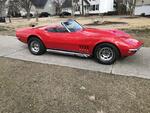

 68 alternator replacement