When you click on links to various merchants on this site and make a purchase, this can result in this site earning a commission. Affiliate programs and affiliations include, but are not limited to, the eBay Partner Network.
I found some unsprung weights in the Parts catalog for various years of C3 Corvettes. These weights are for "base cars".
I had always heard that the later cars were "heavier" and I was curious how much, and why?
Any idea what kinds of changes made these cars heavier?
I just can not believe that the bumpers alone weight that much.
Didn't the later cars have more "standard" equipment as well?
A 72 base car would be an L48 SBC, manual trans, steering, brakes & windows, and an aluminum radiator with aluminum shroud. Very basic. Not even a radio.
I am not as well versed on the later years.
Interesting and piqued my curiosity for weight to base power over the years. I pulled the Curb Weights and HP from https://corvettestory.com/specs/. This curb weight info reflects full fluids including fuel. Since fuel tank capacity changed over the years, as I recall, I didn't want to add the same weight to each year.
2025 c3 ('74-'82) of the Year Finalist - Unmodified
2023 C3 of the Year Finalist - Unmodified
2022 C3 of the Year Finalist - Unmodified
2020 C3 of the Year Finalist - Unmodified
It was mainly the bumpers. The brackets added a lot.
Side door beams came in '73....there's some more.
Also in '73 they started using a tar based undercoating in the fender wells.
Steel floors in '76...
It was mainly the bumpers. The brackets added a lot.
Side door beams came in '73....there's some more.
Also in '73 they started using a tar based undercoating in the fender wells.
Steel floors in '76...
The massive front steel vacuum reservoir/front frame extension/bumper support as added in 1973. (1975-1979 shown below)
Interesting and piqued my curiosity for weight to base power over the years. I pulled the Curb Weights and HP from https://corvettestory.com/specs/. This curb weight info reflects full fluids including fuel. Since fuel tank capacity changed over the years, as I recall, I didn't want to add the same weight to each year.
We're a heavier species now than 50 years ago, that's for sure!
I don't think that'll make much of a difference comparing to the 2023 C8... even the base model = Aye Carumba!
Any idea what kinds of changes made these cars heavier?.
How much time ya got?
The rubber bumpers did indeed add a LOT ov weight, and right where you dont want it, at the polar ends... thus making the extra 150lbs or so seem like even more to the driver. As a general rule, cars within the same iteration (ie: all C3's, or all 68-72 Novas, all 70-74 E-bodies, etc.) gain weight every year. The C3 started out as a 3060lb car. By 1977 (the heaviest year), it had porked up to about 3450lbs, but then it began to get lighter. This almost never happens. This is one thing in my opinion that makes the C3 so interesting. The CURB weights dont reflect this, hence the confusion, because in '78 the C3 grew a considerably larger gas tank... adding about 40lbs ov fuel that the '77 did not have. Adjust for that and the '78 is actually about 40lbs lighter than the '77.
In 1980 things got really interesting. Because Detroit refused to actually try and build an efficient engine, and they needed a drastic boost in gas-mileage, they instead took almost 200lbs out ov the car. The '80, even with all ov its new safety mandates, compulsory equipment, luxury, and a few once-options that were now standard equipment, was now roughly as heavy as the far simpler, far older 1972 car. This is a massive deal. In '81 they lost even more weight, as some got the fiberglass rear leaf, and that was another 35-40lbs gone, depending on who you ask. The '81 car was now roughly as heavy as a 1970 Vette.
Over the years they shaved weight off ov pretty much every part ov the car. The obvious stuff aside (like the rubber bumpers), here's a well-incomplete list:
Anorexia
The AC option, if you have it, as a whole went from nearly 100lbs in '70 to under 60lbs by '79.
The rear-end/suspension lost a ****-ton ov weight in '80 when they went from iron to aluminum/fiberglass. Something like 55lbs, or closer to 100lbs if you count the '81 FG leaf.
The doors gained safety beams in 73, which added nearly 30lbs to the car. However, by '80, the doors themselves were lighter, as was the glass in them, enough to almost negate the gain.
The spare and tub had lost 15lbs as time went on (73 i think?).
The T-tops got lighter at some point (and this I would like to know when).
If you got the newer aluminum rims, thats 33lbs lighter than the steel/caps/rings. BUT... tires got heavier in '73 when they tossed the bias for radials.
In '80 ALL the fiberglass front to back got lighter. The frames also got thinner (though i have also read that they did the frame in '76?). Even the glass got lighter. This was a big part ov the massive '80 year loss.
In '79 the newer seats lightened the rig by about 25lbs.
They went to a lighter battery in '76.
Even smaller things like power windows lost had lost weight by '80.
Gluttony
The 4-speed became standard in '70, which added a little bit over the 3-speed that was used to calculate shipping weights.
The interior fattened up in '70.
Extra sound deadener (in and out) in '73.
Shoulder belts and resonators in '74.
I'm not sure, but i would imagine that the single-cat into duals exhaust system in '75 added weight over the earlier duals.
In '76 PS and PB became standard, affecting shipping weights (that were typically done with non-power cars).
Bigger gas tank (up 7 gallons) in '78. But... the spare/holder lost some weight this year.
The wiring harnesses definitely fattened up from 68 to 82... but i dont have figures for this. I'd imagine its significant.
These are just the bigger changes... there is a LOT more...
You could look at it like this. Technology dropped about 340-350lbs off the car in the span ov 14 years..
At the same time, safety mandates (mainly), and luxury added about 330lbs from 68 to 81.
All my numbers/calculations are in shipping weight, ie just 'wet' enough (full fluids, maybe a gallon ov gas) to drive a mile. Curb weights can confuse matters. I didn't bother to collect data on the 82 cars, so that might skew things a hair, but i'd guess not much.
Heh... i could get into detail here, but i'll spare ya...
Last edited by Pale Roader; Mar 27, 2022 at 05:57 AM.
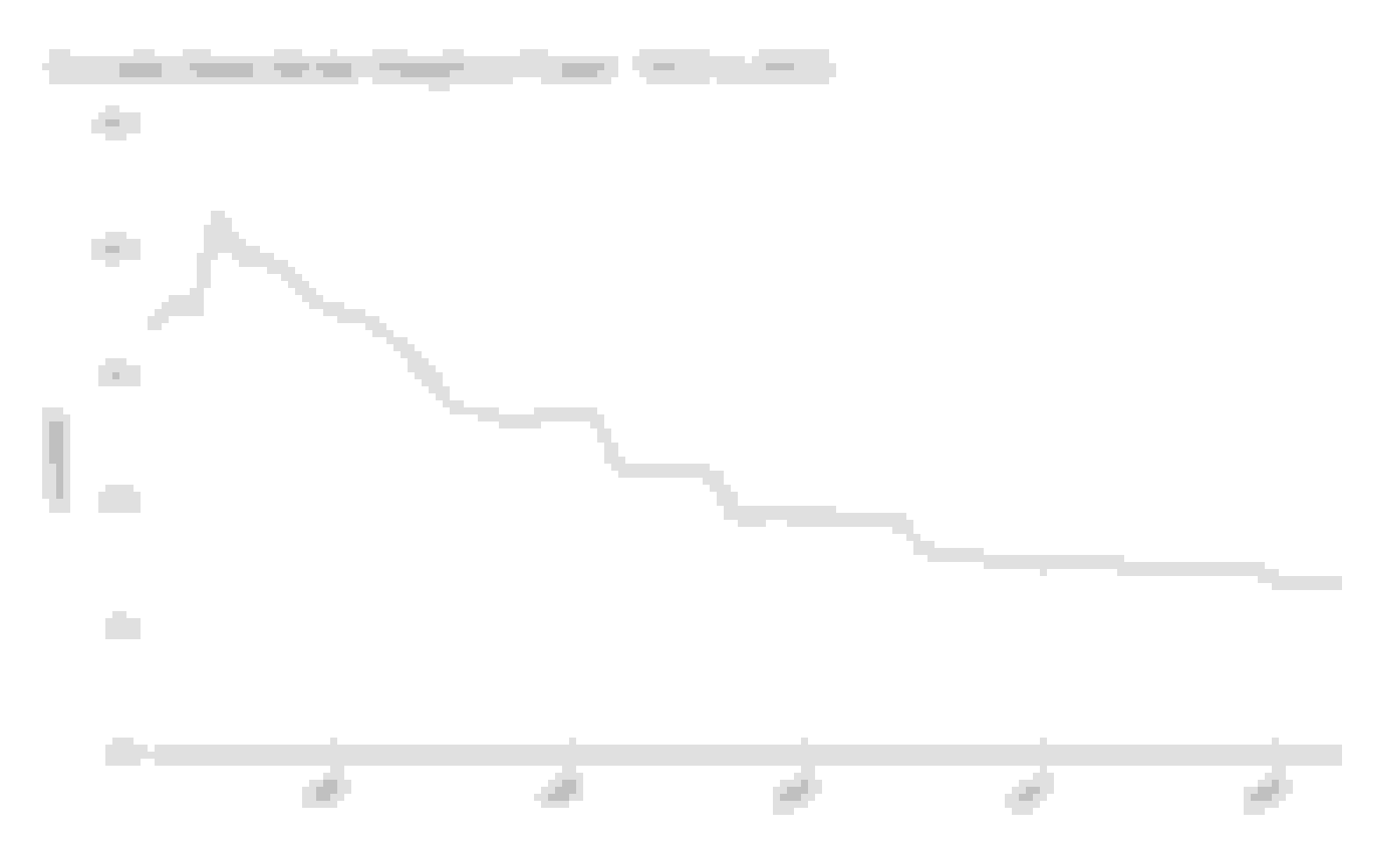
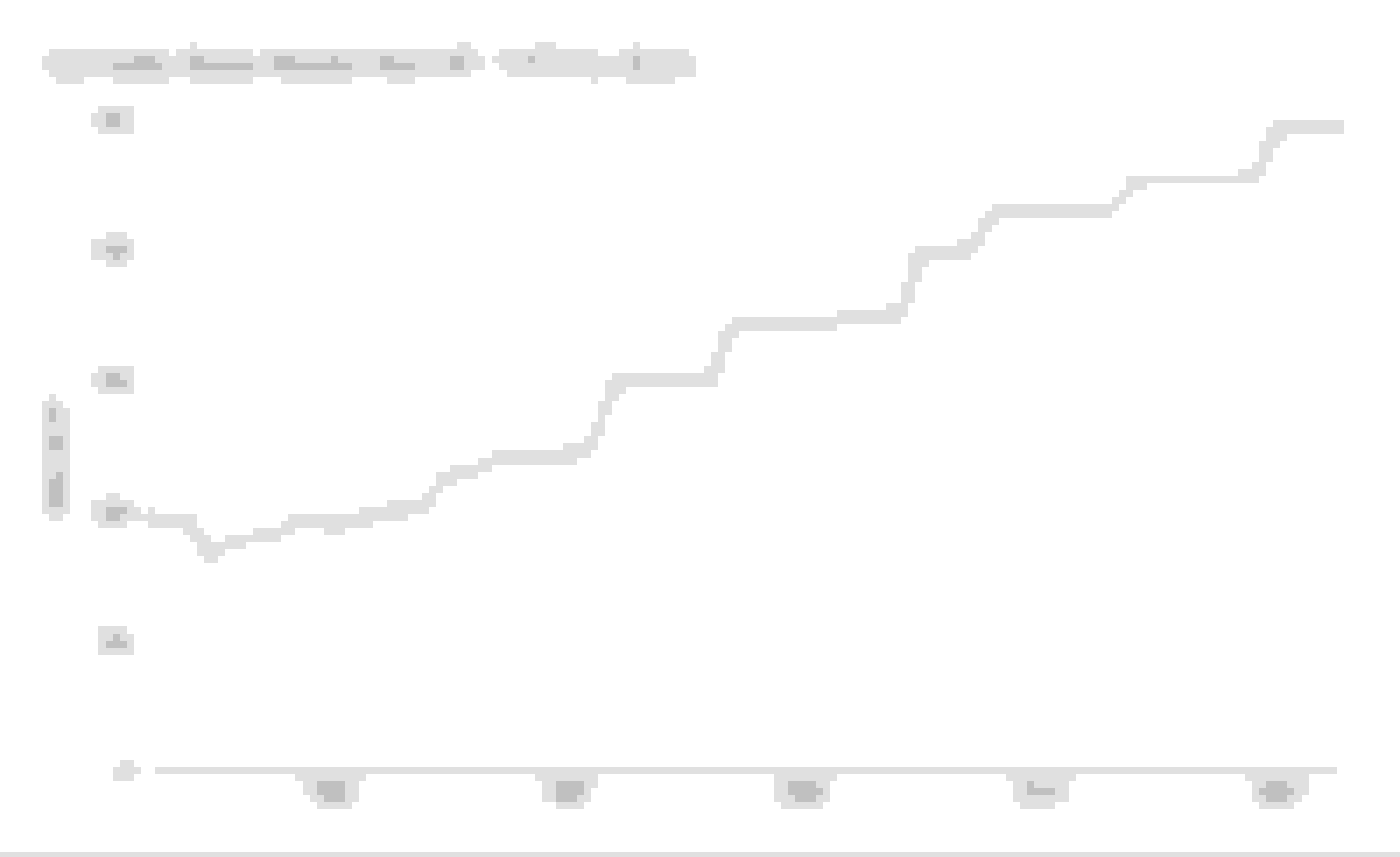
Well, apparently too much; I should be outside diagnosing my C2 wiper motor. However, your detailed reply prompted me to think about how plastics and aluminum have really taken over mainstream auto design. Combined with computerized design, manufacture, and operation, all engines have become much more powerful. Now I had to see how the base-model weights to power played out over the last 50 years. (I attempted to maintain common weight, but the last few years only list dry weight, so those # would actually be a smidge higher.)
The weight of the cars has maintained a surprisingly consistent range. I assumed the models of the last 20 years would be getting much lighter, but that's just not so. With all of the aluminum and plastics, why has the weight not diminished more? The standard equipment increasing over time; i.e., what used to be an option and not included in a base model's weight is now standard?
Obviously, here is where the weight to power figures are most affected. I think this gain is primarily computerized technology in all aspects of design, manufacture, and operation. You can clearly see the upward swing occurring in the mid-'80s when mainstream computing became widely available and historically much more affordable for all aspects of application.
Last edited by barkingrats; Mar 27, 2022 at 07:05 PM.
Well, apparently too much; I should be outside diagnosing my C2 wiper motor. However, your detailed reply prompted me to think about how plastics and aluminum have really taken over mainstream auto design. Combined with computerized design, manufacture, and operation, all engines have become much more powerful. Now I had to see how the base-model weights to power played out over the last 50 years. (I attempted to maintain common weight, but the last few years only list dry weight, so those # would actually be a smidge higher.)
The weight of the cars has maintained a surprisingly consistent range. I assumed the models of the last 20 years would be getting much lighter, but that's just not so. With all of the aluminum and plastics, why has the weight not diminished more? The standard equipment increasing over time; i.e., what used to be an option and not included in a base model's weight is now standard?
Obviously, here is where the weight to power figures are most affected. I think this gain is primarily computerized technology in all aspects of design, manufacture, and operation. You can clearly see the upward swing occurring in the mid-'80s when mainstream computing became widely available and historically much more affordable for all aspects of application.
Your charts would be even more interesting if you included '67 & up when the cars had hp numbers closer to modern Vettes. Since the weight didn't change dramatically at both ends of the time scale, the line should be around the same place at both ends.
Interesting and piqued my curiosity for weight to base power over the years. I pulled the Curb Weights and HP from https://corvettestory.com/specs/. This curb weight info reflects full fluids including fuel. Since fuel tank capacity changed over the years, as I recall, I didn't want to add the same weight to each year.
So, an '82 yields very similar ratio as the '72.
Great, now the 82 guys will be trying even harder to convince us the 82 is better than bumper cars. lol
I found some unsprung weights in the Parts catalog for various years of C3 Corvettes. These weights are for "base cars".
I had always heard that the later cars were "heavier" and I was curious how much, and why?
Any idea what kinds of changes made these cars heavier?
I just can not believe that the bumpers alone weight that much.
Didn't the later cars have more "standard" equipment as well?
A 72 base car would be an L48 SBC, manual trans, steering, brakes & windows, and an aluminum radiator with aluminum shroud. Very basic. Not even a radio.I am not as well versed on the later years.
I see a problem at the end of that chart that makes me question the entire table.
"See GAWR Sticker" is a total misunderstanding of what GAWR means. That's the maximum load carrying capacity of the axle (front or rear). If you load the car over that weight on the axle, it's overloaded. That number has little to do with what you'll see on scales if you actually weigh the car. It'll never exceed those numbers on the scale, but it shouldn't even be that close to those numbers. Fully loaded with everything it's rated to carry (passengers, cargo, full tank of fuel), it has to be under that number, and often there's a safety margin in that number of more than 10%.
Just checking a single year, 1975, on some information sources that I've found to be fairly reliable, I'm finding curb weight (shipping weight + full fluids) to be 3,532 for the 4 speed manual and 3585 for the 3 speed auto transmission cars. not including many options. Your chart is unclear about transmission and other options in the "curb weight" figures. fuel tank capacity changed over those years, as well, so the pounds added for a full tank of fuel should not be constant, but in that chart in the opening post it is shown as a constant 130 pounds.
Many of the other charts presented here appear to be more accurate.
Well I figured this would start a conversation, and it did.
I pulled my data from GMs own Parts manual, from the spring selection section.
It was the only time I had seen all this data at one time, on one page, from the original source (GM).
I had never seen the data from the Corvette Story site before. And I have no way to authenticate it's accuracy. But it is a secondary source at best, and it does not reference where it got it's data from. As a scientist I have a problem with that. Now I am sure it came from GM, but which GM source?
One could go thru the GM Historical Archives, year by year, and pick out the curb weight from the AMA documents prepared by that are copied there. That would be the most accurate source of information, and from the primary source, but quite laborious.
Perhaps that is what someone did on the Corvette Story site. Unfortunately they do not reference their source.
Regardless, I find it interesting that you can get two different weight numbers for the same car, even from the primary source, GM.
GMs own spring selection "base car weights" do vary slightly from that published for the AMA. I only checked for my own 1972 model, but they do vary slightly.
I find it interesting that the curb weights in Post #1 and in Post #5 are different, since they both come ultimately from GM.
I know the bumpers added some of the weight increase, but I am also sure that making some options now standard added some to it, as well as more required safety and emission equipment.
This thread has been a good one to document many of the changes over the years.
With some more effort, someone could put together a list of curb weight each year, with running changes, and then we could estimate what some of that stuff added.
But you would never know for sure unless the two parts were measured back to back.
Last edited by leigh1322; Mar 28, 2022 at 03:48 PM.
It appears that adding both the rubber front bumper, and its supports, the door guard beams, and a new hood, with a flapper valve, and removing the aluminum wiper door, in 1973 added 102 lbs to the car.
And then adding the rear rubber bumper in 1974, and all it's brackets, actually made the cars weight go down by 17lbs. WT*? Go figure!
I have posted my list here several times over the year. My research to classify each year/model in the order of performance, power to weight.I still haven't finished this. Not sure if this was my most current work, but here is one share from 2015.
Here is my general list. I have a more detailed one but too many variations and variable and reasons why I place them where they are and it would take too long to type all of my research, this is just a quick summary list and this is for a perfect hook up launch and shifting up the 1/4:
and so on to L-75's and other bases etc.. a bunch of them. I am already tired of typing!
and so on, I need to add in LS-4'S FROM 73 AND 74 and L-82's etc. Just too much typing. Maybe later I will finish this list out on all of them, if everyone is nice to me! Need to add in C1 cars too.
but this list is considering car weight, tire size, head flow, carb, every factor to place them on this basic list of my creation.
Thus sorry if your favorite RPO- don't rate as high as you thought, it should get beat by what is placed higher on my list!!!!!!!! But I am open to opinions and reasons that would lead to revising this for the good of all mankind.
Your charts would be even more interesting if you included '67 & up when the cars had hp numbers closer to modern Vettes. Since the weight didn't change dramatically at both ends of the time scale, the line should be around the same place at both ends.
I agree it would be great to go back further in the model years! However, I've not seen "net" horsepower figures prior to '72, only "gross" ratings; similarly, post '71 Corvettes do not have published "gross" HP ratings. Remember that the '67 horsepower ratings, for example, are gross measures and don't easily compare to net measures. There's no calculator that will convert for you, so only including '72 and newer meant I was not mixing different measurement methods.
Leigh1322 started this thread focused on base-model cars. I picked up on this because I thought it was interesting to see how the most basic Corvettes performed over the years. Once you start looking into options, then it's a huge time consuming endeavor figuring weights and what options you want to compare.
Comparing '71 and '72 horsepower ratings gives a little clue as to a ballpark conversion but I've not looked into it too deeply.
Your charts would be even more interesting if you included '67 & up when the cars had hp numbers closer to modern Vettes. Since the weight didn't change dramatically at both ends of the time scale, the line should be around the same place at both ends.
I haven't read anything after my last one, but i will. For now, i just have to add that you could not do this if you tried. The Gross to net HP figures skew everything... badly. Our beloved 427 cars, even the higher HP ones, barely outpower the base 350 LS engines. The bone stock 04 Mach 1 4.6 i have on the stand here is about equal, actually. So to compile that list/chart you'd have to convert EVERY car to net.
THEN... (and oh THIS is fun...) you'd have to weather the F5 shitstorm that follows... and the 12 page thread on how modern engines make more power than old engines make more power than modern engines. How 427's are slow compared to new ones, and how 427's are fast compared to new ones. And this forum will run out ov bandwidth before that gets resolved.
Designer Imagines A Corvette That Looks More Like a Corvette Than the Corvette
Slideshow: A Jaguar designer's personal project imagines what a modern front-engined Corvette might look like if Chevrolet revisited the golden age of the Stingray.














 C3 Weights over the years