When you click on links to various merchants on this site and make a purchase, this can result in this site earning a commission. Affiliate programs and affiliations include, but are not limited to, the eBay Partner Network.
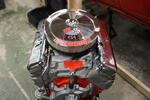
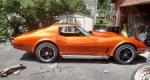
What is your opinion on a good crate motor to replace my 350 in my l48. I am thinking it may be more worthwhile for me in the long run. Not looking for a 10 second car but want more than 180hp. Tia.
What is your opinion on a good crate motor to replace my 350 in my l48. I am thinking it may be more worthwhile for me in the long run. Not looking for a 10 second car but want more than 180hp. Tia.
I got a 383 from GM Performance for my 73 L48 . Awesome upgrade. There are many more options today. Definitely worth it!
No I don't Mine was all stock but that motor was a small block and the architecture was Identical to to the L48 .
I didnt think it would. I haven't installed the rack and pinion yet but I know I will be limited to the type of crate motor I will be able to put in it. I really want both. I would be fine with anything over 300hp at the flywheel to be honest.
I didnt think it would. I haven't installed the rack and pinion yet but I know I will be limited to the type of crate motor I will be able to put in it. I really want both. I would be fine with anything over 300hp at the flywheel to be honest.
This has all been done before I'm sure! that motor was 425 at the flywheel and 475 lb torque !
Do you know if i did a 383 would it fit in there with a flaming river rack and pinion?
My first engine upgrade 78 L48 auto to GMZZ383 with a T56 magnum 6-speed. No problems or clearance issues with flaming river R&P except for driver side near headers / exhaust.
But depends on headers / exhaust used. but if it already works it would depend on the exhaust port shape the new heads use. Most likley different port shape than the current factory exhaust and therefor different
headers / exhaust manifolds required.
Here is the clearance from the steering shafts vs the header location.
2nd engine change to a LS3 with LS7 factory exhaust much better engine / exhaust clearance vs flaming river steering.
LS3 is a much more envolved swap, but my ZZ383 vs LS3 when it comes to drivability. I would do the LS3 as prefered.
Reasons.
1. ZZ383 is external balanced and I had more issues with getting engine vibration working. Auto trans worked better than with T56.
2. Carb tunning vs LS3 spent more time tunning carb / timing etc. LS3 just worked period. EFI with a GM ZZ383 would have been a very good option. But the cost of a GM ZZ383 with aftermarket EFI vs GM Crate LS3 for me the increase in cost was still worth the swap.
3. As for Performance the LS3 / 480 vs ZZ383 is very close.
4. Gas milage ZZ383 ~ 27 MPG (CDN Gal) LS3 ~ 31 MPG
5. Starting ZZ383 gas pumps to start. LS3 just turn the key everytime.
GM Crate motors for me have been a good choice.
Last edited by cagotzmann; Jul 2, 2022 at 08:51 AM.
I didnt think it would. I haven't installed the rack and pinion yet but I know I will be limited to the type of crate motor I will be able to put in it. I really want both. I would be fine with anything over 300hp at the flywheel to be honest.
Have you purchased the Flaming River rack yet ?
There are 2 well known issues to install the rack in a C3 corvette, that Flaming River won't tell you about.
1. The factory GM power steering Pump flow rate is to high vs what the rack requires. Side effect is a very light / twitchy steering. They give you the PSI Spec's but not the flow rate. Factory C3 pump is ~ 1000 PSI max
2. To center the rack to gain full turning radius the factory passenger side tie rod is not long enough. Flaiming river procedure is to center the rack based on centering the tie rods, which means you loose turning radius.
Both are solvable but Flaming River support wont guide you to a better solution.
Issue 1 requires a low flow restrictor change to the factory Power steering pump.
Left is a 1.3 GPH vs the factory (right) Easy fix.
Issue 2 requires a different Tie Rod. Again a simple fix.
Left is the factory tie rod. Right is a tie rod from a 69 Camaro. NAPA # 269-2199 moog# ES381R
This allows you to properly centre the rack and still connect to the factory Wheel spindles.
You will need to make a custom support braket to support the steering shafts what they supply won't work.
And it will take some time to get the correct shaft lengths so the joints are not binding due to high shaft angles.
Also will need to make custom hoses for supply / return lines.
Once installed much better than the factory steering ram setup.
Sorry this is off the original topic (engine swap) , but you should be aware this is doable.
Last edited by cagotzmann; Jul 2, 2022 at 08:54 AM.
There are many good medium performance crate engines available today. From both GM and aftermarket like Blueprint or ATK. One thing to keep in mind is tht your 180 HP you quoted is a net HP rating (as installed in car). Every single engine builder uses gross HP ratings, like GM did prior to 1971.
This 1971 chart from GM shows the difference in both, and is the only year GM rated their engines both ways. 1971 GM Gross and Net HP Ratings
So your 180 HP rating obviously comes from a late 70 vette, but that L48 is almost exactly like a 1971 270 HP (gross) / 210 HP (net) engine mechanically, just slightly less (30HP) due to single exhaust and catalytic convertor. So your stock engine would be around 240 HP gross, the way engine builders rank them (gross HP)
Switch to real dual exhaust (not headers) and you gain 30 so now you are at 270HP gross. That's an easy 12% improvement.
If you want to go to all the trouble to change the engine I would shoot for at least 350HP and up, to feel a substantial improvement, like 30% more than you could have now with duals. Otherwise just modify what you have. IMHO buying a new 300HP engine is not worth it for the money, you will be dissappointed. And 350HP out of a 350 cu in chevy is very easy and inexpensive, the same costs as 300HP really. After that it is just more money for more HP.
Excellent post…
this really opened my eyes as well.
stock l82 with headers..
no slouch in the gross hp comparison.
no slouch with 3.70 gears 4 speed duals no cat..tuned..cast manifolds..either.. its pretty fast even for a 79..
if i ever have to replace I would save and go oem injected crate..with 6 speed..
There are many good medium performance crate engines available today. From both GM and aftermarket like Blueprint or ATK. One thing to keep in mind is tht your 180 HP you quoted is a net HP rating (as installed in car). Every single engine builder uses gross HP ratings, like GM did prior to 1971.
This 1971 chart from GM shows the difference in both, and is the only year GM rated their engines both ways. 1971 GM Gross and Net HP Ratings
So your 180 HP rating obviously comes from a late 70 vette, but that L48 is almost exactly like a 1971 270 HP (gross) / 210 HP (net) engine mechanically, just slightly less (30HP) due to single exhaust and catalytic convertor. So your stock engine would be around 240 HP gross, the way engine builders rank them (gross HP)
Switch to real dual exhaust (not headers) and you gain 30 so now you are at 270HP gross. That's an easy 12% improvement.
If you want to go to all the trouble to change the engine I would shoot for at least 350HP and up, to feel a substantial improvement, like 30% more than you could have now with duals. Otherwise just modify what you have. IMHO buying a new 300HP engine is not worth it for the money, you will be dissappointed. And 350HP out of a 350 cu in chevy is very easy and inexpensive, the same costs as 300HP really. After that it is just more money for more HP.
Interpon: That's a great data point and HP curve. 313 HP (gross) for a stock L82 with real dual exhaust and headers.
Look how close you numbers are to a 71 LT-1 5TQ & 15HP & peak rpms are very close.
You now basically have a low compression L-46, and that is one of my all time favorite Chevy street engines.
Imagine what 11:1 compression would do! 340/350/360HP?
And none of those old heads are worth much HP. A bolt-on new era aluminum head is probably worth another 30-40HP all by itself. Airflow technology really came of age from the 90s til now,
I am running the original "exotic" 53 year old L88 aluminum heads. And I have since learned from multiple sources a new set of AFRs is worth 80HP on my 485HP BB with zero other changes! Oh well I am not re-doing it now. Learn from my lack of knowledge at the time. It was my first BB ever.
There are many good medium performance crate engines available today. From both GM and aftermarket like Blueprint or ATK. One thing to keep in mind is tht your 180 HP you quoted is a net HP rating (as installed in car). Every single engine builder uses gross HP ratings, like GM did prior to 1971.
This 1971 chart from GM shows the difference in both, and is the only year GM rated their engines both ways. 1971 GM Gross and Net HP Ratings
So your 180 HP rating obviously comes from a late 70 vette, but that L48 is almost exactly like a 1971 270 HP (gross) / 210 HP (net) engine mechanically, just slightly less (30HP) due to single exhaust and catalytic convertor. So your stock engine would be around 240 HP gross, the way engine builders rank them (gross HP)
Switch to real dual exhaust (not headers) and you gain 30 so now you are at 270HP gross. That's an easy 12% improvement.
If you want to go to all the trouble to change the engine I would shoot for at least 350HP and up, to feel a substantial improvement, like 30% more than you could have now with duals. Otherwise just modify what you have. IMHO buying a new 300HP engine is not worth it for the money, you will be dissappointed. And 350HP out of a 350 cu in chevy is very easy and inexpensive, the same costs as 300HP really. After that it is just more money for more HP.
If I may ask please, would all this apply to my '72 stock 350 with dual exhausts? The gross HP is around 270, net 180? Thanks for letting me squeeze this into another's thread.
If I may ask please, would all this apply to my '72 stock 350 with dual exhausts? The gross HP is around 270, net 180? Thanks for letting me squeeze this into another's thread.
You can absolutely ask bro. Thats what its all about here. Your question is also helping me out too. These guys here are very knowledgeable and I have received a lot of great info. Good luck!
If I may ask please, would all this apply to my '72 stock 350 with dual exhausts? The gross HP is around 270, net 180? Thanks for letting me squeeze this into another's thread.
Yes it absolutely would.
1971 is the only year GM actually tested their engines both ways.
Gross: engine test stand, no accessories, no water pump, no air cleaner, headers, open exhaust, ideal carb & ignition tuning. Think: Optimum
Net: Exactly as installed in the car. All accessories hooked up, WP, as installed air cleaner, as installed exhaust, as installed ignition/carb tuning. Think: As Installed
A lot of people use '" math ratios" to compare the two, but that is not exactly correct. It will only get you "kinda" close. As you can see above, the specific exhaust, air cleaner, and how many accessories are actually installed does vary quite a bit from one car to another. Thus Net HP varies as well. Even GM Net HP figures are not exactly correct for all option configurations even on the same model car. They assume a base car, with zero options. So an automatic, PS, AC car would actually make less Net HP than a manual, no PS car, and less than GMs quoted Net HP figure.
That is why engine builders use Gross HP readings. It's about the engine only. A 1970 LT-1 Gross HP absolutely will not change from Camaro to Corvette, because the engine stand configuration is exactly the same. The 10HP difference quoted was pure marketing. The L88 was the absolute worst example of this, they rated it at only 430 Gross HP, about 100 below what it really made, because they rated it around 1500rpm below it's peak RPM. Pure marketing BS. But a 1971-2 LT-1 will have different Net HP in a Corvette and a Camaro because of the drastically different exhaust manifold and exhaust setup, even tho the engine part is identical.
I didnt think it would. I haven't installed the rack and pinion yet but I know I will be limited to the type of crate motor I will be able to put in it. I really want both. I would be fine with anything over 300hp at the flywheel to be honest.
Theres no reason it wouldnt work.
a 383 and 350 are completely identical on the outside and identical to any gen 2 SBC minus balancer size differences.. The differences are all internal to the engine. you could even turn your old l48 into a 383 with a longer stroke 400 style crank and different rods and pistons... This is how hot rodders did it back in the day before matched 383 rotating assemblies and crate engines became more the norm. I agree with others that you can get much more power from your existing engine, especially with head, cam and exhaust changes
Last edited by augiedoggy; Jul 5, 2022 at 11:27 AM.
Something like a blueprint 430 HP 383. Cost wise it is not much more than a 300 HP crate engine. I have ~450HP 383 that was locally built and it's now fun to drive. I also put in a 700r4 and 3.70 gears. With the roller cam it's really smooth. The base L48 is pretty much what they sell as a 260 HP crate motor, even a 300 HP crate engine will feel pretty tame.







 Crate motor