When you click on links to various merchants on this site and make a purchase, this can result in this site earning a commission. Affiliate programs and affiliations include, but are not limited to, the eBay Partner Network.
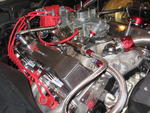
1980 L48 with IK180 heads, CC flat tappet cam and full roller rockers.
I heard a tick coming from the valve train on the drivers side of the engine. I removed the valve cover with the engine running and noticed that the rocker on cylinder #4 was shooting oil about 3 feet into the air. That was the only rocker doing that. I removed lifters and posted pics below. I don't think they've flattened the cam and the lifter face looks flat but I'm not sure and would like so opinions if possible. Also any idea on why just one lifter would shoot oil up that way?
May have been an internal component failure or a factory assembly fault. There's supposed to be an internal check valve to hold the oil back from doing what yours did. As long as the cam lobe isn't worn fully across its width, drop in a new lifter and go on your way. You'll have to break in the new lifter of course
What type of pushrods are you using, ball-ends or one piece?
I would take a real close look at the rocker itself. See if the oil hole above the pushrod is abnormal. Oil pressure travel is a straight shot from the lifter to the rocker. The rocker arm somewhat restricts or aims the oil down to the rocker stud and on down to the springs.
I'm using new trick flow push rods. I checked them as well as the rockers and all looks good. I do get oil out of all the rockers but I'm just getting a 3ft stream out of cyl #4 and a very noticable tick when engine was running. Not sure if the issue could be a bad lifter that is collapsing causing the tick and not restricting oil flow causing the stream of oil.
I'm using new trick flow push rods. I checked them as well as the rockers and all looks good. I do get oil out of all the rockers but I'm just getting a 3ft stream out of cyl #4 and a very noticable tick when engine was running. Not sure if the issue could be a bad lifter that is collapsing causing the tick and not restricting oil flow causing the stream of oil.
Most likely the lifter check valve "tiddly wink" is bad......it is pushing down on the internal plunger/piston and causing a megapressure squirt through the pushrod.....the lifter is the restriction in the oil system for the top end of the engine....and you have lost this.
You can stick a new lifter in......but there is an off chance it may not spin right away as it would be tough the get moly on the lobe and the lifter foot without getting moly along the sides of the lifter.......
If this were here in my shop, I would by the identical lifter and change out the guts......slip it back in and go. I would first disassemble the squirty lifter to inspect for debris and or bad quality control.
So I took out the lifter that was squirting all the oil and disasembled as Jebby suggested. I then primed the oiling system and all looked good but when I start the car I still have the sound coming from the car. Kind of sounds like a significant exhaust leak but I confirmed that's not the case. I added a video below of the engine running with valve covers off and the rockers look like they are oiling up perfectly but I still have the noise. Hoping someone with some experience recognized what it might be. Could it be an issue with a cam lobe? Or a valve issue? The head and valves are less than a year old.
Any suggestoins would be appreciated. This hobby can be great but also very very fustrating.
I had to remove the stock baffle on the valve covers and made so slimmer baffle that fit and it's been working fine. The sound is not metal banging around it's more like exhaust. This really has me stressed!
Update: I did a compression check on all the cylinders and I'm listing results below. After getting the low comperssion of 70lbs on cyl #6 I removed the rockers and kept the valve fully seated for 5 compression strokes and got the same 70lbs. I stuck a camera down the spark plug hole and posted the vido below. I don't see any damage to the piston or any significant scoring on the cylinder walls. So I'm thinking that I either have a blown head gasket or an issue with one of the valves.
Update #2: Not sure what I was smoking this morning or if I thought I was working on my 1987 Envinrude but yes makes no sense to check compression if valves are not operating. My compression with valves operating as they are supposed to is very close on all but cylinder #6 and that was the area where the sound was coming from. Would that low compression on one cylinder be that noticable? Any suggestions?
Hoping someone with some experience can take a look and offer an opinion.
1. Would 70lbs on that cylinder cause the misfire that I mentioned on previous video?
2. I guess next step would be to remove the head and confirm there is no cylinder damage and inspect head gasket as well as valves.
That is not the way to do a compression test.
A compression test measures the amount of air squeezed from the bottom of the stroke to the top of the stroke. The key word here is AIR.
If you deny air from entering the cylinder, how is that going to be compressed?
Some people swear that the throttle be held fully open during the test.
(Which by the way, does not make one iota difference) But with both your valves forced closed your testing is obscured.
Thakns Jebby. I did order a leak down tester that arrive tomorrow. I read that I should pressure the cylinder while piston is at TDC. If air is escaping out exhaust or carb it's most likely valve issue otherwise it's a piston or ring issue?
Thakns Jebby. I did order a leak down tester that arrive tomorrow. I read that I should pressure the cylinder while piston is at TDC. If air is escaping out exhaust or carb it's most likely valve issue otherwise it's a piston or ring issue?
It is preferred to leakdown at TDC but not absolutely necessary.....age old theory says that the bore will wear more toward the top, and it does......so you test there as it is the worst case scenario.....but on an engine with 170psi at crank....I doubt very highly that there is any taper at all in the bore......just make sure the piston is at BDC after TDC so you know the valaves are shut....or you can pressure it up and hold the crank with a breaker bar.....which is what I do.
Another argument is that an engine with a suspected cracked cylinder almost has to be tested at BDC.......
I did a leakdown test on the cylinder with low compression and had about a 20% loss compared to <5% on all other cylinders. I pulled the head and found a significant leak on the intake valve and alot of carbon buildup. I replaced the valves covers temporarily while I waiting on new ones to come in and the temp covers didn't have a baffle for PCV valve. I may have been buring alot of oil which caused all this carbon. Not sure, but in either case I dropped off the head to have the valve and valve seat checked out and will provide an update once it's back together.
I'm also showing video below of the valve leaking during water test.
I did a leakdown test on the cylinder with low compression and had about a 20% loss compared to <5% on all other cylinders. I pulled the head and found a significant leak on the intake valve and alot of carbon buildup. I replaced the valves covers temporarily while I waiting on new ones to come in and the temp covers didn't have a baffle for PCV valve. I may have been buring alot of oil which caused all this carbon. Not sure, but in either case I dropped off the head to have the valve and valve seat checked out and will provide an update once it's back together.
I'm also showing video below of the valve leaking during water test.
Make sure the valve seals are replaced as a precaution....they are cheap and you are there. Also, make sure the shop hand laps every valve and tell you they did.......it may just have a piece of **** in it that will lap out......post your findings.....these kind of threads are helpful to others.
Final update:
The machine shop laped all the valves and replaced the seals. After intalling the head the leak down test now showed about 5% loss versus 20% previously. The compression went from 90PSI to 155PSI which is inline with the rest of the engine. The engine started and ran perfectly so I'd like to thank the forum for the help on this!
Final update:
The machine shop laped all the valves and replaced the seals. After intalling the head the leak down test now showed about 5% loss versus 20% previously. The compression went from 90PSI to 155PSI which is inline with the rest of the engine. The engine started and ran perfectly so I'd like to thank the forum for the help on this!







 Lifter question