




Starter Voltage Drop
Thread Starter
Burning Brakes


Joined: Jan 2004
Posts: 1,043
Likes: 4
From: Va
 Starter Voltage Drop
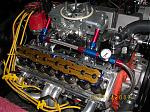
1971 383 Stroker (10:1 compression Ratio) not on the road just start maybe once a week. Have gone thru a Mean Green mini starter(lasted about 5 years) and recently a Powermaster XS High Torque starter (lasted 12 months). The starters were not totally gone just intermittently made an awful metal on metal clang noise and was concerned about damaging the flywheel(4speed Muncie).
I just installed a new Powermaster 9200 ministarter and all is well.
On the first two starters I checked the voltage drop at the solenoid starter terminal while cranking and it was 9.7 volts. The voltage drop at the actual battery post went from 12.6 to 10.5 volts when cranking on a brand new fully charged battery. To improve the voltage drop I installed a relay at the starter and this improved the voltage drop to 10.5 volts at the starter solenoid terminal. The car has all new harnesses including the main power and ground battery cables, all connections cleaned and a noox compound applied to improve connection and prevent corrosion.
I contacted Powermaster and their tech said I need to get at least 11 volts at the starter terminal when cranking in order to avoid potential damage to the new ministarter.
The thing that baffles me most is that the voltage drop at the brand new Costco Interstate Group 78 battery is 10.5 volts which is the same as what I see at the starter. Should I return battery to Costco and exchange for a different one?
What are you guys seeing as far as voltage drop at the starter solenoid when cranking on your cars?
Anyone have experience with this situation that could recommend a resolution?
Thanks for any help you can provide.
I just installed a new Powermaster 9200 ministarter and all is well.
On the first two starters I checked the voltage drop at the solenoid starter terminal while cranking and it was 9.7 volts. The voltage drop at the actual battery post went from 12.6 to 10.5 volts when cranking on a brand new fully charged battery. To improve the voltage drop I installed a relay at the starter and this improved the voltage drop to 10.5 volts at the starter solenoid terminal. The car has all new harnesses including the main power and ground battery cables, all connections cleaned and a noox compound applied to improve connection and prevent corrosion.
I contacted Powermaster and their tech said I need to get at least 11 volts at the starter terminal when cranking in order to avoid potential damage to the new ministarter.
The thing that baffles me most is that the voltage drop at the brand new Costco Interstate Group 78 battery is 10.5 volts which is the same as what I see at the starter. Should I return battery to Costco and exchange for a different one?
What are you guys seeing as far as voltage drop at the starter solenoid when cranking on your cars?
Anyone have experience with this situation that could recommend a resolution?
Thanks for any help you can provide.

Team Owner


Joined: Jan 2007
Posts: 53,648
Likes: 878
From: Southern Cal Ca
St. Jude Donor '22
wow
quite a drop
cranking amps is the name of the game.
either new bat is rated too low or defective.
or starter is drawing too much.
if, cables are good.
an internal corroded or too small gauge will use to many amps.
curious the amount of starters you went thru.
new motors spin tight and possible timing or hydro-loc situation.
guess you need to isolate whats going on
quite a drop
cranking amps is the name of the game.
either new bat is rated too low or defective.
or starter is drawing too much.
if, cables are good.
an internal corroded or too small gauge will use to many amps.
curious the amount of starters you went thru.
new motors spin tight and possible timing or hydro-loc situation.
guess you need to isolate whats going on
Thread Starter
Burning Brakes
Joined: Jan 2004
Posts: 1,043
Likes: 4
From: Va
Been thru 2 starters thus far, mean green ministarter lasted 4 years or so til symptoms started, I checked voltage drop when symptoms started about June 2023 and I believe it was getting 11 volts at the S terminal when cranking. That’s when I decided to go with a new Powermaster XS High Torque starter and then it started the same symptoms after about 12 months, I checked the voltage drop at the S terminal it was 9.7 volts while cranking. I shipped the XS starter to Powermaster for diagnostics and they contacted me today and they said it looked like the low voltage had damaged the clutch, solenoid, and armature.
I have installed a relay on the starter and gotten the voltage up to 10.5 volts on the S terminal on the solenoid of the new Powermaster 9200 ministarter.
The new battery is a Costco Interstate Group 78 800 CCA.
Will be taking it back for exchange for new one and give that a try.
Thanks for your help
I have installed a relay on the starter and gotten the voltage up to 10.5 volts on the S terminal on the solenoid of the new Powermaster 9200 ministarter.
The new battery is a Costco Interstate Group 78 800 CCA.
Will be taking it back for exchange for new one and give that a try.
Thanks for your help

Race Director


Joined: Nov 2006
Posts: 13,225
Likes: 7,823
From: Sunshine Coast, Queensland, Australia
2025 C3 of the Year Finalist - Modified
2024 C3 of the Year Finalist- Modified
2022 C3 of the Year Finalist - Modified
Cruise-In VIII Veteran
Sorry, no. As one who actually does measure voltage drop at starters. No, a 1.5V drop is definitely NOT unusual! Absolutely normal. I personally think your chasing your tail here. If you feel the longevity of your starters is insufficient, (I agree) I think you need to find the actual problem.
Just my 2 cents, probably not worth a cent.
Just my 2 cents, probably not worth a cent.

Racer

Joined: Dec 2006
Posts: 417
Likes: 40
From: Swansea IL
Agree with 4-vets. Battery voltage is going to drop when the starter is energized. If ur maintaining 10.5 v at the starter, life is good.
Two things u might look at; First, check the negative ground cable connection at the frame under ur seat. Make sure u have good clean metal in the frame/cable connection. Second, make sure u are shimming the starter for proper starter gear to flywheel clearance. A good starter should last a log time when properly set-up.
Two things u might look at; First, check the negative ground cable connection at the frame under ur seat. Make sure u have good clean metal in the frame/cable connection. Second, make sure u are shimming the starter for proper starter gear to flywheel clearance. A good starter should last a log time when properly set-up.

Le Mans Master


Joined: Aug 2005
Posts: 6,539
Likes: 1,971
From: Temple Terrace Florida
You mentioned noise upon starting. Sounds like starter clash. Check the flywheel ring gear to see if it is worn. The ring gear is inexpensive, getting to it is another matter. Check the Bendix gear as well. There should be no clash. Jerry

Race Director


Joined: Jan 2000
Posts: 13,017
Likes: 2,261
From: Corsicana, Tx
2020 C2 of the Year - Modified Winner
2020 Corvette of the Year (performance mods)
C2 of Year Winner (performance mods) 2019
2017 C2 of Year Finalist
I'm just gonna say 1.5V drop is HUGE!. In the 18 wheeler diesel world we freak out at 1.0 volt loss and shoot for .5 or less.
Run the numbers through OHM's law and see what's occurring with that much loss.
And is sounds like you're measuring loss at the S terminal as well as the main cables?
I would start working my way back up the line testing until I found the spot it's losing at.
JIM
Run the numbers through OHM's law and see what's occurring with that much loss.
And is sounds like you're measuring loss at the S terminal as well as the main cables?
I would start working my way back up the line testing until I found the spot it's losing at.
JIM
Thread Starter
Burning Brakes
Joined: Jan 2004
Posts: 1,043
Likes: 4
From: Va
I checked the voltage drop at the actual NEW battery Side post terminals, with the new battery fully charged before cranking it is 12.7 volts+. It drops to 10.5 volts when cranking at the side post terminals utilizing a brand new Postmaster 9200 mini starter and cables/harnesses. So it appears to me the issue is at the battery, I am returning the new battery and exchanging it, I have had it less than 20 days. I am hoping this resolves it.
With the new starter it is starting well, plenty revs and no noises, it is just the voltage drop tests that I am concerned about will take its toll on the new starter over time.
thanks for your guys input!
With the new starter it is starting well, plenty revs and no noises, it is just the voltage drop tests that I am concerned about will take its toll on the new starter over time.
thanks for your guys input!
Corvette Stories
The Best of Corvette for Corvette Enthusiasts

Top 10 Most Expensive Corvettes Ever Sold on Bring A Trailer
Brett Foote
10 Things Every Corvette Owner Needs (2026 Edition)
Michael S. Palmer
8 Most "Only Corvette Owners Understand" Quirks and Problems
Pouria Savadkouei
10 Reasons the C6 Z06 is Still A Performance Benchmark After 20 Years
Joe Kucinski
How Much Horsepower Every Corvette Engine "LOST" in 1972
Joe Kucinski
Top 10 DOs and DON'Ts for Protecting Your Convertible Top!
Michael S. Palmer
Top 10 Most Explosive Corvettes Ever Made: Power-to-Weight Ratio Ranked!
Joe Kucinski
150 hp to 1,250 hp: Every Corvette Generation Compared by the Specs That Matter
Joe Kucinski
8 Coolest Corvette Pace Cars (and Replicas) of All Time
Verdad Gallardo
Drifting


Joined: Nov 2013
Posts: 1,572
Likes: 486
From: Loud, Raw and Dangerous 1968 327 4S in Southern California
Batteries also have an internal impedance in the few milliohm range that when a large current is being drawn causes a voltage drop as well. Typically it can be around 5 -10 milliohms in a good battery. So if you are drawing several hundred amps when engaging the starter, you could see a volt or two of drop at the battery terminals.
Race Director
Joined: Jan 2000
Posts: 13,017
Likes: 2,261
From: Corsicana, Tx
2020 C2 of the Year - Modified Winner
2020 Corvette of the Year (performance mods)
C2 of Year Winner (performance mods) 2019
2017 C2 of Year Finalist
Voltage drop is typically measured by reading at the end of the line and at the source. So you'd draw juice at the starter (which is best done with a tool that can apply a controlled load) and measure the difference between the what's at the battery and the starter. It takes two voltmeters. And/or a true tester which can do it.
The starter "can" apply a load but it's not consistent and makes it tougher to see what's going on. Your starter/engine are tugging on the battery, but you're not measuring voltage drop between the battery and starter. And voltage drop is measured on positive and negative cables. And the rest of the circuit as well ( S terminal etc). Again, a controlled load.
A battery tester which can apply a true measured/timed load will tell you if the battery can handle it and is up to snuff.
JIM
The starter "can" apply a load but it's not consistent and makes it tougher to see what's going on. Your starter/engine are tugging on the battery, but you're not measuring voltage drop between the battery and starter. And voltage drop is measured on positive and negative cables. And the rest of the circuit as well ( S terminal etc). Again, a controlled load.
A battery tester which can apply a true measured/timed load will tell you if the battery can handle it and is up to snuff.
JIM
Thread Starter
Burning Brakes
Joined: Jan 2004
Posts: 1,043
Likes: 4
From: Va
Guys I want to thank all of you for taking the time to read my posts and provide input/feedback on this issue I was having. All of the measurements I was taking was with a Fluke 88V Automotive Multimeter. I have a couple of other Fluke meters 28II and 376FC which are apparently more accurate so I decided to do all the same measurements with them making sure the battery was fully topped off prior to doing each measurement. The results of these measurements were identical for the Fluke 28II and 376FC which indicated 11.7 volts at battery terminal sideposts and 10.8 volts at the “S” terminal on the starter when cranking. The Fluke 88V that I had been using previously is apparently out of calibration by .5 to .7 volts lower readings.
I also contacted Powermaster(Ed/John) to review the measurements with the other meters of 10.8 volts at the “S” terminal and they said it was acceptable and within the potential margin of error for a multi-meter. They also indicated that they looked at the 9526 starter I sent them to analyze and they indicated it appears there was a slight mis alignment issue causing the clanging noise. They also said the 9526 was a tighter tolerance starter so correct alignment was critical. The 9526 is a high torque starter without the factory type nose on it which I am now not a fan of.
I now have installed a new Powermaster 9200 ministarter which has the factory style nose and is working very well, better in my opinion than when the 9526 was new. The 9200 has what I feel is a snugger fitment and can handle up to 10:1 compression which what I have in my 383 stroker.
Again thank all of you for help !
I also contacted Powermaster(Ed/John) to review the measurements with the other meters of 10.8 volts at the “S” terminal and they said it was acceptable and within the potential margin of error for a multi-meter. They also indicated that they looked at the 9526 starter I sent them to analyze and they indicated it appears there was a slight mis alignment issue causing the clanging noise. They also said the 9526 was a tighter tolerance starter so correct alignment was critical. The 9526 is a high torque starter without the factory type nose on it which I am now not a fan of.
I now have installed a new Powermaster 9200 ministarter which has the factory style nose and is working very well, better in my opinion than when the 9526 was new. The 9200 has what I feel is a snugger fitment and can handle up to 10:1 compression which what I have in my 383 stroker.
Again thank all of you for help !