When you click on links to various merchants on this site and make a purchase, this can result in this site earning a commission. Affiliate programs and affiliations include, but are not limited to, the eBay Partner Network.
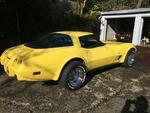
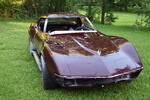
My Dad bought this in 95(without telling my mother) drive it a couple summers, but never got around to restoring it. I just bought it from him and now it will be my project for the next few years.
Only need a handful of parts to get it back to drivable.
I need to replace all the brake lines. Is it recommended to use all flexible lines or go with brake lines that are pre-bent?
my skills do not include bing able to bend them myself.
Go with prebent steel lines, stainless steel is harder to work with. You will have to straighten one long line that probably shipped bent to save space.
You can replace all the brake lines without lifting the body off but you do have to get down and dirty under the car.
You will want new SS sleeved hoses to each caliper.
I will add one more item, get yourself some quality flaring nut wrenches. The flare nuts are very likely to be happy where they are.
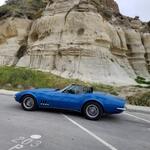
Welcome to the forum! Should be a fun project, I like the wheels.
I see it has the two tone light/dark buckskin interior. I have the same one in a ‘76, but decided to change it all to the lighter buckskin color. If you’re curious they do make carpet in the lighter color.
Inline Tube has complete sets at great prices; and ships quickly. Hand tighten all connections before putting a wrench to them. Plenty of previous post here on the forum for the tricky parts along the rear frame rails. Phoenix System brake bleeder.
Welcome to the Corvette Forumjlawn! This is THE place to be when you have questions about your Corvette! We are glad you have joined us here!
Classic Tubing in New York can also make the pre-bent brake and fuel lines for any Corvette. They made me a nice set for my C4. Very well packaged and shipped quickly. The fuel lines were really nice as well as they came bent in half.
If the Corvette has sat for any period then be sure to flush the brake lines and calipers. Your calipers might need some help as well as the seals deteriorate over time. The ethanol used in the gasoline will allow rust to start inside the fuel lines so be sure to check them carefully.
I agree with the suggestion to get a Phoenix Reverse Bleeder which will make the brake work much faster.
Finally got the corvette from my dad's barn to my garage in early June.
It would start with starter fluid but wouldnt run. My goal was to get it running this summer so I could get a list of projects for the winter.
Got the leaky fuel oil pan fixed and discovered a valve cover leak. That will most likely be a winter job. I didn't want to have it leak all over my garage.
Turns out after sitting for 30 years the tank was filled with crud and I assumed it clogged everything. So, I ended up replacing the oil tank, gas meter/sending unit, and fuel pump. I blew out the fuel lines and replaced all the rubber hoses since the risk of dry rot was so high.
Got the battery today since nobody had one in stock. Excited that I get to see if it starts (and idles) when I get home from work today!
The brakes don't work, so zero chance of driving it today, but baby steps.
T Gotta have that cardboard to stop the leak. Looks like the previous owner hit a few things
You are coming along nicely. The oil tank is actually an oil pan. Sine you are this far along, consider replacing the engine rear main seal. A worn out seal may be causing a good deal of your oil leak. From where you are in the project, you should be able to change the seal in an hour or two. Also. clean out the hard fuel lines with denatured alcohol and compressed air. Flush until the alcohol runs clear. Don't forget to replace the fuel filters. There should be one in the carb. Good luck. Jerry
Thanks Jerry - The oil pan in the photo I refurbished, but I replaced the tank as well. It finally started last weekend but wouldn't idle. Found a 30-year-old carb filter that needed replaced.
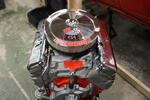
It finally idled but I noticed after a minute or 2 of running a little bit of white smoke was coming from the engine bay. When I shut it off, I couldn't see anything noticeable. I assumed it was just burning crap off of everything since the engine hasn't run in 25 years. Oil pressure, RPMs at idle, and alternator gauges all looked good. Pretty sure a squirrel lived in it for a winter. After a few start/stop inspections, I tapped an aftermarket coolant fill/refill valve, and it exploded...so now I am replacing that hose.
Thank you for all the help the community has given me so far! I am starting to get some parts on order and stocked up for winter projects. One of them is replacing the vacuum hoses.
i have a ASM already and a tech guide on order. Should be here in a couple weeks.
can someone tell me if I have the highlighted hose attached in the correct spot? I am having trouble finding a diagram that matches my setup.
It idled!
Hoo-ray!
Great start.
Now check everything else that would be a safety item to make it safe to drive.
It sat a looong time.
Anything rubber, fuel, brake or coolant, just change.
Flashlight inside radiator to eyeball condition, etc. Flush til water is clear.
Pull trans pan, etc.
Check diff fluid for water, etc.
An excellent alternative material for brake lines is Kunifer, I have only used this for brake lines for the last 40 years and have never had any issues, it will not corrode, is easy to bend to shape and easy to flare and finally seems to be catching on in the US, it's widely used in the marine environment for its corrosion resistant properties, buy a 25 foot coil and a flaring kit and make your own.
It idled!
Hoo-ray!
Great start.
Now check everything else that would be a safety item to make it safe to drive.
It sat a looong time.
Anything rubber, fuel, brake or coolant, just change.
Flashlight inside radiator to eyeball condition, etc. Flush til water is clear.
Pull trans pan, etc.
Check diff fluid for water, etc.
started playing with the brakes today. Took the front drivers side off. Couldn’t get fluid to the caliper so took the caliper off. Got the rubber hose to basically spit sludge. So going to replace all the rubber hoses. The pads and rotors look fine, but the caliper is in rough shape. The pistons move, but not sure I want to risk it once it is on the open road. Might just replace it all.
which means it won’t be in the road this year as funds are low and I am in Michigan. Not a lot of driving time left in the year.
Took the intake manifold off to replace the gaskets due to a leak. How much of the carbon build up will burn off when it starts running and how much do I need to remove before putting it back together? Hasn’t been driven since about 98.









 New Project