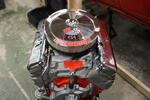
Head bolts L88 heads?

Thread Starter
Drifting


Joined: Apr 2004
Posts: 1,302
Likes: 36
From: Allen Park Mi
 Head bolts L88 heads?
Putting a set of L88/L89 heads on my BBC
did these winters foundry heads use unique head bolts or was there a washer?
These days - everyone insists using a
flat washer on the aluminum castings but i dont thing ive ever seen thst on the old Zl1/L88 engines
did these winters foundry heads use unique head bolts or was there a washer?
These days - everyone insists using a
flat washer on the aluminum castings but i dont thing ive ever seen thst on the old Zl1/L88 engines


Le Mans Master


Joined: Aug 2017
Posts: 8,336
Likes: 2,810
From: Cool Northern Michigan
The aluminum heads are a soft material.
The steel heads bolts are not.
The head of the bolt will gouge the bolt hole boss without the protection of a washer. The sharp corners of the bolt can actually remove material from the cyl head from the gobs of torque you are applying. (Think countersink)
All ARP head bolts have the washer + lube.
The steel heads bolts are not.
The head of the bolt will gouge the bolt hole boss without the protection of a washer. The sharp corners of the bolt can actually remove material from the cyl head from the gobs of torque you are applying. (Think countersink)
All ARP head bolts have the washer + lube.

Safety Car


Joined: May 2001
Posts: 4,757
Likes: 1,647
From: Fairfax Virginia
Those Winters Foundry Cylinder Heads were sure a great thing when they first showed up in the early BB engines. What year were the ones you have made? Any Casting dates? Are they Open Chamber or the earlier Closed Chamber? The Closed Chambers would have been found on the 1967 and 1968 model L88. I have a 1968 L88 Clone engine using many parts from an original L88 that was wrecked. I am not using the Aluminum heads after I spent several years following them at Corvettes@Carlisle I made that decision. I found a set of $500 that needed a lot of aluminum (replacement) that were for the 1968 model year.
I am using the Cast Iron version of the L88 Aluminum heads (GM Part# 3931063) and the matching L88 piston set. With the L88 pistons the large valve reliefs stick above the piston at TDC over 1/2" and they match those heads perfectly. Using these heads and the 12.25 Compression ratio this little 427 will scat along right quickly. It is the compression that makes the incredible horsepower that the L88 made.
Using a factory L88 hood built for the 1968 model year with the air-box (cold air) system still functional it is possible to drive a 12.25-12.5 compression ratio on the streets. The hood feeds the combustion chambers cooler air and that allows a L88 to be used many months of the year. In the heat I can retard the total timing or activate a water/methanol injection system to cool down the engine. The water evaporates removing heat from my intake system and the methanol pushes the octane up to 116 which is way more than my 427 even needs.
My point to this, don't stop with just the heads, get the Pistons and Cam and really see what a L88 can do!! You will never regret the ride after driving a replica L88 on the streets. With a tight chassis, an L88 and a four speed will help you to fully enjoy what Zora Wanted/Designed for us. It is the kind of ride that burns the smile onto your face permanently.
I am using the Cast Iron version of the L88 Aluminum heads (GM Part# 3931063) and the matching L88 piston set. With the L88 pistons the large valve reliefs stick above the piston at TDC over 1/2" and they match those heads perfectly. Using these heads and the 12.25 Compression ratio this little 427 will scat along right quickly. It is the compression that makes the incredible horsepower that the L88 made.
Using a factory L88 hood built for the 1968 model year with the air-box (cold air) system still functional it is possible to drive a 12.25-12.5 compression ratio on the streets. The hood feeds the combustion chambers cooler air and that allows a L88 to be used many months of the year. In the heat I can retard the total timing or activate a water/methanol injection system to cool down the engine. The water evaporates removing heat from my intake system and the methanol pushes the octane up to 116 which is way more than my 427 even needs.
My point to this, don't stop with just the heads, get the Pistons and Cam and really see what a L88 can do!! You will never regret the ride after driving a replica L88 on the streets. With a tight chassis, an L88 and a four speed will help you to fully enjoy what Zora Wanted/Designed for us. It is the kind of ride that burns the smile onto your face permanently.
Thread Starter
Drifting
Joined: Apr 2004
Posts: 1,302
Likes: 36
From: Allen Park Mi
Those Winters Foundry Cylinder Heads were sure a great thing when they first showed up in the early BB engines. What year were the ones you have made? Any Casting dates? Are they Open Chamber or the earlier Closed Chamber? The Closed Chambers would have been found on the 1967 and 1968 model L88. I have a 1968 L88 Clone engine using many parts from an original L88 that was wrecked. I am not using the Aluminum heads after I spent several years following them at Corvettes@Carlisle I made that decision. I found a set of $500 that needed a lot of aluminum (replacement) that were for the 1968 model year.
I am using the Cast Iron version of the L88 Aluminum heads (GM Part# 3931063) and the matching L88 piston set. With the L88 pistons the large valve reliefs stick above the piston at TDC over 1/2" and they match those heads perfectly. Using these heads and the 12.25 Compression ratio this little 427 will scat along right quickly. It is the compression that makes the incredible horsepower that the L88 made.
Using a factory L88 hood built for the 1968 model year with the air-box (cold air) system still functional it is possible to drive a 12.25-12.5 compression ratio on the streets. The hood feeds the combustion chambers cooler air and that allows a L88 to be used many months of the year. In the heat I can retard the total timing or activate a water/methanol injection system to cool down the engine. The water evaporates removing heat from my intake system and the methanol pushes the octane up to 116 which is way more than my 427 even needs.
My point to this, don't stop with just the heads, get the Pistons and Cam and really see what a L88 can do!! You will never regret the ride after driving a replica L88 on the streets. With a tight chassis, an L88 and a four speed will help you to fully enjoy what Zora Wanted/Designed for us. It is the kind of ride that burns the smile onto your face permanently.
I am using the Cast Iron version of the L88 Aluminum heads (GM Part# 3931063) and the matching L88 piston set. With the L88 pistons the large valve reliefs stick above the piston at TDC over 1/2" and they match those heads perfectly. Using these heads and the 12.25 Compression ratio this little 427 will scat along right quickly. It is the compression that makes the incredible horsepower that the L88 made.
Using a factory L88 hood built for the 1968 model year with the air-box (cold air) system still functional it is possible to drive a 12.25-12.5 compression ratio on the streets. The hood feeds the combustion chambers cooler air and that allows a L88 to be used many months of the year. In the heat I can retard the total timing or activate a water/methanol injection system to cool down the engine. The water evaporates removing heat from my intake system and the methanol pushes the octane up to 116 which is way more than my 427 even needs.
My point to this, don't stop with just the heads, get the Pistons and Cam and really see what a L88 can do!! You will never regret the ride after driving a replica L88 on the streets. With a tight chassis, an L88 and a four speed will help you to fully enjoy what Zora Wanted/Designed for us. It is the kind of ride that burns the smile onto your face permanently.
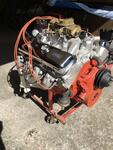
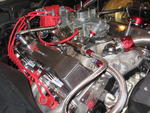
with a set of open
chamber winters heads, a NOS L88 cam
and a 69 L71 3x2 intake but with the Mopar Mech tri power carbs!

Safety Car
Joined: May 2001
Posts: 4,757
Likes: 1,647
From: Fairfax Virginia
Outstanding! You Sir, will have a REAL Corvette when you are done. Just cover up the Mopar carburetors so nobody notices...
The rush of driving a super-car of the sixties is still a huge RUSH today! I love the straight line performance of that engine. My L88 was tested and made over 560 hp when it was first built. The 0-60 times are below 4 seconds and it is a fun car to experience. I like to take people who have never been in a true muscle car and give them rides in my C3. Theoretically my engine should propel me to the low 10 second quarter mile range but the tracks around me all expect me to install a roll cage first, NOT...
I remember my buddies 1970 302 Boss Mustang and it pulled "hard", my 427 makes it look like a matchbox. A buddy with a 1964 GTO convertible with a 389 and four speed was begging me to slow down. He didn't like triple digits speeds on entrance ramps...
What are your plans for fueling the beast? I tried aviation gas but ended up with huge lead deposits inside my cylinder heads. If you use a L88 hood with the air box you might be able to get away like I do. I can run 93 octane 10 months a year easily and during the summer I activate the injection system to cool the engine down. Being fairly adjustable it is possible to set up the injection system to activate only under extreme loads. I really like the option of the injection system.
I used aviation 100 octane low lead, bad idea for long term.
I mixed Tetra-ethyl lead with today's gasoline and made the octane go up, it is deadly toxic, hard to handle and eats the paint right off the car.
I used over the counter fuel additives, what a waste of time.
I bought race fuel and learned how expensive it can be to drive a car on that stuff.
I installed the Snow Performance Water/Methanol Injection system on the engine and it seems to be very happy with the mixture being injected below the throttle body. Windshield washer fluid is a lot cheaper than race gas!!
I hope that the parts of your drive-line are up to snuff as anything worn or loose will break right away. We put a pair of DOT Drag Radials on the rear and I was able to explode a U-joint on a half shaft very quickly and easily so start early and get rid of any grease-able u-joints in your drive line. No hot starts on drag radials for me...
The rush of driving a super-car of the sixties is still a huge RUSH today! I love the straight line performance of that engine. My L88 was tested and made over 560 hp when it was first built. The 0-60 times are below 4 seconds and it is a fun car to experience. I like to take people who have never been in a true muscle car and give them rides in my C3. Theoretically my engine should propel me to the low 10 second quarter mile range but the tracks around me all expect me to install a roll cage first, NOT...
I remember my buddies 1970 302 Boss Mustang and it pulled "hard", my 427 makes it look like a matchbox. A buddy with a 1964 GTO convertible with a 389 and four speed was begging me to slow down. He didn't like triple digits speeds on entrance ramps...
What are your plans for fueling the beast? I tried aviation gas but ended up with huge lead deposits inside my cylinder heads. If you use a L88 hood with the air box you might be able to get away like I do. I can run 93 octane 10 months a year easily and during the summer I activate the injection system to cool the engine down. Being fairly adjustable it is possible to set up the injection system to activate only under extreme loads. I really like the option of the injection system.
I used aviation 100 octane low lead, bad idea for long term.
I mixed Tetra-ethyl lead with today's gasoline and made the octane go up, it is deadly toxic, hard to handle and eats the paint right off the car.
I used over the counter fuel additives, what a waste of time.
I bought race fuel and learned how expensive it can be to drive a car on that stuff.
I installed the Snow Performance Water/Methanol Injection system on the engine and it seems to be very happy with the mixture being injected below the throttle body. Windshield washer fluid is a lot cheaper than race gas!!
I hope that the parts of your drive-line are up to snuff as anything worn or loose will break right away. We put a pair of DOT Drag Radials on the rear and I was able to explode a U-joint on a half shaft very quickly and easily so start early and get rid of any grease-able u-joints in your drive line. No hot starts on drag radials for me...


Racer


Joined: Dec 2006
Posts: 417
Likes: 40
From: Swansea IL
One issue ( beside ,compression ratio/ gas) is the 427 is a free RPM I engine. If ur running stock manifolds n factory exhausts, this chokes the whole system down at high RPM. It is worse on an LS-7, more cubes. If u want the full potential of either engine, u need headers n a true 2.5-3 inch exhaust system. Due to all the issues installing headers on m 70BB car, I opted to leave the stock iron manifolds on. I would guess u give up 50 HP using the stock manifolds.
That said, there are better cam choices than the factory L88 items for performance on the street. Cubes n torque at lower RPM are an excellent alternative to the L88 cams. Just one persons experience.
That said, there are better cam choices than the factory L88 items for performance on the street. Cubes n torque at lower RPM are an excellent alternative to the L88 cams. Just one persons experience.