






Stumbling and dies when hot?

Thread Starter
Advanced


Joined: Mar 2016
Posts: 56
Likes: 4
 Stumbling and dies when hot?
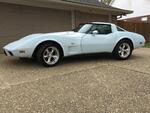
Background. Recently purchased a 78 L82 auto with 20K miles. Its a Silver so someone basically sat on it. It is very stock and original.
It is stumbling and dies when it gets hot. Normal (only and handful of starting and driving) it starts and runs great. Today, jump in and drive about 15 minutes down the road and it stumbles to a point it will die. I was doing 55 when it started. More gas does not get it going, more like it gets worse. Still starts and idles pretty good but stumbles and will die with acceleration. Made it to a parking lot, letting it sit till later when it cools off. I expect it will operate fine later until it gets hot again so hope to make it back home.
Yesterday, took it on a short drive and everything was fine. After about ten minutes, went to take it for another drive and it would not start at all. Waited several hours to let it cool and it started just fine.
Sounds some what like vapor lock but my experience with vapor lock is it usually only occurs idling or in slow traffic and no issues running down the highway. Googled and see alot of possibilities, most involve some pre existing modifications to the engine/fuel/ignition systems. Since I have basically a stock set up, was curious what opinions on what to investigate. Thinking ignition. Only thing I've done under the hood is replace valve cover gaskets and fuel filter.
It is stumbling and dies when it gets hot. Normal (only and handful of starting and driving) it starts and runs great. Today, jump in and drive about 15 minutes down the road and it stumbles to a point it will die. I was doing 55 when it started. More gas does not get it going, more like it gets worse. Still starts and idles pretty good but stumbles and will die with acceleration. Made it to a parking lot, letting it sit till later when it cools off. I expect it will operate fine later until it gets hot again so hope to make it back home.
Yesterday, took it on a short drive and everything was fine. After about ten minutes, went to take it for another drive and it would not start at all. Waited several hours to let it cool and it started just fine.
Sounds some what like vapor lock but my experience with vapor lock is it usually only occurs idling or in slow traffic and no issues running down the highway. Googled and see alot of possibilities, most involve some pre existing modifications to the engine/fuel/ignition systems. Since I have basically a stock set up, was curious what opinions on what to investigate. Thinking ignition. Only thing I've done under the hood is replace valve cover gaskets and fuel filter.

Heel & Toe
Joined: Mar 2025
Posts: 21
Likes: 4
From: Western Md
Background. Recently purchased a 78 L82 auto with 20K miles. Its a Silver so someone basically sat on it. It is very stock and original.
It is stumbling and dies when it gets hot. Normal (only and handful of starting and driving) it starts and runs great. Today, jump in and drive about 15 minutes down the road and it stumbles to a point it will die. I was doing 55 when it started. More gas does not get it going, more like it gets worse. Still starts and idles pretty good but stumbles and will die with acceleration. Made it to a parking lot, letting it sit till later when it cools off. I expect it will operate fine later until it gets hot again so hope to make it back home.
Yesterday, took it on a short drive and everything was fine. After about ten minutes, went to take it for another drive and it would not start at all. Waited several hours to let it cool and it started just fine.
Sounds some what like vapor lock but my experience with vapor lock is it usually only occurs idling or in slow traffic and no issues running down the highway. Googled and see alot of possibilities, most involve some pre existing modifications to the engine/fuel/ignition systems. Since I have basically a stock set up, was curious what opinions on what to investigate. Thinking ignition. Only thing I've done under the hood is replace valve cover gaskets and fuel filter.
It is stumbling and dies when it gets hot. Normal (only and handful of starting and driving) it starts and runs great. Today, jump in and drive about 15 minutes down the road and it stumbles to a point it will die. I was doing 55 when it started. More gas does not get it going, more like it gets worse. Still starts and idles pretty good but stumbles and will die with acceleration. Made it to a parking lot, letting it sit till later when it cools off. I expect it will operate fine later until it gets hot again so hope to make it back home.
Yesterday, took it on a short drive and everything was fine. After about ten minutes, went to take it for another drive and it would not start at all. Waited several hours to let it cool and it started just fine.
Sounds some what like vapor lock but my experience with vapor lock is it usually only occurs idling or in slow traffic and no issues running down the highway. Googled and see alot of possibilities, most involve some pre existing modifications to the engine/fuel/ignition systems. Since I have basically a stock set up, was curious what opinions on what to investigate. Thinking ignition. Only thing I've done under the hood is replace valve cover gaskets and fuel filter.

Le Mans Master


Joined: Jun 2019
Posts: 7,658
Likes: 2,470
From: Indiana
Pretty much your same car same issue here with lots of help and troubleshooting.
https://www.corvetteforum.com/forums...e-on-road.html
vapor lock should not be an issue as it recirculates.
Visually look and see if carburetor squirts gas.
if gas maybe module but if original may not be.
https://www.corvetteforum.com/forums...e-on-road.html
vapor lock should not be an issue as it recirculates.
Visually look and see if carburetor squirts gas.
if gas maybe module but if original may not be.
Thread Starter
Advanced
Joined: Mar 2016
Posts: 56
Likes: 4
I drove it from Indy to Texas, overall it ran very well except for some traditional heat soak after hours of driving but ran fine on highway, no stalling and dieing. Since I have replaced the fuel filter, it was a Wix. If it was a filter problem, only impacted with heat??
Le Mans Master

Joined: Aug 2017
Posts: 8,336
Likes: 2,810
From: Cool Northern Michigan
greaser,
These are common symptoms and are often very difficult to diagnosis.
But the first step is elimination by trial & error of the two possibilities.
Next time this event happens, immediately pop the hood and install a spark tester. About $6 at Harbor Freight.
The tool does NOT have be placed near the hot exhaust manifold. Pick any wire on the distributor cap, install the tester in line with any plugwire.
Crank it! You will know within 3 seconds if you have IGN.
Or
Pop the hood and immediately remove the air cleaner. See if you have fuel percolation at the carb vents.
This can be caused by fuel supply preheated on the way to an already hot carb.
There are several remedies for this, such as return line, carb insulating spacers and blocking off hot air inside the Intake manifold.
These are common symptoms and are often very difficult to diagnosis.
But the first step is elimination by trial & error of the two possibilities.
Next time this event happens, immediately pop the hood and install a spark tester. About $6 at Harbor Freight.
The tool does NOT have be placed near the hot exhaust manifold. Pick any wire on the distributor cap, install the tester in line with any plugwire.
Crank it! You will know within 3 seconds if you have IGN.
Or
Pop the hood and immediately remove the air cleaner. See if you have fuel percolation at the carb vents.
This can be caused by fuel supply preheated on the way to an already hot carb.
There are several remedies for this, such as return line, carb insulating spacers and blocking off hot air inside the Intake manifold.
Last edited by HeadsU.P.; Jul 5, 2025 at 09:55 PM.
Race Director


Joined: Mar 2016
Posts: 14,406
Likes: 8,212
From: Napa Valley California
Coils going bad will fail when they warm up and get hot.
They’ll work good when they are cool but will start failing again as they warm up.
They are cheap and can be replaced in about ten minutes.
Electronic ignition modules will act the same so replacing both is a good idea.
They’ll work good when they are cool but will start failing again as they warm up.
They are cheap and can be replaced in about ten minutes.
Electronic ignition modules will act the same so replacing both is a good idea.
Corvette Stories
The Best of Corvette for Corvette Enthusiasts

Top 10 Most Expensive Corvettes Ever Sold on Bring A Trailer
Brett Foote
10 Things Every Corvette Owner Needs (2026 Edition)
Michael S. Palmer
8 Most "Only Corvette Owners Understand" Quirks and Problems
Pouria Savadkouei
10 Reasons the C6 Z06 is Still A Performance Benchmark After 20 Years
Joe Kucinski
How Much Horsepower Every Corvette Engine "LOST" in 1972
Joe Kucinski
Top 10 DOs and DON'Ts for Protecting Your Convertible Top!
Michael S. Palmer
Top 10 Most Explosive Corvettes Ever Made: Power-to-Weight Ratio Ranked!
Joe Kucinski
150 hp to 1,250 hp: Every Corvette Generation Compared by the Specs That Matter
Joe Kucinski
8 Coolest Corvette Pace Cars (and Replicas) of All Time
Verdad Gallardo


Safety Car


Joined: May 2001
Posts: 4,759
Likes: 1,647
From: Fairfax Virginia
When having issues starting the car after it is Hot or having it cut off like it has I would also be suspicious of the Carburetor Choke and whether is it functioning properly. The Ignition Coil is another great possibility as they do like to fail when they get hot.
If the car has the HEI ignition on it you could be experiencing a heat related failure mode. I never go anywhere far from another HEI module after the horror stories I have heard on this Forum.
The two things that I did to my High compression BB 427 made it start right up under any conditions. First I switched to a Gear drive starter motor which is smaller and fits beneath the headers with no clearance issues. Second I installed a MSD device that allows you to "pull timing while cranking" the engine. This feature is awesome and I am so glad to see it in more places since I first started using this feature. The idea is that the device (MSD 6AL) can allow you to pull up to 20* of timing WHILE cranking the engine. This feature will unload the ignition system and allow the engine to crank faster. The combination of these two items allows my 427 to start right up almost instantly in any weather.
For fuel percolation you might have to start insulating the fuel lines in the engine compartment. I brought my fuel lines in from back by the bell housing and into the rear of the throttle body. The fuel lines are all insulated to keep the fuel cooler along the path to the throttle body. They also have a Fire Sheath over them to protect the fuel lines from fire or excessive heat.
Cold air is another great thing for any engine, if the air going into your engine is really hot then your engine could start to detonate. I use a hood with a true cold air intake system and it supplies my engine with cooler air allowing it to run in the warmer months.
I am using electric cooling fans and those run for a few minutes after shutdown to ensure the car cools down.
If the car has the HEI ignition on it you could be experiencing a heat related failure mode. I never go anywhere far from another HEI module after the horror stories I have heard on this Forum.
The two things that I did to my High compression BB 427 made it start right up under any conditions. First I switched to a Gear drive starter motor which is smaller and fits beneath the headers with no clearance issues. Second I installed a MSD device that allows you to "pull timing while cranking" the engine. This feature is awesome and I am so glad to see it in more places since I first started using this feature. The idea is that the device (MSD 6AL) can allow you to pull up to 20* of timing WHILE cranking the engine. This feature will unload the ignition system and allow the engine to crank faster. The combination of these two items allows my 427 to start right up almost instantly in any weather.
For fuel percolation you might have to start insulating the fuel lines in the engine compartment. I brought my fuel lines in from back by the bell housing and into the rear of the throttle body. The fuel lines are all insulated to keep the fuel cooler along the path to the throttle body. They also have a Fire Sheath over them to protect the fuel lines from fire or excessive heat.
Cold air is another great thing for any engine, if the air going into your engine is really hot then your engine could start to detonate. I use a hood with a true cold air intake system and it supplies my engine with cooler air allowing it to run in the warmer months.
I am using electric cooling fans and those run for a few minutes after shutdown to ensure the car cools down.

Melting Slicks


Joined: Apr 2021
Posts: 2,714
Likes: 2,162
From: Minnesota
Like others have said checking the coil. I would also check your ignition timing. If you’re still running the factory specs more advance can help the engine run smoother, cooler, and more efficiently.
Thread Starter
Advanced
Joined: Mar 2016
Posts: 56
Likes: 4
Update; replaced the coil, D-cap, rotor, and ECM. Went for a drive and doubled the distance as last time and no problems so thinking problem solved. Went home and wanted to check where the timing was at for info and while just sitting and idling it dies. Try restarting real quick and nothing. Go to carb and rock the throttle cam and see gas come out the squirters so it has fuel. Try restarting and it fires up for a few seconds and dies. No restart. Back to carb and rock the throttle but no gas from squirters. Tried several times, no gas from squirters and no start. Will try later today but figure it will start right up. So, looking at gas supply problem. Ordered new fuel pump and plugs and wires, all look original.
Still can't rule out the chock but thinking if I unplug it after it warms up, it should not cause it to die if that's the problem?
Anything about a Q-Jet that can starve itself of fuel when hot?
Still can't rule out the chock but thinking if I unplug it after it warms up, it should not cause it to die if that's the problem?
Anything about a Q-Jet that can starve itself of fuel when hot?
Melting Slicks
Joined: Apr 2021
Posts: 2,714
Likes: 2,162
From: Minnesota
Do you have the factory hot air choke on your carb, or has it been converted to electric?
Regairdless, unplugging the heat source to the choke, wether that’s a wire or a hot air tube, after it’s opened will cause it to close again, not fixing your issue.
A stuck needle can prevent fuel from flowing to the float bowl of a Quadrajet, but that’s generally unaffected by temperature. A warmed up engine shouldn’t need any pumps from the carb to start. If it still won’t start try holding the throttle wide open and cranking it.
Regairdless, unplugging the heat source to the choke, wether that’s a wire or a hot air tube, after it’s opened will cause it to close again, not fixing your issue.
A stuck needle can prevent fuel from flowing to the float bowl of a Quadrajet, but that’s generally unaffected by temperature. A warmed up engine shouldn’t need any pumps from the carb to start. If it still won’t start try holding the throttle wide open and cranking it.
Last edited by Piersonpie; Jul 16, 2025 at 08:06 PM.
Race Director
Joined: Mar 2016
Posts: 14,406
Likes: 8,212
From: Napa Valley California
It does sound like a fuel delivery problem.
My first guess is that the fuel tank isn’t venting properly and it could be checked by simply driving it without the gas cap on.
If the fuel tank isn’t vented, the pump can’t pump fuel from the tank and you eventually run out of gas at the carb, even though you have fuel in the tank.
There have been cases where the fuel tanks actually constrict and become permanently damaged.
Another cause is the fuel sock in the tank is getting clogged with debris and does not allow the fuel to pass through the sock and you run out of gas because it can’t flow from the tank to the pump.
This is common in cars that have been stored because there are debris particles floating in the tank and as you’re driving the particles get pulled down to the sock and clog it.
When the engine is shut off and there’s no fuel getting pulled through the sock the particles release and float back to the top .
The repair is to drop the tank, clean it of any debris, inspect the tank for rust and replace the tank if necessary.
Install a new sock and reinstall the fuel tank.
My first guess is that the fuel tank isn’t venting properly and it could be checked by simply driving it without the gas cap on.
If the fuel tank isn’t vented, the pump can’t pump fuel from the tank and you eventually run out of gas at the carb, even though you have fuel in the tank.
There have been cases where the fuel tanks actually constrict and become permanently damaged.
Another cause is the fuel sock in the tank is getting clogged with debris and does not allow the fuel to pass through the sock and you run out of gas because it can’t flow from the tank to the pump.
This is common in cars that have been stored because there are debris particles floating in the tank and as you’re driving the particles get pulled down to the sock and clog it.
When the engine is shut off and there’s no fuel getting pulled through the sock the particles release and float back to the top .
The repair is to drop the tank, clean it of any debris, inspect the tank for rust and replace the tank if necessary.
Install a new sock and reinstall the fuel tank.

Le Mans Master
Joined: Aug 2017
Posts: 8,336
Likes: 2,810
From: Cool Northern Michigan
Greaser2,
First of all STOP!
Second of all STOP!
Stop throwing parts at it without verification those parts are truly needed.
With the fuel line disconnected at the carb, aim the line at a glass jar and crank it.
Have fuel?
Then you don't need a new pump.
It ran fine earlier. All eight sparkplugs just don't quit at random. Hold off on that project too.
You need to verify you have fuel before the pump and after the pump. Simply removing the fuel line from the tank at the pump and quickly reinstalling will verify that.
Use caution and be ready for fuel splash.
The fuel sock in the tank was mentioned. Does a '78 have a rubber bladder liner in the tank? IDK
First of all STOP!
Second of all STOP!
Stop throwing parts at it without verification those parts are truly needed.
With the fuel line disconnected at the carb, aim the line at a glass jar and crank it.
Have fuel?
Then you don't need a new pump.
It ran fine earlier. All eight sparkplugs just don't quit at random. Hold off on that project too.
You need to verify you have fuel before the pump and after the pump. Simply removing the fuel line from the tank at the pump and quickly reinstalling will verify that.
Use caution and be ready for fuel splash.
The fuel sock in the tank was mentioned. Does a '78 have a rubber bladder liner in the tank? IDK
Race Director
Joined: Mar 2016
Posts: 14,406
Likes: 8,212
From: Napa Valley California

I agree, throwing new parts at it won’t randomly fix the problem.
As stated, check things as listed to see if you’re getting fuel from the pump to the carb by taking the fuel tank out of the picture.
If you verify you get fuel, then the problem is possibly in the tank.
You need to check your AIM to see the make up of the components in your tank and see how they work before you just start buying new parts.
Thread Starter
Advanced
Joined: Mar 2016
Posts: 56
Likes: 4
Greaser2,
First of all STOP!
Second of all STOP!
Stop throwing parts at it without verification those parts are truly needed.
With the fuel line disconnected at the carb, aim the line at a glass jar and crank it.
Have fuel?
Then you don't need a new pump.
It ran fine earlier. All eight sparkplugs just don't quit at random. Hold off on that project too.
You need to verify you have fuel before the pump and after the pump. Simply removing the fuel line from the tank at the pump and quickly reinstalling will verify that.
Use caution and be ready for fuel splash.
The fuel sock in the tank was mentioned. Does a '78 have a rubber bladder liner in the tank? IDK
First of all STOP!
Second of all STOP!
Stop throwing parts at it without verification those parts are truly needed.
With the fuel line disconnected at the carb, aim the line at a glass jar and crank it.
Have fuel?
Then you don't need a new pump.
It ran fine earlier. All eight sparkplugs just don't quit at random. Hold off on that project too.
You need to verify you have fuel before the pump and after the pump. Simply removing the fuel line from the tank at the pump and quickly reinstalling will verify that.
Use caution and be ready for fuel splash.
The fuel sock in the tank was mentioned. Does a '78 have a rubber bladder liner in the tank? IDK

Safety Car


Joined: Nov 2002
Posts: 4,182
Likes: 1,178
From: out of nowhere
This car is nearly 50years old with mostly original parts. The plugs and wires need replaced, I am replacing anything that’s needs replaced as I want this car to be my daily. I’ve already done lots of maintenance, the entire rear suspension has been replaced for example. Original belts replaced. Trans serviced. 50 year old fuel pump is next.
Thread Starter
Advanced
Joined: Mar 2016
Posts: 56
Likes: 4
I get what you are saying, but you need to get what the previous posters/responses are saying. An engine runs on fuel and spark and proper timing/distribution of both. You’d be well served to diagnose each of these as described, then buy parts or make adjustments as needed based on those diagnosis.