



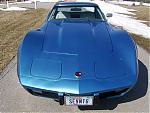




1980 L48 Engine Knock

Thread Starter
Advanced


Joined: Sep 2024
Posts: 82
Likes: 12
From: Richmond, Virginia
 1980 L48 Engine Knock
So I had no knocks before. I just put in a comp 268H cam kit, new disty and have Doug's Headers installed. New timing chain, springs, lifters, pushrods, water pump...
Car pulls fine, starts fine, idles fine. Thanks Lars Grimsrud (carb work) and Lakeside Auto in Richmond (timing, suspension).
Now. I hear a noticeable knock (passenger side) only when in drive. Driving I hear it, in the driveway in drive with the brakes on I hear it. I don't hear it in neutral or in reverse (driving in reverse or with brake on).
Transmission was maybe a quart low on fluid, I filled it (maybe a bit too much, we will see).
Any input will be appreciated.
Ken
Car pulls fine, starts fine, idles fine. Thanks Lars Grimsrud (carb work) and Lakeside Auto in Richmond (timing, suspension).
Now. I hear a noticeable knock (passenger side) only when in drive. Driving I hear it, in the driveway in drive with the brakes on I hear it. I don't hear it in neutral or in reverse (driving in reverse or with brake on).
Transmission was maybe a quart low on fluid, I filled it (maybe a bit too much, we will see).
Any input will be appreciated.
Ken

Popular Reply
Aug 1, 2025, 07:50 AM
Thread Starter
Advanced
Joined: Sep 2024
Posts: 82
Likes: 12
From: Richmond, Virginia
With replies like that, you will find wife #5 in no time brother.

Drifting

Joined: Jun 2025
Posts: 1,672
Likes: 582
Seems you've increased power and torque with your mods; it should have.
Perhaps your automatic transmission's flexplate has cracked; it happens routinely to even unmodified motors.
Cracked flexplates often knock.
Source location of bad sounds are routinely difficult to pinpoint; has fooled many.
Perhaps your automatic transmission's flexplate has cracked; it happens routinely to even unmodified motors.
Cracked flexplates often knock.
Source location of bad sounds are routinely difficult to pinpoint; has fooled many.

Melting Slicks


Joined: Apr 2021
Posts: 2,659
Likes: 2,117
From: Minnesota
I would check your fuel pump/pushrod. I tested mine by removing both and running the car off the gas in the float bowls. Works for long enough to tell if that’s what your issue is.
You can also remove spark plug wires one at a time to see if the noise goes away, and which cylinder is making the noise.
You can also remove spark plug wires one at a time to see if the noise goes away, and which cylinder is making the noise.

Race Director


Joined: Nov 2006
Posts: 13,177
Likes: 7,780
From: Sunshine Coast, Queensland, Australia
2025 C3 of the Year Finalist - Modified
2024 C3 of the Year Finalist- Modified
2022 C3 of the Year Finalist - Modified
Cruise-In VIII Veteran
Sounds like you have a automatic transmission. Why bother?
Le Mans Master

Joined: Aug 2017
Posts: 8,336
Likes: 2,809
From: Cool Northern Michigan
Uniquemicro,
Your symptoms all have one thing in common pretty much.
Engine under load. In gear, driving, brake applied, etc.
I would think this scenario points to the vacuum advance canister.
Your new cam changed the vacuum signal, given in inches.
You will need to figure out your:
Initial Timing w/ vac
Initial Timing w/o vac.
Mechanical advance added
And vacuum degrees added.
No more than 8 -12 degrees of vac is needed.
Testing can be done with a Mighty Vac + Timing light
Your symptoms all have one thing in common pretty much.
Engine under load. In gear, driving, brake applied, etc.
I would think this scenario points to the vacuum advance canister.
Your new cam changed the vacuum signal, given in inches.
You will need to figure out your:
Initial Timing w/ vac
Initial Timing w/o vac.
Mechanical advance added
And vacuum degrees added.
No more than 8 -12 degrees of vac is needed.
Testing can be done with a Mighty Vac + Timing light
Corvette Stories
The Best of Corvette for Corvette Enthusiasts

150 hp to 1,250 hp: Every Corvette Generation Compared by the Specs That Matter
Joe Kucinski
8 Coolest Corvette Pace Cars (and Replicas) of All Time
Verdad Gallardo
Top 10 Corvette Engines RANKED by Peak Torque (70+ Years of Muscle!)
Joe Kucinski
Corvette ZR1X Will Be Pacing the Indy 500, And Could Probably Race, Too!
Verdad Gallardo
Top 10 Corvettes Coming to Mecum Indy 2026!
Brett Foote
Top 10 C9 Corvette MUST-HAVES to Fix These C8 Generation Flaws!
Michael S. Palmer
10 Revolutionary 'Corvette Firsts' Most People Don't Know
Joe Kucinski
5 Reasons to Upgrade to an LS6-Powered Corvette; 5 Reasons to Stay LT2
Michael S. Palmer
2027 Corvette vs The World: Every C8 vs Its Closest Competitor
Joe Kucinski
Thread Starter
Advanced
Joined: Sep 2024
Posts: 82
Likes: 12
From: Richmond, Virginia
Uniquemicro,
Your symptoms all have one thing in common pretty much.
Engine under load. In gear, driving, brake applied, etc.
I would think this scenario points to the vacuum advance canister.
Your new cam changed the vacuum signal, given in inches.
You will need to figure out your:
Initial Timing w/ vac
Initial Timing w/o vac.
Mechanical advance added
And vacuum degrees added.
No more than 8 -12 degrees of vac is needed.
Testing can be done with a Mighty Vac + Timing light
Your symptoms all have one thing in common pretty much.
Engine under load. In gear, driving, brake applied, etc.
I would think this scenario points to the vacuum advance canister.
Your new cam changed the vacuum signal, given in inches.
You will need to figure out your:
Initial Timing w/ vac
Initial Timing w/o vac.
Mechanical advance added
And vacuum degrees added.
No more than 8 -12 degrees of vac is needed.
Testing can be done with a Mighty Vac + Timing light
How do I test this theory of yours?
Le Mans Master
Joined: Aug 2017
Posts: 8,336
Likes: 2,809
From: Cool Northern Michigan
Oh-no. Not another mechanic that does not understand the importance of Vac Adv.
If you truly do have too much vac adv, there is a limiting plate that fits under the arm of the canister.
One screw holds it. Maybe $15. Have one myself, set to 10 degrees max.
But for now, you need the two tools I mentioned, then some basic knowledge of how to perform the test and get results for each setting above.
If you truly do have too much vac adv, there is a limiting plate that fits under the arm of the canister.
One screw holds it. Maybe $15. Have one myself, set to 10 degrees max.
But for now, you need the two tools I mentioned, then some basic knowledge of how to perform the test and get results for each setting above.
Thread Starter
Advanced
Joined: Sep 2024
Posts: 82
Likes: 12
From: Richmond, Virginia
Oh-no. Not another mechanic that does not understand the importance of Vac Adv.
If you truly do have too much vac adv, there is a limiting plate that fits under the arm of the canister.
One screw holds it. Maybe $15. Have one myself, set to 10 degrees max.
But for now, you need the two tools I mentioned, then some basic knowledge of how to perform the test and get results for each setting above.
If you truly do have too much vac adv, there is a limiting plate that fits under the arm of the canister.
One screw holds it. Maybe $15. Have one myself, set to 10 degrees max.
But for now, you need the two tools I mentioned, then some basic knowledge of how to perform the test and get results for each setting above.
Ken
Melting Slicks
Joined: Apr 2021
Posts: 2,659
Likes: 2,117
From: Minnesota
Thread Starter
Advanced
Joined: Sep 2024
Posts: 82
Likes: 12
From: Richmond, Virginia
Email Lars at V8fastcars@msn.com and ask for a copy of his timing and vacuum advance papers.
Melting Slicks
Joined: Apr 2021
Posts: 2,659
Likes: 2,117
From: Minnesota
In the papers it talks about how the vacuum advance works. Adding in more timing during times of light engine load, like cruising or idling.
Yes, 36 total degrees of mechanical advance is ideal when you’re accelerating, but when you’re not the engine can handle quite a bit more. With modern gasoline that number is 12, giving you a total of 48 degrees when the mechanical advance is fully engaged. This much advance during light load wont hurt the engine in any way.
If the shop set your total mechanical advance to 36 your initial will probably be somewhere in the mid teens. I would measure your timing at idle with the VA unplugged, add 12 to that number, then hook up your VA to a manifold vacuum source and adjust until you’re getting that number. With the VA in combination with your aftermarket cam the engine will run better at idle, run cooler, have better throttle response, and get better fuel economy. It might solve your knocking problem too.
Yes, 36 total degrees of mechanical advance is ideal when you’re accelerating, but when you’re not the engine can handle quite a bit more. With modern gasoline that number is 12, giving you a total of 48 degrees when the mechanical advance is fully engaged. This much advance during light load wont hurt the engine in any way.
If the shop set your total mechanical advance to 36 your initial will probably be somewhere in the mid teens. I would measure your timing at idle with the VA unplugged, add 12 to that number, then hook up your VA to a manifold vacuum source and adjust until you’re getting that number. With the VA in combination with your aftermarket cam the engine will run better at idle, run cooler, have better throttle response, and get better fuel economy. It might solve your knocking problem too.
Last edited by Piersonpie; Aug 1, 2025 at 05:46 PM.
Le Mans Master
Joined: Aug 2017
Posts: 8,336
Likes: 2,809
From: Cool Northern Michigan
Unique,
Yes, some Vac Adv canisters have an allen screw inside the hose port.
That allows you to tweak the timing for more vacuum or less vacuum advance.
What that adjuster screw does not do is, limit the maximum allowed.
So, there is where your tools of the trade will help you diagnose. Timing Light, vacuum gauge or better yet, Mighty Vac pump.
Also. At the other end of the Vac canister hose:
Where are you getting a vacuum source?
You have to find "your" current timing numbers before you put a hole in a piston.
Yes, some Vac Adv canisters have an allen screw inside the hose port.
That allows you to tweak the timing for more vacuum or less vacuum advance.
What that adjuster screw does not do is, limit the maximum allowed.
So, there is where your tools of the trade will help you diagnose. Timing Light, vacuum gauge or better yet, Mighty Vac pump.
Also. At the other end of the Vac canister hose:
Where are you getting a vacuum source?
You have to find "your" current timing numbers before you put a hole in a piston.
Le Mans Master
Joined: Aug 2017
Posts: 8,336
Likes: 2,809
From: Cool Northern Michigan
Initial + Mechanical = total (34-38*) timing, no vac.
Plus 10* - 12* vac gives you 48* - 50* cruising.
But, anyway, I think the O.P. vac adv is too high, sticking or perhaps hooked up to a bad supply source.
That's why his mechanic chose the "cap-it" repair. "There. All fixed!"
Plus 10* - 12* vac gives you 48* - 50* cruising.
But, anyway, I think the O.P. vac adv is too high, sticking or perhaps hooked up to a bad supply source.
That's why his mechanic chose the "cap-it" repair. "There. All fixed!"
Last edited by HeadsU.P.; Aug 1, 2025 at 08:23 PM.
Melting Slicks
Joined: Apr 2021
Posts: 2,659
Likes: 2,117
From: Minnesota
Piersonpie,
Reread your post.
Initial + Mechanical = total (34-38*) timing, no vac.
Plus 10* - 12* vac gives you 48* - 50* cruising.
But, anyway, I think the O.P. vac adv is too high, sticking or perhaps hooked up to a bad supply source.
That's why his mechanic chose the "cap-it". "There. All fixed!"
Reread your post.
Initial + Mechanical = total (34-38*) timing, no vac.
Plus 10* - 12* vac gives you 48* - 50* cruising.
But, anyway, I think the O.P. vac adv is too high, sticking or perhaps hooked up to a bad supply source.
That's why his mechanic chose the "cap-it". "There. All fixed!"
BTW some of the adjustable vacuum advance canisters to allow you to change the amount of advance as well as the vacuum level you get said advance at. They’re adjusted by the same screw though, so you’re set to a certain vacuum level to get 12 degrees. A canister that allows you to adjust these variables independently would be ideal, but I haven’t been able to find one for an HEI.

Old Pro Solo Guy


Joined: Dec 2017
Posts: 8,031
Likes: 4,386
From: Marlton NJ
A properly adjusted vacuum advance is essential on street driven cars.
These engines are mostly driven at part throttle, and that is where it works.
Deleting it is an old-school race car mod that has persisted for some 50 years, and has no business being done on any street driven car.
Believe it or not, even an L88 drives better at part throttle with vacuum advance hooked up, if it is tuned properly.
The factory tuned them for race only, and did not care about the street, and deleted it.
Just like the fan shroud, radio, heater, defroster, etc.
But stock vacuum advance cans do not work well with modified engines, you have to know how to tune them.....
That adjustable vac can, and a 10* limiter, and Lars papers, are all you need.
These engines are mostly driven at part throttle, and that is where it works.
Deleting it is an old-school race car mod that has persisted for some 50 years, and has no business being done on any street driven car.
Believe it or not, even an L88 drives better at part throttle with vacuum advance hooked up, if it is tuned properly.
The factory tuned them for race only, and did not care about the street, and deleted it.
Just like the fan shroud, radio, heater, defroster, etc.
But stock vacuum advance cans do not work well with modified engines, you have to know how to tune them.....
That adjustable vac can, and a 10* limiter, and Lars papers, are all you need.