When you click on links to various merchants on this site and make a purchase, this can result in this site earning a commission. Affiliate programs and affiliations include, but are not limited to, the eBay Partner Network.
Hi guys, I just finished breaking down the rear end a few days ago; trailing arms, differential pulled, the works. I bought a low mileage used differential out of a 1980 from a reputable Corvette shop in Arkansas.
My question is; since its a used differential (it is marked where the old driveshaft was) and I did mark the position of the driveshaft on the transmission side; should I attach it to the differential FIRST and then line it up with my marks on the transmission side? I wanted to clarify that, today is just opening the differential and changing the seals while I wait for all the other bushings to come in.
I connect the drive shaft to the transmission first then the differential. There's nothing to align. When you opened up the diff you may find a worn cross shaft and yokes. Below is a picture of a diff I pulled from a 80 at a pick-n- yard. The speedometer showed about 80,000 miles. Poor Vette.
Last edited by Fly skids up!; Oct 13, 2025 at 04:32 PM.
I appreciate the reply, and I opened up both differentials to check something. The clutch pack retaining clips on my original one are quite loose and obviously broken at the tip. The used one I bought is similar; the retaining clip on one side almost looks bent but its still in place not affecting anything in my opinion. The cross shaft on my original isn't as worn as yours but its a noticeable groove! And finally, the used one has some wear but its normal to me; nothing excessive.
The yoke on my passenger side original diff has some pretty worn teeth while the driver side does not.
The used one I bought, both yokes have good teeth and look solid.
I've read that these clutch pack retaining pins break quite often, but if its still in place and I can't just pull it out; I would assume its just fine?
Update
It took me a long time but I got the snap rings off that hold the yokes in place, but I can't seem to get the yokes out. I don't see any special instructions in my GM 1981 shop manual, it just says to pull them out. I sprayed them with Kroil and tapped with a hammer but they don't budge; they go in almost flush where the yoke gear teeth sit but that it. I don't want to go hitting on the yokes with a hammer unless I'm missing something. The only thing I haven't taken off is the pinion nut since there's nothing for me to grab onto with my breaker bar. Any suggestions?
Update
It took me a long time but I got the snap rings off that hold the yokes in place, but I can't seem to get the yokes out. I don't see any special instructions in my GM 1981 shop manual, it just says to pull them out. I sprayed them with Kroil and tapped with a hammer but they don't budge; they go in almost flush where the yoke gear teeth sit but that it. I don't want to go hitting on the yokes with a hammer unless I'm missing something. The only thing I haven't taken off is the pinion nut since there's nothing for me to grab onto with my breaker bar. Any suggestions?
Look for areas at the end of the yokes that have mushroomed and use a Dremel to remove the material.
If I use a Dremel to remove the mushroomed material (it must be very little) would I have to then replace the yokes or could they be reused? I'm wondering if I could attach a slide hammer in some way as well.
If I use a Dremel to remove the mushroomed material (it must be very little) would I have to then replace the yokes or could they be reused? I'm wondering if I could attach a slide hammer in some way as well.
You will have to determine that.
Did you measure end play before starting disassembly?
I did not measure the end play, but to me and from what I was told when I purchased it; there was no excessive play. It all seemed to be tight and square even upon initial inspection when it arrived today.
I did not measure the end play, but to me and from what I was told when I purchased it; there was no excessive play. It all seemed to be tight and square even upon initial inspection when it arrived today.
Since you are having an issue removing the yoke it appears there is some wear against the center pin. You can measure when you assemble and then decide if you need new yokes.
I just looked at the center pin, it looked like very light wear. When I rotated the pin there's actually a pretty decent groove. Here's a picture for better reference.
Years ago on my 80 I used an narrow flat chisel to clear out the splines. I used a bigger slide hammer to pull the yokes and did final clean up on the bench. If you cant get a slide hammer to line up with did if car you can use a chain between the yokes and slide hammer.
That's the direction I was about to head. My Dremel tool stopped working at the worst time but I did have a small fine file set, and that cleared up most of the burs and gave it a little more wiggle room than before. I will post an update here once I get it out.
I was able to get the side yokes out, a little unconventional but it worked. Of course the local auto part store had the slide hammers but NONE in the area had the attachments, go figure. So I just so happened to have a ball joint separating fork in my drawer, it lines up perfectly with the ends of the yokes. Hit it with a hammer twice then rotate, hit again, repeat. Took a little convincing but came out after about a minute. Inner splines are cleaned up, yokes are nice and filed/cleaned up as well. Thank you all.
When You go to install it pull the Yoke out of the Trans if You have not all ready. You will need to catch the Oil that will drain. Then install the Driveline and U-Joints with the Trans Yoke on the Differential. Re install as an assembly. Much better than putting it together in place up in the Tunnel.
First thing I did was pull the trans yoke out to replace the leaking seal, and marked it before I took it out. I put in new seals for the differential side yokes (unfortunately the new ones are slightly thinner so they don't align flush with the housing towards the yoke dust cover if that makes sense) but they seal up perfectly and hammered exactly as they should; no leaks when full of diff fluid. I tilted it and turned it on both sides and spun the yokes to verify that so the new seals should work just fine. Just waiting on my trailing arm bushings to come in; unfortunately they are on backorder and I can't reinstall the differential just yet; I want as much room as possible when re-installing my trailing arms.
First thing I did was pull the trans yoke out to replace the leaking seal, and marked it before I took it out. I put in new seals for the differential side yokes (unfortunately the new ones are slightly thinner so they don't align flush with the housing towards the yoke dust cover if that makes sense) but they seal up perfectly and hammered exactly as they should; no leaks when full of diff fluid. I tilted it and turned it on both sides and spun the yokes to verify that so the new seals should work just fine. Just waiting on my trailing arm bushings to come in; unfortunately they are on backorder and I can't reinstall the differential just yet; I want as much room as possible when re-installing my trailing arms.
Assuming your refering to the forward Bushing where they are bolted to the frame are you aware that the centers need to be flared out when new ones are installed ? A special Tool is made for this job.
First thing I did was pull the trans yoke out to replace the leaking seal, and marked it before I took it out. I put in new seals for the differential side yokes (unfortunately the new ones are slightly thinner so they don't align flush with the housing towards the yoke dust cover if that makes sense) but they seal up perfectly and hammered exactly as they should; no leaks when full of diff fluid. I tilted it and turned it on both sides and spun the yokes to verify that so the new seals should work just fine. Just waiting on my trailing arm bushings to come in; unfortunately they are on backorder and I can't reinstall the differential just yet; I want as much room as possible when re-installing my trailing arms.
Assuming your referring to the forward Bushing where they are bolted to the frame are you aware that the centers need to be flared out when new ones are installed ? A special Tool is made for this job.
Correct, I'm aware that it needs a special flaring tool but I could not justify spending $100 on a tool to use just once, especially since money is tight. I was going to make the rental flare tool from O'Reilly work.





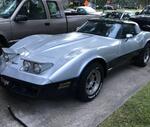


 1981 Corvette Differential/Driveshaft Install