When you click on links to various merchants on this site and make a purchase, this can result in this site earning a commission. Affiliate programs and affiliations include, but are not limited to, the eBay Partner Network.
I will be putting a new BP engine in my 78 corvette this next winter, but I'm torn between the 350/390hp, 383/410hp and the 383/436hp. I understand the 436hp needs 91 octane whereas the others only need 87.. The 410 costs more than the 436 by $300 and the 390 is $900 less than the 436. I need to hear from the people that have any of these engines to see if they are happy or if they wished they had purchased a different engine. Thanks in advance.
Consider an LS3 instead, either new from GM, or a junkyard LS swap.
Once you consider the cost of also adding EFI to your brand new engine (which may come with locked timing and/or no vacuum advance), you'll be miles ahead if you start with a better platform.
FWIW, the cost difference of 91 vs. 87 octane is less of a concern when you (can) get nearly double the mpg.
In 2023 I installed a BP 396 SB in my '77. Kept the original 4 speed and added a Sniper FI (see the link to the original post). I am happy with the decision I made, after all, it is my car...... Does this car need all that? Probably not, the car is very fast and you probably can't go wrong with the any of the choices you are considering. The BP 396 that I went with is no longer an option, don't know why.....
The BP dyno sheet came back at: HP = 493.9 TQ = 524.1
(But of course these are their numbers)
Beware..... You're going to get a lot of people on here telling what you "should" do and how you "should" spend your money...... "You should do this..... You should do that....." It's your car, do as YOU please!
If it’s in your budget then I would go with the 436 hp.
When replacing an engine, make sure everything in the drive train works well together and the engine builds torque where you want it most.
An engine that has peak hp at 6500 rpm can perform very poorly on the street.
Compression and cam specs can make or break performance if matched poorly with transmission type and rear end gearing.
What ever crate engine you buy pay close attention to the quality of parts they use, whether the block is new or remanufactured and where the final assembly is done.
You can get a real turd of an engine if you don’t do your research.
I had a bad experience buying a crate engine years ago, and I’ll never consider buying another.
The engine was damaged during shipping.
The builder and shipping company fought for two years in court over who was responsible and during that entire time I was without an engine for my build.
You may want to consider rebuilding/upgrading your OEM 350 if you still have the motor and it is rebuildable. I had this same dilemma back in 2014 with my OEM GM 78 L-82 with 66,000 miles on it with a Super T-10 4 speed and 3.70 gears. My machine owner/builder convinced me to rebuild the OEM L-82 versus a crate motor for my car since it was for street driving only and we could build a better OEM Gen 1 SBC for the same or less money than a crate motor. He was right!
I also opted for the bored L-82 355 over the 383 stroked version trying to keep as GM L-82 as possible, using many of the OEM L-82 components like forged L-82 crankshaft, L-82 rods, L-82 aluminum intake etc. I was aiming for BIG Mid range Torque (2,500-4,500 RPM), with strong Bottom end TQ, along with big HP, storming very to occasional pulls to 6,000 RPM, even though the engine can rev to 6,500 RPM redline.
Here is a quick summary of my L-82 355 and the BP 383. Remember the HP's quoted are GROSS NOT Net HP like all cars have been rated since 1972 when an engine is factory installed, not apples to apples comparison. My L-82 355:
AI summary of my 355 L-82 and the BP383 crate:Here's the updated comparison, now incorporating the 110 LSA for the BP 383 and specifying the BP aluminum heads:
Attribute Gm 355 Engine BP 383 Crate Motor Displacement 355 cubic inches 383 cubic inches Cam Type Roller cam Roller cam Lift .525 .544/.555 Duration (Intake/Exhaust) 219/225 230/236 LSA 110 degrees 110 degrees Compression Ratio 10.3:1 10:1 Cylinder Heads AFR 180 BP aluminum heads Power Output 440 HP 436 HP
Engine Features
Gm 355 Engine
The roller cam design provides smoother operation and better performance at higher RPMs.
Utilizes AFR 180 heads, known for maximizing airflow and enhancing both torque and horsepower.
With a 10.3:1 compression ratio, it's set up to run effectively on high-octane fuel, improving overall power efficiency.
BP 383 Crate Motor
Also features a roller cam, which helps optimize performance.
Lift of .544/.555 promotes better airflow at high RPMs, contributing to a higher power ceiling.
A consistent 110 LSA ensures that both engines have similar characteristics regarding intake and exhaust timing.
The BP aluminum heads are typically lightweight and provide good airflow, which suits high-performance setups.
Conclusion
Both engines have similar specifications, including a 110 LSA, which indicates they will have comparable overlap characteristics, potentially resulting in similar power bands. The Gm 355 offers a slight edge in compression and efficiency at lower RPMs, while the BP 383 is built for higher performance capabilities given its larger displacement and lift.
If you’re considering integrating one over the other for a specific project or vehicle type, that could guide which engine would better fit your performance goals. Would you like to discuss applications or installation considerations for either engine?
OldCarBum,
Thanks for the headsup. I already learned that by watching my brother 40 years ago get a reconditioned engine that was junk. I won't be doing that.
Prestige593,
Also, good advice. I'm sure in the end, it will be my decision. I'm just wondering if anyone is disappointed with what they purchased and they should have gone with a different choice.
jb78L-82,
Since the engine that's in my 78 Vette is a 305 which shocked me BTW, I can't rebuild that one. So I'm starting from scratch. I'm just going to cruse it, not race it, but on the freeway at 70 I'm doing 3k rpm. Mostly driven like a fun car but I've been told I might have a lead foot too. I think either the GM or BP would work fine for me. I just don't have a 350 block to start with, which is why I was looking at the BP offerings.Of the three BP offerings I mentioned at the beginning you would go with the 383/436hp....correct?
One big thing to consider is how you drive the car, I returned (refused delivery) the 390 hp because it only made 12 in Hg of vacuum and idled at 950 RPM. The BP350CT on the other hand makes 18 in Hg of vacuum and idles at 600 RPM and burns regular gas. The BP350CT will have way more HP than I could ever want in a C3. The 390 HP would need a high stall speed torque converter. Mine peaked out at 361 HP at the crank.
If the engine you decide on is in stock at Summit Racing buy from them because shipping is free, Blueprint charges $299 for shipping.
One big thing to consider is how you drive the car, I returned (refused delivery) the 390 hp because it only made 12 in Hg of vacuum and idled at 950 RPM. The BP350CT on the other hand makes 18 in Hg of vacuum and idles at 600 RPM and burns regular gas. The BP350CT will have way more HP than I could ever want in a C3. The 390 HP would need a high stall speed torque converter. Mine peaked out at 361 HP at the crank.
If the engine you decide on is in stock at Summit Racing buy from them because shipping is free, Blueprint charges $299 for shipping.
JT
^This
I have the Blueprint 350/341HP too and I love it.
I just noticed the BP 350/341 and 390hp are internally balanced front and externally balanced rear, whereas the BP 383/410 and 436 are externally balanced front and rear. Externally balanced engines can flex at high rpm causing undue bearing wear. I'm wondering when they say internally balanced are they doing it by drilling the crank or welding weights on it????? This is a question I need to ask them tomorrow.
I just noticed the BP 350/341 and 390hp are internally balanced front and externally balanced rear, whereas the BP 383/410 and 436 are externally balanced front and rear. Externally balanced engines can flex at high rpm causing undue bearing wear. I'm wondering when they say internally balanced are they doing it by drilling the crank or welding weights on it????? This is a question I need to ask them tomorrow.
Consider:
All, repeat ALL OE serial production Gen 1 and Gen II sbc since about 1987 have a Neutral harmonic balancer/damper and have a counterweighted flexplate-flywheel.
Those are also referred to as "hybrid" and as "internally balanced." Ya see, this ALL coincided with the advent of a crank with a One-Piece rear main seal. Back when crank had Two-piece RMS, the crank's drive flange came is several different configurations which each had a different mass which affected bobweight differently. However, One-piece rms cranks ALL have a same configuration drive flange with No room for mass for counterbalance. Instead, counterweight's attached or built-into to the flexplate-flywheel.
Ideally, any mass should be distributed equally along length of crank. The cheapest way to do a stroker is to hang lotsa counterbalance mass off of each end. And yes, that places more stress on crank snout and rear main bearing. And yes, those type motors' do have greater frequency of failures at those very locations.
FWIW: chevy created two serial production motors having a large & heavy and markedly counterbalanced front damper; Gen 1 400ci sbc and Mark IV 454ci BBC. Neither of those were intended for Hi-RPM.
I'm certainly no fan of BPE product. But No, BPE nor any other credible builder welds weights onto crank. They do drill away mass from counterweights for lightening and also drill holes in counterweights and then fill holes with "heavy metal" aka "mallory metal" aka Tungsten; all to achieve a target, calculated bobweight.
Suggest you invest a few bucks into at least one book specifically about how to build a hi-po sbc; and read it repeatedly. If ya wonder what's diff between bobweight and counterweight? That's reason enough to study some tech books.
I agree with everything you said because since i posted my comments I read everything I could find on balancing. I did have a GM car that had weights welded onto the crank.....it was that horrible Vega engine. I know this because it had aluminum cylinders and after only 4000 miles I was using 3 quarts in 1000 miles. I took it out and put a 350 in it. After a while I tore down the Vega engine and there were weights in the pan and you could see where they came loose from the crank. The cylinders were oblong from being so out of balance. What a crap engine that was. I was about 19 or so then and I'm 68 now. I hope they learned their lesson since then. I know I sure did. But then again I did have a lot of fun with that V8 Vega.
This thread is very timely for me. I’m getting ready to buy a BP 350/341 long block to install in my 72 C3. I had planned to install the BP 350/390 but was concerned by the vacuum and idle rpms. I plan on using most of the accessories from my old engine including the Quadrajet carb, Edelbrock Performer intake manifold. Does anyone know if the old style intake manifold will bolt to the BP heads? The BP literature says it has both bolt patterns. I will give BP a call. Thanks for everyone’s expertise.
Does anyone know if the old style intake manifold will bolt to the BP heads?
Although the heads are dual pattern the Vortec style ports won't match up. I put Vortec intake manifold gasket up against a 86 Corvette TPI intake and it was a no go.




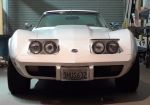


 BP engine choices pros and cons