When you click on links to various merchants on this site and make a purchase, this can result in this site earning a commission. Affiliate programs and affiliations include, but are not limited to, the eBay Partner Network.
So I’ve got a ‘click’ in my clutch cross-shaft: pushing down, about 3/4 of the way down, consistent, heard & felt in pedal, not so much on release.
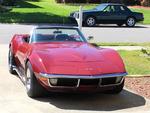
1969 L46/Muncie, original equipment for reference.
Before I dig into the release fork and TO bearing, I’m going to renew/replace the cross-shaft and related pins, clips, seals, etc…*
[*see waaaaay below; it’s just a parts list]
The A.I.M. has the breakdown; the service manual has stated to use “graphite grease”**; this forum has suggestions / plans / ideas for filling the grease cavity with ‘something to take up that space’.
So I’ve got a plan, but want to ask for a few pointers…
**It’s been said chassis grease [ball joints, tie rods, idler] is acceptable. If you’ve got another suggested grease, what do you use?
I plan to use Valvoline Multi-Vehicle High Temp Red Grease, same as steering/suspension. StaLube Moly-Graph is also favored; Valvoline Moly-Fortified Gray is an option, too. …?
I’ve got a POM rod, 3/4”Diam x12”, and since it’s plastic (Delrin), has low friction, is resistant to oils & grease, with a reasonable density, and easy to fabricated/“machine”, I’d think it’s a good idea for a filler. [Math comes back at ~0.20lbs for 3/4”x8” rod; less after a groove is made.]
Test-fit and it drops right into the test cross-shaft, feels like a good modification, I’m open to experimenting with this and reporting back, worst case scenario, it’s an expensive grease-removal rod.
As far as assembly goes…
J219, UPC 7, Sheet C 1 in the A.I.M. is my reference for rebuilding, BUT! what about the engine-side ball stud?
Does it get a nylon seat [1] like the frame-side?
Inside the shaft?
Do I need 3 seats per shaft:
2-frame-side (in/out) + 1-engine-side (in) ?
Or just 1 like the diagram?
…or just one on each side, installed before the pivot-***** go in?
@DUB mentioned making sure the engine-side ball stud is tight.
I've heard good things about the Speed Direct clutch rod upgrade kit. It uses heim joints for a smoother clutch operation. It will probably be the next thing I buy for my car.
I have the Speed DirectsRod Links kit on my 1968 Corvette and it works great. The reduced friction is noticeable and it works very smoothly.
It would be easier to just replace the parts with the Speed Direct Rod links kit. This is an improvement for the car but includes no permanent modifications to the car.
My rule of thumb is always, dissassemble, verify what if anything needs replacement. Then, and only then order parts.
That's my philosophy most of the time. For the way the majority of the Vette’s repairs have gone, I’ve had to balance price, availability, and delivery time. And then make plans for how quickly the repair can be done.
So for small parts with small prices, a $100 total to have them on-hand and available means no disassembly unless reassembly can be done same (or next) day.
I think we can all agree that @4-vettes makes a great point: diagnose, verify, repair or replace. And I think individually, we have unique budgets (time & money) to consider during those repairs.
In my case, minimal down-time is high on the list. So if I can remove an assembly and swap in a new one, I might not be saving money, but I’m saving time.
I've heard good things about the Speed Direct clutch rod upgrade kit. It uses heim joints for a smoother clutch operation. It will probably be the next thing I buy for my car.
Originally Posted by ctmccloskey
I have the Speed DirectsRod Links kit on my 1968 Corvette and it works great. The reduced friction is noticeable and it works very smoothly.
It would be easier to just replace the parts with the Speed Direct Rod links kit. This is an improvement for the car but includes no permanent modifications to the car.
I considered this option, and then saw the price. I’ll put it on the wish-list!
Just buy all the pieces. They are pretty cheap. 3 plastic seats, snap ring, ball studs, zerk maybe? felt seals, rubber seal ring, probably leaving some stuff out but you get the idea. Replace this crap while you have it apart. Done!
The cross shaft is pre-assembled with greased seats and outboard stud. Only 1 seat inboard inside the cross shaft. The outboard stud will be captive with 2 seats and a snap ring so the shaft can not move side to side. The inboard block stud will be tight in the block side threads but the block moves around vs the car frame while idling and driving so the inboard cross shaft connection is free to allow movement in-out between clutch linkage and engine block.
I do apreciate the cross shaft filler idea as it solves the problem of filling the whole darn cross shaft up with a ton of grease where heat melts the grease and then it runs out all over the place. Honestly, grease the pieces at assembly before install is my advice. Don't fill it all up later. If it needs service again in your lifetime, you know what to do.
Your "click" might be in the linkage or bellhousing fork stud or fork itself. The cross shaft rebuild might not get it gone. Still good to do this no matter what. The clutch linkage you can get to but the fork stuff requires dropping the transmission.
Last edited by stingr69; Apr 19, 2026 at 10:03 AM.
I will put in my vote for the Speed Direct clutch linkage kit as well. I have had it for years and it is a huge improvement over the stock setup. Your problem is probably in the linkage, not the the Z-shaft. Usually it is wear in the rods where they rub on the Z-bar since there is no lubrication there and GM didn't plan on these cars still being in service 50 years later.
I think that if you were to remove the pin at the clutch fork and manually move the shaft and lever assembly through the full range, you'll feel if the "click" is in the linkages or not. If it's not, then I'm wondering if it's a throw-out bearing and clutch finger springs binding in some way.
I have that in another car, not my C3. It's a quality setup.
Originally Posted by drwet
I will put in my vote for the Speed Direct clutch linkage kit as well. I have had it for years and it is a huge improvement over the stock setup. Your problem is probably in the linkage, not the the Z-shaft. Usually it is wear in the rods where they rub on the Z-bar since there is no lubrication there and GM didn't plan on these cars still being in service 50 years later.
Speed Direct kit is getting good reviews!
That's part of why I ask questions here on CF.
There's a good chance it’ll be a ‘this winter’ conversion. …in prep for spring ‘27.
I think that if you were to remove the pin at the clutch fork and manually move the shaft and lever assembly through the full range, you'll feel if the "click" is in the linkages or not. If it's not, then I'm wondering if it's a throw-out bearing and clutch finger springs binding in some way.
Great diagnostic tip to narrow down location!
Thank you @barkingrats !
That's a good separation point for:
Pedal-side vs fork-side [internal to trans/clutch assy]
Just buy all the pieces. They are pretty cheap. 3 plastic seats, snap ring, ball studs, zerk maybe? felt seals, rubber seal ring, probably leaving some stuff out but you get the idea. Replace this crap while you have it apart. Done!
The cross shaft is pre-assembled with greased seats and outboard stud. Only 1 seat inboard inside the cross shaft. The outboard stud will be captive with 2 seats and a snap ring so the shaft can not move side to side. The inboard block stud will be tight in the block side threads but the block moves around vs the car frame while idling and driving so the inboard cross shaft connection is free to allow movement in-out between clutch linkage and engine block.
I do apreciate the cross shaft filler idea as it solves the problem of filling the whole darn cross shaft up with a ton of grease where heat melts the grease and then it runs out all over the place. Honestly, grease the pieces at assembly before install is my advice. Don't fill it all up later. If it needs service again in your lifetime, you know what to do.
Your "click" might be in the linkage or bellhousing fork stud or fork itself. The cross shaft rebuild might not get it gone. Still good to do this no matter what. The clutch linkage you can get to but the fork stuff requires dropping the transmission.
I have (and agree with) the parts for replacement. It’s the “3 seats” that sold me unless anyone has rebuttals.
2 seats [outboard] have clearance for the snap (retaining) ring to fit -> minimizes transverse movement.
Inboard [engine-side] needs the ‘flex’ from torque/acceleration with a lil transverse slip. …as it should be/do.
This (and the ‘filler rod’ questions) were the ones I wanted to answer while chasing the ‘click’.
And if it’s not shaft/linkage, it’s in the fork/TO/clutch finger/sprong [hahaha] spring area. Internal to trans.
Last edited by The_JC_L46; Apr 19, 2026 at 10:52 PM.
Still wondering why our cars originally came with a red plastic caplug in the cross shaft hole where we put the zerk? That's not a factory installed grease fitting.
Still wondering why our cars originally came with a red plastic caplug in the cross shaft hole where we put the zerk? That's not a factory installed grease fitting.
In the '67 Chassis Service Manual (which I'm sure is the same those before and after) it has this under the lubrication section. I also saw that GM recommended a graphite lube in the service section.
In the '67 Chassis Service Manual (which I'm sure is the same those before and after) it has this under the lubrication section. I also saw that GM recommended a graphite lube in the service section.
Typical GM doublespeak. Lubrication not required. Lubricate it at 36,000 miles or sooner. Who writes this stuff??
I have a zerk fitting in mine and I give it a squirt every Spring.
Typical GM doublespeak. Lubrication not required. Lubricate it at 36,000 miles or sooner. Who writes this stuff??
I have a zerk fitting in mine and I give it a squirt every Spring.
Understood. I was just replying with the source of our Zerk fittings — that they're not factory but were dealer installed during service.
In the '67 Chassis Service Manual (which I'm sure is the same those before and after) it has this under the lubrication section. I also saw that GM recommended a graphite lube in the service section.
Merriam’s has it defined as: “occurring or recurring at a regular interval”. 36k is dependent on driving style, so there’s a hint of / inferred as “when it needs it”.
It’s 1979 and the 1969 has 22.5k on it, yeah, 10yrs without grease - it should have been done “sooner, if necessary”.
I get the impression that it’s a “by driver habits” “if the customer asks” “when the mechanic recommends” schedule.
The old 3k/3-6mo oil change idea isn’t periodic; it’s defined by mileage or time.
Designer Imagines A Corvette That Looks More Like a Corvette Than the Corvette
Slideshow: A Jaguar designer's personal project imagines what a modern front-engined Corvette might look like if Chevrolet revisited the golden age of the Stingray.








 Renewing Clutch Cross-Shaft














![2 seats [outboard] have clearance for the snap (retaining) ring to fit -> minimizes transverse movement.](https://cimg1.ibsrv.net/gimg/www.corvetteforum.com-vbulletin/579x435_1/img_4876_28f4ad51536a6039949aedbf22792c2e40b3c359.jpeg)


