




Engine Balance

Thread Starter
Pro


Joined: Sep 2002
Posts: 653
Likes: 0
From: Dickinson (Houston) Texas
 Engine Balance
I am building a Gen. V 454, which is an external balanced engine. If I get a forged steel crank for internal balanced Big Block, would it work?
I would have to replace my flywheel and I need to get a new harmonic balancer anyway, so why not go with internally balanced parts?
Is there any advantage of having the engine internally balanced over the external balance?
Bill
http://home.earthlink.net/~bigdogvettes/index.html
I would have to replace my flywheel and I need to get a new harmonic balancer anyway, so why not go with internally balanced parts?
Is there any advantage of having the engine internally balanced over the external balance?
Bill
http://home.earthlink.net/~bigdogvettes/index.html

Team Owner


Joined: Jul 1999
Posts: 65,492
Likes: 230
From: Orange Park Florida
Re: Engine Balance (matchframe)
Pete79L82, Norval....TTT....I have similar questions....good topic here....
I have taken engines to the shop and had the short blocks assembled/balanced/reworked to my performance demands, and never had any troubles ....yet.....
I do my own cams and other 'glory work'....
GENE
I have taken engines to the shop and had the short blocks assembled/balanced/reworked to my performance demands, and never had any troubles ....yet.....
I do my own cams and other 'glory work'....
GENE

Team Owner

Joined: Apr 1999
Posts: 21,953
Likes: 1,445
From: Reno Nevada
2024 C3 of the Year Finalist- Modified
Re: Engine Balance (matchframe)
The best thing you can ever do is go to an internally balanced motor.
External bal. means Damper or flex/flywheel balance to make up for the internal out of balance or heavy metal on the crank throws.
The less weight is the better when going for performance. I owned a 509 ci or 510 bbc 4.25 stroker big block that had a 56 lbs forged crank
Now i have a 383 with a 40 lbs crank. They rev so nice and are easy on the bearings
External bal. means Damper or flex/flywheel balance to make up for the internal out of balance or heavy metal on the crank throws.
The less weight is the better when going for performance. I owned a 509 ci or 510 bbc 4.25 stroker big block that had a 56 lbs forged crank
Now i have a 383 with a 40 lbs crank. They rev so nice and are easy on the bearings

Drifting


Joined: Oct 2000
Posts: 1,825
Likes: 56
From: Shawano WI
Re: Engine Balance (mrvette)
In reality there is no such thing as an internal or external balanced crankshaft when it has not been installed in a particular engine. When manufactures advertise an external balanced crank it means that the counterweights are set to the same as the GM had them on a factory engine. Whenever you change the weight of the piston/pin/rod combination you must rebalance the cranshaft to that combination. If you use a light enough rod/piston combination you can add enough "heavy metal" to an originally externally balanced crank to make it an internally balanced crank. If you choose a heavy rod/piston combo you may have to make an internally balanced crank into a externally balanced crank.
In other words the counterweights and the piston/pin combo must match closely to have an internal balance. As you increase the stroke the rod/piston moves farther away from the centerline of the crank so you need a heavier counterweight to compensate for it. Because of space limiitation the counterweight can only be physically so large before it starts to run into things. At that point in order to balance the assy you must either lighten the piston/rod combo/crank pin or add "heavy metal" (mallory) to the conterweights. Again you are limited by the physical size as to how much "heavy metal" you can add before you start to weaken that area of the crank. You are better to add a weighted balance and flywheel (external balance) rather than add a large amount of weight to the crank.
The performance differences between an internal and external balanced engine is minimal. With an external balance engine (if needed)you can get a slightly lighter rotating assy with the weight placed closer to the centerline of the crank for less moment of inertia. With an internal balance you have more choices of flywheel and balancer and the ability to change them without rebalancing the engine.
My preference is to internal balance whenever possible.
In other words the counterweights and the piston/pin combo must match closely to have an internal balance. As you increase the stroke the rod/piston moves farther away from the centerline of the crank so you need a heavier counterweight to compensate for it. Because of space limiitation the counterweight can only be physically so large before it starts to run into things. At that point in order to balance the assy you must either lighten the piston/rod combo/crank pin or add "heavy metal" (mallory) to the conterweights. Again you are limited by the physical size as to how much "heavy metal" you can add before you start to weaken that area of the crank. You are better to add a weighted balance and flywheel (external balance) rather than add a large amount of weight to the crank.
The performance differences between an internal and external balanced engine is minimal. With an external balance engine (if needed)you can get a slightly lighter rotating assy with the weight placed closer to the centerline of the crank for less moment of inertia. With an internal balance you have more choices of flywheel and balancer and the ability to change them without rebalancing the engine.
My preference is to internal balance whenever possible.

Instructor

Joined: Oct 2003
Posts: 186
Likes: 0
Re: Engine Balance (matchframe)
easy way to answer your own question. do you like the crank to have more or less stress on the main journals?? if less is your answer, go internal balance!! think of it this way, the rod combo and counter weight are flopping around out of balance and you add an equally out of balance to the opposite of the crank a couple of inches away to even things out. it's balanced, but the main journal just turned into a teeder-todder. can create harmfull harmonics at high rpm. Brian
Team Owner
Joined: Jul 1999
Posts: 65,492
Likes: 230
From: Orange Park Florida
Re: Engine Balance (AKRAY4PLAY)
Pete, Brian, which all means that if an internal balance is done to most stock engines like chebby/old Pontiac....the extra weights welded on the flex plates, and the drill holes in the flywheels need be neutral balanced, as any stock harmonica balancer....NO??? make sense to me...
GENE
GENE
Instructor
Joined: Oct 2003
Posts: 186
Likes: 0
Re: Engine Balance (mrvette)
Gene,
not quite sure what you're saying. if you have an internal balanced crank the harmonic balancer and flywheel should be neutral balanced like a trusty 350 Chevy. there should not be any weights on the flywheel or chunks "missing" out of the balancer. BIG NOTE!! when balancing take all your rotating assembly parts in to be weighed!!!!! a good balance job needs the correct bob weight of the rod, rod bolts, piston, rings, wrist pin, and really **** balance guys even considder the rod bearings. of course you need the crank, flywheel, damper and maybe the timing gear. it all dependson how crazy you want to get making things perfect. most pro shops are happy to .5 grams, but i have seen guys that take it to the extreme. i hope i did not confuse anyone. Brian
not quite sure what you're saying. if you have an internal balanced crank the harmonic balancer and flywheel should be neutral balanced like a trusty 350 Chevy. there should not be any weights on the flywheel or chunks "missing" out of the balancer. BIG NOTE!! when balancing take all your rotating assembly parts in to be weighed!!!!! a good balance job needs the correct bob weight of the rod, rod bolts, piston, rings, wrist pin, and really **** balance guys even considder the rod bearings. of course you need the crank, flywheel, damper and maybe the timing gear. it all dependson how crazy you want to get making things perfect. most pro shops are happy to .5 grams, but i have seen guys that take it to the extreme. i hope i did not confuse anyone. Brian
Thread Starter
Pro
Joined: Sep 2002
Posts: 653
Likes: 0
From: Dickinson (Houston) Texas
Re: Engine Balance (AKRAY4PLAY)
OK, from what you guys said, internal balancing is better if at all possible.
I guess my question is since the Gen V Big Block were externally balanced from the factory, can a crank that is designed to be internally balanced be used with one of these blocks? What my concern is, this is the first generation of Big Blocks that have the one piece oil seal, would that have any influence on what type of crank this block needs?
I have to buy a harmonic balancer anyway, so if I get one that is neutrally balanced, replace the flywheel with the same, and with the new crank, then the machine shop should be able to balance the engine internally, that is if the other components, pistons, rods etc..I get are light enough. Then if for some reason, I need to replace the flywheel, or harmonic balancer, I don't need to drag the block back to the machine shop for a rebalance. But...if the rotating assembly were externally balanced, and I need to replace the flywheel, or harmanic balancer, will the engine then be out of balance?
Thanks,
Bill
http://home.earthlink.net/~bigdogvettes/index.html
I guess my question is since the Gen V Big Block were externally balanced from the factory, can a crank that is designed to be internally balanced be used with one of these blocks? What my concern is, this is the first generation of Big Blocks that have the one piece oil seal, would that have any influence on what type of crank this block needs?
I have to buy a harmonic balancer anyway, so if I get one that is neutrally balanced, replace the flywheel with the same, and with the new crank, then the machine shop should be able to balance the engine internally, that is if the other components, pistons, rods etc..I get are light enough. Then if for some reason, I need to replace the flywheel, or harmonic balancer, I don't need to drag the block back to the machine shop for a rebalance. But...if the rotating assembly were externally balanced, and I need to replace the flywheel, or harmanic balancer, will the engine then be out of balance?
Thanks,
Bill
http://home.earthlink.net/~bigdogvettes/index.html
Corvette Stories
The Best of Corvette for Corvette Enthusiasts

Top 10 Most Expensive Corvettes Ever Sold on Bring A Trailer
Brett Foote
10 Things Every Corvette Owner Needs (2026 Edition)
Michael S. Palmer
8 Most "Only Corvette Owners Understand" Quirks and Problems
Pouria Savadkouei
10 Reasons the C6 Z06 is Still A Performance Benchmark After 20 Years
Joe Kucinski
How Much Horsepower Every Corvette Engine "LOST" in 1972
Joe Kucinski
Top 10 DOs and DON'Ts for Protecting Your Convertible Top!
Michael S. Palmer
Top 10 Most Explosive Corvettes Ever Made: Power-to-Weight Ratio Ranked!
Joe Kucinski
150 hp to 1,250 hp: Every Corvette Generation Compared by the Specs That Matter
Joe Kucinski
8 Coolest Corvette Pace Cars (and Replicas) of All Time
Verdad Gallardo
Drifting
Joined: Oct 2000
Posts: 1,825
Likes: 56
From: Shawano WI
Re: Engine Balance (matchframe)
It does not matter to the block how the crank is balanced. You just have to make sure the crank matches the seal type you are using.
That depends on who does the balancing. A externally balanced chevy big block has a balancer and a flywheel that has a set amount of "weighted out of balance" condition to them. As long as who ever is balancing the assy does not change the weighting of the balancer and flywheel (ie: does all the balancing on the crankshaft) then any replacement external balanced balancer or flywheel can be used without changing your balancing job.
Pete
[Modified by Pete79L82, 6:25 AM 12/29/2003]
But...if the rotating assembly were externally balanced, and I need to replace the flywheel, or harmanic balancer, will the engine then be out of balance?
Pete
[Modified by Pete79L82, 6:25 AM 12/29/2003]
Thread Starter
Pro
Joined: Sep 2002
Posts: 653
Likes: 0
From: Dickinson (Houston) Texas
Re: Engine Balance (Pete79L82)
Thanks Pete!
I understand now.
The shop I will be using is known for building highly modified engines. So if I stayed with the externally balanced...due to the 1 piece oil seal...they will balance it like you said. I will make sure I have a good understanding with them before I leave it.
Bill
http://home.earthlink.net/~bigdogvettes/index.html
I understand now.
The shop I will be using is known for building highly modified engines. So if I stayed with the externally balanced...due to the 1 piece oil seal...they will balance it like you said. I will make sure I have a good understanding with them before I leave it.
Bill
http://home.earthlink.net/~bigdogvettes/index.html
Instructor
Joined: Oct 2003
Posts: 186
Likes: 0
Re: Engine Balance (Pete79L82)
As long as who ever is balancing the assy does not change the weighting of the balancer and flywheel (ie: does all the balancing on the crankshaft) then any replacement external balanced balancer or flywheel can be used without changing your balancing job.
Pete
[Modified by Pete79L82, 6:25 AM 12/29/2003]
Pete
[Modified by Pete79L82, 6:25 AM 12/29/2003]
i have a slight disagreement with you on this one. true enough the balance will be close but not right. every assembly i have balanced needs a little weight welded onto the flywheel/flexplate. flywheels are do not generally take much, but flexplates can vary because they are so light the balance point can move around from manufacturing tollerences. it all depends on how exact you want things. running a stock or close to stock motor, i would not worry about it. but turning 6500 rpm, it can become an issue. Brian
Drifting
Joined: Oct 2000
Posts: 1,825
Likes: 56
From: Shawano WI
Re: Engine Balance (AKRAY4PLAY)
Brian: I agree with you. But you have this same problem whether you have an internal or external assy. The replacement parts are close but never exact. For a street motor this is not a problem but on a race moor I would never replace a flywheel or balancer without rebalancing the assy and reindicating TDC.
Pete
Pete
Race Director


Joined: Nov 2000
Posts: 11,872
Likes: 12
From: Waterloo ontario Canada
Re: Engine Balance (matchframe)
I have a 454 and it was balanced with a new stock 454 flex plate and 454 harmonic balancer. All balancing was done to the crank and it only required a little weight reduction.
About 2 years later I switched from automatic/flexplate to standard/flywheel.
I started with a steel 454 flywheel and had the shop match it's counterweight exactly to the flexplate.
Being a non trusting person I stayed there and watch. The flexplate was bolted to the balancer and the offset weight was recorded. The flywheel was next installed in the same fixture and it's offset weight was adjusted to be in the exact same spot and the same value.
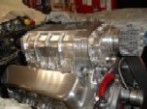
I installed this on the motor but since then there has been a shudder at certain rpms. The blower was installed at the exact same time so I often wonder if it is the blower itself passing through a certain harmonics.
I could lighten the crank by drilling the rod journals but this is a street engine and has never seen more then 7500 on in the last few years no more then 5400 where my adjustable rev limiter is set.
Given the choice I would prefer internal balancing but with the 454 it was not an option. I am not paying alot for mallory slugs.
About 2 years later I switched from automatic/flexplate to standard/flywheel.
I started with a steel 454 flywheel and had the shop match it's counterweight exactly to the flexplate.
Being a non trusting person I stayed there and watch. The flexplate was bolted to the balancer and the offset weight was recorded. The flywheel was next installed in the same fixture and it's offset weight was adjusted to be in the exact same spot and the same value.
I installed this on the motor but since then there has been a shudder at certain rpms. The blower was installed at the exact same time so I often wonder if it is the blower itself passing through a certain harmonics.
I could lighten the crank by drilling the rod journals but this is a street engine and has never seen more then 7500 on in the last few years no more then 5400 where my adjustable rev limiter is set.
Given the choice I would prefer internal balancing but with the 454 it was not an option. I am not paying alot for mallory slugs.
Thread Starter
Pro
Joined: Sep 2002
Posts: 653
Likes: 0
From: Dickinson (Houston) Texas
Re: Engine Balance (norvalwilhelm)
Norval,
Are you saying that with the 454 Gen V and later, there is no option other than external balancing? Even if I get an aftermarket forged steel crank?
Bill
http://home.earthlink.net/~bigdogvettes/index.html
Are you saying that with the 454 Gen V and later, there is no option other than external balancing? Even if I get an aftermarket forged steel crank?
Bill
http://home.earthlink.net/~bigdogvettes/index.html
Team Owner
Joined: Apr 1999
Posts: 21,953
Likes: 1,445
From: Reno Nevada
2024 C3 of the Year Finalist- Modified
Re: Engine Balance (matchframe)
What Norval is saying is internally balanced is better, but when you have to drill the counter weights and add Mallory heavy metal slugs the cost becomes prohibitive.
When you talk to vendor selling the crank ask them about balancing options for a complete rotating assembly. Crank, pistons and rods as a balanced package
When you talk to vendor selling the crank ask them about balancing options for a complete rotating assembly. Crank, pistons and rods as a balanced package
Thread Starter
Pro
Joined: Sep 2002
Posts: 653
Likes: 0
From: Dickinson (Houston) Texas
Re: Engine Balance (gkull)
Thanks so much everybody!
You have been a really big help in answering my question. I posted this question on many different forums, but only here did I recieved really in depth answers.
Thanks again!
Bill
http://home.earthlink.net/~bigdogvettes/index.html
You have been a really big help in answering my question. I posted this question on many different forums, but only here did I recieved really in depth answers.
Thanks again!
Bill
http://home.earthlink.net/~bigdogvettes/index.html
