




Starter heat shield

Thread Starter
Le Mans Master


Joined: Oct 2004
Posts: 5,269
Likes: 54
From: Orlando Florida
St. Jude Donor '05
 Starter heat shield
Just installed the starter heat shield yesterday - guess what ... it doesn't help at all.... it's not worth the plastic foil it was wrapped in....
I bought it at Eckler's and thought that since their reputation is pretty good they wouldn't sell junk.... it was a pain to install, of course made by MrGasket.... it barely fit and just doesn't work....
What is a good replacement starter that does not have this 'hot start' problem ?? Is it the starter causing this problem or the solenoid ?
I bought it at Eckler's and thought that since their reputation is pretty good they wouldn't sell junk.... it was a pain to install, of course made by MrGasket.... it barely fit and just doesn't work....
What is a good replacement starter that does not have this 'hot start' problem ?? Is it the starter causing this problem or the solenoid ?

Race Director


Joined: Sep 2004
Posts: 11,874
Likes: 263
From: Arlington Va Current ride 04 vert, previous vettes: 69 vert, 77 resto mod
Originally Posted by RedBad1979
Just installed the starter heat shield yesterday - guess what ... it doesn't help at all.... it's not worth the plastic foil it was wrapped in....
I bought it at Eckler's and thought that since their reputation is pretty good they wouldn't sell junk.... it was a pain to install, of course made by MrGasket.... it barely fit and just doesn't work....
What is a good replacement starter that does not have this 'hot start' problem ?? Is it the starter causing this problem or the solenoid ?
I bought it at Eckler's and thought that since their reputation is pretty good they wouldn't sell junk.... it was a pain to install, of course made by MrGasket.... it barely fit and just doesn't work....
What is a good replacement starter that does not have this 'hot start' problem ?? Is it the starter causing this problem or the solenoid ?
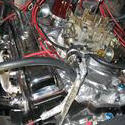
i went with a hi torque mini starter for approx 150 clams
Le Mans Master
Joined: Oct 2002
Posts: 7,098
Likes: 378
From: Las Vegas - Just stop perpetuating myths please.
Its still heat that makes the problem.
Originally Posted by RedBad1979
Just installed the starter heat shield yesterday - guess what ... it doesn't help at all.... it's not worth the plastic foil it was wrapped in....
I bought it at Eckler's and thought that since their reputation is pretty good they wouldn't sell junk.... it was a pain to install, of course made by MrGasket.... it barely fit and just doesn't work....
What is a good replacement starter that does not have this 'hot start' problem ?? Is it the starter causing this problem or the solenoid ?
I bought it at Eckler's and thought that since their reputation is pretty good they wouldn't sell junk.... it was a pain to install, of course made by MrGasket.... it barely fit and just doesn't work....
What is a good replacement starter that does not have this 'hot start' problem ?? Is it the starter causing this problem or the solenoid ?
 Take a look at members.cardomain.com/cardo0 (page 2). I bought a GM mini (#12361146) for <$200 but could not get it to work (members.cardomain.com/cardo0 - page 3,4). I have a 14"/168 tooth flywheel (manual trans) and GM advertised that mini works for both the 14" and 12&3/4"-153 tooth flywheels. But when i determed the DC motor and forced out the Bendix gear (using my battery charger) it stuck itself into flywheel. Tried for over 3 days using different solenoid positions but gave up as it was quicker to mod & install the JC Whitney piece.
Now SanDiegoPaul just bought one (GM mini #12361146) and it worked out fine on the secound try lining it up - but he had an auto trans and didn't report which flywheel he has.
 And Paul67 has one working just fine with his auto trans too so its either an auto or maybe a Paul thing.
Anyways i like the JC Whitney shield as it provides a dead air space between starter and shield - only touches starter at the 2 mounting bolts. I liked and bought the BB stock shield but realized i would have to mod that one to fit my hdrs too. And i don't like the heat shield wraps either as they contact the starter too much and eventualy will transfer heat to that poor little solenoid - kinda conduct and keep the heat in.
 Remote solenoids only add to the confusion as the starter mounted solenoid still has to throwout the Bendix gear and can't be removed or bypassed and just end up wired in series with any remote solenoid.
 A senoir electrician once told me he fixed a BB starter heat problem just by lubing the DC mtr bearings with hi-temp grease. He also said most starters are poorly lubed at the bearings - well thier just brass bushings really.
So thanks for posting ur experience and let us know what works for u.
 cardo0

Le Mans Master
Joined: Jun 2003
Posts: 5,446
Likes: 2
From: Not Correctly Restored Stingray Fla.
Shields are junk. I am guessing you are using a standard GM starter. Because you would not be having any problems if you have one of these
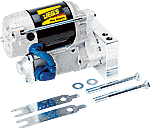
They happen to be on sale @ Jeg's for a real good price. PN 555-10001

For these starters to work for a good long time it is important to shim them correctly.
They happen to be on sale @ Jeg's for a real good price. PN 555-10001
For these starters to work for a good long time it is important to shim them correctly.

Melting Slicks


Joined: Feb 2003
Posts: 3,053
Likes: 4
St. Jude Donor '03,'11
you can use a hot start solenoid, which amounts to a ford solenoid.
The problem is that when the solenoid gets hot it needs more kick than the starter switch can provide.
You re-route the starter switch to the ford solenoid and the ford solenoid shorts between the big red cable and the S terminal on the GM solenoid.
The problem is that when the solenoid gets hot it needs more kick than the starter switch can provide.
You re-route the starter switch to the ford solenoid and the ford solenoid shorts between the big red cable and the S terminal on the GM solenoid.
Thread Starter
Le Mans Master
Joined: Oct 2004
Posts: 5,269
Likes: 54
From: Orlando Florida
St. Jude Donor '05
First of all thanks for the good info.... I'll probably get a new starter and solenoid soon.
As long as it's cold my starter works just fine, it's only when it's hot that it turns very slow... well, these are not that expensive....
As long as it's cold my starter works just fine, it's only when it's hot that it turns very slow... well, these are not that expensive....
Corvette Stories
The Best of Corvette for Corvette Enthusiasts

Top 10 Most Expensive Corvettes Ever Sold on Bring A Trailer
Brett Foote
10 Things Every Corvette Owner Needs (2026 Edition)
Michael S. Palmer
8 Most "Only Corvette Owners Understand" Quirks and Problems
Pouria Savadkouei
10 Reasons the C6 Z06 is Still A Performance Benchmark After 20 Years
Joe Kucinski
How Much Horsepower Every Corvette Engine "LOST" in 1972
Joe Kucinski
Top 10 DOs and DON'Ts for Protecting Your Convertible Top!
Michael S. Palmer
Top 10 Most Explosive Corvettes Ever Made: Power-to-Weight Ratio Ranked!
Joe Kucinski
150 hp to 1,250 hp: Every Corvette Generation Compared by the Specs That Matter
Joe Kucinski
8 Coolest Corvette Pace Cars (and Replicas) of All Time
Verdad Gallardo
Burning Brakes


Joined: May 2003
Posts: 910
Likes: 20
From: Shorewood IL
Originally Posted by RedBad1979
I'll probably get a new starter and solenoid soon.
As long as it's cold my starter works just fine, it's only when it's hot that it turns very slow... well, these are not that expensive....
As long as it's cold my starter works just fine, it's only when it's hot that it turns very slow... well, these are not that expensive....

I'll be getting one of the high torque starters this spring. Mine won't start when it's hot either!!
Drifting


Joined: Nov 2002
Posts: 1,951
Likes: 1
From: Shore NJ
Pick up a high torque mini starter on Ebay, plenty of Forum members have them including myself. They are 1/3rd the weight of a reguler starter, can be wrapped with heat shield wrap from Summit, Jegs, etc., much more affective than a metal shield any easy to install. Assuming your electrical system is ok, that should solve your problem.....

Burning Brakes
Joined: Nov 2004
Posts: 1,028
Likes: 0
From: San Antonio Texas
anybody know anything about "Mean Green" starters. they are gear reduction starts (4.4 to 1) but are more expensive than the Powermasters, etc. wonder if they are worth the extra expense???

Instructor

Joined: Sep 2004
Posts: 168
Likes: 0
From: Houston Texas
This is a common and old problem that will p**s you off. Many others have seen the problem. I'ts legendary. I had it on my 78 Trans Am when it was new and later when I bought my 79 vette in 1998. I solved this problem on my own before I found out this was a common problem and that my fix was The standard fix. I tried the heat shield and it still “no workee”.
There are something like 9 connections plus the neutral safety switch and the ignition switch in the circuit that activates the starter solenoid. These connections & switches cause a significant voltage drop at the starter solenoid. When the starter gets hot there is not enough voltage to activate the solenoid. I trouble shot this problem by running a jumper from the small stud (S connection) on the starter up to a tie off on the fire wall but not connected to anything. I left enough extra length to reach the battery. When the POS wouldn't start I would touch the jumper to the + battery post thus by passing the key ignition switch circuit. It would start every time when jumped.
I decided I would install a “permanent jumper” switched by a Ford (no flames guys) starter relay. I would activate the Ford relay (mounted on the fire wall) with the keyed ignition switch circuit. From an electrical standpoint what I did was to substitute the relay for the existing ignition switch (not physically but electrically) and use the keyed ignition switch to activate the relay.
The reason this works is because for what ever reason it takes more voltage to activate the GM starter solenoid (with integral relay) than it does the Ford starter relay especially when the starter is hot.
I have never had a problem since. Eventually I changed to a mini-starter for other reasons but the stock starter always worked after the mod.
The wiring changes are:
Remove the purple wire from the S terminal on the starter and run it to the S terminal (small terminal) on the Ford starter relay. You may have to splice on a longer wire. Since the Ford relay grounds through the base and the vette fire wall is fiberglass you will have to run a ground wire from one of the mounting studs of the Ford relay to the frame or some other grounding point. Once this is done you have completed the circuit that activates the Ford relay.
No it’s time to get the power to the starter. Run a wire from the large terminal on the starter (B terminal) up to one of the large terminal on the Ford Relay. We will call this the B terminal on the Ford relay since B stands for battery . This is the 12 volt supply to the relay. Run a second wire from the other (opposite) large connection on the Ford relay to the S (small stud) connection on the starter.
All of the above is done with 12 gauge or heavier wire. That takes care of the starter.
You may want to take advantage of the large connection terminal on the Ford relay as a take off point for un-switched 12 volt supply. In order to do this you need to install a heavier wire than 12 gauge from the B (battery) connection on the starter to the B connection on the Ford relay. I used a battery cable but re-terminated the battery end with a ring connector.
The 12 volt supply to the rest of the car is connected to the B connector on the starter. This can be moved to the B connector on the Ford relay. These are the 2 heavy (16 gauge) red wires with fusible links connected to the B connection on the starter. Move these to the B side of the Ford relay. Much more convenient if a fusible link fails. You can also move any other connections from the B terminal on the starter to the B terminal on the Ford relay. You can also connect the alternator out put to the B terminal on the Ford relay.
There are something like 9 connections plus the neutral safety switch and the ignition switch in the circuit that activates the starter solenoid. These connections & switches cause a significant voltage drop at the starter solenoid. When the starter gets hot there is not enough voltage to activate the solenoid. I trouble shot this problem by running a jumper from the small stud (S connection) on the starter up to a tie off on the fire wall but not connected to anything. I left enough extra length to reach the battery. When the POS wouldn't start I would touch the jumper to the + battery post thus by passing the key ignition switch circuit. It would start every time when jumped.
I decided I would install a “permanent jumper” switched by a Ford (no flames guys) starter relay. I would activate the Ford relay (mounted on the fire wall) with the keyed ignition switch circuit. From an electrical standpoint what I did was to substitute the relay for the existing ignition switch (not physically but electrically) and use the keyed ignition switch to activate the relay.
The reason this works is because for what ever reason it takes more voltage to activate the GM starter solenoid (with integral relay) than it does the Ford starter relay especially when the starter is hot.
I have never had a problem since. Eventually I changed to a mini-starter for other reasons but the stock starter always worked after the mod.
The wiring changes are:
Remove the purple wire from the S terminal on the starter and run it to the S terminal (small terminal) on the Ford starter relay. You may have to splice on a longer wire. Since the Ford relay grounds through the base and the vette fire wall is fiberglass you will have to run a ground wire from one of the mounting studs of the Ford relay to the frame or some other grounding point. Once this is done you have completed the circuit that activates the Ford relay.
No it’s time to get the power to the starter. Run a wire from the large terminal on the starter (B terminal) up to one of the large terminal on the Ford Relay. We will call this the B terminal on the Ford relay since B stands for battery . This is the 12 volt supply to the relay. Run a second wire from the other (opposite) large connection on the Ford relay to the S (small stud) connection on the starter.
All of the above is done with 12 gauge or heavier wire. That takes care of the starter.
You may want to take advantage of the large connection terminal on the Ford relay as a take off point for un-switched 12 volt supply. In order to do this you need to install a heavier wire than 12 gauge from the B (battery) connection on the starter to the B connection on the Ford relay. I used a battery cable but re-terminated the battery end with a ring connector.
The 12 volt supply to the rest of the car is connected to the B connector on the starter. This can be moved to the B connector on the Ford relay. These are the 2 heavy (16 gauge) red wires with fusible links connected to the B connection on the starter. Move these to the B side of the Ford relay. Much more convenient if a fusible link fails. You can also move any other connections from the B terminal on the starter to the B terminal on the Ford relay. You can also connect the alternator out put to the B terminal on the Ford relay.
Le Mans Master
Joined: Oct 2002
Posts: 7,098
Likes: 378
From: Las Vegas - Just stop perpetuating myths please.
That does make sense.
Good report Mr. Watt. I would have to agree that low voltage (from bad contacts) at the pull in coil could be the problem. Also that purple "S" wire is toast after 25-30 yrs and may have open strands and corrsion to reduce voltage also. Just that i think this would be a problem even when cold. And what i suspect is that heat will cause an increase in winding resistance/reduce current flow and prevent pull-in when hot enough. So what i think may be the problem is a combination here of both contact voltage drops and temperature increased winding resistance. And apparently u can increase voltage enough with just a starter switch bypass.
BTW where GM uses a pull-in and a hold-in coil inside the starter mounted solenoid, that Ford starter uses the magnetism of the energized field windings to pull in a pole shoe (that in turn will throw-out the Bendix gear). Apparently the Ford starter has large enough field winding wire size or maybe large enough field windings to avoid the current loss/resistance increase.
Good night. cardo0
I would have to agree that low voltage (from bad contacts) at the pull in coil could be the problem. Also that purple "S" wire is toast after 25-30 yrs and may have open strands and corrsion to reduce voltage also. Just that i think this would be a problem even when cold. And what i suspect is that heat will cause an increase in winding resistance/reduce current flow and prevent pull-in when hot enough. So what i think may be the problem is a combination here of both contact voltage drops and temperature increased winding resistance. And apparently u can increase voltage enough with just a starter switch bypass. BTW where GM uses a pull-in and a hold-in coil inside the starter mounted solenoid, that Ford starter uses the magnetism of the energized field windings to pull in a pole shoe (that in turn will throw-out the Bendix gear). Apparently the Ford starter has large enough field winding wire size or maybe large enough field windings to avoid the current loss/resistance increase.
Good night.
cardo0
Instructor
Joined: Sep 2004
Posts: 168
Likes: 0
From: Houston Texas
Thanks Mr. Cardo. This is getting away from the original post somewhat but having the main 12 volt buss (large terminal on the Ford relay connected to the large B terminal on the starter) has other advantages. If you run an electric fan you can connect it to the B terminal on the Ford starter relay. I needed an ignition switched source under the hood for my two O2 sensors and the related A/F ratio gauges. Plus I run a MSD knock sensor and some other stuff. I ran a lead from the 12 volt buss B terminal on the Ford starter relay to a second smaller relay (30A) also mounted on the fire wall. The connection lead included an in-line fuse. I switched this second relay on with a connection to the blower power lead (brown 14 gauge wire) that is only a few inches away on top the blower heater housing. This is a 25A circuit and using it to activate another relay puts very little additional load on it. The 12V power side of the 30A relay was connected to a 5/16, 1” long brass bolt also mounted on the fire wall a few inches away. This became the ignition switched 12 volt buss. You also have to install a grounded brass bolt near by for the ground buss (use a 16 gauge wire or larger). Any switched accessories connected to the 12V ignition switched buss should have their own circuit protection (fuses). You can install the brass (or copper or stainless) through the firewall from the wiper plenum side with a nut on the engine side of the fire wall. Then all you need is a ring connector to what ever circuit you installing and secure the ring connector (or connectors) with a second nut on the buss (bolt).
Last edited by Megawatt; Dec 21, 2004 at 07:12 AM.
