







horsepower rating

Thread Starter
Racer

Joined: Dec 2004
Posts: 336
Likes: 0
From: crystal lake Il.
 horsepower rating
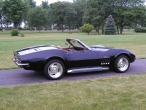
I have a 75 L-48. It is the year of the cat and pollution control. this year the horsepower rating was changed to rwhp. my car is rated at 165. sounds pretty anemic. what would the rating be at the flywheel?

Race Director


Joined: Apr 1999
Posts: 15,136
Likes: 477
From: NM
Originally Posted by painterman52
I have a 75 L-48. It is the year of the cat and pollution control. this year the horsepower rating was changed to rwhp. my car is rated at 165. sounds pretty anemic. what would the rating be at the flywheel?
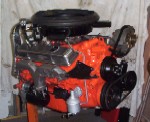
The GROSS HP that was used prior to 72 was on an engine dyno with NO accessories, open exhaust and headers, unrestricted air flow, no emissions, no water pump, etc, etc. Starting in 72 they went to NET HP ratings. This was also on an engine dyno but with all standard equipment as it would have installed in the car in place and working. Stock air cleaner assembly, stock exhaust manifolds feeding out through stock exhaust, alternator, emission equipment, etc, etc, all in place.
I have see lots of different % numbers thrown out, really have no idea what would be correct, but would guess anywhere from 15% to 20% difference.
Want to feel really bad?
 Your 165 hp is at the flywheel. Your rear wheel hp drops even more, say maybe down to about 120-140 hp.
 tom...
Melting Slicks

Joined: Dec 2000
Posts: 2,198
Likes: 2
From: Eastern Connecticut
In the heat of the HP wars, manufacturers would turn the engine over with an electric motor to measure the drag at various rpm. they would then add this number to the dyno figures. so they were actually recording HP at the piston! Joe
Melting Slicks
Joined: Dec 2000
Posts: 2,198
Likes: 2
From: Eastern Connecticut
In the heat of the HP wars, manufacturers would turn the engine over with an electric motor to measure the drag at various rpm. they would then add this number to the dyno figures. so they were actually recording HP at the pistons! Joe

Safety Car


Joined: Jun 2002
Posts: 4,751
Likes: 2,499
From: Buckeye, AZ
St. Jude Donor '12-'13
Help straighten me out here. I read that during the 60s the car companies measured HP with no drivetrain; just the engine. The government had a real problem with that and going forward around '72 or '74 it was required to provide HP ratings with full drivertrain. The same article noted that a '78 L48 for example rated at 185-190HP would actually be around 225HP if compared straight up with a 60s era rating. This makes total sense to me as the car companies of the 60s wanted to show as much HP as they could, by hook or crook. Why they would want to show less HP boggles me, so I believe the article I read was right on target. The government could care less if something is understated but overstating HP could be seen as fraudulent. Of late I am finding that you really have to scrutinize HP ratings and torque. I had a Ford minivan rated at 200HP, and a Corvette rated at 190HP. I guarantee the Vette will smoke the van. You really need to look at the HP peak rpm range to get a full feel for usable HP. Jut my two cents.
Corvette Stories
The Best of Corvette for Corvette Enthusiasts

How Much Horsepower Every Corvette Engine "LOST" in 1972
Joe Kucinski
Top 10 DOs and DON'Ts for Protecting Your Convertible Top!
Michael S. Palmer
Top 10 Most Explosive Corvettes Ever Made: Power-to-Weight Ratio Ranked!
Joe Kucinski
150 hp to 1,250 hp: Every Corvette Generation Compared by the Specs That Matter
Joe Kucinski
8 Coolest Corvette Pace Cars (and Replicas) of All Time
Verdad Gallardo
Top 10 Corvette Engines RANKED by Peak Torque (70+ Years of Muscle!)
Joe Kucinski
Corvette ZR1X Will Be Pacing the Indy 500, And Could Probably Race, Too!
Verdad Gallardo
Top 10 Corvettes Coming to Mecum Indy 2026!
Brett Foote
Top 10 C9 Corvette MUST-HAVES to Fix These C8 Generation Flaws!
Michael S. Palmer
Race Director
Joined: Apr 1999
Posts: 15,136
Likes: 477
From: NM
Originally Posted by gliot1
Help straighten me out here. I read that during the 60s the car companies measured HP with no drivetrain; just the engine. The government had a real problem with that and going forward around '72 or '74 it was required to provide HP ratings with full drivertrain.
The same article noted that a '78 L48 for example rated at 185-190HP would actually be around 225HP if compared straight up with a 60s era rating.
By the way the factories do not do rearwheel HP. That is a hot rod shop thing. The chassie dyno is good for comparing two different cars as long as you use the same dyno on the same day. The chassie dynos vary widley so it is hard to compare between dynos.
tom...
Advanced
Joined: Jul 2000
Posts: 88
Likes: 0
From: Southern California
Originally Posted by gliot1
Of late I am finding that you really have to scrutinize HP ratings and torque. I had a Ford minivan rated at 200HP, and a Corvette rated at 190HP. I guarantee the Vette will smoke the van. You really need to look at the HP peak rpm range to get a full feel for usable HP. Jut my two cents.

Race Director
Joined: Dec 2000
Posts: 10,896
Likes: 2
From: CO
Originally Posted by painterman52
I have a 75 L-48. It is the year of the cat and pollution control. this year the horsepower rating was changed to rwhp. my car is rated at 165. sounds pretty anemic.
At sea level thats a low 15 and maybe a high 14. Not to shabby. I think the 4 speed helps alot.

Race Director

Joined: Sep 2004
Posts: 11,874
Likes: 263
From: Arlington Va Current ride 04 vert, previous vettes: 69 vert, 77 resto mod
Originally Posted by gliot1
Help straighten me out here. . Why they would want to show less HP boggles me, so I believe the article I read was right on target. The government could care less if something is understated but overstating HP could be seen as fraudulent. .
heres some things to help put that in perspective...Insurance costs...remember there was alot of insurance/product liability issues going on at the time...also i believe its to a companys advantage to be conservative so when the car magazines test drive the cars and compare them to each other the understated cars appears faster....
Thread Starter
Racer
Joined: Dec 2004
Posts: 336
Likes: 0
From: crystal lake Il.
By simply removing all the pollution control,including the cat. putting on headers and true duals will this result in significant power gain. are the heads on these 75 L48`s garbage? For some reason it`s the only vette that uses r44tx plugs, gapped at .60.
Race Director
Joined: Sep 2004
Posts: 11,874
Likes: 263
From: Arlington Va Current ride 04 vert, previous vettes: 69 vert, 77 resto mod
Originally Posted by painterman52
By simply removing all the pollution control,including the cat. putting on headers and true duals will this result in significant power gain. are the heads on these 75 L48`s garbage? For some reason it`s the only vette that uses r44tx plugs, gapped at .60.
i'm guessing that would give you an extra 15-20 HP
my 77 L48 126k, no smog stuff, no ac, auto trans, with headers and 2 into 1 exhaust with cat ran 142 rwhp and 230 ft lbs at the dyno...that engine was rated at 185 HP and was tired... i figured it this way... i lost 20% through trans/driveline (-36) another 15% to age (-26) ....
185-36= 149 - 26= 123 RWHP + no smog stuff and headers (+10% or 19)
123 + 19= 142
not very scientific formula but its logical to me...
Last edited by bobs77vet; Jan 25, 2005 at 03:51 PM.

Pro

Joined: Dec 2004
Posts: 570
Likes: 0
From: glace bay nova scotia
the 75 had the r44tx plugs that were gapped at .65 for the emissions(remember this was also the first yeasr for h.e.i. ignition )so they probably didn't have it refined yet, as the next year the gap drops back to 45. i gap my plugs at 45 and it works fine with the r44t plugs as the tx type around here are discontinued.
also my 75 has 882 head castings with 1.95/1.6(correct me if wrong)valves. they really benefit from porting out the exghaust side some with some gasket matching on the intake . these heads, although prone to cracking in hard use applications,can be made to flow pretty well.
a good cam 460 lift??, headers,some cleaning up of the heads,along with a good carb and intake can bring these motors up to about 300 h.p.very reliably.
throw out the dog of a 400 turbo and put in a nice th350 with a shift kit and 2400 stall converter and you can loosen up another 15 to 20 h.p.that you save from the extra drag supplied by the th400.
i.ve done exactly this to my 75 but i won't get to hammer the guts out of it till the spring .i'll let you know , but i've done a lot of homework and this is what seemed to give decent h.p. for not too many dollars.
i did not change from the 3.08 gears as i want good highway driveability.
also my 75 has 882 head castings with 1.95/1.6(correct me if wrong)valves. they really benefit from porting out the exghaust side some with some gasket matching on the intake . these heads, although prone to cracking in hard use applications,can be made to flow pretty well.
a good cam 460 lift??, headers,some cleaning up of the heads,along with a good carb and intake can bring these motors up to about 300 h.p.very reliably.
throw out the dog of a 400 turbo and put in a nice th350 with a shift kit and 2400 stall converter and you can loosen up another 15 to 20 h.p.that you save from the extra drag supplied by the th400.
i.ve done exactly this to my 75 but i won't get to hammer the guts out of it till the spring
.i'll let you know , but i've done a lot of homework and this is what seemed to give decent h.p. for not too many dollars.i did not change from the 3.08 gears as i want good highway driveability.
Drifting

Joined: Dec 2004
Posts: 1,345
Likes: 3
There is no need to guess. Chevrolet published both ratings in 1971 to aid in the transition. The HP ratings from the original sales literature is as follows:
Base 350 270 Gross / 210 Net
LT-1 (350) 330 Gross / 275 Net
LS-5 (454) 365 Gross / 285 Net
LS-6 (454) 425 Gross / 325 Net
I am always amazed so few people have seen the '71 ratings from the brochures! Note even the difference is not really a straight percentage and varies based on the individual engines.
You might find it of interest that the '72 LT-1 is rated 255 Net or 20 HP less than in '71 - although many call both 330 HP LT-1s. Catalitic converters sapped 30 HP on the base engine and 45 on the L-82 the when first introduced in '75.
Base 350 270 Gross / 210 Net
LT-1 (350) 330 Gross / 275 Net
LS-5 (454) 365 Gross / 285 Net
LS-6 (454) 425 Gross / 325 Net
I am always amazed so few people have seen the '71 ratings from the brochures! Note even the difference is not really a straight percentage and varies based on the individual engines.
You might find it of interest that the '72 LT-1 is rated 255 Net or 20 HP less than in '71 - although many call both 330 HP LT-1s. Catalitic converters sapped 30 HP on the base engine and 45 on the L-82 the when first introduced in '75.
Last edited by StickShiftCorvette; Jan 25, 2005 at 08:46 PM.
