





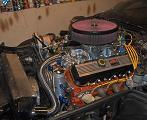











Mini Corvette Engine

Thread Starter
Racer

Joined: Jan 2007
Posts: 322
Likes: 0
From: Chapin South Carolina
 Mini Corvette Engine
Corvette Stories
The Best of Corvette for Corvette Enthusiasts

10 Most Common Corvette Problems of the Last 20 Years!
Joe Kucinski
5 MOST and 5 LEAST Popular Corvette Model Years in History!
Joe Kucinski
2027 Corvette Buyer's Guide: Everything You Need to Know!
Joe Kucinski
10 Things C8 Corvette Owners Hate (But Won't Tell You)
Joe Kucinski
10 Best Corvettes Coming to Barrett-Jackson Palm Beach 2026!
Brett Foote
Every Corvette Grand Sport Explained! (C2, C4, C6, C7, & C8)
Joe Kucinski
Grand Sport & Grand Sport X Launch Alongside All-New 535hp LS6 V8!
Michael S. Palmer
5 Reasons Bad Drivers Crash & 5 Ways to Avoid a Costly Mistake!
Joe Kucinski
7 Bolt-On Upgrades From Extreme Online Store to Level Up Your C6 Corvette
Pouria Savadkouei
Burning Brakes


Joined: Dec 2007
Posts: 805
Likes: 3
From: Waco TX
They said he made it "from scrach". I have always been fascinated with engine production. I am an accountant, and sometime I think I missed my call as a mechanical engineer.
How do you make something from scratch like that? How does he make such a precise instrument like an engine from scratch? Also, how many cylinders is that? How is it cooled?
How do you make something from scratch like that? How does he make such a precise instrument like an engine from scratch? Also, how many cylinders is that? How is it cooled?




Team Owner


Joined: Feb 2006
Posts: 22,999
Likes: 117
From: San Antonio Texas
Guys that can do that are like wizards of engineering and construction. I saw a tiny Ferrari once that everything worked. It had a V12 engine that ran, full functioning suspension with working hydraulic disk brakes...everything! I wonder what kind of oiling and cooling they have. The fact that they run at all blows my mind.

Racer

Joined: Aug 2007
Posts: 311
Likes: 23
From: Austin, TX
here is a link to a better article on it in the NY Times

Pro

Joined: Dec 2006
Posts: 514
Likes: 0
From: Kennewick Washington
Good old American ingenuity!
It appears to lack a cooling system. I wonder what the source of spark it. I see a distributor and wires, but no coil or battery. I wonder if it uses glow heads like a model car or airplane engine.
It appears to lack a cooling system. I wonder what the source of spark it. I see a distributor and wires, but no coil or battery. I wonder if it uses glow heads like a model car or airplane engine.

Racer
Joined: Jun 2007
Posts: 486
Likes: 0
From: Sandy Ut
On that note, I just have to share this as well
http://www.nvbackflow.com/engines/
If you look around on this site you will find out that there are a few other guys that are into these small engines too.
http://www.nvbackflow.com/engines/
If you look around on this site you will find out that there are a few other guys that are into these small engines too.

Le Mans Master


Joined: May 2004
Posts: 5,377
Likes: 530
They said he made it "from scrach". I have always been fascinated with engine production. I am an accountant, and sometime I think I missed my call as a mechanical engineer.
How do you make something from scratch like that? How does he make such a precise instrument like an engine from scratch? Also, how many cylinders is that? How is it cooled?
How do you make something from scratch like that? How does he make such a precise instrument like an engine from scratch? Also, how many cylinders is that? How is it cooled?
I believe bare minimum required to attempt a model engine besides understanding of math and precise measuring is a lathe and a machining mill. You can buy mini lathes and mills to fit in your garage but you'd probably spend a thousand or more for them. It requires patience as well, it's not something you can just dive into. Several mini engine builders I've spoken with stress making a single piston combustion or steam engine first to build experience.
www.cnczone.com
That link alone would keep you busy a year or longer learning.

Last edited by 1985 Corvette; Aug 19, 2008 at 03:48 PM.
Burning Brakes
Joined: Dec 2007
Posts: 805
Likes: 3
From: Waco TX
Wow. That stuff is pretty neat.
But couldn't you just make your engine a lot easier by casting it? Seems like it would be a lot easier. I actually know a guy, a dental technition, that would probably know all that is needed to cast something VERY precise in metal.
Sure, after casting it, then you'd mill or machine it. The discovery channel has a show called ultimate factories. It showed how Ferrari takes scrap aluminum and casts it into the necessary parts. It's really not that complicated of a process.
They basically make the molds out of a sand mixed with some kind of resin or glue (after it hardens its VERY brittle and cracks apart pretty easily). Then they carefully fit the pieces of sand/resin mix together like a 3d jigsaw puzzle, pour in the molden aluminum and then just shake the sand/resin parts off. They are really brittle and crumble easily.
I think the hardest part would be making a crankshaft from scratch. Has to be super durable, perfectly balanced, incredibly precise (thousands of an inch or less in tollerance).
But couldn't you just make your engine a lot easier by casting it? Seems like it would be a lot easier. I actually know a guy, a dental technition, that would probably know all that is needed to cast something VERY precise in metal.
Sure, after casting it, then you'd mill or machine it. The discovery channel has a show called ultimate factories. It showed how Ferrari takes scrap aluminum and casts it into the necessary parts. It's really not that complicated of a process.
They basically make the molds out of a sand mixed with some kind of resin or glue (after it hardens its VERY brittle and cracks apart pretty easily). Then they carefully fit the pieces of sand/resin mix together like a 3d jigsaw puzzle, pour in the molden aluminum and then just shake the sand/resin parts off. They are really brittle and crumble easily.
I think the hardest part would be making a crankshaft from scratch. Has to be super durable, perfectly balanced, incredibly precise (thousands of an inch or less in tollerance).
Le Mans Master
Joined: May 2004
Posts: 5,377
Likes: 530
Wow. That stuff is pretty neat.
But couldn't you just make your engine a lot easier by casting it? Seems like it would be a lot easier. I actually know a guy, a dental technition, that would probably know all that is needed to cast something VERY precise in metal.
Sure, after casting it, then you'd mill or machine it. The discovery channel has a show called ultimate factories. It showed how Ferrari takes scrap aluminum and casts it into the necessary parts. It's really not that complicated of a process.
They basically make the molds out of a sand mixed with some kind of resin or glue (after it hardens its VERY brittle and cracks apart pretty easily). Then they carefully fit the pieces of sand/resin mix together like a 3d jigsaw puzzle, pour in the molden aluminum and then just shake the sand/resin parts off. They are really brittle and crumble easily.
I think the hardest part would be making a crankshaft from scratch. Has to be super durable, perfectly balanced, incredibly precise (thousands of an inch or less in tollerance).
But couldn't you just make your engine a lot easier by casting it? Seems like it would be a lot easier. I actually know a guy, a dental technition, that would probably know all that is needed to cast something VERY precise in metal.
Sure, after casting it, then you'd mill or machine it. The discovery channel has a show called ultimate factories. It showed how Ferrari takes scrap aluminum and casts it into the necessary parts. It's really not that complicated of a process.
They basically make the molds out of a sand mixed with some kind of resin or glue (after it hardens its VERY brittle and cracks apart pretty easily). Then they carefully fit the pieces of sand/resin mix together like a 3d jigsaw puzzle, pour in the molden aluminum and then just shake the sand/resin parts off. They are really brittle and crumble easily.
I think the hardest part would be making a crankshaft from scratch. Has to be super durable, perfectly balanced, incredibly precise (thousands of an inch or less in tollerance).
There's people that actually melt their own aluminum and cast simple objects. Of course you'd need your own mini foundry to melt the aluminum. A poor man's method is lining a coffee can with a material that resists extreme heat. Coals are then placed inside the reinforced can and then on top of that sits the container that you drop your aluminum in that melts.
There's videos of it on youtube where people just take empty coke cans, put them inside their homemade furnace and it melts like butter.


