


should be done on friday

Thread Starter
Racer


Joined: Jul 2007
Posts: 462
Likes: 21
From: Kansas City Missouri
 should be done on friday
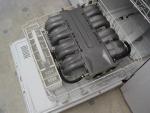
Keep your fingers crossed boys. It looks like we will be firing it up on Friday. Once everything is totally done, I will post the pics of the journey and give the detailed list of what was accomplished. Here is a pic of today's progress......we are mighty close.
reallly only have to install the cold air intake and set the distributor.

reallly only have to install the cold air intake and set the distributor.

Banned Loser


Joined: Aug 2009
Posts: 53,427
Likes: 250
From: They say you learn from your mistakes, I must be a genius
2017 Corvette of the Year
2016 C4 of Year Finalist
Creator of the "Original" whining and crying thread
St. Jude Donor '14-'15-'16-'17
There's nothing like bringing them to life for the first time. Good luck!
Thread Starter
Racer
Joined: Jul 2007
Posts: 462
Likes: 21
From: Kansas City Missouri
break in procedure
what do you guys reccommend for the break in of the new cam/new motor?
I have been told to prime the oil first and then to set it at 2000 rpms for 30 minutes to set the cam. What is the standard step by step for this. Hoping to tackel it for tomorrow. Thanks in advance.
I have been told to prime the oil first and then to set it at 2000 rpms for 30 minutes to set the cam. What is the standard step by step for this. Hoping to tackel it for tomorrow. Thanks in advance.
Thread Starter
Racer
Joined: Jul 2007
Posts: 462
Likes: 21
From: Kansas City Missouri
Here is what I found. Anything missing?
BEFORE YOU TURN THE KEY
• Fill All of the Engine’s Fluids- Using a minimum of a SAE API SD, SE or better fresh
clean mineral based oil and Erson’s Break-In Additive with ZZDP, fill the engine to
the proper level. Do not use synthetic oil during break-in. Fill the coolant system and
follow the instructions on purging air from the system. With carburetor equipped
engines, fill the carburetor to insure fuel is available immediately. Make sure that
the ignition timing is properly set to insure immediate starting, without excess
cranking of the engine.
• Pre-Lube the Engine- Using a oil pump priming tool such as those available from
Mallory, spin the engine’s oil pump until you see pressure on the gauge or have oil
at the rocker arms. Do not attempt to prime the engine using the starter motor!
• Proper Ventilation- Make sure that you do not start the engine without good
airflow. That means have the overhead garage door open and the exhaust vented to
the outside. If you have any doubts about sufficient airflow to the engine, push the
car out of the garage to make sure the radiator can draw in plenty of air. Having a
fan to blow fresh air through the garage is a plus.
• Exhaust System- If at all possible, start the car with a muffled exhaust system
hooked up and operational. It makes it much easier to hear what is going on.
• Resist the Urge- Take a minute before you try to start the engine for the first time
and double check that you are ready to go. Don’t take any short cuts or leave parts
such as fan shrouds, air cleaner, wire looms, etc. off. Clean up the area around and
especially under your vehicle. Pick up your tools and wipe up the floor so you can
easily spot even a minor leak.
• Be Prepared- Have extra coolant or hose handy, clean rags, tools for tightening
clamps, connections, etc. just in case. They need to be in place to make sure you
have an uneventful break-in of the camshaft.
WHEN THE ENGINE STARTS
• Have a Helper- Now is the time for a helper. They can check the coolant level,
check for oil and fluid leaks, and proper operation of under hood accessories. Air
pockets in the coolant system are common so make sure the recovery bottle is
checked and filled as necessary. You cannot count on the temperature gauge.
Temperature gauges are only accurate if the sensor is submerged in coolant and
will not give an accurate reading if in an air pocket.
• Do Not Idle the Engine- As soon as the engine starts; raise the rpm to 2,000 rpm.
You should also constantly vary the RPM between 2,000 and 3,000 RPM for the
first 20 minutes. This is the only way to insure proper lubrication during this critical
period since the camshaft to lifter contact area relies almost exclusively on oil
splash from the crank and connecting rods. Make sure that you run the engine for a
full 20 minutes using this procedure. It will seem like forever, but it is one of the
most important steps to insure long, dependable performance.
Once Break-in is Complete- Drain and replace the engine oil and filter with new,
fresh oil and a new filter. Recheck for any fluid leaks and check all fluid levels. If you
installed a mechanical lifter style camshaft, flat faced or roller style, the valve
adjustment should be rechecked at this time with the engine fully warmed up.
Hydraulic lifter equipped engines should not require any readjustment.
Proper maintenance is important for any vehicle. Frequent oil changes, with a new
filter is one of the easiest ways to insure your vehicle will deliver the performance
you want for many long happy miles.
Erson Cams Tech Line 800-641-7920
BEFORE YOU TURN THE KEY
• Fill All of the Engine’s Fluids- Using a minimum of a SAE API SD, SE or better fresh
clean mineral based oil and Erson’s Break-In Additive with ZZDP, fill the engine to
the proper level. Do not use synthetic oil during break-in. Fill the coolant system and
follow the instructions on purging air from the system. With carburetor equipped
engines, fill the carburetor to insure fuel is available immediately. Make sure that
the ignition timing is properly set to insure immediate starting, without excess
cranking of the engine.
• Pre-Lube the Engine- Using a oil pump priming tool such as those available from
Mallory, spin the engine’s oil pump until you see pressure on the gauge or have oil
at the rocker arms. Do not attempt to prime the engine using the starter motor!
• Proper Ventilation- Make sure that you do not start the engine without good
airflow. That means have the overhead garage door open and the exhaust vented to
the outside. If you have any doubts about sufficient airflow to the engine, push the
car out of the garage to make sure the radiator can draw in plenty of air. Having a
fan to blow fresh air through the garage is a plus.
• Exhaust System- If at all possible, start the car with a muffled exhaust system
hooked up and operational. It makes it much easier to hear what is going on.
• Resist the Urge- Take a minute before you try to start the engine for the first time
and double check that you are ready to go. Don’t take any short cuts or leave parts
such as fan shrouds, air cleaner, wire looms, etc. off. Clean up the area around and
especially under your vehicle. Pick up your tools and wipe up the floor so you can
easily spot even a minor leak.
• Be Prepared- Have extra coolant or hose handy, clean rags, tools for tightening
clamps, connections, etc. just in case. They need to be in place to make sure you
have an uneventful break-in of the camshaft.
WHEN THE ENGINE STARTS
• Have a Helper- Now is the time for a helper. They can check the coolant level,
check for oil and fluid leaks, and proper operation of under hood accessories. Air
pockets in the coolant system are common so make sure the recovery bottle is
checked and filled as necessary. You cannot count on the temperature gauge.
Temperature gauges are only accurate if the sensor is submerged in coolant and
will not give an accurate reading if in an air pocket.
• Do Not Idle the Engine- As soon as the engine starts; raise the rpm to 2,000 rpm.
You should also constantly vary the RPM between 2,000 and 3,000 RPM for the
first 20 minutes. This is the only way to insure proper lubrication during this critical
period since the camshaft to lifter contact area relies almost exclusively on oil
splash from the crank and connecting rods. Make sure that you run the engine for a
full 20 minutes using this procedure. It will seem like forever, but it is one of the
most important steps to insure long, dependable performance.
Once Break-in is Complete- Drain and replace the engine oil and filter with new,
fresh oil and a new filter. Recheck for any fluid leaks and check all fluid levels. If you
installed a mechanical lifter style camshaft, flat faced or roller style, the valve
adjustment should be rechecked at this time with the engine fully warmed up.
Hydraulic lifter equipped engines should not require any readjustment.
Proper maintenance is important for any vehicle. Frequent oil changes, with a new
filter is one of the easiest ways to insure your vehicle will deliver the performance
you want for many long happy miles.
Erson Cams Tech Line 800-641-7920
Safety Car


Joined: Aug 2008
Posts: 4,344
Likes: 48
From: San Marcos CA
I usually start my engines without coolant so if something major is wrong, you don't have to drop the lower hose off the radiator and make a big mess draining the water out. I always hated wallowing around in coolant- it's already bad enough if something is wrong with a new engine.
After it runs for about 20 seconds and lubes up, I stop it and fill with water.
After it runs for about 20 seconds and lubes up, I stop it and fill with water.
Corvette Stories
The Best of Corvette for Corvette Enthusiasts

Every 2027 Corvette Engine Explained
Joe Kucinski
Designer Imagines A Corvette That Looks More Like a Corvette Than the Corvette
Verdad Gallardo
10 Ugly Corvettes That We Still Kinda Love
Joe Kucinski
Top 10 Most Expensive Corvettes Ever Sold on Bring A Trailer
Brett Foote
10 Things Every Corvette Owner Needs (2026 Edition)
Michael S. Palmer
8 Most "Only Corvette Owners Understand" Quirks and Problems
Pouria Savadkouei
10 Reasons the C6 Z06 is Still A Performance Benchmark After 20 Years
Joe Kucinski
How Much Horsepower Every Corvette Engine "LOST" in 1972
Joe Kucinski