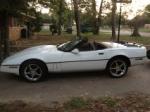
Advice on Missing Keys

Melting Slicks

Joined: May 2013
Posts: 2,692
Likes: 349
From: Sacramento California

LOL there is no "trunk" key for your 1991 because there is no trunk. It has a hatch, which does not open with a key -- the hatch opens with buttons located on the console and on the rear edge of both doors, or with the key fob. There's also an emergency hatch release cable tucked underneath the trim below the shade pull handle at the back of the hatch area.
I'm going to assume when he says "trunk" key, he's talking about the round key, which is for the doors and interior locks (armrest & storage if it has those locks). The square key is for the ignition only. Both are single-sided.
I'm going to assume when he says "trunk" key, he's talking about the round key, which is for the doors and interior locks (armrest & storage if it has those locks). The square key is for the ignition only. Both are single-sided.

Thread Starter
Heel & Toe

Joined: Jun 2013
Posts: 21
Likes: 0
From: California
I have some potentiometers, so I probably have one or two that can cover the 15 different values. The main trick will be tapping into the contact points without a lot of effort. I saw some tools with plastic keys and wires coming from the key, so I am going to try to MacGyver it with the work key by insulating it and then attaching some conductive ribbon I have to either side. I think the security light should guide me as to whether or not I am making proper contact to the cylinder contacts. Then I will go through the resistance values with a multimeter.
See page 4: http://www.lockmasters.com/ecommerce...%20Article.pdf
Thanks for the advice on checking the gas tank. This is going to be another topic on what I should do before starting the car to minimize any damage to the engine. I plan on inspecting all the wires, belts and hoses and making sure all the components are bolted on and not loose.
See page 4: http://www.lockmasters.com/ecommerce...%20Article.pdf
Thanks for the advice on checking the gas tank. This is going to be another topic on what I should do before starting the car to minimize any damage to the engine. I plan on inspecting all the wires, belts and hoses and making sure all the components are bolted on and not loose.
Thread Starter
Heel & Toe
Joined: Jun 2013
Posts: 21
Likes: 0
From: California
LOL there is no "trunk" key for your 1991 because there is no trunk. It has a hatch, which does not open with a key -- the hatch opens with buttons located on the console and on the rear edge of both doors, or with the key fob. There's also an emergency hatch release cable tucked underneath the trim below the shade pull handle at the back of the hatch area.
 Yeah, he thought it was odd, so I am hoping they mean the round door key and not some other obscure key I am not aware of. I drove this 'vette a little bit in HS (a long time ago) and I do not remember using a key for the rear hatch.
Last edited by buchacho; Jun 25, 2013 at 03:20 PM.

Team Owner


Joined: Dec 2000
Posts: 21,094
Likes: 282
From: Phila., PA burbs
If you drop the panel under the dash, it's pretty easy to access the points you need. You'll see two wires that run up toward the ignition key (I can't recall the colors). Follow the two wires from the cylinder to a connector. Unplug it and you have your connection points.

Team Owner


Joined: Sep 2003
Posts: 25,383
Likes: 2,736
I have some potentiometers, so I probably have one or two that can cover the 15 different values. The main trick will be tapping into the contact points without a lot of effort. I saw some tools with plastic keys and wires coming from the key, so I am going to try to MacGyver it with the work key by insulating it and then attaching some conductive ribbon I have to either side. I think the security light should guide me as to whether or not I am making proper contact to the cylinder contacts. Then I will go through the resistance values with a multimeter.
See page 4: http://www.lockmasters.com/ecommerce...%20Article.pdf
Thanks for the advice on checking the gas tank. This is going to be another topic on what I should do before starting the car to minimize any damage to the engine. I plan on inspecting all the wires, belts and hoses and making sure all the components are bolted on and not loose.
See page 4: http://www.lockmasters.com/ecommerce...%20Article.pdf
Thanks for the advice on checking the gas tank. This is going to be another topic on what I should do before starting the car to minimize any damage to the engine. I plan on inspecting all the wires, belts and hoses and making sure all the components are bolted on and not loose.
http://forums.corvetteforum.com/1557847121-post4.html
There is only 14 possible for your car, forget #1 - I mentioned that earlier and don't forget the 4 minute rest requirement between attempts, you might increase that to 5. If you're a gambler and believe "probability" do your request in this order: 9 - 8 - 10 - 7 - 11 - 6 - 12 - 5 - 13 - 4 - 14 - 3 -15 - 2
Last edited by WVZR-1; Jun 26, 2013 at 07:18 AM.

Le Mans Master


Joined: Jul 2009
Posts: 7,182
Likes: 100
From: Pendleton IN
That is an "exception" and certainly not the rule!! Before key control became a "corporate" procedure and not a "car line" controlled feature it varied car line to car line. The Chevrolet policy was very complicated and nearly worthless. It was likely passed on to the OP that it (VATS) would "likely" not be included is what a dealer would mention before the request, there is NO way of knowing before the request. If it is in included with the request then the OP's needs MIGHT POSSIBLY be met BUT it would be advised to have the "work-key" only done first to confirm rotation. If you do the VATS key and it doesn't rotate you've wasted substantially more money. If the VATS is included and the "work-key" doesn't rotate then there's a good chance the cylinder was replaced but the VATS value retained. Then it's buy a cylinder time and start fresh or use other options.
The OP just needs to make the "first move" which has been suggested! He seems intent on "brainstormin"!!
The OP just needs to make the "first move" which has been suggested! He seems intent on "brainstormin"!!
Last edited by Vette Daddy; Jun 29, 2013 at 06:20 PM.
Thread Starter
Heel & Toe
Joined: Jun 2013
Posts: 21
Likes: 0
From: California
Got the keys and they fit! Unfortunately they do not have a work key blank, so I had to get a full key with a random value. I chose #9.
I need to charge the battery and figure out how to drop the panel below the steering column.
I also took a closer look at the ECC's. It looks like both are not the original. Does the ECC also determine the key resistance value, or is that determined from another module?


I need to charge the battery and figure out how to drop the panel below the steering column.
I also took a closer look at the ECC's. It looks like both are not the original. Does the ECC also determine the key resistance value, or is that determined from another module?
Corvette Stories
The Best of Corvette for Corvette Enthusiasts

Top 10 Most Explosive Corvettes Ever Made: Power-to-Weight Ratio Ranked!
Joe Kucinski
150 hp to 1,250 hp: Every Corvette Generation Compared by the Specs That Matter
Joe Kucinski
8 Coolest Corvette Pace Cars (and Replicas) of All Time
Verdad Gallardo
Top 10 Corvette Engines RANKED by Peak Torque (70+ Years of Muscle!)
Joe Kucinski
Corvette ZR1X Will Be Pacing the Indy 500, And Could Probably Race, Too!
Verdad Gallardo
Top 10 Corvettes Coming to Mecum Indy 2026!
Brett Foote
Top 10 C9 Corvette MUST-HAVES to Fix These C8 Generation Flaws!
Michael S. Palmer
10 Revolutionary 'Corvette Firsts' Most People Don't Know
Joe Kucinski
5 Reasons to Upgrade to an LS6-Powered Corvette; 5 Reasons to Stay LT2
Michael S. Palmer
Team Owner
Joined: Sep 2003
Posts: 25,383
Likes: 2,736
Got the keys and they fit! Unfortunately they do not have a work key blank, so I had to get a full key with a random value. I chose #9.
I need to charge the battery and figure out how to drop the panel below the steering column.
I also took a closer look at the ECC's. It looks like both are not the original. Does the ECC also determine the key resistance value, or is that determined from another module?
I need to charge the battery and figure out how to drop the panel below the steering column.
I also took a closer look at the ECC's. It looks like both are not the original. Does the ECC also determine the key resistance value, or is that determined from another module?
Does no one know what was done under there? I thought this was a car that had been "in the family".
Don't of course knock out the resistor until you try that key first. When you mention fit I guess you mean "rotate" but you're still presented with the "no crank"?
Good to see you back!
i can't read anything on the box but it looks like there's been some sort of an attempt to install a push-button and by-pass all of the OE stuff. If you can post the information on the box, the label etc do that. I don't recognize any of it from a "first-hand" experience!
Last edited by WVZR-1; Jun 29, 2013 at 05:26 PM.
Thread Starter
Heel & Toe
Joined: Jun 2013
Posts: 21
Likes: 0
From: California
Yep, door/ignition cylinders rotate.
The car had an alarm system installed before my dad bought it. My memory of some details is hazy since the last time I drove it was probably more than 10 years ago. I am not sure what he was doing with it and why he gave up on it since we never talked about it. He had other cars and a project car that he gave up on as well, so it was kind of not unusual I guess. It wold be cool to get it running again, but it will need some TLC. The body is in fairly good shape though.
The alarm system looks to be a Viper 300+ and I think the push button is a valet mode / fob programming function.
I am either going to find the resistance from the ignition wires or get a bypass unit that generates the signal on eBay...
The car had an alarm system installed before my dad bought it. My memory of some details is hazy since the last time I drove it was probably more than 10 years ago. I am not sure what he was doing with it and why he gave up on it since we never talked about it. He had other cars and a project car that he gave up on as well, so it was kind of not unusual I guess. It wold be cool to get it running again, but it will need some TLC. The body is in fairly good shape though.
The alarm system looks to be a Viper 300+ and I think the push button is a valet mode / fob programming function.
I am either going to find the resistance from the ignition wires or get a bypass unit that generates the signal on eBay...
Thread Starter
Heel & Toe
Joined: Jun 2013
Posts: 21
Likes: 0
From: California
An update...
I have been trying to diagnose the car. The security light does not go on in the instrument panel when I try the key. Also, the LCD panel for speedometer and odometer does not light up. The radio also does not turn on. I checked the diagnostic code with A-B jumpered and got a 4-6, which looks like a pass-key error probably due to resistance error. I found the connector for the resistance wires that go to the lock cylinder, but forgot to bring my multimeter.
When I turn the key to the ON position, a fan turns on. Is this normal?
Does anyone have advice (or search keywords) on how to troubleshoot the instrument cluster? The analog gauges, seem to move, for example, the voltage gauge, however the LCD is dark. Also, could the radio not turning on be related?
I have been trying to diagnose the car. The security light does not go on in the instrument panel when I try the key. Also, the LCD panel for speedometer and odometer does not light up. The radio also does not turn on. I checked the diagnostic code with A-B jumpered and got a 4-6, which looks like a pass-key error probably due to resistance error. I found the connector for the resistance wires that go to the lock cylinder, but forgot to bring my multimeter.
When I turn the key to the ON position, a fan turns on. Is this normal?
Does anyone have advice (or search keywords) on how to troubleshoot the instrument cluster? The analog gauges, seem to move, for example, the voltage gauge, however the LCD is dark. Also, could the radio not turning on be related?

Racer
Joined: Oct 2012
Posts: 350
Likes: 2
From: Huntsville AL
At this point, you don't know if you are fighting a car problem or an after market alarm problem. If you Google/Bing Viper 300+ you will see that the install manual is readily available for download. Use the info in the manual to either disarm the system or do a complete deinstall. That should either fix your problem or put you in a position to trouble shoot the car itself.
Last edited by Just BOB; Jul 8, 2013 at 12:18 PM.
Team Owner
Joined: Sep 2003
Posts: 25,383
Likes: 2,736
At this point, you don't know if you are fighting a car problem or an after market alarm problem. If you Google/Bing Viper 300+ you will see that the install manual is readily available for download. Use the info in the manual to either disarm the system or do a complete deinstall. That should either fix your problem or put you in a position to trouble shoot the car itself.[/COLOR]
Thread Starter
Heel & Toe
Joined: Jun 2013
Posts: 21
Likes: 0
From: California
At this point, you don't know if you are fighting a car problem or an after market alarm problem. If you Google/Bing Viper 300+ you will see that the install manual is readily available for download. Use the info in the manual to either disarm the system or do a complete deinstall. That should either fix your problem or put you in a position to trouble shoot the car itself.
Last edited by buchacho; Jul 8, 2013 at 05:38 PM.