HELP! Possible clutch issue?


Thread Starter
Advanced


Joined: May 2017
Posts: 93
Likes: 15
From: Indiana
 HELP! Possible clutch issue?
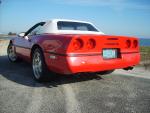
So I bought a 1990 base Vette with a 6-speed about a month ago, and today it started acting weird. Normally when I'd give my car some gas it'd pull harder than any car I've ever driven. But today, I pressed the gas and the revs jumped about 3 grand and then settled and my car begins to pull. Not as hard as normal. It drives different and the car shifts fine, but something seems off. I can only assume the clutch is slipping. She has 62,000 miles right now. I believe the stock clutch is on there. Please help! I'm new to the forum and am not for sure if I have posted in the right area. I apologize in advance.
Drifting


Joined: Mar 2011
Posts: 1,693
Likes: 144
From: on Barnegat Bay Joisey
Welcome to the forum. First thing you want to do is loosen up the ECM and carefully move it to the side. Now you will see the clutch master cylinder with its reservoir on top. Check the fluid level and color; it should be about a quarter down from the top and straw color. Add Dot 3 brake fluid if its low or nearly empty. Look up the "Ranger Method" to clean up the fluid if its black (Google). If all is good it will become more serious quickly.

Burning Brakes

Joined: Jun 2016
Posts: 761
Likes: 66
From: Fitzwilliam New Hampshire
Put it in high gear at 45-55 mph and put gas peddle to floor, watch tach, it will slip if bad. Can you smell anything strange when this happens?
Last edited by A Peter C4; Jun 11, 2017 at 09:31 PM.

Le Mans Master

Joined: Oct 2004
Posts: 6,314
Likes: 508
From: South-central Missouri
Welcome to the forum. First thing you want to do is loosen up the ECM and carefully move it to the side. Now you will see the clutch master cylinder with its reservoir on top. Check the fluid level and color; it should be about a quarter down from the top and straw color. Add Dot 3 brake fluid if its low or nearly empty. Look up the "Ranger Method" to clean up the fluid if its black (Google). If all is good it will become more serious quickly.
Last edited by Paul Workman; Jun 12, 2017 at 09:28 AM.
Drifting
Joined: Mar 2011
Posts: 1,693
Likes: 144
From: on Barnegat Bay Joisey
I agree with you. I only noted the clutch fluid because as mine slowly diminished in the reservoir the clutch would engage in a different position from the floor causing over revving and missed shifts. As I recall (from 25 years ago LOL) the top half of the pedal movement became very soft and the engagement moved closer to the floor.

Le Mans Master


Joined: Aug 2015
Posts: 6,120
Likes: 1,997
From: St. Charles MO
I agree with Paul about the hydraulics. I would add the same regarding clutch fork pivot wear - it will show the opposite symptoms to slippage as well. Peter has a good diagnostic test. If you find slippage with that, then it's time for a clutch job. If it's the original clutch and flywheel, I would try hard to find a way to verify that the pressure plate isn't defective in some way, and have it resurfaced rather than replaced. Then just put a new disk in it. Replacement pressure plates now are all junk. Also, you'll find two choices for your flywheel: resurface the stock dual-mass unit or replace it with a single-mass flywheel. The latter option means you will have some gear rattle when idling in neutral, but also gives you some performance options with lighter flywheels.