



Cooling question.....

Thread Starter
Advanced

Joined: Oct 2017
Posts: 57
Likes: 8
From: Hawaii
 Cooling question.....
This is a question that I'm having a hard time seeing how some people are getting wrong.
A motor that runs down the flat freeways @ 60mph registering 200 degrees on the gauge, doesn't give a crap about what temperature thermostat is in it, correct? (180 vs 160....both are already fully open)
Cooling fans programmed to turn on at less than the "normal operating temperature while traveling 60mph on a flat freeway" (200 degrees in this case) is just a noisy waste, correct? ( Fans don't pull more air than a 60mph head wind, so programming them to turn on at 180 degrees is pointless)
AND LASTLY,
THE ONLY way to decrease the "normal operating temperature while traveling 60mph on a flat freeway" is to increase the heat removal capacity of the heat exchanger (radiator), correct? (Bigger surface area, more rows or better fresh air exposure)
I'd love to have this explained to me if I'm wrong...... PO of my vette was VERY proud of the fact that he put in a 160 thermostat......yet the car consistently runs hotter than that.....makes no sense man!
A motor that runs down the flat freeways @ 60mph registering 200 degrees on the gauge, doesn't give a crap about what temperature thermostat is in it, correct? (180 vs 160....both are already fully open)
Cooling fans programmed to turn on at less than the "normal operating temperature while traveling 60mph on a flat freeway" (200 degrees in this case) is just a noisy waste, correct? ( Fans don't pull more air than a 60mph head wind, so programming them to turn on at 180 degrees is pointless)
AND LASTLY,
THE ONLY way to decrease the "normal operating temperature while traveling 60mph on a flat freeway" is to increase the heat removal capacity of the heat exchanger (radiator), correct? (Bigger surface area, more rows or better fresh air exposure)
I'd love to have this explained to me if I'm wrong...... PO of my vette was VERY proud of the fact that he put in a 160 thermostat......yet the car consistently runs hotter than that.....makes no sense man!

Burning Brakes

Joined: Jun 2016
Posts: 761
Likes: 66
From: Fitzwilliam New Hampshire
cooling issue
Flush your cooling system completely, include removing knock sensors, and remove radiator and clean fins and core, also blow out AC condenser while you have access from rear towards front it will run about 185 after at all speeds above 35 MPH with new coolant.
Last edited by A Peter C4; Oct 8, 2017 at 10:52 PM. Reason: add info

Team Owner


Joined: Aug 2004
Posts: 21,543
Likes: 3,216
From: Park City Utah
You're right though, if the car runs at 200, it doesn't matter one wit if you've got a 160 stat in there, or a 180.
Thread Starter
Advanced
Joined: Oct 2017
Posts: 57
Likes: 8
From: Hawaii
I never said "my" motor.... I just said "a" motor....the 200 number was an example.
I was more curious about the thermostat discussion.
That being said.....my motor regularly exceeds 160 while cruising....then again I live in Hawaii where it is hot and humid.
My rad is clean as a whistle and has fresh coolant.
I was more curious about the thermostat discussion.
That being said.....my motor regularly exceeds 160 while cruising....then again I live in Hawaii where it is hot and humid.
My rad is clean as a whistle and has fresh coolant.
Last edited by Skidmark1; Oct 9, 2017 at 01:20 AM.
Team Owner
Joined: Aug 2004
Posts: 21,543
Likes: 3,216
From: Park City Utah
O.K. Then in your hypothetical scenario, the T-stat wouldn't matter...but THAT "hypothetical car" would need some "hypothetical maintenance", b/c the cooling system would not be doing what it should be capable of doing. 
Thread Starter
Advanced
Joined: Oct 2017
Posts: 57
Likes: 8
From: Hawaii
So Tom,
I'm curious, my dirt bikes do not have thermostats as the manufacturers sized the cooling systems BTU dispersion to allow the motor to operate at the desired temperature....most of the time. They also do not have cooling fans.
What temperature should our "hypothetical" C4 corvette motor run at going 60mph on a 90 degree day with 70 percent humidty?.....or if you have a example from a lower temp/humidity i can try to figure out what it should be here in Hawaii.
I appreciate your time on this discussion as I find it very interesting.
aloha,
Skiddy
I'm curious, my dirt bikes do not have thermostats as the manufacturers sized the cooling systems BTU dispersion to allow the motor to operate at the desired temperature....most of the time. They also do not have cooling fans.
What temperature should our "hypothetical" C4 corvette motor run at going 60mph on a 90 degree day with 70 percent humidty?.....or if you have a example from a lower temp/humidity i can try to figure out what it should be here in Hawaii.
I appreciate your time on this discussion as I find it very interesting.
aloha,
Skiddy
Team Owner
Joined: Aug 2004
Posts: 21,543
Likes: 3,216
From: Park City Utah

First: What do people "think" is the "right" temp for the C4? That seems to run the gamut depending on who answers, but from 160-260 seems to be the range of opinions.
Second: What does the OEM think the car should run at? Who knows...in the LT1/4, for example, GM specs a 180 stat. So they want it to run slightly above ~185* or so,...right? Maybe....but then they program the fans to turn on at ~230* -a whopping 50*F above the T-stat rating. That is a helluva operating range, IMO, and who knows which end of it is better? None of us do.
Third: What should the CAR do? Well the car should be able to run at very high RPM for an extended period of time (track use), in high temps (up 100*F IMO) and not overheat the oil or coolant. It should be able to run up steep grades in very high temps (over 110*F) and not over heat the oil or coolant -to me, over heating would be 300/260 respectively. In fact, my daily commute has me climbing 3000' vert over 6 miles. Traffic frequently has me going ~30 mph; above the "fan on speed"....but not a lot of air flow from vehicle speed. Even in summer, it's never gotten above ~210 in this challenging conditions.
What do *I* think the car should run at? Depends on the operating conditions, obviously, but the ability of the cooling system to handle the extreme situations that I've outlined above means that with that large cooling capacity/margin, it should be able to cruise on the highway going 60mph on a 90 degree day with 70 percent humidity (meaning that it's making ~20hp at a low 1500 RPM)..."down against the t-stat". If you have a 180 stat, it should be running ~185-195 mostly.
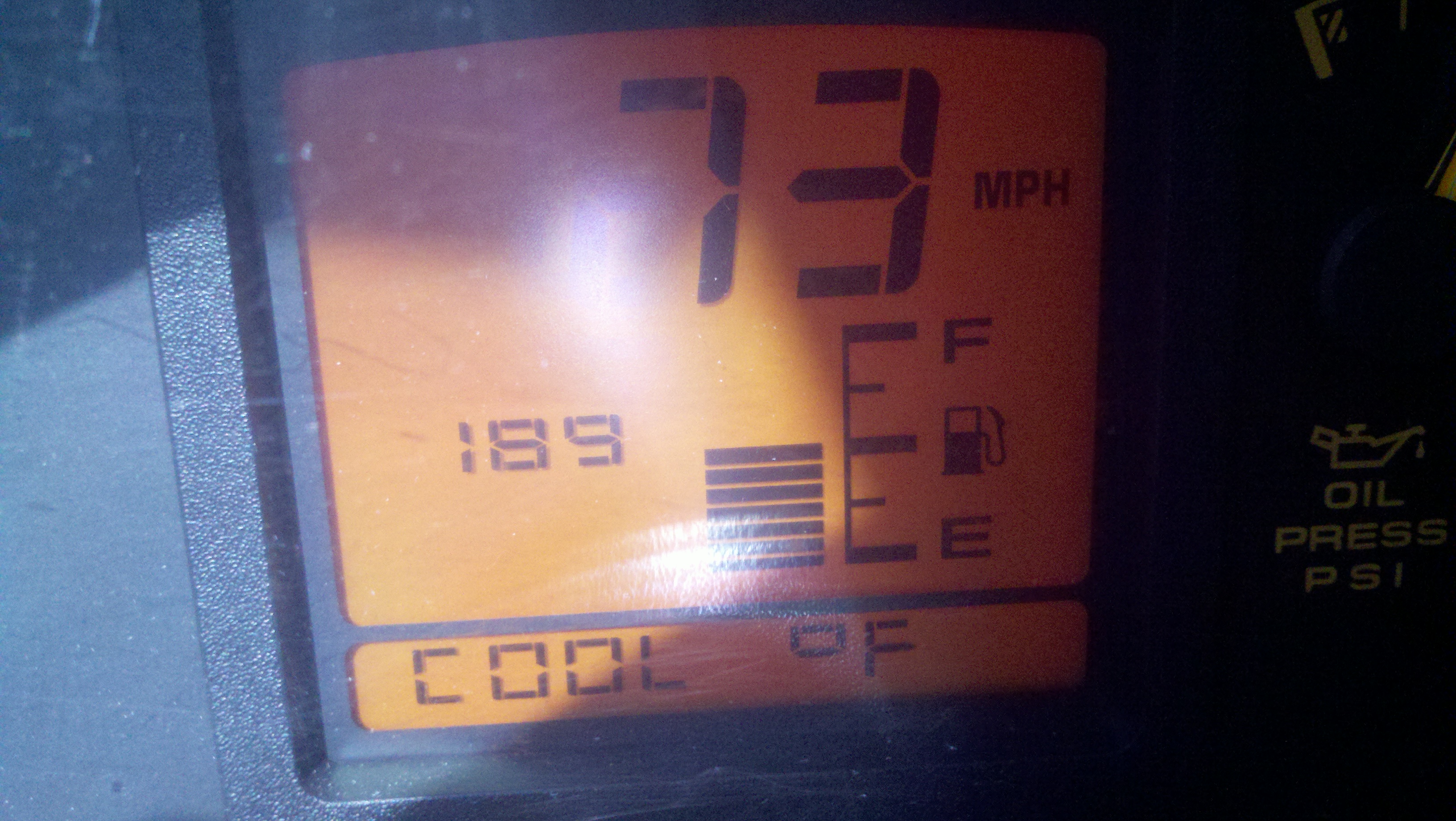
In another THREAD from this summer, I posted this pic on July 6th, of my car driving home from work.
*It was 104*F in Salt Lake as I was driving home.
*I was driving ~70-75 mph
*I had the AC going so there is some added heat loading to the cooling system.
IDK the humidity. It's Utah, so probably pretty low but since I gave you the date and location, you could probably find it on NOAA (weather.gov)
*My coolant temps read (on the DIC) 184*F - 194*F. Here is where it was when I first noticed the temp and snapped a pic.... IMO, this is what a C4 Corvette "should run at" on the highway.
Last edited by Tom400CFI; Oct 10, 2017 at 12:56 AM.
Safety Car


Joined: Aug 2009
Posts: 3,752
Likes: 276
From: Melbourne, Victoria, Australia
This is a question that I'm having a hard time seeing how some people are getting wrong.
A motor that runs down the flat freeways @ 60mph registering 200 degrees on the gauge, doesn't give a crap about what temperature thermostat is in it, correct? (180 vs 160....both are already fully open)
Cooling fans programmed to turn on at less than the "normal operating temperature while traveling 60mph on a flat freeway" (200 degrees in this case) is just a noisy waste, correct? ( Fans don't pull more air than a 60mph head wind, so programming them to turn on at 180 degrees is pointless)
AND LASTLY,
THE ONLY way to decrease the "normal operating temperature while traveling 60mph on a flat freeway" is to increase the heat removal capacity of the heat exchanger (radiator), correct? (Bigger surface area, more rows or better fresh air exposure)
I'd love to have this explained to me if I'm wrong...... PO of my vette was VERY proud of the fact that he put in a 160 thermostat......yet the car consistently runs hotter than that.....makes no sense man!
A motor that runs down the flat freeways @ 60mph registering 200 degrees on the gauge, doesn't give a crap about what temperature thermostat is in it, correct? (180 vs 160....both are already fully open)
Cooling fans programmed to turn on at less than the "normal operating temperature while traveling 60mph on a flat freeway" (200 degrees in this case) is just a noisy waste, correct? ( Fans don't pull more air than a 60mph head wind, so programming them to turn on at 180 degrees is pointless)
AND LASTLY,
THE ONLY way to decrease the "normal operating temperature while traveling 60mph on a flat freeway" is to increase the heat removal capacity of the heat exchanger (radiator), correct? (Bigger surface area, more rows or better fresh air exposure)
I'd love to have this explained to me if I'm wrong...... PO of my vette was VERY proud of the fact that he put in a 160 thermostat......yet the car consistently runs hotter than that.....makes no sense man!
The early C4's were designed to run 200-230F for efficient combustion, the standard thermostat is a 195F so will mostly be fully open allowing plenty of coolant flow
The coolant fan will be inhibited by the ECM above a certain speed, not sure the exact speed should be highway speed. but coolant temp does drop to 195F on highway by the amount of airflow, then the coolant temperature is regulated by the thermostat.
The limit of the standard radiator cooling capacity is only noticeable while stopped idling, where the cooling fan can only flow so much airflow 230-240F is normal in early C4s. Once the car is moving the temperature drops quickly to 190-200F.
Note DEWITTS have a coolant fan (for 84-87) that flows a lot more air to keep a C4 coolant temperature stable at idle on hot days.
Fitting a low temperature thermostat can affect the coolant temperature by allowing constant flow, not allowing the thermostat to close for the radiator to cool the coolant. That is why a higher temperature thermostat can prevent a car from overheating as the coolant in the radiator has more time to cool.
A Double row 2x 1 inch cores compared to the standard core helps if you have a modified engine needing more cooling capacity.
I have an adjustable coolant fan temp switch with capillary probe to top radiator hose, is connected to the green /white wire from ECM to the cooling fan relay. Allows the coolant temp to be maintained at 190F for track days and 230F for economical highway cruising at the turn of the adjustable cooling fan temp switch. And factory a/c coolant fan request when running the a/c

Last edited by gerardvg; Oct 10, 2017 at 04:13 AM.
Corvette Stories
The Best of Corvette for Corvette Enthusiasts

Top 10 Most Expensive Corvettes Ever Sold on Bring A Trailer
Brett Foote
10 Things Every Corvette Owner Needs (2026 Edition)
Michael S. Palmer
8 Most "Only Corvette Owners Understand" Quirks and Problems
Pouria Savadkouei
10 Reasons the C6 Z06 is Still A Performance Benchmark After 20 Years
Joe Kucinski
How Much Horsepower Every Corvette Engine "LOST" in 1972
Joe Kucinski
Top 10 DOs and DON'Ts for Protecting Your Convertible Top!
Michael S. Palmer
Top 10 Most Explosive Corvettes Ever Made: Power-to-Weight Ratio Ranked!
Joe Kucinski
150 hp to 1,250 hp: Every Corvette Generation Compared by the Specs That Matter
Joe Kucinski
8 Coolest Corvette Pace Cars (and Replicas) of All Time
Verdad Gallardo
Intermediate
Joined: Jun 2017
Posts: 27
Likes: 3
This is a question that I'm having a hard time seeing how some people are getting wrong.
A motor that runs down the flat freeways @ 60mph registering 200 degrees on the gauge, doesn't give a crap about what temperature thermostat is in it, correct? (180 vs 160....both are already fully open)
Cooling fans programmed to turn on at less than the "normal operating temperature while traveling 60mph on a flat freeway" (200 degrees in this case) is just a noisy waste, correct? ( Fans don't pull more air than a 60mph head wind, so programming them to turn on at 180 degrees is pointless)
AND LASTLY,
THE ONLY way to decrease the "normal operating temperature while traveling 60mph on a flat freeway" is to increase the heat removal capacity of the heat exchanger (radiator), correct? (Bigger surface area, more rows or better fresh air exposure)
I'd love to have this explained to me if I'm wrong...... PO of my vette was VERY proud of the fact that he put in a 160 thermostat......yet the car consistently runs hotter than that.....makes no sense man!
A motor that runs down the flat freeways @ 60mph registering 200 degrees on the gauge, doesn't give a crap about what temperature thermostat is in it, correct? (180 vs 160....both are already fully open)
Cooling fans programmed to turn on at less than the "normal operating temperature while traveling 60mph on a flat freeway" (200 degrees in this case) is just a noisy waste, correct? ( Fans don't pull more air than a 60mph head wind, so programming them to turn on at 180 degrees is pointless)
AND LASTLY,
THE ONLY way to decrease the "normal operating temperature while traveling 60mph on a flat freeway" is to increase the heat removal capacity of the heat exchanger (radiator), correct? (Bigger surface area, more rows or better fresh air exposure)
I'd love to have this explained to me if I'm wrong...... PO of my vette was VERY proud of the fact that he put in a 160 thermostat......yet the car consistently runs hotter than that.....makes no sense man!
Last edited by aguilar92c4; Oct 10, 2017 at 12:21 PM.

Racer
Joined: Aug 2017
Posts: 435
Likes: 22
From: Ellenton Florida
Well, there are a plethora of answers to that question.
First: What do people "think" is the "right" temp for the C4? That seems to run the gamut depending on who answers, but from 160-260 seems to be the range of opinions.
Second: What does the OEM think the car should run at? Who knows...in the LT1/4, for example, GM specs a 180 stat. So they want it to run slightly above ~185* or so,...right? Maybe....but then they program the fans to turn on at ~230* -a whopping 50*F above the T-stat rating. That is a helluva operating range, IMO, and who knows which end of it is better? None of us do.
Third: What should the CAR do? Well the car should be able to run at very high RPM for an extended period of time (track use), in high temps (up 100*F IMO) and not overheat the oil or coolant. It should be able to run up steep grades in very high temps (over 110*F) and not over heat the oil or coolant -to me, over heating would be 300/260 respectively. In fact, my daily commute has me climbing 3000' vert over 6 miles. Traffic frequently has me going ~30 mph; above the "fan on speed"....but not a lot of air flow from vehicle speed. Even in summer, it's never gotten above ~210 in this challenging conditions.
What do *I* think the car should run at? Depends on the operating conditions, obviously, but the ability of the cooling system to handle the extreme situations that I've outlined above means that with that large cooling capacity/margin, it should be able to cruise on the highway going 60mph on a 90 degree day with 70 percent humidity (meaning that it's making ~20hp at a low 1500 RPM)..."down against the t-stat". If you have a 180 stat, it should be running ~185-195 mostly.
In another THREAD from this summer, I posted this pic on July 6th, of my car driving home from work.
*It was 104*F in Salt Lake as I was driving home.
*I was driving ~70-75 mph
*I had the AC going so there is some added heat loading to the cooling system.
IDK the humidity. It's Utah, so probably pretty low but since I gave you the date and location, you could probably find it on NOAA (weather.gov)
*My coolant temps read (on the DIC) 184*F - 194*F. Here is where it was when I first noticed the temp and snapped a pic.... IMO, this is what a C4 Corvette "should run at" on the highway.
First: What do people "think" is the "right" temp for the C4? That seems to run the gamut depending on who answers, but from 160-260 seems to be the range of opinions.
Second: What does the OEM think the car should run at? Who knows...in the LT1/4, for example, GM specs a 180 stat. So they want it to run slightly above ~185* or so,...right? Maybe....but then they program the fans to turn on at ~230* -a whopping 50*F above the T-stat rating. That is a helluva operating range, IMO, and who knows which end of it is better? None of us do.
Third: What should the CAR do? Well the car should be able to run at very high RPM for an extended period of time (track use), in high temps (up 100*F IMO) and not overheat the oil or coolant. It should be able to run up steep grades in very high temps (over 110*F) and not over heat the oil or coolant -to me, over heating would be 300/260 respectively. In fact, my daily commute has me climbing 3000' vert over 6 miles. Traffic frequently has me going ~30 mph; above the "fan on speed"....but not a lot of air flow from vehicle speed. Even in summer, it's never gotten above ~210 in this challenging conditions.
What do *I* think the car should run at? Depends on the operating conditions, obviously, but the ability of the cooling system to handle the extreme situations that I've outlined above means that with that large cooling capacity/margin, it should be able to cruise on the highway going 60mph on a 90 degree day with 70 percent humidity (meaning that it's making ~20hp at a low 1500 RPM)..."down against the t-stat". If you have a 180 stat, it should be running ~185-195 mostly.
In another THREAD from this summer, I posted this pic on July 6th, of my car driving home from work.
*It was 104*F in Salt Lake as I was driving home.
*I was driving ~70-75 mph
*I had the AC going so there is some added heat loading to the cooling system.
IDK the humidity. It's Utah, so probably pretty low but since I gave you the date and location, you could probably find it on NOAA (weather.gov)
*My coolant temps read (on the DIC) 184*F - 194*F. Here is where it was when I first noticed the temp and snapped a pic.... IMO, this is what a C4 Corvette "should run at" on the highway.
How does one get their computer to show that or on the DIC? I do not have an owner's manual and have been tinkering with other bull like injectors, exhaust etc to be worried. The 1st week I had it I noticed temp gauge high but oil temp was not and I live in FL and know vette gauges usually run high. Anyone have a DIY on gauge cluster options, etc? All I have is a Chiltons which at least told me how to reset a few things.
Team Owner
Joined: Aug 2004
Posts: 21,543
Likes: 3,216
From: Park City Utah
...and we're off to the races!
Higher temps while idling is directly related to AIR FLOW (or lack thereof)...not radiator capacity. The car runs hotter at idle because, as I discussed above, there is no airflow from ground speed and the fans don't turn on until those higher temps that you cited. Temps go down when you start driving...b/c now you have air flow. The radiator has WAY, WAY more than enough cooling capacity to cool then engine at idle.
NO WAY. This is totally wrong. You do NOT....lower your operating temp or "prevent overheating" by installing a hotter t-stat. No way. That is massive miss informative. 
I'd like to know what differences in economy have you measured, cruising on the highway, at 190 vs. 230?
More perplexing is; what does your "adjustable cooling fan switch" have anything to do with your cooling temps while "cruising on the highway"?? The fan doesn't run in the highway! -Nor should it need to. You're temps should be "down against the T-stat" on the highway, regardless of what your fan is doing. If it's not, there is something wrong with your cooling system.
Fitting a low temperature thermostat can affect the coolant temperature by allowing constant flow, not allowing the thermostat to close for the radiator to cool the coolant. That is why a higher temperature thermostat can prevent a car from overheating as the coolant in the radiator has more time to cool.
More perplexing is; what does your "adjustable cooling fan switch" have anything to do with your cooling temps while "cruising on the highway"?? The fan doesn't run in the highway! -Nor should it need to.
You're temps should be "down against the T-stat" on the highway, regardless of what your fan is doing. If it's not, there is something wrong with your cooling system.
Team Owner
Joined: Aug 2004
Posts: 21,543
Likes: 3,216
From: Park City Utah
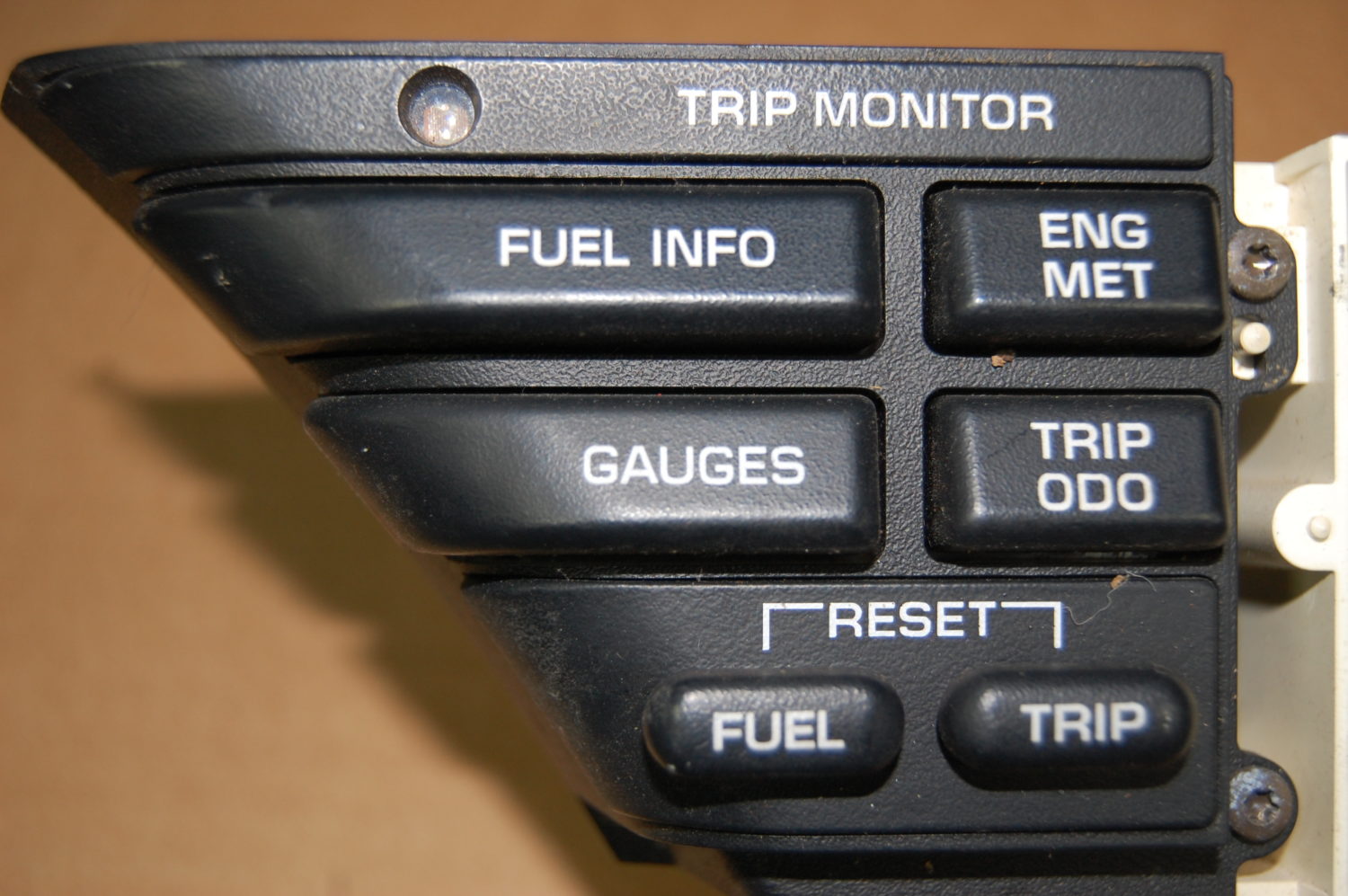
How does one get their computer to show that or on the DIC? I do not have an owner's manual and have been tinkering with other bull like injectors, exhaust etc to be worried. The 1st week I had it I noticed temp gauge high but oil temp was not and I live in FL and know vette gauges usually run high. Anyone have a DIY on gauge cluster options, etc? All I have is a Chiltons which at least told me how to reset a few things.
Not sure on the '90-'91 but on the '92-96, you push the "Gauges" button to the right of your gauge cluster, to scroll through coolant, volts and oil temp.

Race Director


Joined: Oct 2005
Posts: 11,772
Likes: 177
From: Rolla Missouri
2021 C4 of the Year - Unmodified Finalist
St. Jude Donor '10 thru '25
Higher temps while idling is directly related to AIR FLOW (or lack thereof)...not radiator capacity. The car runs hotter at idle because, as I discussed above, there is no airflow from ground speed and the fans don't turn on until those higher temps that you cited. Temps go down when you start driving...b/c now you have air flow. The radiator has WAY, WAY more than enough cooling capacity to cool then engine at idle.
