When you click on links to various merchants on this site and make a purchase, this can result in this site earning a commission. Affiliate programs and affiliations include, but are not limited to, the eBay Partner Network.
Nice try. One post by one poster (likely you) with zero evidence backing up their claim.
"Turbo motors are considered "easy" on rods.. Because the back pressure of the turbo adds cushion on the exhaust stroke at high rpm.. When engines useally "throw" rods.."
An informative read but only one statement relating to throwing rods on the exhaust stroke.
"Given the stress of these events, one might assume the exhaust stroke would be easiest on the connecting rod. The objective is simply moving the piston to push the spent gasses through an open exhaust valve. This, in fact, is the most dangerous time in the entire combustion process for a connecting rod. As Manley’s Michael Tokarchik explains, “The reason why is there’s no cylinder pressure buffering during that cycle.” With many camshafts having at least some type of intake and exhaust valve overlap, there is no cushioning pressure to slow the piston down."
No further statement is made. Certainly nothing about your claim of any "cushion" having any effect on longevity at high RPMs (or any RPM, for that matter.) Nothing. Zip. Nada.
Originally Posted by Kingtal0n
I love when people say "wrong" but really have no idea what they are talking about, lack experience and education. Now, you are educated a little bit in this subject.
Come back when you can cite actual, proven data to back your claims. I stand by my original statement: you're wrong and the OP should not heed your "advice."
Hmm I don't know guys. You just aren't on my level. I have more experience than most of this forum. I am the top tuner in this country. I teach at university engineering courses. I study cancer and develop cancer diagnostics. I am a doctor of engineering, MS bioengineering, biological science, chemistry, mathematics. Math tutor, chemistry tutor, MCAT tutor for 10 years. I have 25 years building turbo cars. I've seen every combo, I've built and tuned hundreds of cars. I have a line of people begging me to build their vehicles on paper. You can choose to ignore me- but do so at your own risk. For me to tune your car is $5000USD.
This turbo stuff is just common knowledge. Its like water is wet. You can see it clearly if you understand fluid mechanics freshman engineering and do some research. Just... get on my level.
Totally agree.. The day my Supra made 750 WHP on the stock motor, I already had a fully built motor sitting in the shop fully prepped and ready...
But then I kicked myself for doing that too, because my stock motor lasted me a long time... I had over 1000 WHP for 2 years now and I am still on the same motor, and the car's lowest boost setting nets me 850 WHP right... In chronological order, my stock motor had 550 WHP for one year, 650 WHP for 3 mths, 750 WHP for another 3 mths, 900 WHP for a year, and 1000 WHP for 2 years
Keep in mind 800bhp is maybe 700rwhp. I would not push an OEM 3.0L from any car much beyond 700 to the tires. But many have produced 1000rwhp using the OEM bottom end of that infamous engine.
The engine I will like to use for 900-1000rwhp on stock internals favorite is 5.3L L33 05-07 Silverado. Its got Gen3 electronics and Gen4 internals, perfect for a swap. But you need to know all the esoteric **** to go with it. Want a list of the esoteric stuff? I teach online free but I won't waste my time typing to brick walls.
Its not a secret just get outside and look around what other people are doing
This is the community opinion, general common knowledge. Everybody knows since 1999 what that engine is capable of.
I used to inspect 44 JDM engines at a time brought back in a high cube container
Put them into cars here. And the business brings more business, more cars, more engines. Countless. Hundreds. I was tuning for free back then... they would line up.
Eventually start bring the entire car, imported grey market in 2008 to 2012 was the hot ticket.
I have thousands of pictures from the past, long gone history. I learned to pull an engine, paint a car, and complete an engine swap in just a couple days. "Build Thread" doesn't really exist.
My dirac
I am deeply appreciative of mathematics engineering application hand calculation. Homework ftw.
I built a 383 lt1 which is the cheapest and most reliable to build, with afr heads, and vortech supercharger. I have more hp than I can get traction for. If I'm going 60 mph and floor it it smokes the tires, one problem with a vette is getting power to the ground. It's crazy how it nails you into the seat, and I have to wait an hour before the smile turns back into wrinkles. You do you though, if you like the new school engines go for it but be advised those turbos got nothing on a blower for the instant power and longevity.
Best quote of the bad, you win!!! "It's crazy how it nails you into the seat, and I have to wait an hour before the smile turns back into wrinkles." ... lol...
1. Program alternator voltage down to 12.5 to 13.2v At wide open throttle, generally do not exceed 13.35v with > 105hp/cyl or 800rwhp
2. Intercoolers reduce power , they absorb kinetic energy and internal energy of airflow even though they are necessary to protect the engine
3. Always run the lowest fuel pressure possible to increase fuel pump flow and fuel system lifespan
4. Engines & power plants make the most power/efficiency with the highest mass of hot as possible air (see #2) thermodynamics
5. Always measure crankcase pressure and utilize air filter pressure drop to pull 1" to 3" Hg on the crankcase at WOT (ask me for video)
6. Do not use high flow air filters with < 0.5" Hg pressure drop at the peak CFM flow rate of the engine (Nobody ever measures!!)
7. Turbochargers prefer oil lubrication on their compressor stage to protect ferrous materials, similarly Throttle valves need lubricant (oil coating is desirable)
8. Always cruise at 14.9 to 15.5:1 air fuel ratio , never use 14.7:1 stoichiometric ratio for any situation. Do not use narrowband closed loop.
9. Use the largest plug gap possible to maximize spark area. Do not gap down unnecessarily unless using nitrous or extremely volatile fuel volume.
10. Turbochargers increase engine reliability, high exhaust gas pressure protects rod end caps during exhaust stroke enabling higher RPM reliability.
11. Always filter down to 1uM to 2uM for longevity purposes, do not use high flow aftermarket filters without knowing their particulate filtration efficiency.
12. Know your filter particulate efficiency clearance rate!
13. Oil is like blood of circulatory system, never touch internal engine parts with bare hands. Never leave an engine open to atmosphere for long.
14. PCV is essential to protect crankcase and enable high mileage. It must be tested and set to a specific range (#5 & #6)
15. Factory engines are often delicate glass, for professional daily driver application, master tuners. Forged internals are for beginners, tolerant of mistakes.
16. You MUST Pressure test forced induction applications (ask for video) using air compressor, engine off, to find all leaks.
17. Use the lowest lift, slowest ramp rate camshaft possible to generate any desired power using a turbocharger while maintaining maximum valvetrain longevity and stability.
18. Maintain oil temps near 212-220*F and coolant temps within +/- 20*F of the oil temps at all times if possible.
19. Limit max RPM In daily driver applications to something ridiculously safe like 5800rpm. Turbo setup properly will produce flat power curve so RPM isn't a needed feature.
20... I can come up with maybe 50 of these if I keep trying
Now,
This is the most reliable build possible to date, for the lowest cost. There are two particular engines you would be interested in which are rapidly drying up.
The Iron LM7 will support 500-650rwhp reliably for indefinite mileage setup properly, limited due to gen3 internals. This is a good cheap engine for use with gasoline only fuels if you do not wish to use alcohol.
The Aluminum L33 will support 1000-1200rwhp reliably for indefinite mileage setup properly, will use E50 to E85 fuels to achieve these output figures.
The reason these engines are ideal is their simple to use gen3 electronics. minimal wiring/config, easy to tune, electronics ideal for simplicity sake.
A Turbocharger is the heart of the reliability. High exhaust gas pressure protects OEM rod caps/bolts at high RPM which makes the turbo an essential component.
There are a few esoteric components to reliability as well.
To achieve 'indefinite' mileage requires that it have:
1. Incredible air filtration, the air must be filtered down to approx 1uM which requires pre-filtering and filter 'boxing' (filter within a filter).
The size of oil molecules is 300 to 800picometers and the size of a 10uM piece of invisible dust from air is like the empire state building compared to the tip of a pencil eraser. The key to achieving high mileage with the engine is to keep the debris/dust out of the piston oil seals and this is the #1 overlooked aspect of performance reliability.
2. Fully intact OEM Pcv system. Another esoteric value. The Air filter must be sized to provide approx 1" to 3" Hg of pressure drop at wide open throttle to the crankcase. The setup MUST include a full-time monitoring of crankcase pressure via 1-bar or 2-bar map sensors to ensure this criterion is met with an alarm/warning lamp when it fails. The effects of crankcase pressure is far too many to list here but suffice to say the engine will not live a long healthy life without this attention. It also goes without saying hopefully that the engine also requires a forced induction style PCV valve such as Toyota 95-02 TT pcv valve to maintain low crankcase pressure at idle/cruise as well.
3. Oil temps must rise rapidly to 198-212*F using a thermostat'd setup and be maintained within 10 to 20*F of the coolant temperatures. Oil temp must not exceed 225*F at any time due to the fragility of brittle fracture failure OEM pistons and their tight piston wall clearance.
4. The setup must be pressure tested frequently, from compressor cover through to intake manifold using more than boost pressure. Any air leaking from the plumbing will cause rising turbine RPM, rising Exhaust gas temp and Exhaust gas pressure and result with OEM fragile brittle fracture failure in pistons.
5. IAT must be measured properly prior to intake manifold using an rubber/plastic mount isolated IAT sensor correctly calibrated. IAT must be kept below 110-120*F at all times for wide open throttle to protect OEM pistons. Alcohol fuels such as E85 are recommended to help cool the pistons and allow a little more headroom for IAT rise but in short the IAT should be kept as low as possible no matter what fuel is being used and the intercooler system and compressor should be slightly oversized to accommodate this.
6. The camshaft needs to be low lift, .520 to .550 (LESS than .586 lift) and the camshaft RAMP RATE needs to be as slow as possible. You will want a custom grind something like TFS-30602001 but with a little less lift. Compare the open and closing points of that cam with other modern cams to see how much more slowly the cam ramp opening is. The key to reliability in any valvetrain is minimum lift and slowest ramp rate, this gives the max control over valve at high RPM.
7. Speaking of RPM those engines are easily 7,000rpm capable but for reliability sake the MAX rpm should be limited to approx 5800-6200rpm IMO. Perhaps 6500rpm on race day. There is no reason to push the RPM as high as it can go when you are not racing for money / profits / trophy.
8. Tuning is obviously an essential element. I will provide some links with tuning details below
The recommended fuel is E50 to E85. If using 93 octane alone by itself I will limit output to roughly 600rwhp for most setups due to heating of OEM pistons concerns. It all comes down to protecting the OEM pistons are those are the weak link between power and reliability for stock engines. This goes for any stock piston engine whether 2jz supra, RB skyline, SR silvia, or LS truck engine, they all use the same piston materials, all brittle fracture failure.
For reference I've been tuning engines for over 20 years and besides engineering/mathematics/bioengineering/biological science/chemistry slew of degrees I am also a computer programmer and computer technician since 16 years old, for example I wrote auto tuning software in 2003 https://www.thirdgen.org/forums/dfi-...der-950-a.html
I'm not bragging only defending my unique position because some of this stuff will seem crazy even to advanced experienced mechanics unlike anything you've ever heard before anywhere else, it is my own cultivated theory over 25 years and not something I copy and paste from other people.
Sig contains build thread where I take a free 5.3L and put high mileage with reasonable output as well showing every detail step by step
A turbocharger adds reliability to an engine, protects rod caps and stock rod bolts. Majority of small displacement engines are turbo for a reason, name successful Skyline, Silvia, Supra, Evolution, STI, etc...
A turbo engine is more reliable than natural aspirated or supercharged for various reasons. All of my engines are turbo since 2003, never look back, it is the peak.
A supercharger has drawbacks which influence reliability.
They typically draw 50hp to 80hp from the crankshaft, for example if an engine can only support 500bhp, then it will provide 500bhp with a turbo but only 450bhp with a 50hp loss to the supercharger. The loss comes directly from the energy of rotating engine. Thus turbos always support more power on any given engine than a belt-driven unit.
Superchargers can be hard on crankshaft bearings. The small units are not too bad but any significant power from a belt driven unit is known to rapidly wear crankshaft bearings near the front of an engine. If the OEM provides a supercharger it will typically be limited in size, flow, to keep wear and tear minimal.
The advantage of a supercharger is simple to package and install. It can be done by novice mechanics. Turbos require fab work and attention to heat flow related obstacles in setting up, turbos are for more advanced fabrication skills.
As to response, a turbo can respond rapidly if sized correctly, and implemented correctly. Like anything else there is a combination of parts requirement to make it perform best. The issue I see across multiple V8 forums is that people typically oversize their turbochargers, wayyy over sized makes for a laggy combination. I have seen very few if any properly sized turbo V8 applications unfortunately. A good example of a well sized/matched turbo combo is in my sig, I did the necessary math and calculated the ideal size turbo and it works exactly like it should in an OEM application. Which by the way- look at OEM turbo engines and compare their torque curves to natural aspirated engines, or supercharged, w/e it is very similar with response, the OEM knows what they need. Its just online people copy setups and the copy paste routine without any math behind it kills the response frequently. There are so many mistakes I keep seeing its crazy.
Dear Mr. Atari, I respect your opinion and your expertise but i would have to say that part of your sentence is faulty. "A turbo engine is more reliable than natural aspirated or supercharged for various reasons." The claim that is more reliable than naturally aspirated is highly debatable. An old school 1960's muscle car can be mildly modified and race for decades without failure, naturally aspirated cars have clocked, 500,000 miles with regular service many can approach 1,000,000 miles with care, again decades of driving. Yet many turbos cannot last for decades and amass a million or more miles. I can bet there are far more stock early to mid 80's V-8 American muscle that have never had their valve covers pulled. You would be hard press to find a mid to late 80's Japanese Turbo car such a as a Mitsubishi Mirage or a Nissan 300Z or a Supra that was raced regularly that would not have had the turbo itself fail. Less is more in this case, naturally aspirated does not have the failure of a non attached system such as a turbo. Any N.A. car with Aftermarket Head, Headers, Camshaft, and valve train upgrades done professionally and not extreme power makers would improve reliability over stock especially stronger components are used such as Forged parts etc... Yes I am well aware of 3,500 HP Skylines', Supras' and twin turbo Lamborghinis' But against your assertions they blow up very often. a Well built LS3 with good boosted HP also seems to last longer than some of those super expensive Billet Blocked million dollar builds. A Big Block hi-performance Chevy directly from GM has a warranty and without much work can easily make a 1,000hp naturally aspirated and last for decades. Once again you can not prove a negative but many of us with life time of experience would say that a turbo car is not as reliable as a naturally aspirated car. I respect your calculations and your experience with the Japan market cars. I have lived in countries where these cars were for sale legally, I know many idols who took JZ2's 4G63's and Ford 5.0's that literally split their blocks! While many Chevys, GM and dodge products have survived for 50 years without major failures. Just a well built blue printed naturally aspirated car with forged internals and modern upgrade improve the old engines. Sorry for the lengthy analogy. Have a Great Day Sir, respect.
Dear Mr. Atari, I respect your opinion and your expertise but i would have to say that part of your sentence is faulty. "A turbo engine is more reliable than natural aspirated or supercharged for various reasons." The claim that is more reliable than naturally aspirated is highly debatable. An old school 1960's muscle car can be mildly modified and race for decades without failure, naturally aspirated cars have clocked, 500,000 miles with regular service many can approach 1,000,000 miles with care, again decades of driving. Yet many turbos cannot last for decades and amass a million or more miles. I can bet there are far more stock early to mid 80's V-8 American muscle that have never had their valve covers pulled. You would be hard press to find a mid to late 80's Japanese Turbo car such a as a Mitsubishi Mirage or a Nissan 300Z or a Supra that was raced regularly that would not have had the turbo itself fail. Less is more in this case, naturally aspirated does not have the failure of a non attached system such as a turbo. Any N.A. car with Aftermarket Head, Headers, Camshaft, and valve train upgrades done professionally and not extreme power makers would improve reliability over stock especially stronger components are used such as Forged parts etc... Yes I am well aware of 3,500 HP Skylines', Supras' and twin turbo Lamborghinis' But against your assertions they blow up very often. a Well built LS3 with good boosted HP also seems to last longer than some of those super expensive Billet Blocked million dollar builds. A Big Block hi-performance Chevy directly from GM has a warranty and without much work can easily make a 1,000hp naturally aspirated and last for decades. Once again you can not prove a negative but many of us with life time of experience would say that a turbo car is not as reliable as a naturally aspirated car. I respect your calculations and your experience with the Japan market cars. I have lived in countries where these cars were for sale legally, I know many idols who took JZ2's 4G63's and Ford 5.0's that literally split their blocks! While many Chevys, GM and dodge products have survived for 50 years without major failures. Just a well built blue printed naturally aspirated car with forged internals and modern upgrade improve the old engines. Sorry for the lengthy analogy. Have a Great Day Sir, respect.
Thank you for reading!
And thank you for the nice post!
I always appreciate somebody who will take the time to read and think and respond. How rare indeed
I see the perspective issue here and you are absolutely correct. MY poor wording is to blame, misdirected. Good job thinking critically I appreciate your mind.
I am not saying that a turbocharged V8 will be more reliable than a typical Corolla 4-cylinder or Toyota 200hp daily driver. Obviously adding a turbo to an engine is a level of maintenance, oil influence, heat input, Brake specific fuel consumption, etc... That an engine doesn't need at all to be reliable as a normal car behavior. The stresses that typical OEM rod caps face in those low output daily drivers is no concern whatsoever. There won't be any need for high exhaust gas pressure at typical engine RPM.
I should be more specific.
What I am saying is, 800hp naturally aspirated vs 800hp turbocharged: Which one is more reliable?
Or 1200hp nitrous vs 1200hp turbocharged: which one is more reliable?
Or how about 2000hp supercharged vs 2000hp turbocharged: More reliable? Etc...
The name of the game is power AND reliability. Not just reliability, we would all just drive Honda civics or something like that for reliability pure.
I am comparing turbo applications to ANY other similar-power output potential from any engine application whether its 4, 6, 8, 10 cylinders+ and the fact that a turbo protects the rod cap and can avoid parasitic rotating energy influence is what makes it the top reliability power adder over supercharging and nitrous. It also has distinct characteristics which allow on the fly adjustment of engine pressure & temperature "electronic boost control" allowing end users to hit a button and reduce the pressure to manageable levels or even use low quality fuels as they see fit. And further it's characteristic of having a 'free wheel' nothing attached to the engine RPM means it can be "spooled" In advance, or completely separate from the engine's conditions, using variety of methods and means.
In short, turbos offer control. Control theory is a field invented/established long before electronics were available to run engines; control theory applications are what I consider the root of all combustion engine tuning theory and essentially the end-game for all doctor of whatever scientists wishing to establish finite influence and control over their experiments whether they are boats or power plants or airplanes or whatever... A car being (one of) the simplest and easiest devices to control nevertheless contains myriad control points, such as oil pressure, coolant pressure, differential temperature, thermal expansion of parts, friction surfaces that most don't even consider such as snap rings and bearing inside a transmission, harmonics and potential for oscillation & sound propagation through parts and surfaces, the list is huge and often there are many different types of engineers with various backgrounds collaborating their efforts in order to build a single working well controlled device... Which brings me to the act of producing power, handling that power and making it work in a well controlled manner. In short the turbocharger is the most... controllable aspect of engine performance endeavors... it can be utilized to great affect regarding kinetic energy to drive systems such as PCV and applying kinetic energy components to air molecules headed towards the engine which can increase engine vacuum and participate in the idle quality for example. Airflow containing kinetic energy in OEM applications is generally bypassed to the compressor inlet where conservation of energy implies a difference (sigh 'differential') in pressure ratio which completely alters compressor wheel speed (more 'control' theory application) to name a few 'secret' (most people don't realize these things unless they are designing an OEM turbo application Or familar with preexisting one) control points that are available to a turbo application.
Sorry somewhat of a digression. The summary is this: In the search for power, we often start off performing intake mods, camshaft stuff, heads, exhaust, basics right? Those mods, even the simplest of which, for example air filter upgrade, although they are the first things we learn to do in our progression of power, turn out to be somewhat detrimental to the reliability of the engine in the long run. For example High lift camshafts are abusive on valvetrain. Heavy springs reduce economy and create unwanted stress on guides and lifters and add unwanted maintenance. High flow air filters may ruin PCV crankcase pressure drop and cause engine oil deposits forming within the crankcase if it isn't corrected for, ultimately leading to sludge forming and catastrophic failure after so many miles. There are many mods which don't cause harm and many which do, and often novices can't tell which are which or simply don't care. The turbocharger fixes all of that without adding any engine stress as nitrous or supercharging. The turbocharger allows us to utilize low lift camshafts to preserve the valvetrain. We get to use a slightly restrictive filter creating MORE than necessary pressure drop on the crankcase at Wide open throttle allowing SUPERIOR pcv action than even the OEM engine provides, resulting with potentially an even cleaner crankcase when done properly. The turbo allows us to switch fuel quality at the press of a button as I said already is pulled off properly. The turbo allows the use of low compression pistons which reduce starter wear and easier on the battery lifespan and cable quality. The turbo also gives us the ability to produce any amount of power we could possibly wish for: How much power does a 122 cubic inch engine make with a 500hp turbo? How much power does a 400cubic inch engine make with a 500hp turbo? Its the same amount of power no matter what engine size if you pull it off correctly. There are so many aspects which the turbo ALLOWS us to control, the atmosphere, power, PCV, wear & tear of items, that it becomes the defining over-riding feature of reliability mixed with performance applications.
Yet many turbos cannot last for decades and amass a million or more miles. I can bet there are far more stock early to mid 80's V-8 American muscle that have never had their valve covers pulled. You would be hard press to find a mid to late 80's Japanese Turbo car such a as a Mitsubishi Mirage or a Nissan 300Z or a Supra that was raced regularly that would not have had the turbo itself fail. Less is more in this case, naturally aspirated does not have the failure of a non attached system such as a turbo. Any N.A. car with Aftermarket Head, Headers, Camshaft, and valve train upgrades done professionally and not extreme power makers would improve reliability over stock especially stronger components are used such as Forged parts etc..
These are also issues worthy discussion topics
First, forged parts do not increase reliability. Well, they rarely will or do, unless installed by the factory of course. The issue isn't so much the parts themselves as the method of fitment and installation. I've yet to see an engine using aftermarket forged rods and pistons reach 200,000 miles. Typically the forged piston calls for excess piston-wall clearance which leads to additional unwanted cold start wear and tear. Low silicone forged alloy often need 30 to 40minutes of warmup time which makes them unsuitable for daily drivers which intend to see boost pressure within the first few minutes of being started. This is how factory turbo engines are produced using cast tight wall brittle fracture piston materials, they are already tight in the bore when first started. Thus forged internals is not a good option for daily drivers or cold starts...
Next lets consider turbos and failure for a moment. Firstly, a turbo traditionally shares its oil supply with engine oil, so the engine maintenance and oil quality of the engine is partly to blame for turbo failure and visca versa. They both must be maintained by their shared oil supply, which implies maintenance of the engine imparts reliability to the turbo. The turbo itself can heat up if abused causing oil related issues to the engine, and the turbo failure can easily lead to engine failure.
So lets take a broad picture approach: are there engines out there run with routine maintenance that see very high boost pressures for a million miles or more frequently? In a statistically relevant fashion: absolutely diesel truck are the ideal prime examples of such devices. They are often using 40 to 50psi of boost pressure and achieve extremely high mileage with great reliability using turbochargers. Thus it is quite clear the turbo is not the issue here. The issue of turbo failure and engine failure is always coming back to knowledge, understanding of the influence of owner maintenance and operation of a turbo engine. IF the turbo is overheated or over-spun it will be damaged easily. A small boost leak can quickly destroy a turbo and thereby the engine in a chain cascade. How many turbo engine owners frequently test for boost leaks? It is extremely uncommon. Next, how many are aware of their Exhaust gas temp and pressure? It seems to be a rare measurement.
And lets go even deeper. What about PCV? The crankcase pressure is responsible for helping oil return to the oil pan. Without proper PCV control the oil will aspirate through a turbo's seals and cause oil related issues at the turbo intake and exhaust. The turbo oil drain is dependent on crankcase pressure. And how many people are measuring their crankcase pressure? Practically none.
And there is more. What about air filter quality? How many people run OEM air cleaners on their turbocharged, racing projects? It is practically so rare as to be unheard of, that. By using lower quality air cleaners than OEM the turbo is not going to live a healthy long life. I've inspected hundreds of imported turbo engines and it became readily apparent that the owners whom upgraded their filters caused massive debris, pitting of compressor wheels, embedded debris to intercoolers, sand blasted throttle bodies, it was so bad I stopped accepting engines with upgraded air filters. And furthermore, did you know oil is necessary for oil compressor stage? The OEM engine provides a small steady stream of oil to the turbo inlet via PCV action which is beneficial to ferrous compressor wheel materials, Here I have a quote for you
The oil could benefit the exposed threads of the shaft and wheel and the comp nut which are both made of ferrous materials and will rust. As you point out crankcase ventilation is often directed into the comp inlet so oil vapor is present in this area. There is no harm in a small amount of oil or lubricant like WD-40 being on anything in the compressor stage.
Thanks,
Brian Rhinehart
BorgWarner
IAM Tech Service TurboDriven.com Matchbot
2020 Performance Catalog
When the owners install a catch can or remove the OEM PCV system or Disturb the OEM air filter quality, they inadvertently are causing these downstream issues, turbos which rapidly oxidize (they are being pelted by high velocity oxygen which rapidly oxidizes metal materials even aluminum) and chipped/damaged due to debris are quite common from owners without the background necessary to realize these influential aspects of air quality and PCV oil supply maintenance to ferrous materials. Lack of pressure testing leads to over speed. Lack of PCV leads to poor oil quality in the engine. Lack of crankcase pressure control leads to damaged turbo oil seals. They are all connected.... IF the engine is healthy and properly setup by a true pro... then the turbo can last as long as the engine or longer.
et al;
A well designed turbo is very easily able to outlast any engine, it is far simpler in design than say a crankshaft support bearing system. If fed clean oil, clean air, lubrication maintenance, If it is not abused, over-spun, and if there are no boost leaks, it should outlast any engine. The evidence is out there. If just one turbo can make it to a million miles in a diesel truck application for example - those same turbo components are apparently used in variety automotive performance applications. Borg Warner utilize the same technology in their racing turbos as diesel truck applications, perhaps the automotive can be superior in some respects.
It is the end user to blame for these faults you happen to notice... but unaware of so many atrocities committed against those turbos you speak of.
It is such a deep issue that I make my own maintenance, pressure test, and crankcase pressure testing videos for people that depend on turbocharger reliability.
With a budget of 3K you should stick with a SBC, going LS, even with a stock engine will proabbly end up costing more than that to get the engine in there and be a lot more work.
having said that I can attest to the fact that done right a LS swap is super reliable and tame until you get on the gas. But for 3K I don't think you'd be able to accomplish it and have a car you'd want to drive.
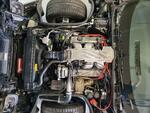
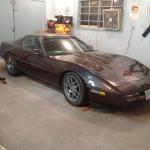
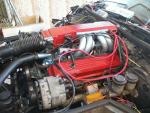
So I’ve been taking a break on the old vette and just driver her as is, which engine wise is long tube headers, FIRST TPI intake, and 1.6 rockers. My current plan is to do AFR 180 heads with a shim headgasket and a comp cams cam, basically I’m looking at 3k give or take more to put the HP at a projected 400 give or take. And that’s not including having to do the trans torque converter and maybe diff regearing. Lot of money in the engine already, but still less than what I’m planning to spend. My question is would I be better off building a newer SBC out of the car and ditch the L98 or ripping and LS and trans from a Camaro or something and LS swapping? I don’t know how much trouble LS swapping these cars is but I know the power ceiling would be a lot higher. I’m fairly new to this and just sitting here thinking this out I’m at a cross roads, the old L98 just doesn’t seem to be cost effective.
1988 Corvette
Question:
Should I build the L98 in it, build a newer SBC to put it in it, or LS swap it?
( Obviously I know the final choice is mine, this question is to see y’all experience and recommendations since mine is limited, thank you)
Your budget is tight for an LS swap. Maybe too tight. However, if you do things right, the LS engine itself can be quite inexpensive. Last swap I did, we got a running, driving 2001 Camaro with a 5 speed for $1,250 (about 4 years ago, prices have increased). We took out the LS engine and the transmission and the wiring, also removed the Zexel Torsen diff and stuck that in my own S10 pickup. When we were done, we "advertised" (with flyers with the tear off pieces with the phone number to call) at the local short tracks and drag strips within a 200 mile radius. We sold the rolling chassis "ready for you to install your race engine/transmission/rear end" for $1800. So we made a little over $500 on the car that way. YMMV.
If you're looking for a Gen I small block (short block assembly or just the block to put a stroker crank and all new pistons/rods into), look at the trucks with the 5.7L "Vortec" engines from the late 1990s. Same block, possibly lower mileage. definitely still plentiful in the yards. A complete engine swap with one of those engines might be a good compromise for cost effectiveness as well.
Expect a delay on anything "special" from Comp Cams. I'm waiting on two cams from them right now. One has been on order for about 18 months and still isn't here. The other one was ordered just after new years 2022 and also has not arrived. ETAs keep slipping on both of them. I'd say go with another alternative, but that's also happening with other camshaft suppliers. Unless you find one "in stock" at Summit or one of the other online vendors, it can be a long wait.
I routinely quote 20k to 50k builds for Properly LS swapping any RWD vehicle to achieve 700, 800rwhp sometimes 1000rwhp for 200,000 miles of reliability using a ~$2000 engine.
LS Swap done right is not cheap- but the engine can be when using a turbocharger to protect the engine from mods. The less you do to any engine in theory the more reliable it becomes. That is the framework or goal behind daily drivers, untouched parts, no machine work, no down time. Easy to find and replace parts that take a day or less. If my engine blows and transmission blows I can have it back together then next day because all parts are stock and widely available. If the goal for power is sub 1200rwhp then always use a stock engine and have a master tuner perform the setup calculations.
So I’ve been taking a break on the old vette and just driver her as is, which engine wise is long tube headers, FIRST TPI intake, and 1.6 rockers. My current plan is to do AFR 180 heads with a shim headgasket and a comp cams cam, basically I’m looking at 3k give or take more to put the HP at a projected 400 give or take. And that’s not including having to do the trans torque converter and maybe diff regearing. Lot of money in the engine already, but still less than what I’m planning to spend. My question is would I be better off building a newer SBC out of the car and ditch the L98 or ripping and LS and trans from a Camaro or something and LS swapping? I don’t know how much trouble LS swapping these cars is but I know the power ceiling would be a lot higher. I’m fairly new to this and just sitting here thinking this out I’m at a cross roads, the old L98 just doesn’t seem to be cost effective.
1988 Corvette
Question:
Should I build the L98 in it, build a newer SBC to put it in it, or LS swap it?
( Obviously I know the final choice is mine, this question is to see y’all experience and recommendations since mine is limited, thank you)
Why anyone would think there's a cheaper alternative building a l98.its the last of the old 350 engines differences is made for roller cam one piece rear seal and first successful fuel injection.88 89 races were l98 vettes only no one wanted to race against them.small chambered heads so they received dishes pistons to bring compression way down.basic rebuild but use earlier pistons (flat top) just like old 350/350hp lt1.but designed for a roller cam.flat tops around 11 to 1 cost the same.so only price difference is camshaft price only slightly higher.all other low performance 350 heads have obstructions for emissions poor attempt at swirling a/f but l98 heads don't ports are fully open like non emissions earlier heads.fyi the Goodwrench 383 crate motor uses same heads.
I didn’t know this got so many replies, I’ll have to catch up. My current plan is to build a 383 out of my L98, that might change when I’m done reading if I’ve overlooked anything but thanks for all the info so far.
If the goal for power is sub 1200rwhp then always use a stock engine
Didn’t think to aim that high. So if I’ve read all your post right my best option for best power and reliability is either rebuild the 350 for a turbo or build a 383 for turbo and go as mild in every other mod as possible to reach power goal? Would a rear mounted turbo like for example replacing the spare tire for a properly fabricated rear turbo setup work?
Didn’t think to aim that high. So if I’ve read all your post right my best option for best power and reliability is either rebuild the 350 for a turbo or build a 383 for turbo and go as mild in every other mod as possible to reach power goal? Would a rear mounted turbo like for example replacing the spare tire for a properly fabricated rear turbo setup work?
Eh. The best option is a non-rebuilt engine. A factory stock engine. Untouched. Never opened. Like a 200,000 miles LM7 5.3L for example. anything made after 02' will have the necessary girdle and pan support to produce the kind of 500 to 700rwhp people want these days. L33 has advantage of gen4 internals and simplicity of gen3 electronics along with -120lbs of aluminum block, superior in many ways and simple makes it ideal. But 4x to 5x the cost of LM7 so. I just use LM7 all day. Or better yet, 4.8L engine, I prefer this over LM7 due to shorter stroke, superior economy, higher rpm potential, better cruise economy is reality, more suitable for performance vehicles around 3000lbs.
Mileage is inconsequential. Do not be afraid of 200k miles for 02+ Species if the engine has been maintained. The trick is being able to tell which one has been properly maintained. Look for intact OEM air filters and OEM pcv systems. Look for cleanliness of OEM installations. Lack of modifications. Don't take engines with mods. That is the key ideaology.
I Know its a pain in the *** to swap a later model LS engine to an older chassis. But if you want to actually drive the vehicle like a normal car everyday in traffic- you will want the 02+ LS technology of Gen3 or Gen4 models such as LM7 and L33. It means you can use all OEM parts, all factory items, and make incredible reliability. WIth or without turbo.
Without the turbo they will not be fast. 5.3L or 4.8L Minus turbo is not very good performance. But will still be very reliable.
The turbo adds the power.
To your question, rear mount turbo: I do not recommend this route because it is difficult and expensive to pull off properly. I would personally spend about $15,000 setting up a proper rear mount system. Oval stainless plumbing, Oil-less cartridge turbochargers, appropriate heat control, it isn't for the novice installation.
If you can't fit a turbo up front, just avoid it. Consider a supercharger instead. Very easy to install, manage, make room for it up front. Make sure to adequately intercool, water/air is beneficial if you can manage. The idea here is get forced induction somehow using the simplest method you can achieve. I personally dislike superchargers because of many reasons... they are harder on crankshaft snout, the belt can slip, there is additional maintenance in many places, they tend to create unwanted heat that is more difficult to control than a turbo install, their means of delivery is more difficult to intercool sometimes, there are many down sides to supercharging. But the plus is very easy to package, easy to install, easy to use if you pay attention. And I recommend positive displacement so it can give a low-end torque that turbocharger will find difficult to pull off.
This is one of my favorites, 4.8L high mileage engine (200k+?) 700rwhp, supercharged, look the torque curve of this combo
Ape do a 383 with the FIRST TPI and maybe get the FIRST extrude honed or ported. Throw some real good heads on there and spend some money on a good tune.
Obviously this won't be the cheapest nor the most reliable nor the most power, but it sure will be cool and look cool, in my opinion!
interesting question. i think the answer falls squarely on the desired output and service of the engine.
im on my second c4 and didn't buy either car with the intention of keeping the factory engine. the last one i had was 2014ish and it got a lsx. this car is getting a di LT1/6060. i have a 2018 ss camaro (1LE) now, as well, i've spent the last 4 years playing around with the gen v engine. my camaro trapped almost 126 with just bolt ons & drag wheels with a 3900 lb raceweight. i think this c4 will go 130+ with very basic mods. getting the proper header on this car will be a challenge but not impossible.
i need a reliable street car. i use my fun cars for everything. hot rod power tours, taking the kids to school, cruising, drag racing, you name it. i don't think i can get the performance i want out of an L98 while retaining the drivability and reliability i want, as well.
in closing, i vote gen 3+ engine swap. the ceiling for power is higher, i also think they are easier to diagnose when one has problems. logging and tuning is exponentially easier. swaps require more than just an engine. consider the fuel system, gauges and transmission adaptation. done right, the swaps are not cheap but 100% worth it in my opinion.