




Engine choice help
Thread Starter
Instructor

Joined: Aug 2021
Posts: 102
Likes: 7
From: Alabama
 Engine choice help
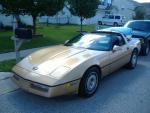
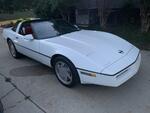
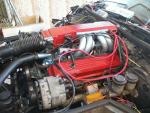
So I’ve been taking a break on the old vette and just driver her as is, which engine wise is long tube headers, FIRST TPI intake, and 1.6 rockers. My current plan is to do AFR 180 heads with a shim headgasket and a comp cams cam, basically I’m looking at 3k give or take more to put the HP at a projected 400 give or take. And that’s not including having to do the trans torque converter and maybe diff regearing. Lot of money in the engine already, but still less than what I’m planning to spend. My question is would I be better off building a newer SBC out of the car and ditch the L98 or ripping and LS and trans from a Camaro or something and LS swapping? I don’t know how much trouble LS swapping these cars is but I know the power ceiling would be a lot higher. I’m fairly new to this and just sitting here thinking this out I’m at a cross roads, the old L98 just doesn’t seem to be cost effective.
1988 Corvette
Question:
Should I build the L98 in it, build a newer SBC to put it in it, or LS swap it?
( Obviously I know the final choice is mine, this question is to see y’all experience and recommendations since mine is limited, thank you)
1988 Corvette
Question:
Should I build the L98 in it, build a newer SBC to put it in it, or LS swap it?
( Obviously I know the final choice is mine, this question is to see y’all experience and recommendations since mine is limited, thank you)

Drifting


Joined: Feb 2016
Posts: 1,384
Likes: 339
From: Simi Valley CA
If you're considering a newer SBC do you mean a LT1/4? Or a 90s ZR1 engine? I think both require the 92+ engine cradle which is a pretty easy swap, but a cost to consider. If you go with a LS swap you need to cut and weld the front cradle. I think if you go the LT1/4 route you still need to do quite a bit of modification. You'll need to get an aftermarket computer. There are kits that eliminate the distributor and run it like a LS engine. By the time you go through all this hassle you might as well have just gone with a LS swap. So I'd narrow it down to build the L98 or do a LS swap.

Racer


Joined: Feb 2010
Posts: 371
Likes: 65
From: south wilmington il.
Best thing I ever did was build a 383 stroker, crank, rods and pistons. plus machine work was under the amount your looking to spend. I did the build myself so if your capable, the best hp per buck you can get.

Safety Car


Joined: Oct 2007
Posts: 4,222
Likes: 1,078
From: South Florida
5.3 from a junkyard is practically free and will support 600rwhp using the free engine and a turbocharger
It may cost 10k or 20k to do the swap and fab work but you'll have a daily driveable reliable vehicle with 500-600 to the tires and a free engine
It may cost 10k or 20k to do the swap and fab work but you'll have a daily driveable reliable vehicle with 500-600 to the tires and a free engine

Team Owner


Joined: May 2000
Posts: 53,777
Likes: 5,623
From: Plantation Florida USAF(Retired) 1966-1990
U.S. Air Force
St. Jude Donor '05 thru '26
NCM Sinkhole Donor
I have seen early and late C4 with either LS1 or LS3 engine and when I asked if they had any problems, they said nothing but power!
If I was doing I would look for LS3 and harness, so it is plug and play.
If I was doing I would look for LS3 and harness, so it is plug and play.
Corvette Stories
The Best of Corvette for Corvette Enthusiasts

Top 10 Most Expensive Corvettes Ever Sold on Bring A Trailer
Brett Foote
10 Things Every Corvette Owner Needs (2026 Edition)
Michael S. Palmer
8 Most "Only Corvette Owners Understand" Quirks and Problems
Pouria Savadkouei
10 Reasons the C6 Z06 is Still A Performance Benchmark After 20 Years
Joe Kucinski
How Much Horsepower Every Corvette Engine "LOST" in 1972
Joe Kucinski
Top 10 DOs and DON'Ts for Protecting Your Convertible Top!
Michael S. Palmer
Top 10 Most Explosive Corvettes Ever Made: Power-to-Weight Ratio Ranked!
Joe Kucinski
150 hp to 1,250 hp: Every Corvette Generation Compared by the Specs That Matter
Joe Kucinski
8 Coolest Corvette Pace Cars (and Replicas) of All Time
Verdad Gallardo
Race Director


Joined: Oct 2012
Posts: 17,378
Likes: 6,525
From: Melbourne, FL
Overall I think it depends what you want out of the car. Donyou want the stock cluster to work? Do you want it to be like oem or you OK with a buncha aftermarket gauges and no frills? It'd be a lot cheaper to buy a c5 and get used to the crappy steering feel than it would be to fully swap an ls into a c4. Ask @DMITTZ about cost to do an ls swap right.
Safety Car
Joined: Oct 2007
Posts: 4,222
Likes: 1,078
From: South Florida
Actually. The 5.3 has gotten a good but more expensive, and those 600hp turbo 5.3s either cost much more than you expect, or don't last very long. My buddy is 4 rebuilds deep into his 250 dollar (bought like 6 years ago) 5.3 in his dakota.
Overall I think it depends what you want out of the car. Donyou want the stock cluster to work? Do you want it to be like oem or you OK with a buncha aftermarket gauges and no frills? It'd be a lot cheaper to buy a c5 and get used to the crappy steering feel than it would be to fully swap an ls into a c4. Ask @DMITTZ about cost to do an ls swap right.
Overall I think it depends what you want out of the car. Donyou want the stock cluster to work? Do you want it to be like oem or you OK with a buncha aftermarket gauges and no frills? It'd be a lot cheaper to buy a c5 and get used to the crappy steering feel than it would be to fully swap an ls into a c4. Ask @DMITTZ about cost to do an ls swap right.
As to 'doesn't last long' my friend that is where config, tuning and setup play the make it or break it role as with all OEM engine turbo application. I have 40,000 miles on my 5.3L Turbo 600rwhp 5.3L LM7 220,000 miles it will last forever the way I've set it. However very few limited # people have the ability to accomplish the correct setup and tuning due to widespread copy and paste and lack of education regarding engine longevity and turbo application.
I've supplied all the details of my setup and tune file for OEM ecu so it can be copied in build thread below. The most important aspects of engine longevity is PCV and Air filtration followed by correct tuning strategy and heat control. The weak point of OEM brittle fracture failure pistons is temperature and this is overlooked in majority of turbo apps.

Le Mans Master

Joined: Sep 2013
Posts: 6,192
Likes: 750
From: near the thumb in the mitten
3k is a little tough, but with luck could find some used deals. Gear change will give the biggest bang for your buck especially if you have a 2.59. A used 3.07 assembly will give noticeable improvement.
You will need to do something about the intake whether replacing or getting better runners, plenum, and base. More mods translates to tuning, tuning can get expensive and frustrating. Possibly someone has a build already sorted with a tune that works as a guide.
IMO LS swap is going to blow up your budget, if you plan to keep the car for years it might be worth. Resale value will depend on the professionalism of swap.
You will need to do something about the intake whether replacing or getting better runners, plenum, and base. More mods translates to tuning, tuning can get expensive and frustrating. Possibly someone has a build already sorted with a tune that works as a guide.
IMO LS swap is going to blow up your budget, if you plan to keep the car for years it might be worth. Resale value will depend on the professionalism of swap.
Last edited by Kevova; Jul 1, 2022 at 11:22 AM.

Pro


Joined: Mar 2006
Posts: 520
Likes: 143
From: Caribbean/Florida
Hey its a small block Chevy you can do an aftermarket block and build a 434 cu in small block demon (or More), you can also do an all aluminum version if money is not much of an object.
383 is the best and cheapest. A mini ram and a Procharger or a single or twin turbo set up will make fantastic power.
A 383 with the best internals and a huffer on top would be awesome. Think a Callaway Twin Turbo with more cubic inches.
Example: "The Sledgehammer Corvette. The result was a 898 bhp coupe that still retained luxuries such as air conditioning and a radio.
Callaway achieved this power by using a NASCAR-spec block with Mahle pistons and forged connecting rods. The top end included a Brodix aluminum head which was fed by twin Turbonetics T04B turbochargers.
On October 26, 1988 at 3:45PM John Lingenfelter drove the Sledgehammer to its record speed of 254.76 mph on the 7.5 mile oval track at the Transportation Research Center (TRC) in Ohio." It Made 772lbs of torque and was ONLY a 350 cubic inch motor. Capable of 3.9 seconds to 60mph and 10.6sec. in the 1/4 mile. With a 3.54:1 gear ratio and a 6speed.
With your average 383 putting out Naturally aspirated about 450 to 500hp at the crank, with a Procharger increasing your horsepower by 75% with about 10 to 12 pounds of boost you are looking at 780 to 850 crank horsepower, should be able to put at least 650 to the wheels. They don't make songs about Twin Turbo Corvettes for nothing.
If anyone doesn't think a 800 Horse power SBC Chevy in a built C4 Chassis with it being light weight, aerodynamic and big binders wouldn't be fun they would be insane especially for a street car. SBC, L98 forever.
383 is the best and cheapest. A mini ram and a Procharger or a single or twin turbo set up will make fantastic power.
A 383 with the best internals and a huffer on top would be awesome. Think a Callaway Twin Turbo with more cubic inches.
Example: "The Sledgehammer Corvette. The result was a 898 bhp coupe that still retained luxuries such as air conditioning and a radio.
Callaway achieved this power by using a NASCAR-spec block with Mahle pistons and forged connecting rods. The top end included a Brodix aluminum head which was fed by twin Turbonetics T04B turbochargers.
On October 26, 1988 at 3:45PM John Lingenfelter drove the Sledgehammer to its record speed of 254.76 mph on the 7.5 mile oval track at the Transportation Research Center (TRC) in Ohio." It Made 772lbs of torque and was ONLY a 350 cubic inch motor. Capable of 3.9 seconds to 60mph and 10.6sec. in the 1/4 mile. With a 3.54:1 gear ratio and a 6speed.
With your average 383 putting out Naturally aspirated about 450 to 500hp at the crank, with a Procharger increasing your horsepower by 75% with about 10 to 12 pounds of boost you are looking at 780 to 850 crank horsepower, should be able to put at least 650 to the wheels. They don't make songs about Twin Turbo Corvettes for nothing.
If anyone doesn't think a 800 Horse power SBC Chevy in a built C4 Chassis with it being light weight, aerodynamic and big binders wouldn't be fun they would be insane especially for a street car. SBC, L98 forever.
Racer
Joined: Feb 2010
Posts: 371
Likes: 65
From: south wilmington il.
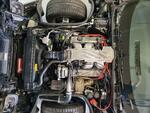
I built a 383 lt1 which is the cheapest and most reliable to build, with afr heads, and vortech supercharger. I have more hp than I can get traction for. If I'm going 60 mph and floor it it smokes the tires, one problem with a vette is getting power to the ground. It's crazy how it nails you into the seat, and I have to wait an hour before the smile turns back into wrinkles. You do you though, if you like the new school engines go for it but be advised those turbos got nothing on a blower for the instant power and longevity.
Pro
Joined: Dec 2018
Posts: 733
Likes: 424
From: Wisconsin
2023 Corvette of the Year Finalist - Modified
2022 C4 of the Year Winner - Modified
Finalist 2020 C4 of the Year - Modified
The stock cluster will still function correctly (and the cruise control as it is controlled by the dash) with an LS or SBC that you've changed to aftermarket EFI. The only functions that will not work if you remove the factory EFI is the fuel mileage and range functions.
Safety Car
Joined: Oct 2007
Posts: 4,222
Likes: 1,078
From: South Florida
A turbocharger adds reliability to an engine, protects rod caps and stock rod bolts. Majority of small displacement engines are turbo for a reason, name successful Skyline, Silvia, Supra, Evolution, STI, etc...
A turbo engine is more reliable than natural aspirated or supercharged for various reasons. All of my engines are turbo since 2003, never look back, it is the peak.
A supercharger has drawbacks which influence reliability.
They typically draw 50hp to 80hp from the crankshaft, for example if an engine can only support 500bhp, then it will provide 500bhp with a turbo but only 450bhp with a 50hp loss to the supercharger. The loss comes directly from the energy of rotating engine. Thus turbos always support more power on any given engine than a belt-driven unit.
Superchargers can be hard on crankshaft bearings. The small units are not too bad but any significant power from a belt driven unit is known to rapidly wear crankshaft bearings near the front of an engine. If the OEM provides a supercharger it will typically be limited in size, flow, to keep wear and tear minimal.
The advantage of a supercharger is simple to package and install. It can be done by novice mechanics. Turbos require fab work and attention to heat flow related obstacles in setting up, turbos are for more advanced fabrication skills.
As to response, a turbo can respond rapidly if sized correctly, and implemented correctly. Like anything else there is a combination of parts requirement to make it perform best. The issue I see across multiple V8 forums is that people typically oversize their turbochargers, wayyy over sized makes for a laggy combination. I have seen very few if any properly sized turbo V8 applications unfortunately. A good example of a well sized/matched turbo combo is in my sig, I did the necessary math and calculated the ideal size turbo and it works exactly like it should in an OEM application. Which by the way- look at OEM turbo engines and compare their torque curves to natural aspirated engines, or supercharged, w/e it is very similar with response, the OEM knows what they need. Its just online people copy setups and the copy paste routine without any math behind it kills the response frequently. There are so many mistakes I keep seeing its crazy.
A turbo engine is more reliable than natural aspirated or supercharged for various reasons. All of my engines are turbo since 2003, never look back, it is the peak.
A supercharger has drawbacks which influence reliability.
They typically draw 50hp to 80hp from the crankshaft, for example if an engine can only support 500bhp, then it will provide 500bhp with a turbo but only 450bhp with a 50hp loss to the supercharger. The loss comes directly from the energy of rotating engine. Thus turbos always support more power on any given engine than a belt-driven unit.
Superchargers can be hard on crankshaft bearings. The small units are not too bad but any significant power from a belt driven unit is known to rapidly wear crankshaft bearings near the front of an engine. If the OEM provides a supercharger it will typically be limited in size, flow, to keep wear and tear minimal.
The advantage of a supercharger is simple to package and install. It can be done by novice mechanics. Turbos require fab work and attention to heat flow related obstacles in setting up, turbos are for more advanced fabrication skills.
As to response, a turbo can respond rapidly if sized correctly, and implemented correctly. Like anything else there is a combination of parts requirement to make it perform best. The issue I see across multiple V8 forums is that people typically oversize their turbochargers, wayyy over sized makes for a laggy combination. I have seen very few if any properly sized turbo V8 applications unfortunately. A good example of a well sized/matched turbo combo is in my sig, I did the necessary math and calculated the ideal size turbo and it works exactly like it should in an OEM application. Which by the way- look at OEM turbo engines and compare their torque curves to natural aspirated engines, or supercharged, w/e it is very similar with response, the OEM knows what they need. Its just online people copy setups and the copy paste routine without any math behind it kills the response frequently. There are so many mistakes I keep seeing its crazy.
Pro
Joined: Dec 2018
Posts: 733
Likes: 424
From: Wisconsin
2023 Corvette of the Year Finalist - Modified
2022 C4 of the Year Winner - Modified
Finalist 2020 C4 of the Year - Modified
A turbocharger adds reliability to an engine, protects rod caps and stock rod bolts. Majority of small displacement engines are turbo for a reason, name successful Skyline, Silvia, Supra, Evolution, STI, etc...
A turbo engine is more reliable than natural aspirated or supercharged for various reasons. All of my engines are turbo since 2003, never look back, it is the peak.
A supercharger has drawbacks which influence reliability.
They typically draw 50hp to 80hp from the crankshaft, for example if an engine can only support 500bhp, then it will provide 500bhp with a turbo but only 450bhp with a 50hp loss to the supercharger. The loss comes directly from the energy of rotating engine. Thus turbos always support more power on any given engine than a belt-driven unit.
Superchargers can be hard on crankshaft bearings. The small units are not too bad but any significant power from a belt driven unit is known to rapidly wear crankshaft bearings near the front of an engine. If the OEM provides a supercharger it will typically be limited in size, flow, to keep wear and tear minimal.
The advantage of a supercharger is simple to package and install. It can be done by novice mechanics. Turbos require fab work and attention to heat flow related obstacles in setting up, turbos are for more advanced fabrication skills.
As to response, a turbo can respond rapidly if sized correctly, and implemented correctly. Like anything else there is a combination of parts requirement to make it perform best. The issue I see across multiple V8 forums is that people typically oversize their turbochargers, wayyy over sized makes for a laggy combination. I have seen very few if any properly sized turbo V8 applications unfortunately. A good example of a well sized/matched turbo combo is in my sig, I did the necessary math and calculated the ideal size turbo and it works exactly like it should in an OEM application. Which by the way- look at OEM turbo engines and compare their torque curves to natural aspirated engines, or supercharged, w/e it is very similar with response, the OEM knows what they need. Its just online people copy setups and the copy paste routine without any math behind it kills the response frequently. There are so many mistakes I keep seeing its crazy.
A turbo engine is more reliable than natural aspirated or supercharged for various reasons. All of my engines are turbo since 2003, never look back, it is the peak.
A supercharger has drawbacks which influence reliability.
They typically draw 50hp to 80hp from the crankshaft, for example if an engine can only support 500bhp, then it will provide 500bhp with a turbo but only 450bhp with a 50hp loss to the supercharger. The loss comes directly from the energy of rotating engine. Thus turbos always support more power on any given engine than a belt-driven unit.
Superchargers can be hard on crankshaft bearings. The small units are not too bad but any significant power from a belt driven unit is known to rapidly wear crankshaft bearings near the front of an engine. If the OEM provides a supercharger it will typically be limited in size, flow, to keep wear and tear minimal.
The advantage of a supercharger is simple to package and install. It can be done by novice mechanics. Turbos require fab work and attention to heat flow related obstacles in setting up, turbos are for more advanced fabrication skills.
As to response, a turbo can respond rapidly if sized correctly, and implemented correctly. Like anything else there is a combination of parts requirement to make it perform best. The issue I see across multiple V8 forums is that people typically oversize their turbochargers, wayyy over sized makes for a laggy combination. I have seen very few if any properly sized turbo V8 applications unfortunately. A good example of a well sized/matched turbo combo is in my sig, I did the necessary math and calculated the ideal size turbo and it works exactly like it should in an OEM application. Which by the way- look at OEM turbo engines and compare their torque curves to natural aspirated engines, or supercharged, w/e it is very similar with response, the OEM knows what they need. Its just online people copy setups and the copy paste routine without any math behind it kills the response frequently. There are so many mistakes I keep seeing its crazy.
OP: do yourself a favor and disregard the entirety of this quoted post. I have a turbocharged L98 and can tell you that getting turbos to fit in a C4 is not for those that don't enjoy a challenge. If you're thinking of going that far, LS swap it instead. You'll thank yourself later.
Safety Car
Joined: Oct 2007
Posts: 4,222
Likes: 1,078
From: South Florida
Wrong on so many levels. The reason the Skyline, Supra (the real ones, not the current rebadged BMW) Evo, STI and "etc" use turbochargers is because boost multiplies the output of a normally aspirated engine. It allows the manufacturer to use a smaller displacement engine to make the desired power output, not increase the reliability of said engine.
OP: do yourself a favor and disregard the entirety of this quoted post. I have a turbocharged L98 and can tell you that getting turbos to fit in a C4 is not for those that don't enjoy a challenge. If you're thinking of going that far, LS swap it instead. You'll thank yourself later.
OP: do yourself a favor and disregard the entirety of this quoted post. I have a turbocharged L98 and can tell you that getting turbos to fit in a C4 is not for those that don't enjoy a challenge. If you're thinking of going that far, LS swap it instead. You'll thank yourself later.
Tuned hundreds of them here in America with 600 to 800bhp.
The point is the turbo does not reduce the reliability of the engine. It improves the reliability AND improves the power, both.
All turbo engines can rev higher due to the protective effect of high exhaust gas pressure. It is a well known component of turbocharging which improves reliability.
See for yourself some common knowledge
https://www.yellowbullet.com/threads...6/post-6879784
Turbo motors are considered "easy" on rods.. Because the back pressure of the turbo adds cushion on the exhaust stroke at high rpm.. When engines useally "throw" rods..
Given the stress of these events, one might assume the exhaust stroke would be easiest on the connecting rod. The objective is simply moving the piston to push the spent gasses through an open exhaust valve. This, in fact, is the most dangerous time in the entire combustion process for a connecting rod. As Manley’s Michael Tokarchik explains, “The reason why is there’s no cylinder pressure buffering during that cycle.” With many camshafts having at least some type of intake and exhaust valve overlap, there is no cushioning pressure to slow the piston down.
Stock engines can use stock rods with stock rod bolts- untouched to produce tremendous power, thanks to exhaust cushion. For example I can make 1000rwhp for 200,000 miles using a factory 5.3L Engine from 2005 with an Aluminum engine block. This cannot be done any other way using any other type of power adder, only turbocharger supplies the increased reliability and especially for high rpm conditions thanks to exhaust cushion.
I love when people say "wrong" but really have no idea what they are talking about, lack experience and education. Now, you are educated a little bit in this subject.
Pro
Joined: Dec 2018
Posts: 733
Likes: 424
From: Wisconsin
2023 Corvette of the Year Finalist - Modified
2022 C4 of the Year Winner - Modified
Finalist 2020 C4 of the Year - Modified
I've inspected and sold around 500 skyline/supra/silvia engines, many with 200,000 miles that look brand new. The redline is higher for turbo engines because of the improved reliability.
Tuned hundreds of them here in America with 600 to 800bhp.
The point is the turbo does not reduce the reliability of the engine. It improves the reliability AND improves the power, both.
All turbo engines can rev higher due to the protective effect of high exhaust gas pressure. It is a well known component of turbocharging which improves reliability.
See for yourself some common knowledge
https://www.yellowbullet.com/threads...6/post-6879784
https://www.dragzine.com/tech-storie...et-steel-rods/
In circle track racing there are records of rod failures during high RPM, high vacuum situations. The driver lifts from the throttle and the incredible intake vacuum pulling the rod away from the crankshaft with no exhaust cushion causes the rod cap to fail.
Stock engines can use stock rods with stock rod bolts- untouched to produce tremendous power, thanks to exhaust cushion. For example I can make 1000rwhp for 200,000 miles using a factory 5.3L Engine from 2005 with an Aluminum engine block. This cannot be done any other way using any other type of power adder, only turbocharger supplies the increased reliability and especially for high rpm conditions thanks to exhaust cushion.
I love when people say "wrong" but really have no idea what they are talking about, lack experience and education. Now, you are educated a little bit in this subject.
Tuned hundreds of them here in America with 600 to 800bhp.
The point is the turbo does not reduce the reliability of the engine. It improves the reliability AND improves the power, both.
All turbo engines can rev higher due to the protective effect of high exhaust gas pressure. It is a well known component of turbocharging which improves reliability.
See for yourself some common knowledge
https://www.yellowbullet.com/threads...6/post-6879784
https://www.dragzine.com/tech-storie...et-steel-rods/
In circle track racing there are records of rod failures during high RPM, high vacuum situations. The driver lifts from the throttle and the incredible intake vacuum pulling the rod away from the crankshaft with no exhaust cushion causes the rod cap to fail.
Stock engines can use stock rods with stock rod bolts- untouched to produce tremendous power, thanks to exhaust cushion. For example I can make 1000rwhp for 200,000 miles using a factory 5.3L Engine from 2005 with an Aluminum engine block. This cannot be done any other way using any other type of power adder, only turbocharger supplies the increased reliability and especially for high rpm conditions thanks to exhaust cushion.
I love when people say "wrong" but really have no idea what they are talking about, lack experience and education. Now, you are educated a little bit in this subject.
You stated that turbocharging an engine improves the reliability of the engine vs a properly built NA engine, not that it "does not reduce the reliability of the engine" as you just did once I called you on that statement.
You also stated that is why the OEM in your stated examples turbocharge said engines. I already stated the truth: it allows them to make more power per liter than the engine would if it had no power adders. Compare the N/A and turbocharged engines in a MK3 or MK4 Supra at similar mileage, maintenance, and driving habits. They'll have similar wear.
The reason the redline (and peak horsepower rpm) of any given engine is higher or lower than another has more to do with: camshaft selection, runner length, bore, stroke, connecting rod length, materials used for the rotating assembly and valvetrain, and pushrod vs overhead camshafts than whether or not someone has added the "cushion" of added back pressure from driving a turbocharger. If added back pressure was all that would be required to make an engine survive high RPMs, why bother properly building the rest of the engine at all? You could just stuff a banana in the tailpipe and get the desired added reliability if you were correct. (Bonus points if you get the movie reference.)
Want an example? You're in the C4 forum. What's the redline of the LT5 in the ZR-1? Go tell the ZR-1 guys that their engines are incapable of being reliable at high RPMs because they are normally aspirated and let us all know how that works for you.