






1986, which octane????

Race Director


Joined: Sep 2000
Posts: 17,298
Likes: 33
From: The Top of Utah

Originally Posted by Casethecorvetteman
so why the hell would you put octane booster in your tank as a performance aid??
If YOU would, you'd be making a mistake. You MAY gain some performance by advancing the timing further, with higher octane, than you can with lower octane. But the addition of octane or even octane boost will NOT produce more power in an engine that is not currently knocking (or causing timing retard). Also, the NEED to crank in excessive amounts of advance to make the best power, is an indication of less than ideal combustion efficiency.
Octane ONLY serves to suppress knock.
RACE ON!!!

Waka, Waka, Waka!


Joined: Jun 2002
Posts: 2,435
Likes: 2
From: Richmond Virginia
CI 4-6-8 & 10 Veteran
St. Jude Contributor
I have slight problems at WOT between 34 and 39 hundred RPM with 87 octane, so I only use it if I am on a long trip, and will not be going WOT until I refuel. 89 is fine around town. I usually fill'er up with the good stuff if I'll be doing stuff like heading to the dyno. (or giving 'demo' rides)

Drifting

Joined: Apr 2000
Posts: 1,879
Likes: 1
From: Lockport, IL Let's get em ALL home soon!
Originally Posted by Bilyk
I use 87 with zero problems on my 1985. And thats without those fancy 86 aluminum heads.
 I think I have tried 92 ONCE in the 9 years I have had my car. I might give 89 a try if the prices get to about $1.50/gal, but until then 87 is my choice.
Race Director
Joined: Sep 2000
Posts: 17,298
Likes: 33
From: The Top of Utah
Originally Posted by Fozzy_Bear
I have slight problems at WOT between 34 and 39 hundred RPM with 87 octane.
The ONLY thing octane does, is suppress knock.
My old, worn out, 1984, with iron heads doesn't knock on 85 octane with 14* base timing. And it runs pretty well.
RACE ON!!!
Waka, Waka, Waka!
Joined: Jun 2002
Posts: 2,435
Likes: 2
From: Richmond Virginia
CI 4-6-8 & 10 Veteran
St. Jude Contributor
Originally Posted by CFI-EFI
That will only help if the "slight problems" are either with pinging or ...
Just a little ping that goes away with better gas.

Advanced

Joined: Jul 2004
Posts: 80
Likes: 0
CFI-EFI is partially correct: "Octane" is the ability of a fuel to resist autoignition, or knock. BUT, there are three ways to produce high octane gasolines and depending on the method used, higher octane fuels may or may not produce more power. The octane number of a fuel is determined by its composition, the addition of octane enhancing additives, or a combination of the two. For example, while ethanol and MTBE both have high octane numbers, they aren't capable of producing as much power as a hydrocarbon such as isooctane because compounds with ony hydrogen and carbon release the greatest energy when burned (the oxygen in ethanol and MTBE is not used to make power during combustion). Note that racing gasolines are almost entirely composed of natually high octane branched paraffins and aromatics (same as aviation gasoline). BTW, the reason the Aussies have such high octane numbers is that they use the RON values rather than the (R+M)/2 values used in the U.S. RON is typically 10 numbers above MON in street gasolines.
Corvette Stories
The Best of Corvette for Corvette Enthusiasts

Every 2027 Corvette Engine Explained
Joe Kucinski
Designer Imagines A Corvette That Looks More Like a Corvette Than the Corvette
Verdad Gallardo
10 Ugly Corvettes That We Still Kinda Love
Joe Kucinski
Top 10 Most Expensive Corvettes Ever Sold on Bring A Trailer
Brett Foote
10 Things Every Corvette Owner Needs (2026 Edition)
Michael S. Palmer
8 Most "Only Corvette Owners Understand" Quirks and Problems
Pouria Savadkouei
10 Reasons the C6 Z06 is Still A Performance Benchmark After 20 Years
Joe Kucinski
How Much Horsepower Every Corvette Engine "LOST" in 1972
Joe Kucinski
Top 10 DOs and DON'Ts for Protecting Your Convertible Top!
Michael S. Palmer
Team Owner

Joined: May 2002
Posts: 24,337
Likes: 25
From: San Diego , CA Double Yellow DirtBags 1985..Z51..6-speed
I use 87 octane with the base timing at 6btdc.
Recently I bumped it to 9 degrees, and I'll run 91 octane just to be safe until I get around to scanning for knock counts.
For best performance and economy, you should always run the minimum octane required to prevent knock counts under your worst case driving conditions.
Also, under no circumstances should lugging up a hill at low rpm and WOT on a hot day be part of your normal driving routine.
Recently I bumped it to 9 degrees, and I'll run 91 octane just to be safe until I get around to scanning for knock counts.
For best performance and economy, you should always run the minimum octane required to prevent knock counts under your worst case driving conditions.
Also, under no circumstances should lugging up a hill at low rpm and WOT on a hot day be part of your normal driving routine.


Racer

Joined: Apr 2001
Posts: 322
Likes: 0
From: Sherburne,NY NewYork
Top Tier Gasoline
Just to add to the discussion,not all companies have the same additive packages available in the various octane ranges. A new type of high detergent gasoline is available at some stations,this is referred to by GM as top tier gasoline. It's purpose is to address fuel injector and intake valve deposit issues. An example of this would be Shell V-Power fuels. Other manufacturers also have versions. This would be the ultimate fuel in any octane range. Initially this fuel is available only in certain areas and by certain manufacturers. It is also more expensive than regular fuel. Just my 2 cents...........
Jim B. AKA VP
Jim B. AKA VP
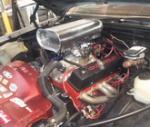


 it has 8.8:1 compression and doens't like higher than 89 octane.

Cruising
Joined: Oct 2024
Posts: 12
Likes: 2
From: PA
FWIW, the 86 owner's manual says 87 octane minimum. If you buy from a decent gas station, all grades should have the same detergents in them...
I ran just fine on 87 once I hooked up the knock sensor that some former owner had disconnected and tie-wrapped to the frame .
.
[RICHR]
I ran just fine on 87 once I hooked up the knock sensor that some former owner had disconnected and tie-wrapped to the frame
.[RICHR]
Le Mans Master


Joined: Jul 2004
Posts: 6,228
Likes: 698
From: Clifton Park, NY ............Clearwater, FL ... 85 Original Owner
