


Tuning and Altitude?

Thread Starter
Drifting


Joined: Aug 2005
Posts: 1,645
Likes: 90
From: Sparks NV
 Tuning and Altitude?
I'll start this question off by saying that I am a complete NuBee to tuning. I'm currently reading everything I can get my hands on to get a better understanding.
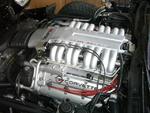
I own a 91' L98 m6/vert with the Speed Density system. The vehicle is basically stock and runs well. I live just outside Denver at 6200ft.
My question is this...is there some additional performance available to my stock engine by tuning the fuel system to the altitude or is the ECM already compensating well enough? It's my understanding that the system adjusts fuel based on the VE table that is looking at manifold pressure vs RPM. Seems to me that air pressure and density are not nessecarily the same thing. Am I all wet here? or can I pick up some ponies with a custom tune (preferably DIY)
Hans
I own a 91' L98 m6/vert with the Speed Density system. The vehicle is basically stock and runs well. I live just outside Denver at 6200ft.
My question is this...is there some additional performance available to my stock engine by tuning the fuel system to the altitude or is the ECM already compensating well enough? It's my understanding that the system adjusts fuel based on the VE table that is looking at manifold pressure vs RPM. Seems to me that air pressure and density are not nessecarily the same thing. Am I all wet here? or can I pick up some ponies with a custom tune (preferably DIY)
Hans

Burning Brakes

Joined: May 1999
Posts: 760
Likes: 1
From: Greenwich, CT
Originally Posted by ccmano
Am I all wet here?
Altitude is not the same as air density; they are inversely proportional.
Do a google for SAE correction factors for altitude, or look up same on
an aircraft site. At increased altitude the partial pressure of oxygen is
reduced, hence the power available from the NA engine is reduced. At
6,000 ft the O2 partial pressure is about 80% of that at sea-level.
In particlar, at high altitude on a SD design, the part throttle fuel
tables will be slightly lean. Not outside the ECM's ability to correct,
but slightly. If you always drive at the same altitude, you might be
able to increase the part-throttle timing a bit for better mileage. At
WOT I'd guess it is probably rich, but that's only a guess. Some logging
with a WB might net a few % improvement.
The best thing you can do for any engine is make sure everyting is
running up to spec (good maintenance). If you want more power,
look into buying a blower.
BTW, somebody wrote a very nice paper on this topic some years ago:
http://naca.larc.nasa.gov/reports/19...cgi?page01.gif
Your tax dollars at work.
For the technically challenged here's a "car magazine" article:
http://chevyhiperformance.com/techarticles/67678/
And an on-line calculator is here:
http://wahiduddin.net/calc/calc_hp_abs.htm
Have fun.
Burning Brakes
Joined: May 1999
Posts: 760
Likes: 1
From: Greenwich, CT
Originally Posted by ccmano
Am I all wet here?
Altitude is not the same as air density; they are inversely proportional.
Do a google for SAE correction factors for altitude, or look up same on
an aircraft site. At increased altitude the partial pressure of oxygen is
reduced, hence the power available from the NA engine is reduced. At
6,000 ft the O2 partial pressure is about 80% of that at sea-level.
In particlar, at high altitude on a SD design, the part throttle fuel
tables will be slightly lean. Not outside the ECM's ability to correct,
but slightly. If you always drive at the same altitude, you might be
able to increase the part-throttle timing a bit for better mileage. At
WOT I'd guess it is probably rich, but that's only a guess. Some logging
with a WB might net a few % improvement.
The best thing you can do for any engine is make sure everyting is
running up to spec (good maintenance). If you want more power,
look into buying a blower.
BTW, somebody wrote a very nice paper on this topic some years ago:
http://naca.larc.nasa.gov/reports/19...cgi?page01.gif
Your tax dollars at work.
For the technically challenged here's a "car magazine" article:
http://chevyhiperformance.com/techarticles/67678/
And an on-line calculator is here:
http://wahiduddin.net/calc/calc_hp_abs.htm
Have fun.








