


Gas ported pistons and compression ratio question


Thread Starter
Burning Brakes


Joined: Sep 2003
Posts: 875
Likes: 0
From: Louisville KY
 Gas ported pistons and compression ratio question
First off, is 11:1 c/r "streetable" with aluminum heads on a non ltx or Lsx block? I would think so due to aluminum not retaining heat like Iron.
I'm thinking of using JE gas ported pistons in combination with 64cc chambered Dart Pro 1 heads (ending in ~ 11:1 c/r). I know what the whole gas porting setup does and how it helps but would it be alright for a street/strip application that gets 6k miles on it a year? They are much lighter than the standard forged JE flat top.
The other option is to use the same pistons in combination with 72cc Dart Pro 1's giving around 10:1 C/R. Is there a certain target C/R to use gas ported pistons? Please explain. Thx
I'm thinking of using JE gas ported pistons in combination with 64cc chambered Dart Pro 1 heads (ending in ~ 11:1 c/r). I know what the whole gas porting setup does and how it helps but would it be alright for a street/strip application that gets 6k miles on it a year? They are much lighter than the standard forged JE flat top.
The other option is to use the same pistons in combination with 72cc Dart Pro 1's giving around 10:1 C/R. Is there a certain target C/R to use gas ported pistons? Please explain. Thx
Last edited by kpforce1; Oct 3, 2005 at 02:07 AM.

Le Mans Master


Joined: Jan 2003
Posts: 8,596
Likes: 19
From: Portland Oregon
Originally Posted by kpforce1
First off, is 11:1 c/r "streetable" with aluminum heads on a non ltx or Lsx block? I would think so due to aluminum not retaining heat like Iron.
I'm thinking of using JE gas ported pistons in combination with 64cc chambered Dart Pro 1 heads (ending in ~ 11:1 c/r). I know what the whole gas porting setup does and how it helps but would it be alright for a street/strip application that gets 6k miles on it a year? They are much lighter than the standard forged JE flat top.
The other option is to use the same pistons in combination with 72cc Dart Pro 1's giving around 10:1 C/R. Is there a certain target C/R to use gas ported pistons? Please explain. Thx
I'm thinking of using JE gas ported pistons in combination with 64cc chambered Dart Pro 1 heads (ending in ~ 11:1 c/r). I know what the whole gas porting setup does and how it helps but would it be alright for a street/strip application that gets 6k miles on it a year? They are much lighter than the standard forged JE flat top.
The other option is to use the same pistons in combination with 72cc Dart Pro 1's giving around 10:1 C/R. Is there a certain target C/R to use gas ported pistons? Please explain. Thx
Thread Starter
Burning Brakes
Joined: Sep 2003
Posts: 875
Likes: 0
From: Louisville KY
Originally Posted by tjwong
I would call JE for using these types of pistons in a street application. Normally these ultra-lite gas ported pistons are used in high end race engines that are routinely torn down. IMHO for general street usage the gas ports would tend to plug up with the normal combustion process of a street driver. Also these pistons are normally rated for compression ratios varying from 9 to nearly 12:1. And they are rated for 400 to 500Hp in most applications. In a not LTx engine on the street I would keep your compression around 10 or 10.5:1 max. Aluminum heads do allow for a bit more compression over a iron head. But the L98 with aluminum heads in the later years was already at 10:1 if I remember correctly.
I'm using a lot of expensive alternatives to prevent parasitic loss of hp so I can use a rather mild hydro roller cam to make 500+hp (i.e. Jesel belt drive timing setup and Scat featherweight rods and crank). My rotating assembly is going to be around 9-11 lbs lighter than the standard forged rotating assembly. That makes a HUGE difference and 10lbs off the rotating assembly can be equated to a mere 150lbs off of a 3100lb car
I'm all about saving weight and producing a more efficient engine.
Last edited by kpforce1; Oct 3, 2005 at 01:13 AM.
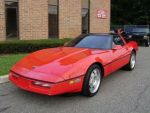

 the '90-91 L98 was rated at 10.25:1 c/r.

Burning Brakes
Joined: Aug 2000
Posts: 1,146
Likes: 2
From: Albuquerque NM
by itself, 11.1 is definitly streetable...it is the cam. total intake (head and manifold) port size, and compression. Too much of one, will require giving up something from the other two.
Too big of intake volume will require either small cam and/or lower CR to prevent reversion...tq and hp loss <<This is way AFR heads are worth the ducks>>
Too big of CR (12+ assuming .035-.04 quench) will require increasing the lobe separation...hp loss <<Coatings and good quench help here>>
too much cam will require more CR (drag cars run at 13.5+ CR with big cams) or very smal ports. big cam and high CR will net a high HP/low Tq car<<7000+ rpm cars>>. Big cam and small port volume is low performer<<unless forced induction>>
Too big of intake volume will require either small cam and/or lower CR to prevent reversion...tq and hp loss <<This is way AFR heads are worth the ducks>>
Too big of CR (12+ assuming .035-.04 quench) will require increasing the lobe separation...hp loss <<Coatings and good quench help here>>
too much cam will require more CR (drag cars run at 13.5+ CR with big cams) or very smal ports. big cam and high CR will net a high HP/low Tq car<<7000+ rpm cars>>. Big cam and small port volume is low performer<<unless forced induction>>

Racer


Joined: Jul 2001
Posts: 322
Likes: 1
From: Los Gatos, CA
Gas porting increases cylinder bore sealing along with wear. The type of rings and width will also impact street life. The potential benefit might not be worth it unless you run thin rings. I'd call JE and talk to them and at least find out what your potential risks are.
I know some people have made them live on the street and others had had to change out pistons right away. Getting the right rings on the right cylinder wall finish and block hardness are more important with gas ported pistons.
Good luck
I know some people have made them live on the street and others had had to change out pistons right away. Getting the right rings on the right cylinder wall finish and block hardness are more important with gas ported pistons.
Good luck







