






dry or wet nitrous?

Melting Slicks

Joined: May 2004
Posts: 2,524
Likes: 10
From: Lufkin Texas
St. Jude Donor '05-'06

Dry kits, although cheaper and easier to install depend soley upon the O2 and other sensors and ECM to add and trim fuel as needed. Whereas the wet kit supplies the extra fuel needed without depending on the ECM and sensors.
The problem with dry is that if your systems fail bring in enough fuel while spraying and you run lean, it's BYE BYE pistons.
The wet kits supply just another needed safety. Combine a wet kit with a hobbs (low fuel pressure cutoff) and you already have a much safer system than a dry. Lean + n20= disaster!
The problem with dry is that if your systems fail bring in enough fuel while spraying and you run lean, it's BYE BYE pistons.
The wet kits supply just another needed safety. Combine a wet kit with a hobbs (low fuel pressure cutoff) and you already have a much safer system than a dry. Lean + n20= disaster!
Melting Slicks
Joined: May 2004
Posts: 2,524
Likes: 10
From: Lufkin Texas
St. Jude Donor '05-'06
Originally Posted by cplonner
i see.....How much more difficult is it to install a wet system opposed to a dry system?
Melting Slicks
Joined: May 2004
Posts: 2,524
Likes: 10
From: Lufkin Texas
St. Jude Donor '05-'06
Originally Posted by cplonner
i see.....How much more difficult is it to install a wet system opposed to a dry system?

Drifting

Joined: Aug 2004
Posts: 1,830
Likes: 1
From: atlanta Georgia
if you can wire series/parallel circuits then you can do this job on a saturday. just need to get up under the car a little bit to run n20 and fuel lines as well as wiring etc...
with that being said i did not do my own because i lacked the knowledge i now have from auto tech skool
your friend
sean
also wet is the only way to go!
with that being said i did not do my own because i lacked the knowledge i now have from auto tech skool
your friend
sean
also wet is the only way to go!
Corvette Stories
The Best of Corvette for Corvette Enthusiasts

Top 10 Most Expensive Corvettes Ever Sold on Bring A Trailer
Brett Foote
10 Things Every Corvette Owner Needs (2026 Edition)
Michael S. Palmer
8 Most "Only Corvette Owners Understand" Quirks and Problems
Pouria Savadkouei
10 Reasons the C6 Z06 is Still A Performance Benchmark After 20 Years
Joe Kucinski
How Much Horsepower Every Corvette Engine "LOST" in 1972
Joe Kucinski
Top 10 DOs and DON'Ts for Protecting Your Convertible Top!
Michael S. Palmer
Top 10 Most Explosive Corvettes Ever Made: Power-to-Weight Ratio Ranked!
Joe Kucinski
150 hp to 1,250 hp: Every Corvette Generation Compared by the Specs That Matter
Joe Kucinski
8 Coolest Corvette Pace Cars (and Replicas) of All Time
Verdad Gallardo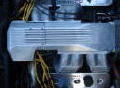
Thread Starter
Burning Brakes

Joined: Apr 2005
Posts: 1,110
Likes: 0
From: JUPITER FLORIDA
yeah i figure going the safest way (wet) is always the the way to go. becasue murphys law, an injector will fail! Thanks for your info guys. im going to start shopping once i get this tranny rebuilt and a new tc.

Collections Hold
Joined: May 2003
Posts: 3,520
Likes: 2
From: Tacoma WA
To the guy that said dry depends on o2's, nonsense, depends on MAF. Furthermore, find someone who has had a maf fail and thus fuel supply, you wont. So, that's Bs using this a suggestion that wet is better. In reality, it's the fuel side of a wet kit that fails, a fuel noid, wiring, fuse, relay to mention a few can fail on the wet side and then what?
Yes a wet kit generaly makes a slightly more amount of torque compared to a dry hp for hp. But that is not allways what it seems. On our rearends we prone to breakage anyway and adding a mondo all in one torque monster hit can spell breakage. Also, output shafts, transhafts, drivelines and clutches will go on a heavy torque hit, I have seen them all on the spray.
Now lets talk about intake backfires that remove intake/hood and cause a big underhood fire. This happens on wet kits only, you will not find this happening on dry kits, period.
Dry kits retain there set a/f as the bottle goes empty. A wet kit gets richer and richer as bottle emptys. The reason is a wet kit has a set mech jet that has no way of changing volume. A dry kit because it's using the maf and reading volume by density/temp, will maintain a constant a/f all the way till bottle is empty.
A dry kit really has only one problem and that is the chance of a n2o noid sticking open. The cure is redundant noids,as the chance of two noids sticking open at the same time is Zero.
Think of all the senerios, from the n2o side and the fuel side, on a wet kit that can go wrong (efecting the other side, like n2o noid sticks open and fuel sprays by itself), and you'll see that infact, dry is safer.
There is much more to this also.
Here's the biggest difference, remember this dosen't happen with dry:
Z06 BackFire
Now if you want to run a wet kit for the slightly higher torque, that's fine, if you know the whole story. Moreover, you can jet a dry to give give the same torque, but you'll use more n2o. Doing this has a benifit, you'll have higher hp torque for torque, so is wet anymore powerfull?
Robert
Yes a wet kit generaly makes a slightly more amount of torque compared to a dry hp for hp. But that is not allways what it seems. On our rearends we prone to breakage anyway and adding a mondo all in one torque monster hit can spell breakage. Also, output shafts, transhafts, drivelines and clutches will go on a heavy torque hit, I have seen them all on the spray.
Now lets talk about intake backfires that remove intake/hood and cause a big underhood fire. This happens on wet kits only, you will not find this happening on dry kits, period.
Dry kits retain there set a/f as the bottle goes empty. A wet kit gets richer and richer as bottle emptys. The reason is a wet kit has a set mech jet that has no way of changing volume. A dry kit because it's using the maf and reading volume by density/temp, will maintain a constant a/f all the way till bottle is empty.
A dry kit really has only one problem and that is the chance of a n2o noid sticking open. The cure is redundant noids,as the chance of two noids sticking open at the same time is Zero.
Think of all the senerios, from the n2o side and the fuel side, on a wet kit that can go wrong (efecting the other side, like n2o noid sticks open and fuel sprays by itself), and you'll see that infact, dry is safer.
There is much more to this also.
Here's the biggest difference, remember this dosen't happen with dry:
Z06 BackFire
Now if you want to run a wet kit for the slightly higher torque, that's fine, if you know the whole story. Moreover, you can jet a dry to give give the same torque, but you'll use more n2o. Doing this has a benifit, you'll have higher hp torque for torque, so is wet anymore powerfull?
Robert
Last edited by Robert56@RNS; Nov 15, 2005 at 09:22 PM.


Collections Hold
Joined: May 2003
Posts: 3,520
Likes: 2
From: Tacoma WA
Originally Posted by cplonner
yeah i figure going the safest way (wet) is always the the way to go. becasue murphys law, an injector will fail! Thanks for your info guys. im going to start shopping once i get this tranny rebuilt and a new tc.
An o2 sensor has absolutly nothing to do with spraying, it's out of the picture when going wot. Don't the dry kits for the lt1 spike the injectors with an additional fuel pump/source to up pressure allowing injectors to flow more?
Now, nothing wrong with running a wet kit if you want, but feel you asked about safety and dry is the ticket.
Robert
Melting Slicks
Joined: May 2004
Posts: 2,524
Likes: 10
From: Lufkin Texas
St. Jude Donor '05-'06
You may be correct about the 02 sensors at WOT. I just know the 02 sensors are used to tune for the jets on wet systems to messure the AF ratio. The LT cars use a FPR and the and LS cars use the MAF and other sensors to tell the ECM to add fuel and require upgraged fuel pumps and injectors with a dry kit and rely on the fuel pump and injectors. The wet systems dont require upgraded pumps or injectors. The wet system can be relitively safegaurded with a hobbs switch that deactivates the entire system if the fuel pressure is insufficient. This prevents spraying N20 without fuel. In the event that fuel is sprayed without N20 you risk what? Running rich. Wow. Hardly fatal. On the other hand, with a dry setup if your MAF or ECM or injectors or fuel pump fail and you run lean while spraying N20..IT'S BYE BYE pistons! Oh yeah, did I mention the rev limiter with the lt1 and ls1 cars? It's designed to cut the pulse to the injectors if it's hit with a high enough RPM. Which nitrous will sometimes do. So with a dry system, dont forget to have a chip burned or buy an aftermarket ignition.
I didn't mean to come off as a smarta$$ here. I just did alot of research and have been spraying safely with my wet system for a while now. I believe wet is safest for the above reasons. I've found most knowledgeable people agree. The general consensus is that wet is safer.
If you are worried about everything involved then dont use nitrous. If you cover the bases with either wet or dry you can be relitively safe but like everything there are always some risks. I personally feel the risks are greater with dry (lean) setups.
Here's a great read on the subject, http://www.go-fast.org/z28/new_to_nitrous.html To each his own but I'm staying wet.
Oh yeah, did I mention the rev limiter with the lt1 and ls1 cars? It's designed to cut the pulse to the injectors if it's hit with a high enough RPM. Which nitrous will sometimes do. So with a dry system, dont forget to have a chip burned or buy an aftermarket ignition. I didn't mean to come off as a smarta$$ here. I just did alot of research and have been spraying safely with my wet system for a while now. I believe wet is safest for the above reasons. I've found most knowledgeable people agree. The general consensus is that wet is safer.
If you are worried about everything involved then dont use nitrous. If you cover the bases with either wet or dry you can be relitively safe but like everything there are always some risks. I personally feel the risks are greater with dry (lean) setups.
Here's a great read on the subject, http://www.go-fast.org/z28/new_to_nitrous.html To each his own but I'm staying wet.
Last edited by skateparkdave; Nov 25, 2005 at 02:49 AM.
Collections Hold
Joined: May 2003
Posts: 3,520
Likes: 2
From: Tacoma WA
Originally Posted by skateparkdave
You may be correct about the 02 sensors at WOT. I just know the 02 sensors are used to tune for the jets on wet systems to messure the AF ratio. The LT cars use a FPR and the and LS cars use the MAF and other sensors to tell the ECM to add fuel and require upgraged fuel pumps and injectors with a dry kit and rely on the fuel pump and injectors. The wet systems dont require upgraded pumps or injectors. The wet system can be relitively safegaurded with a hobbs switch that deactivates the entire system if the fuel pressure is insufficient. This prevents spraying N20 without fuel. In the event that fuel is sprayed without N20 you risk what? Running rich. Wow. Hardly fatal. On the other hand, with a dry setup if your MAF or ECM or injectors or fuel pump fail and you run lean while spraying N20..IT'S BYE BYE pistons! Oh yeah, did I mention the rev limiter with the lt1 and ls1 cars? It's designed to cut the pulse to the injectors if it's hit with a high enough RPM. Which nitrous will sometimes do. So with a dry system, dont forget to have a chip burned or buy an aftermarket ignition.
I didn't mean to come off as a smarta$$ here. I just did alot of research and have been spraying safely with my wet system for a while now. I believe wet is safest for the above reasons. I've found most knowledgeable people agree. The general consensus is that wet is safer.
If you are worried about everything involved then dont use nitrous. If you cover the bases with either wet or dry you can be relitively safe but like everything there are always some risks. I personally feel the risks are greater with dry (lean) setups.
Here's a great read on the subject, http://www.go-fast.org/z28/new_to_nitrous.html To each his own but I'm staying wet.
Oh yeah, did I mention the rev limiter with the lt1 and ls1 cars? It's designed to cut the pulse to the injectors if it's hit with a high enough RPM. Which nitrous will sometimes do. So with a dry system, dont forget to have a chip burned or buy an aftermarket ignition. I didn't mean to come off as a smarta$$ here. I just did alot of research and have been spraying safely with my wet system for a while now. I believe wet is safest for the above reasons. I've found most knowledgeable people agree. The general consensus is that wet is safer.
If you are worried about everything involved then dont use nitrous. If you cover the bases with either wet or dry you can be relitively safe but like everything there are always some risks. I personally feel the risks are greater with dry (lean) setups.
Here's a great read on the subject, http://www.go-fast.org/z28/new_to_nitrous.html To each his own but I'm staying wet.
O2 sensors have nothing to do with tuning we or dry.
You can listen to someone who has recently done reasearch on the subject and has been running a wet system for awhile. Or you can listen to someone who has been running n2o for 25+ years, is a nitrous mod on two sites, and works for a nitrous company?
I will reply to all of the incorrect/invalid statements in the morning

Collections Hold
Joined: May 2003
Posts: 3,520
Likes: 2
From: Tacoma WA
First my only goal here is to present the correct info, so one can make a knowledgable choice.
Ther is more on this issue of wet vs dry concerning safety. If any want a more detailed explanation on any statement I made just ask.
Robert
Originally Posted by skateparkdave
You may be correct about the 02 sensors at WOT. I just know the 02 sensors are used to tune for the jets on wet systems to messure the AF ratio.
O2 sensors are used to help maintain the 14.7 a/f at part throttle conditions concerning emissions. When going wot the comp goes to Power enrichment mode and drops the o2 input. Usually in the 12.1/13.1 area. This wot PE can be adjusted to what you like or need concerning n2o.
The LT cars use a FPR and the and LS cars use the MAF and other sensors to tell the ECM to add fuel and require upgraged fuel pumps and injectors with a dry kit and rely on the fuel pump and injectors.
Yes the lt cars use a FPR and a aux fuel pump (comes in the kit). They do this to increase fuel pressure at the injector, thus no injector upgrade needed, unless going real big.
LSx cars use the maf to add extra fuel, and depending on size of shot, will determine whether a fuel and/or injector upgrade is needed. I have personaly made 480rwhp and 5xx torque on stock 28lb injectors and stock fuel pump. Other sensors can be programed in to a dry kit, but they come using the MAF only. You can also pull timing on spray only running a dry through tune.
The wet systems dont require upgraded pumps or injectors.
Power for power, if a dry needs a better fuel pump, then a wet will also. Granted, a wet dosen't need upgraded injectors, but neither does the lt dry hits.
The wet system can be relitively safegaurded with a hobbs switch that deactivates the entire system if the fuel pressure is insufficient. This prevents spraying N20 without fuel.
All dry kits come with this same safe gaurd also, and shuts system down when fuel supply issues arise.
In the event that fuel is sprayed without N20 you risk what? Running rich. Wow. Hardly fatal. On the other hand, with a dry setup if your MAF or ECM or injectors or fuel pump fail and you run lean while spraying N20..IT'S BYE BYE pistons!
Have you ever seen a intake explosion on an lsx car? do you want all that extra fuel running through your manifold, as many things can cause a backfire into intake track. granted normally it is pumped out the exhaust, but issue do occur. When is the last time you heard of a MAF failing, it just dosen't happen. But fuel noids on wet hits fail all the time and n2o keeps spraying. Fuel pump failure on wet or dry is caught by the hobbs sw and shuts the system down. Try to find someone who hurt their motor on a dry hit, good luck, far and few. Now you can't say that about wet kits.
Oh yeah, did I mention the rev limiter with the lt1 and ls1 cars? It's designed to cut the pulse to the injectors if it's hit with a high enough RPM. Which nitrous will sometimes do. So with a dry system, dont forget to have a chip burned or buy an aftermarket ignition.
A window switch is the answer to this senerio. I have mine set to have n2o come on at 3000rpm and shut off at 6400rpm and rev limiter is at 6800rpm. You use a ws to save a non built auto tranny also by shutting n2o off right before the shift rpm. I rec running a ws on all kits.
I didn't mean to come off as a smarta$$ here. I just did alot of research and have been spraying safely with my wet system for a while now. I believe wet is safest for the above reasons. I've found most knowledgeable people agree. The general consensus is that wet is safer.
Never took it that way. Just want the info to be complete and correct, nothing personal. My opinion is based on the facts, that dry kits are safer by design. A whole lot less can go wrong on a dry hit. Now if your an absolute die hard NHRA drag racer, wet kits can make a little more torque for launching, but that torque monster hit is not allways great for us street/strip guys.
If you are worried about everything involved then dont use nitrous. If you cover the bases with either wet or dry you can be relitively safe but like everything there are always some risks. I personally feel the risks are greater with dry (lean) setups.
For the most part I agree. Don't tune them to be lean and you will in fact have less problems with dry. I didn't read your link yet, but will add one of my own.
Here's a great read on the subject, http://www.go-fast.org/z28/new_to_nitrous.html To each his own but I'm staying wet.
O2 sensors are used to help maintain the 14.7 a/f at part throttle conditions concerning emissions. When going wot the comp goes to Power enrichment mode and drops the o2 input. Usually in the 12.1/13.1 area. This wot PE can be adjusted to what you like or need concerning n2o.
The LT cars use a FPR and the and LS cars use the MAF and other sensors to tell the ECM to add fuel and require upgraged fuel pumps and injectors with a dry kit and rely on the fuel pump and injectors.
Yes the lt cars use a FPR and a aux fuel pump (comes in the kit). They do this to increase fuel pressure at the injector, thus no injector upgrade needed, unless going real big.
LSx cars use the maf to add extra fuel, and depending on size of shot, will determine whether a fuel and/or injector upgrade is needed. I have personaly made 480rwhp and 5xx torque on stock 28lb injectors and stock fuel pump. Other sensors can be programed in to a dry kit, but they come using the MAF only. You can also pull timing on spray only running a dry through tune.
The wet systems dont require upgraded pumps or injectors.
Power for power, if a dry needs a better fuel pump, then a wet will also. Granted, a wet dosen't need upgraded injectors, but neither does the lt dry hits.
The wet system can be relitively safegaurded with a hobbs switch that deactivates the entire system if the fuel pressure is insufficient. This prevents spraying N20 without fuel.
All dry kits come with this same safe gaurd also, and shuts system down when fuel supply issues arise.
In the event that fuel is sprayed without N20 you risk what? Running rich. Wow. Hardly fatal. On the other hand, with a dry setup if your MAF or ECM or injectors or fuel pump fail and you run lean while spraying N20..IT'S BYE BYE pistons!
Have you ever seen a intake explosion on an lsx car? do you want all that extra fuel running through your manifold, as many things can cause a backfire into intake track. granted normally it is pumped out the exhaust, but issue do occur. When is the last time you heard of a MAF failing, it just dosen't happen. But fuel noids on wet hits fail all the time and n2o keeps spraying. Fuel pump failure on wet or dry is caught by the hobbs sw and shuts the system down. Try to find someone who hurt their motor on a dry hit, good luck, far and few. Now you can't say that about wet kits.
Oh yeah, did I mention the rev limiter with the lt1 and ls1 cars? It's designed to cut the pulse to the injectors if it's hit with a high enough RPM. Which nitrous will sometimes do.
So with a dry system, dont forget to have a chip burned or buy an aftermarket ignition. A window switch is the answer to this senerio. I have mine set to have n2o come on at 3000rpm and shut off at 6400rpm and rev limiter is at 6800rpm. You use a ws to save a non built auto tranny also by shutting n2o off right before the shift rpm. I rec running a ws on all kits.
I didn't mean to come off as a smarta$$ here. I just did alot of research and have been spraying safely with my wet system for a while now. I believe wet is safest for the above reasons. I've found most knowledgeable people agree. The general consensus is that wet is safer.
Never took it that way. Just want the info to be complete and correct, nothing personal. My opinion is based on the facts, that dry kits are safer by design. A whole lot less can go wrong on a dry hit. Now if your an absolute die hard NHRA drag racer, wet kits can make a little more torque for launching, but that torque monster hit is not allways great for us street/strip guys.
If you are worried about everything involved then dont use nitrous. If you cover the bases with either wet or dry you can be relitively safe but like everything there are always some risks. I personally feel the risks are greater with dry (lean) setups.
For the most part I agree. Don't tune them to be lean and you will in fact have less problems with dry. I didn't read your link yet, but will add one of my own.
Here's a great read on the subject, http://www.go-fast.org/z28/new_to_nitrous.html To each his own but I'm staying wet.
Robert
Last edited by Robert56@RNS; Nov 25, 2005 at 03:36 PM.
Melting Slicks
Joined: May 2004
Posts: 2,524
Likes: 10
From: Lufkin Texas
St. Jude Donor '05-'06
Originally Posted by Robert56
What a mountain of misinformation, or maybe misunderstanding. You really should have a better grasp of n2o before you start giving advice.
O2 sensors have nothing to do with tuning we or dry.
You can listen to someone who has recently done reasearch on the subject and has been running a wet system for awhile. Or you can listen to someone who has been running n2o for 25+ years, is a nitrous mod on two sites, and works for a nitrous company?
I will reply to all of the incorrect/invalid statements in the morning
O2 sensors have nothing to do with tuning we or dry.
You can listen to someone who has recently done reasearch on the subject and has been running a wet system for awhile. Or you can listen to someone who has been running n2o for 25+ years, is a nitrous mod on two sites, and works for a nitrous company?
I will reply to all of the incorrect/invalid statements in the morning
 The important thing about the statement was not what sensors are used to add the extra fuel with a dry system. The important point I was trying to elaborate on is that with dry the system depends entirely on the stock computer and fuel system to add the extra fuel needed. If one of those systems fails, it's lean time. I think we all can agree that lean+nitrous=disaster, No?
 Yes I know that with a wet system the same risk is at hand. I think it's easier to put a low fuel pressure switch on the fuel side of a wet kit and be done. It's my understanding that the stock fuel pump and injectors are not really up to the task of safely adding the extra fuel needed. Plus I've heard of MAF's being ruined with nitrous.
The initial posters first question was, "which was best and safest?" It's my opinion that wet is. Then he asked, "which is easier to install?" Honestly, I think a basic dry kit is easier. However, to do dry safe seems to really put the MAF at risk and requires new larger injectors and upgraded fuel pump. Thats what makes it seem obvious to me that the dry kits are in fact harder to install.
Another thing that bothers me about using larger injectors and up'ed fuel pressure is this. What happens during daily drivability when you're not at the track spraying? Which for me is 90% percent of the time. Are you just running around pig rich? I dont know. I'm asking.
I admit, I am somewhat new to the nitrous. I did alot of research and question asking before I did mine. Most if not all who I inquired about it with said wet is the way to go. I've been spraying without a hitch with my wet system for a year now without having an effect on daily driving. So thats all I have to go on. I'm not claiming to be an authority. Just sharing what I've learned along the way.
Robert56, I dont see how what I've shared could be "a mountain of misinformation". Except for the o2 thing. Which I explained was a blunder and really wasn't a true factor to the point that DRY relies on the car itself to add the extra fuel anyway. It does, and it doesn't matter what sensors are used. This information is out there everywhere. I'm not wanting to start a war here. I may not agree but I can respect your opinions. As a novice, I'm interested in what you know and will definetly be
 . It's all good.
My advise now to cplonner is to continue to do what he's doing. Ask questions and do research. Take all the information and opinions and weigh them out and do what suits you best.
Collections Hold
Joined: May 2003
Posts: 3,520
Likes: 2
From: Tacoma WA
For insight:
Colonel's Tech Files
Also in my web in links section is lots of dry info, mostly lsx based but certainly can give knowledge insight and install tips.
Robert
Colonel's Tech Files
Also in my web in links section is lots of dry info, mostly lsx based but certainly can give knowledge insight and install tips.
Robert

Drifting
Joined: May 2003
Posts: 1,730
Likes: 1
From: Charlotte NC
St. Jude Donor '05
Coming from the outside I'll just say theres disadvantages to both style kits.
I believe the dry kits are limited in most cars in the amount of shot you can shoot. On top of that the LT1 and older style dry kits push the injectors quite hard with lots of pressure.
Wet kits have the potential to blow your intake and MAF apart. (seen that)
Both require the same amount of fuel delievery, the old dry kits require a high pressure/high flow pump whereas a wet kit just needs a high flow pump (there is a difference)
I would consider a dry kit safer in the event of hitting a rev limitor than a wet kit because the wet kit is still spraying some fuel.. the dry is completely off on the rev limitor. Its hard to blow up something with absoulutely no fuel.
I believe the dry kits are limited in most cars in the amount of shot you can shoot. On top of that the LT1 and older style dry kits push the injectors quite hard with lots of pressure.
Wet kits have the potential to blow your intake and MAF apart. (seen that)
Both require the same amount of fuel delievery, the old dry kits require a high pressure/high flow pump whereas a wet kit just needs a high flow pump (there is a difference)
I would consider a dry kit safer in the event of hitting a rev limitor than a wet kit because the wet kit is still spraying some fuel.. the dry is completely off on the rev limitor. Its hard to blow up something with absoulutely no fuel.