


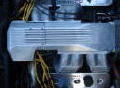



dry or wet nitrous?

Melting Slicks

Joined: May 2004
Posts: 2,524
Likes: 10
From: Lufkin Texas
St. Jude Donor '05-'06

I can certaily see logic in some of your arguments. I'm still not entirely sold on dry though. I guess all that matters here is cplonner's evaluation.
Yes, as a matter of fact I have. But the C5 owner and others there at the track blamed it on lack of purge. I've been told that with a wet system with a throttle body and plenum a purge is a necessity, not an option. The reason being is that when the nitrous line does not have the air purged out before every run the fuel side sprays alone for a second and the fuel atomization without nitrous is poor and fuel alone can puddle in the plenum. A couple of back to back runs of this can cause an accumulation of wet fuel. Then a spark happens with a valve open and BOOM!  The remedy here is a properly used purge. ONE of the many safety items I use and recommend.
In my opinion, from what I've seen, a direct port system is really the absolute best way to spray. It's just more expensive and cplonner didn't ask about it so I just addressed the wet vs. dry question.
Originally Posted by Robert56
[COLOR=RoyalBlue]
Have you ever seen a intake explosion on an lsx car? do you want all that extra fuel running through your manifold, as many things can cause a backfire into intake track. granted normally it is pumped out the exhaust, but issue do occur. When is the last time you heard of a MAF failing, it just dosen't happen. But fuel noids on wet hits fail all the time and n2o keeps spraying. Fuel pump failure on wet or dry is caught by the hobbs sw and shuts the system down. Try to find someone who hurt their motor on a dry hit, good luck, far and few. Now you can't say that about wet kits.
Have you ever seen a intake explosion on an lsx car? do you want all that extra fuel running through your manifold, as many things can cause a backfire into intake track. granted normally it is pumped out the exhaust, but issue do occur. When is the last time you heard of a MAF failing, it just dosen't happen. But fuel noids on wet hits fail all the time and n2o keeps spraying. Fuel pump failure on wet or dry is caught by the hobbs sw and shuts the system down. Try to find someone who hurt their motor on a dry hit, good luck, far and few. Now you can't say that about wet kits.
The remedy here is a properly used purge. ONE of the many safety items I use and recommend. In my opinion, from what I've seen, a direct port system is really the absolute best way to spray. It's just more expensive and cplonner didn't ask about it so I just addressed the wet vs. dry question.

Collections Hold
Joined: May 2003
Posts: 3,520
Likes: 2
From: Tacoma WA
Originally Posted by skateparkdave
I can certaily see logic in some of your arguments. I'm still not entirely sold on dry though. I guess all that matters here is cplonner's evaluation.
Yes, as a matter of fact I have. But the C5 owner and others there at the track blamed it on lack of purge. I've been told that with a wet system with a throttle body and plenum a purge is a necessity, not an option. The reason being is that when the nitrous line does not have the air purged out before every run the fuel side sprays alone for a second and the fuel atomization without nitrous is poor and fuel alone can puddle in the plenum. A couple of back to back runs of this can cause an accumulation of wet fuel. Then a spark happens with a valve open and BOOM! The remedy here is a properly used purge. ONE of the many safety items I use and recommend.
In my opinion, from what I've seen, a direct port system is really the absolute best way to spray. It's just more expensive and cplonner didn't ask about it so I just addressed the wet vs. dry question.
Yes, as a matter of fact I have. But the C5 owner and others there at the track blamed it on lack of purge. I've been told that with a wet system with a throttle body and plenum a purge is a necessity, not an option. The reason being is that when the nitrous line does not have the air purged out before every run the fuel side sprays alone for a second and the fuel atomization without nitrous is poor and fuel alone can puddle in the plenum. A couple of back to back runs of this can cause an accumulation of wet fuel. Then a spark happens with a valve open and BOOM!
The remedy here is a properly used purge. ONE of the many safety items I use and recommend. In my opinion, from what I've seen, a direct port system is really the absolute best way to spray. It's just more expensive and cplonner didn't ask about it so I just addressed the wet vs. dry question.
Robert

Safety Car


Joined: Dec 2002
Posts: 3,655
Likes: 24
From: Charleston SC
An LS1 and a LT1 have some differnt parts that make a big differnce with reguards to safe with both dry and wet kits. I would not trust the stock LT1 24# injector without having datalogs to see my injector DC period. As far as the intank pump goes it needs to be upgraded with either kit to maintain proper flow. A bosster pump will help with PSI but can flow no more then the stock pump will flow in a static state. I also have seen plenty of LT1 FPR's bite the dust. One other thing posted that is not realy true is tuning the PE tables to add extra fuel for the nitrous. This is not a good method of tuning unless the only time you plan on going to WOT is with the nitrous on. The PE tables will add fuel but not just for nitrous. I don't see that I would touch the ECM tune. I am puting togeather a nitrous only tune for my car but only because I want to pull some timing and the Delteq makes this an expensive task aand I have an extra ECM I can install at the track. 
Collections Hold
Joined: May 2003
Posts: 3,520
Likes: 2
From: Tacoma WA
Originally Posted by FD2BLK
An LS1 and a LT1 have some differnt parts that make a big differnce with reguards to safe with both dry and wet kits. I would not trust the stock LT1 24# injector without having datalogs to see my injector DC period. As far as the intank pump goes it needs to be upgraded with either kit to maintain proper flow. A bosster pump will help with PSI but can flow no more then the stock pump will flow in a static state. I also have seen plenty of LT1 FPR's bite the dust. One other thing posted that is not realy true is tuning the PE tables to add extra fuel for the nitrous. This is not a good method of tuning unless the only time you plan on going to WOT is with the nitrous on. The PE tables will add fuel but not just for nitrous. I don't see that I would touch the ECM tune. I am puting togeather a nitrous only tune for my car but only because I want to pull some timing and the Delteq makes this an expensive task aand I have an extra ECM I can install at the track.
On the injectors on lt1 dry, when you boost pressure you are in fact upsizing injectors. for instance, on the lsx we often use Ford svt 30lb injectors. They are rated at I believe 45psi, but when running at our 58psi they now are 36lb injectors. So, duty cycle/wear tear will not be affected unless you pass their rating at a set pressure. I know the NOS 5176? dry kit comes with a fuel pump to be tapped into fuel system, so intank needs no changing, unless going past the kits 150hp set-up. On injector failure, won't you feel a miss and shut your system down before a melt down? Taxing injectors for a short 1/4 pass shouldn't be an issue. wet or dry it still is the best bang for the buck.
Robert
Melting Slicks
Joined: May 2004
Posts: 2,524
Likes: 10
From: Lufkin Texas
St. Jude Donor '05-'06
So Robert, not to hijack the thread, but my 90 is speed density. Another reason I went wet. What does a speed density car use to add fuel. I cant imagine the MAP would do it. By the way, I do run an upgraded Walbro fuel pump and 24 lb injectors and and an AFPR. Plus all the safety stuff, like wot switch, low fuel pressure switch, window switch and a bottle heater and purge and colder sparkplugs. But not because it required it but because I just wanted to be safe. So, yeah, to do it right I guess it can get costly either way.
What makes a dry set up add fuel with speed density anyway?
What makes a dry set up add fuel with speed density anyway?
Safety Car
Joined: Dec 2002
Posts: 3,655
Likes: 24
From: Charleston SC
Originally Posted by Robert56
My referal to the Power Enrichment at WOT is the PE Fuel Multiplier which is only used during WOT. The pe tables you refer to are for part throttle and comp is constantly adjusting to maintain 14.7. The only time the pe tables have to do with wot is when they are positive (running lean), then they are added on top of PE Multiplier. When pe table shows neg, they are dropped when going WOT.
On the injectors on lt1 dry, when you boost pressure you are in fact upsizing injectors. for instance, on the lsx we often use Ford svt 30lb injectors. They are rated at I believe 45psi, but when running at our 58psi they now are 36lb injectors. So, duty cycle/wear tear will not be affected unless you pass their rating at a set pressure. I know the NOS 5176? dry kit comes with a fuel pump to be tapped into fuel system, so intank needs no changing, unless going past the kits 150hp set-up. On injector failure, won't you feel a miss and shut your system down before a melt down? Taxing injectors for a short 1/4 pass shouldn't be an issue. wet or dry it still is the best bang for the buck.
Robert
On the injectors on lt1 dry, when you boost pressure you are in fact upsizing injectors. for instance, on the lsx we often use Ford svt 30lb injectors. They are rated at I believe 45psi, but when running at our 58psi they now are 36lb injectors. So, duty cycle/wear tear will not be affected unless you pass their rating at a set pressure. I know the NOS 5176? dry kit comes with a fuel pump to be tapped into fuel system, so intank needs no changing, unless going past the kits 150hp set-up. On injector failure, won't you feel a miss and shut your system down before a melt down? Taxing injectors for a short 1/4 pass shouldn't be an issue. wet or dry it still is the best bang for the buck.
Robert
Robert,
I think you missed my point. For the LT1 at least The PE tables are the PE tables. If you change the Power Enrichment tables Vs RPM for the nitrous during WOT you are changing them for non-nitrous WOT as well. My A/F ratio was done on a dyno at WOT and the PE tables are perfect for max power on my motor without nitrous. Now if I take those tables and change them to add fuel for a nitrous system every time I go to WOT I am dumping too much fuel unless I am on gas. I think you may be confusing the way a LT1 and LS1 car use the PE tables but I am know nothing about LS1 tuning so I am not sure. A dry kit on a LT1 has no reference to A/F and I think the LS1 uses the MAF sensor to add fuel, you can probably confirm this. Again with the fuel injectors we all know if you add more F/P they will add more fuel but it doesn't change the fact that you still have to deal with duty cycle and ensure the injector won’t go static. I am on the way conservative side but unless you have a chart that shows what a Delphi injector will flow safely at a set pressure other then 42 PSI I would be concerned about possible injector problems. As far as the fuel pump goes again you missed the point. Booster pump or no booster pump the stock fuel pump will only flow so much fuel. Ask Walbro, Racetronics, or Blower works and they will all confirm this. I think you bring up some great points but some of them seemed to be LS1 driven and not directly related to the LT1 platform.
Last edited by FD2BLK; Nov 25, 2005 at 11:34 PM.
Corvette Stories
The Best of Corvette for Corvette Enthusiasts

Top 10 Most Expensive Corvettes Ever Sold on Bring A Trailer
Brett Foote
10 Things Every Corvette Owner Needs (2026 Edition)
Michael S. Palmer
8 Most "Only Corvette Owners Understand" Quirks and Problems
Pouria Savadkouei
10 Reasons the C6 Z06 is Still A Performance Benchmark After 20 Years
Joe Kucinski
How Much Horsepower Every Corvette Engine "LOST" in 1972
Joe Kucinski
Top 10 DOs and DON'Ts for Protecting Your Convertible Top!
Michael S. Palmer
Top 10 Most Explosive Corvettes Ever Made: Power-to-Weight Ratio Ranked!
Joe Kucinski
150 hp to 1,250 hp: Every Corvette Generation Compared by the Specs That Matter
Joe Kucinski
8 Coolest Corvette Pace Cars (and Replicas) of All Time
Verdad Gallardo
Safety Car
Joined: Dec 2002
Posts: 3,655
Likes: 24
From: Charleston SC
Originally Posted by skateparkdave
So Robert, not to hijack the thread, but my 90 is speed density. Another reason I went wet. What does a speed density car use to add fuel. I cant imagine the MAP would do it. By the way, I do run an upgraded Walbro fuel pump and 24 lb injectors and and an AFPR. Plus all the safety stuff, like wot switch, low fuel pressure switch, window switch and a bottle heater and purge and colder sparkplugs. But not because it required it but because I just wanted to be safe. So, yeah, to do it right I guess it can get costly either way.
What makes a dry set up add fuel with speed density anyway?
What makes a dry set up add fuel with speed density anyway?
Melting Slicks
Joined: May 2004
Posts: 2,524
Likes: 10
From: Lufkin Texas
St. Jude Donor '05-'06
Originally Posted by FD2BLK
Dave the LT1 is the same for both speed density and MAF systems. It bumps the fuel presure up via the regulator and basicly makes a bigger injector while the nitrous system is on.
Safety Car
Joined: Dec 2002
Posts: 3,655
Likes: 24
From: Charleston SC
Originally Posted by skateparkdave
Yeah I understand this but since speed density doesn't have a MAF I was wondering what sensors are used to accomplish the fuel addition.
No sensors are used just the additional fuel presure.
Think of it like your wet kit but using the injectors instead of the fuel jet to add fuel. when the nitrous is activated the nitrous pressure regulator "fools" the fuel pressure regulator into bumping up the FP and that makes the injector add more fuel.
This may help it is the instalation guide for the Nos Lt1 dry system
http://www.holley.com/data/Products/...135-SNOS-1.pdf
Last edited by FD2BLK; Nov 26, 2005 at 12:36 AM.
Melting Slicks
Joined: May 2004
Posts: 2,524
Likes: 10
From: Lufkin Texas
St. Jude Donor '05-'06
Originally Posted by FD2BLK
No sensors are used just the additional fuel presure.
Think of it like your wet kit but using the injectors instead of the fuel jet to add fuel. when the nitrous is activated the nitrous pressure regulator "fools" the fuel pressure regulator into bumping up the FP and that makes the injector add more fuel.
This may help it is the instalation guide for the Nos Lt1 dry system
http://www.holley.com/data/Products/...135-SNOS-1.pdf
Think of it like your wet kit but using the injectors instead of the fuel jet to add fuel. when the nitrous is activated the nitrous pressure regulator "fools" the fuel pressure regulator into bumping up the FP and that makes the injector add more fuel.
This may help it is the instalation guide for the Nos Lt1 dry system
http://www.holley.com/data/Products/...135-SNOS-1.pdf
Collections Hold
Joined: May 2003
Posts: 3,520
Likes: 2
From: Tacoma WA
Originally Posted by FD2BLK
Robert,
I think you missed my point. For the LT1 at least The PE tables are the PE tables. If you change the Power Enrichment tables Vs RPM for the nitrous during WOT you are changing them for non-nitrous WOT as well. My A/F ratio was done on a dyno at WOT and the PE tables are perfect for max power on my motor without nitrous. Now if I take those tables and change them to add fuel for a nitrous system every time I go to WOT I am dumping too much fuel unless I am on gas. I think you may be confusing the way a LT1 and LS1 car use the PE tables but I am know nothing about LS1 tuning so I am not sure.
What I am saying is pe tables is not how you tune wot. IT is a seperate wot Power Erichment multiplier that only comes into effect at wot and has nothing to with reg part throttle PE tables. I don't think I ever said change the pE tables to tune a dry set-up? Yes this is lsx based and has nothing really to do with a dry ltx set-up, but we have been talking both so it gets a little confusing.
A dry kit on a LT1 has no reference to A/F and I think the LS1 uses the MAF sensor to add fuel, you can probably confirm this.
True.
Again with the fuel injectors we all know if you add more F/P they will add more fuel but it doesn't change the fact that you still have to deal with duty cycle and ensure the injector won’t go static.
True, but if using the kit at it's set parameters going static will not be an issue.
I am on the way conservative side but unless you have a chart that shows what a Delphi injector will flow safely at a set pressure other then 42 PSI I would be concerned about possible injector problems.
As far as the fuel pump goes again you missed the point. Booster pump or no booster pump the stock fuel pump will only flow so much fuel. Ask Walbro, Racetronics, or Blower works and they will all confirm this. I think you bring up some great points but some of them seemed to be LS1 driven and not directly related to the LT1 platform.
Again true, and if you stay within the parameters of the kit a stock pump, in good working order, will support a dry 150 hit. The booster pump is there to increase the pressure to allow more flow at the injector at any rpm demand not just max rpm/demand. I think the kit designers would have figured this all out. Now if you go oast the kit rec you may need to upsize tank pump..
I think you missed my point. For the LT1 at least The PE tables are the PE tables. If you change the Power Enrichment tables Vs RPM for the nitrous during WOT you are changing them for non-nitrous WOT as well. My A/F ratio was done on a dyno at WOT and the PE tables are perfect for max power on my motor without nitrous. Now if I take those tables and change them to add fuel for a nitrous system every time I go to WOT I am dumping too much fuel unless I am on gas. I think you may be confusing the way a LT1 and LS1 car use the PE tables but I am know nothing about LS1 tuning so I am not sure.
What I am saying is pe tables is not how you tune wot. IT is a seperate wot Power Erichment multiplier that only comes into effect at wot and has nothing to with reg part throttle PE tables. I don't think I ever said change the pE tables to tune a dry set-up? Yes this is lsx based and has nothing really to do with a dry ltx set-up, but we have been talking both so it gets a little confusing.
A dry kit on a LT1 has no reference to A/F and I think the LS1 uses the MAF sensor to add fuel, you can probably confirm this.
True.
Again with the fuel injectors we all know if you add more F/P they will add more fuel but it doesn't change the fact that you still have to deal with duty cycle and ensure the injector won’t go static.
True, but if using the kit at it's set parameters going static will not be an issue.
I am on the way conservative side but unless you have a chart that shows what a Delphi injector will flow safely at a set pressure other then 42 PSI I would be concerned about possible injector problems.
As far as the fuel pump goes again you missed the point. Booster pump or no booster pump the stock fuel pump will only flow so much fuel. Ask Walbro, Racetronics, or Blower works and they will all confirm this. I think you bring up some great points but some of them seemed to be LS1 driven and not directly related to the LT1 platform.
Again true, and if you stay within the parameters of the kit a stock pump, in good working order, will support a dry 150 hit. The booster pump is there to increase the pressure to allow more flow at the injector at any rpm demand not just max rpm/demand. I think the kit designers would have figured this all out. Now if you go oast the kit rec you may need to upsize tank pump..
Robert

Racer


Joined: Nov 2004
Posts: 412
Likes: 26
I was never a fan of the dry kits untill I started helping a friend with his 1995 mustang. I have been using nitrous since the mid 80s and have good luck with the wet kits(NOS,TNT NX) and even had a TNT wet kit on my 01 ws6 and it worked perfect.
Then this summer I started helping my buddy with his mustang and I must say that the dry kit is the way to fly. The motor has "had" 147000 miles on it and is all stock including the Hyperutectic pistons. After we added 36# injectors and a PMS (hand held tuner for fords) and the basics like plugs,fuel pump,msd,ect. we ended up making 467 rwhp and 613 ftlbs and this is with a stock shortblock including the stock cam. We picked around 190 rwhp with the nitrous and the car went 11.16 @123.
Now for the bad news.
We ended up splitting the bock at englishtown last weekend and ran 11.2@104 on a shut off pass.Splitting the block is a common problem with the 302 at this power level and has nothing to do with the nitrous itself it was just the two greedy idiots that kept upping the pill.
Then this summer I started helping my buddy with his mustang and I must say that the dry kit is the way to fly. The motor has "had" 147000 miles on it and is all stock including the Hyperutectic pistons. After we added 36# injectors and a PMS (hand held tuner for fords) and the basics like plugs,fuel pump,msd,ect. we ended up making 467 rwhp and 613 ftlbs and this is with a stock shortblock including the stock cam. We picked around 190 rwhp with the nitrous and the car went 11.16 @123.
Now for the bad news.
We ended up splitting the bock at englishtown last weekend and ran 11.2@104 on a shut off pass.Splitting the block is a common problem with the 302 at this power level and has nothing to do with the nitrous itself it was just the two greedy idiots that kept upping the pill.

Safety Car
Joined: Dec 2002
Posts: 3,655
Likes: 24
From: Charleston SC
Originally Posted by Robert56
It's all good, if your happy wet, great. Just trying to point out options. spike injectors is also used on the lsx platform, with outragous gains. Many other ways to do it also.
Robert
Robert
Robert,
I think both the wet and dry kits are both good kits as well the only real atvantage to wet is it does allow you to grow a little more but a dry kit can be converted if it came to that.
Instructor
Joined: Oct 2005
Posts: 120
Likes: 1
Originally Posted by Alvin
Coming from the outside I'll just say theres disadvantages to both style kits.
I believe the dry kits are limited in most cars in the amount of shot you can shoot. On top of that the LT1 and older style dry kits push the injectors quite hard with lots of pressure.
Wet kits have the potential to blow your intake and MAF apart. (seen that)
Both require the same amount of fuel delievery, the old dry kits require a high pressure/high flow pump whereas a wet kit just needs a high flow pump (there is a difference)
I would consider a dry kit safer in the event of hitting a rev limitor than a wet kit because the wet kit is still spraying some fuel.. the dry is completely off on the rev limitor. Its hard to blow up something with absoulutely no fuel.
I believe the dry kits are limited in most cars in the amount of shot you can shoot. On top of that the LT1 and older style dry kits push the injectors quite hard with lots of pressure.
Wet kits have the potential to blow your intake and MAF apart. (seen that)
Both require the same amount of fuel delievery, the old dry kits require a high pressure/high flow pump whereas a wet kit just needs a high flow pump (there is a difference)
I would consider a dry kit safer in the event of hitting a rev limitor than a wet kit because the wet kit is still spraying some fuel.. the dry is completely off on the rev limitor. Its hard to blow up something with absoulutely no fuel.
My 2 cents,
 Totally!

Instructor
Joined: Dec 2005
Posts: 156
Likes: 0
From: vancouver bc
hey guys new to the forum but not new to nitrous
there are two different types of dry kits
1-nitrous injected in front of the mass air meter (limited in to about 100hp)
2-nitrous in injected in front of the tb and fuel is supplied by spiking the fp reg.
HP LIMITATION IS BASED ON THE FUEL INJECTOR SIZE
DRY SYSTEM TAKES ABIT MORE TO TUNE BUT I CAN GET THE SAME AMOUNT OF HP THAT A WET SYSTEM CAN GIVE
wet kits do not blow intakes ..the use of a window switch and a wot switch will take care of that problem
there are pros and con about both systems the most important is the use of
window switch
fuel pressure switch
wot switch
lean switch
my 2 cents
there are two different types of dry kits
1-nitrous injected in front of the mass air meter (limited in to about 100hp)
2-nitrous in injected in front of the tb and fuel is supplied by spiking the fp reg.
HP LIMITATION IS BASED ON THE FUEL INJECTOR SIZE
DRY SYSTEM TAKES ABIT MORE TO TUNE BUT I CAN GET THE SAME AMOUNT OF HP THAT A WET SYSTEM CAN GIVE
wet kits do not blow intakes ..the use of a window switch and a wot switch will take care of that problem
there are pros and con about both systems the most important is the use of
window switch
fuel pressure switch
wot switch
lean switch
my 2 cents
