


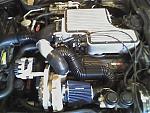





Help me from limping around!
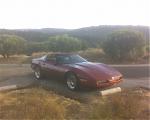
Thread Starter
Instructor

Joined: Mar 2006
Posts: 216
Likes: 0
From: Palo Alto California
 Help me from limping around!
Codes:
I pulled codes 12 and 34 by grounding the top right two pins together.
The Car:
I have a 1987 4+3, and a couple of times I have had the car sputter on acceleration. It has also randomly stalled out on me when above 180 degrees a few times.
The Problem:
The other day, I was accelerating, and then it seems like the car lost at least half of it's power. It had normal coolant temp, oil temp, and I believe fairly normal to high oil pressure in the range of 60-70psi.
Currently:
Everything sensor is plugged in from what I can tell, no strange noises, and no leaks. It starts fine, idles normally, and can drive. However, if I try to put the pedal down at all, it has no power. I don't know if this would be limp mode, or if something really bad happened.
I tried looking up the codes with no luck. I don't know where a listing might be.
I also have these books:
"GM 1987 Corvette Service Manual"
"GM 1987 Corvette Electrical Diagnosis Service Manual Supplement"
Any help on diagnosis is appreciated.
-Paul Z
I pulled codes 12 and 34 by grounding the top right two pins together.
The Car:
I have a 1987 4+3, and a couple of times I have had the car sputter on acceleration. It has also randomly stalled out on me when above 180 degrees a few times.
The Problem:
The other day, I was accelerating, and then it seems like the car lost at least half of it's power. It had normal coolant temp, oil temp, and I believe fairly normal to high oil pressure in the range of 60-70psi.
Currently:
Everything sensor is plugged in from what I can tell, no strange noises, and no leaks. It starts fine, idles normally, and can drive. However, if I try to put the pedal down at all, it has no power. I don't know if this would be limp mode, or if something really bad happened.
I tried looking up the codes with no luck. I don't know where a listing might be.
I also have these books:
"GM 1987 Corvette Service Manual"
"GM 1987 Corvette Electrical Diagnosis Service Manual Supplement"
Any help on diagnosis is appreciated.
-Paul Z

Instructor
Joined: Jun 2006
Posts: 194
Likes: 0
From: Hartselle Al
34 MAP sensor signal voltage was too low
34 MAP sensor signal voltage was too low (high vacuum) when engine speed was under 600 RPM or the engine speed was over 600 RPM with a throttle position angle above 6%.
12 is just a code that means hi, I'm a car...
The Manifold Air Pressure sensor is located near the upper plenum if I remember correctly. Check and make sure that the vacuum line is connected with no leaks first. If it is connected correctly you may want to replace this item, Its not too costly.
Use this site for codes, Its were I got the info for you. Check your VIN code for the correcl list. I would print a copy and keep them on hand.
http://www.troublecodes.net/GM/
the VIN code I used for you was at this site. I don't know what yours is so check and make sure its right.
http://www.troublecodes.net/GM/86-88_578.shtml
12 is just a code that means hi, I'm a car...
The Manifold Air Pressure sensor is located near the upper plenum if I remember correctly. Check and make sure that the vacuum line is connected with no leaks first. If it is connected correctly you may want to replace this item, Its not too costly.
Use this site for codes, Its were I got the info for you. Check your VIN code for the correcl list. I would print a copy and keep them on hand.
http://www.troublecodes.net/GM/
the VIN code I used for you was at this site. I don't know what yours is so check and make sure its right.
http://www.troublecodes.net/GM/86-88_578.shtml
Thread Starter
Instructor
Joined: Mar 2006
Posts: 216
Likes: 0
From: Palo Alto California
Is it possible that the computer throwing codes would send it into limp mode? If so, then would I have to reset the computer to get it back to normal?
I haven't driven the car since this happened, so I couldn't tell you any more than that. My dad's car has had the cat come apart twice, and both times there was this distinct rattling noise. I didn't notice any weird noises as I drove home, but it's terribly loud to begin with.
Also: When I bought the car not long ago, the previous owner said that it occasionally throws the MAF code. However, I think I remember him saying that he replaced the maf to no effect, and that there was nothing wrong with it.
I could easily check the vacuum line you spoke of.
I haven't driven the car since this happened, so I couldn't tell you any more than that. My dad's car has had the cat come apart twice, and both times there was this distinct rattling noise. I didn't notice any weird noises as I drove home, but it's terribly loud to begin with.
Also: When I bought the car not long ago, the previous owner said that it occasionally throws the MAF code. However, I think I remember him saying that he replaced the maf to no effect, and that there was nothing wrong with it.
I could easily check the vacuum line you spoke of.
Last edited by TUNED87vette; Jun 8, 2006 at 12:29 AM.
Corvette Stories
The Best of Corvette for Corvette Enthusiasts

Every 2027 Corvette Engine Explained
Joe Kucinski
Designer Imagines A Corvette That Looks More Like a Corvette Than the Corvette
Verdad Gallardo
10 Ugly Corvettes That We Still Kinda Love
Joe Kucinski
Top 10 Most Expensive Corvettes Ever Sold on Bring A Trailer
Brett Foote
10 Things Every Corvette Owner Needs (2026 Edition)
Michael S. Palmer
8 Most "Only Corvette Owners Understand" Quirks and Problems
Pouria Savadkouei
10 Reasons the C6 Z06 is Still A Performance Benchmark After 20 Years
Joe Kucinski
How Much Horsepower Every Corvette Engine "LOST" in 1972
Joe Kucinski
Top 10 DOs and DON'Ts for Protecting Your Convertible Top!
Michael S. Palmer
Instructor
Joined: Jun 2006
Posts: 194
Likes: 0
From: Hartselle Al
Thanks,
Originally Posted by tequilaboy
87 is a MAF car. MAF = Mass Airflow Sensor
Code 34 MAF Sensor Low.
Code 34 MAF Sensor Low.
The Cheap parts pro way of testing that sensor is (I know this sounds gay) to tap it with something hard and light while the car is running. Sometimes, I do mean sometimes, the engine will die. That might be a bad MAF sensor.
I have also heard if you unplug it while the car is running and it doesn't change the way it runs, it may be bad.
If you can get a parts store to let you try it on your car would help too, I had many friends in the parts business that didn't care if I did that.
The Burn off relay seemed to be a low sell item back when I worked for a part store. It does go out however. A volt-ohm meter can be used to test that though.
The Haynes manual will also tell you how to test these things using a volt-ohm meter.
There are small holes for the test lead to poke through on the pigtail of the MAF sensor. You can probably get the correct values off the net just searching for a “MAF sensor test”.
Thread Starter
Instructor
Joined: Mar 2006
Posts: 216
Likes: 0
From: Palo Alto California
I will try and test the maf soon with any of the methods that you said. The thing is that it threw this code since the day I bought the car ( about 1000 miles ago ), but it was just a couple days ago that it lost all it's power. What exactly should be done to return it to working order?

Team Owner


Joined: Sep 2003
Posts: 20,179
Likes: 673
From: Freedom is never more than one generation away from extinction.
St. Jude '03 thru '24
Open the distributor and replace that igniton control module. Runs about 25 bucks at AZ or Kragens.
This little trouble maker starts to break down under load. Sometimes just the slightest load after the engine is fully heated. Once the part completely fails the engine will not longer start.
Yes I saw all the MAF codes, replaced relays, a new MAF and problem persisted until this item failed completely.
My .02
This little trouble maker starts to break down under load. Sometimes just the slightest load after the engine is fully heated. Once the part completely fails the engine will not longer start.
Yes I saw all the MAF codes, replaced relays, a new MAF and problem persisted until this item failed completely.
My .02
Instructor
Joined: Jun 2006
Posts: 194
Likes: 0
From: Hartselle Al
Long reply, sorry. Nothing else to do.
Unplug the Battery to reset the codes, Drive it and see if it comes back on right away. This may be another problem besides the MAF sensor. If you’re just now starting to do your own trouble shooting, start with the basics. Look at these; it doesn't have to be this order, but all these can cause a car to run like crap and die.
CAP AND ROTOR, if it is new don’t worry about it first
Battery connections, If these are bad and the car is running off the alternator then it may explain why it died when it reach over 180 degrees (The fan kick on Sucking the juice)
Alternator, test it at a part store, this is free, and you can see how much it puts out.
Ignition module, these things are temp sensitive sometimes, test for free at parts store.
Fuel Pressure, if your pumps trying to go bad, the car will loose power.
MAF, don’t forget to check into testing this thing.
Remember, the car just wants fuel, air, and the right amount of each.
Things to help do testing for beginners:
Volt-Ohm meter, I’m an electrical engineer at a power plant, and I wouldn’t live without one of these.
Fuel Pressure Gage, Borrow one unless you have $35 buck for something you will use 3 times and loose. I have bought 3 in my life; I just found all of them too. Sorry about the rant. Your car should have around 35-40 lbs at the fuel rail.
Well, that’s all about that. Sorry again for making you read 90 lines of crap. Feel free to ask me anything. Good luck.
CAP AND ROTOR, if it is new don’t worry about it first
Battery connections, If these are bad and the car is running off the alternator then it may explain why it died when it reach over 180 degrees (The fan kick on Sucking the juice)
Alternator, test it at a part store, this is free, and you can see how much it puts out.
Ignition module, these things are temp sensitive sometimes, test for free at parts store.
Fuel Pressure, if your pumps trying to go bad, the car will loose power.
MAF, don’t forget to check into testing this thing.
Remember, the car just wants fuel, air, and the right amount of each.
Things to help do testing for beginners:
Volt-Ohm meter, I’m an electrical engineer at a power plant, and I wouldn’t live without one of these.
Fuel Pressure Gage, Borrow one unless you have $35 buck for something you will use 3 times and loose. I have bought 3 in my life; I just found all of them too. Sorry about the rant. Your car should have around 35-40 lbs at the fuel rail.
Well, that’s all about that. Sorry again for making you read 90 lines of crap. Feel free to ask me anything. Good luck.
Thread Starter
Instructor
Joined: Mar 2006
Posts: 216
Likes: 0
From: Palo Alto California
Well, the alternator is brand new, and according to the dash puts out 14.1 volts.
The fan on my car is always on regardless of temperature. What else happens at 180, is this the thermostat? It will only reach 180 is I drive it hard for a few minutes.
I'll first try resetting the computer, and checking all the connections. It could be in the ignition or fuel, but the only code I got was 34. It was running like a mad dog, and then it happened all at once if that makes a difference.
I have a voltage/ohm tester. Fuel could be possible for sure.
The fan on my car is always on regardless of temperature. What else happens at 180, is this the thermostat? It will only reach 180 is I drive it hard for a few minutes.
I'll first try resetting the computer, and checking all the connections. It could be in the ignition or fuel, but the only code I got was 34. It was running like a mad dog, and then it happened all at once if that makes a difference.
I have a voltage/ohm tester. Fuel could be possible for sure.
Instructor
Joined: Jun 2006
Posts: 194
Likes: 0
From: Hartselle Al
Good, glad you have a volt-ohm meter
I was looking at this on line. go to this site and look at page 3. It tells a bit about the MAF and testing.
http://www.wellsmfgcorp.com/counterp...erpoint3_2.pdf
IT was page 3.
see what you think.
http://www.wellsmfgcorp.com/counterp...erpoint3_2.pdf
IT was page 3.
see what you think.



Le Mans Master


Joined: Oct 2003
Posts: 6,130
Likes: 2
From: seattle WA
It seems like we always refer to the power and burnoff relays while talking about MAF problems or codes, but this is a direct quote from the FSM Code 34, which you'll find also in Code 33. "The oil pressure switch or the ECM, through control of the fuel pump relay, will provide 12 volts for the MAF power relay which provides the 12 volts needed by the MAF sensor." Poor little FP relay gets so overlooked, also check the wires going into the FP relay, myself and others have found the insulation on these wires shrink and expose bare wires ( in my case some were actually comming into contact with one another-easy fix).There have been a few here who found this cured their MAF code problem. 

Team Owner


Joined: Jan 2003
Posts: 20,333
Likes: 263
From: Summerland B.C. Canada
Thread Starter
Instructor
Joined: Mar 2006
Posts: 216
Likes: 0
From: Palo Alto California
Tried messing around with it more.
I have had very little time to screw with this, but I tested a few things.
First off, fuel pressure is just under 40psi at idle, and 45psi at wot.
The vacuum is definately low around 14 at idle. However, I connected a smoke machine and couldn' find any leaks. It seems hesitant on the gauge, but still rebounds like it should.
I spliced into the o2 sensor, and it's voltage is a little low. It ranges from around 250mV to 600mV. My friend thinks that this should be replaced either way.
The TPS voltage seems to appropriate to me, but I'm no expert.
I'll try to upload a graph of these going idle to wot.
I still haven't tried messing with the injectors or ignition, but the fuel pressure is there.
First off, fuel pressure is just under 40psi at idle, and 45psi at wot.
The vacuum is definately low around 14 at idle. However, I connected a smoke machine and couldn' find any leaks. It seems hesitant on the gauge, but still rebounds like it should.
I spliced into the o2 sensor, and it's voltage is a little low. It ranges from around 250mV to 600mV. My friend thinks that this should be replaced either way.
The TPS voltage seems to appropriate to me, but I'm no expert.
I'll try to upload a graph of these going idle to wot.
I still haven't tried messing with the injectors or ignition, but the fuel pressure is there.