


Considering DeWitts rad with internal EOC

Thread Starter
Melting Slicks


Joined: Jan 2002
Posts: 2,238
Likes: 4
From: Milan
 Considering DeWitts rad with internal EOC
I'm considering the DeWitts rad with internal Engine Oil Cooler for my Auto .
I made about 500 km on my new 396 and even thinking I'm in a break-in period I'm not confident with the oil temps. The oil temps seems too lazy to return to normal even cruising at higway speeds .
This is due to the missing OEM oil cooler (The Modine one between the oil filter and the block).
Don't ask me why i'm not using the OEM cooler . I can't use it.period.
I'm plannig to use the Dewitts radiator with the 7 plate engine oil cooler, to replace my 17 year old OEM rad, and using a large stand-alone transmission Oil Cooler .
Advises are welcome .
What needed to connect the oil cooler to the engine? I need an adapter?
which diameter the hoses? the fittings? Is there a direct KIT from Tom Dewitts for connecting the cooler to the engine?
Some fittings/hoses dimension/diameters to avoid to suggest?
And the last question: How to order this radiator?
TIA
-Beppe-
I made about 500 km on my new 396 and even thinking I'm in a break-in period I'm not confident with the oil temps. The oil temps seems too lazy to return to normal even cruising at higway speeds .
This is due to the missing OEM oil cooler (The Modine one between the oil filter and the block).
Don't ask me why i'm not using the OEM cooler . I can't use it.period.
I'm plannig to use the Dewitts radiator with the 7 plate engine oil cooler, to replace my 17 year old OEM rad, and using a large stand-alone transmission Oil Cooler .
Advises are welcome .
What needed to connect the oil cooler to the engine? I need an adapter?
which diameter the hoses? the fittings? Is there a direct KIT from Tom Dewitts for connecting the cooler to the engine?
Some fittings/hoses dimension/diameters to avoid to suggest?
And the last question: How to order this radiator?
TIA
-Beppe-

Former Vendor
Joined: Jan 2000
Posts: 5,593
Likes: 631
From: Brighton
We don't make any hose or adpater kits for the C4 but you can get these at Jegs or Summit. They have to be the oil filter adpater type and some people frown on those because it lowers the filter can. The radiator with EOC is a A90E and you can order it online right here
http://www.dewitts.com/pages/categor...s.asp?catID=19
http://www.dewitts.com/pages/categor...s.asp?catID=19

Instructor

Joined: Jun 2006
Posts: 195
Likes: 0
From: Canyon Country CA
Hey, what are the inlet/outlet fittings on the Dewitts radiator?
If you are concerned about lowering the filter just use an adapter with the hose connections at the stock filter location and use a remote filter mount.
Joe
If you are concerned about lowering the filter just use an adapter with the hose connections at the stock filter location and use a remote filter mount.
Joe
Thread Starter
Melting Slicks
Joined: Jan 2002
Posts: 2,238
Likes: 4
From: Milan
I read it somewhehere that DeWitts EOC is supplied with a female #6 AN o-ring port (if I remember).
are these two good filter adapter to use?:
http://store.summitracing.com/partde...p?part=PRM-185
and
http://store.summitracing.com/partde...?part=TRD-1322
The inlet/outlet size on these adapter is 3/8 in. NPT
starting from these holes on the adapter I have to buy 2 AN to hose barb fitting and an 1/2" diameter hose pipe? ..or NPT to AN or NPT to nipple...
...Or I have to avoid barb fittings?
When the hoses comes to to the rad... I have to use some fitting to connect the female 6 AN o-ring port to the hose...
Help me i'm real confused and real UN-skilled about this...
-Beppe-
are these two good filter adapter to use?:
http://store.summitracing.com/partde...p?part=PRM-185
and
http://store.summitracing.com/partde...?part=TRD-1322
The inlet/outlet size on these adapter is 3/8 in. NPT
starting from these holes on the adapter I have to buy 2 AN to hose barb fitting and an 1/2" diameter hose pipe? ..or NPT to AN or NPT to nipple...
...Or I have to avoid barb fittings?
When the hoses comes to to the rad... I have to use some fitting to connect the female 6 AN o-ring port to the hose...
Help me i'm real confused and real UN-skilled about this...
-Beppe-

Le Mans Master


Joined: Jan 2002
Posts: 9,036
Likes: 13
From: Edmonton AB
Beppe
Other people here get their panties in a twist when someone asks
a question in an effort to help answer a question. I know that
you are not this way, so here is my question.
Does the reason that you are not using the OEM cooler have anything
to do with clearance? If so, then a popular style of adapter may
not work well because it is very similar to the OEM cooler - a cast
or machined part that inserts between the filter and the engine block.
The Moroso 23690 adapter moves the filter out from the block by 1-1/2".
There is more information and a helpful list of filters in this thread.
A different style of adapter has a much lower profile. It is used
when the oil filter(s) are relocated to another location. Several
companies offer these: Moroso has a cast version #23770 and a billet
version #23782
 .
. 
.
Other people here get their panties in a twist when someone asks
a question in an effort to help answer a question. I know that
you are not this way, so here is my question.
Does the reason that you are not using the OEM cooler have anything
to do with clearance? If so, then a popular style of adapter may
not work well because it is very similar to the OEM cooler - a cast
or machined part that inserts between the filter and the engine block.
The Moroso 23690 adapter moves the filter out from the block by 1-1/2".
There is more information and a helpful list of filters in this thread.
A different style of adapter has a much lower profile. It is used
when the oil filter(s) are relocated to another location. Several
companies offer these: Moroso has a cast version #23770 and a billet
version #23782
. .
Le Mans Master
Joined: Jan 2002
Posts: 9,036
Likes: 13
From: Edmonton AB
plumbing in C4 Tech and in AutoX & RR. IIRC, there was a misunderstanding
about the fittings at first that was later cleared up. I will find the
threads and post links.
Originally Posted by conv90
are these two good filter adapter to use?:
http://store.summitracing.com/partde...p?part=PRM-185
and
http://store.summitracing.com/partde...?part=TRD-1322
The inlet/outlet size on these adapter is 3/8 in. NPT
http://store.summitracing.com/partde...p?part=PRM-185
and
http://store.summitracing.com/partde...?part=TRD-1322
The inlet/outlet size on these adapter is 3/8 in. NPT
- Both have 3/8" NPT ports. The Moroso 23690/23692 have 1/2" NPT ports.
. - Both appear to retain the OEM by-pass mechanism (the cast
piece that bolts onto the filter pad which has a spring in a circular boss
with a coin-sized valve.) All of the Moroso's mentioned eliminate the
OEM by-pass.
. - Of your two examples, I question the mounting of the second one.
It appears to seat against the botton of the shoulder of the block that
extends down around the filter pad. Normally, a SBC filter seats up
inside this shoulder against a machined surface.
The first example (TransDapt) appears to seat inside the shoulder against
the machined surface.
Originally Posted by conv90
Starting from these holes on the adapter I have to buy 2 AN to hose
barb fitting and an 1/2" diameter hose pipe? ..or NPT to AN or NPT to nipple...
barb fitting and an 1/2" diameter hose pipe? ..or NPT to AN or NPT to nipple...
first component in the plumbing must have NPT threads (3/8 or 1/2 or ..).
My vote is that while brass barb end fittings can be used, they result in
greater flow restriction because their ID is smaller than similarly sized
AN or JIC 37º hose ends.
I recommend selecting a hose first because not all hose is rated for
hot oil service, or has sufficiently small enough bend radius for routing
through the engine compartment. Then choose fittings according to
the need for convenience (installation/removal), weight, appearance
and budget.
Hose should be a minimum of -10. My vote is that -8 is too small.
IMO, it is not entirely necessary to use a hose with SS outer braid.
My vote is that a suitable alternative is Aeroquip AQP FC350. This
thread has several posts with more info about FC350, other choices
some charts and some links.
.
Thread Starter
Melting Slicks
Joined: Jan 2002
Posts: 2,238
Likes: 4
From: Milan
Slalom, The reason I dont want to use the factory oil cooler is not related to clearance problems...
I used in the past the bypass, the oil cooler an adapter for a "ghost" oil cooler + K&N filter without problems (even if I was always afraid for the reduced clearance to ground..)
The reason I don't want to use the factory oil cooler is that this cooler had an engine failure and I think that in there are some metal particles on it. These particles are trapped on the internal fins. when the coolant warms the fins can enlarge itself...realesing the particles to the thrust bearing directly...
I think that a combo with engine block-oil filter bypass(..closed)-oil filter adapter-oil filter can give me the clearance needed.
So, removed the reason of the clearance, (even thinking that the two mentioned oil fiter adapters are good) , my question is to find the right combinations of oil filter adapter-fittigs-hoses- to connect to the DeWitts Engine Oil Cooler, tacking in mind safety, flow, reability, and oil pressure.
The oil filter adapter inlet/otlet, the type of fittings used, the diameter of the pipes(hoses) can play a role on this...
These are the kind of info I'd like to have .
-Beppe-
I used in the past the bypass, the oil cooler an adapter for a "ghost" oil cooler + K&N filter without problems (even if I was always afraid for the reduced clearance to ground..)
The reason I don't want to use the factory oil cooler is that this cooler had an engine failure and I think that in there are some metal particles on it. These particles are trapped on the internal fins. when the coolant warms the fins can enlarge itself...realesing the particles to the thrust bearing directly...
I think that a combo with engine block-oil filter bypass(..closed)-oil filter adapter-oil filter can give me the clearance needed.
So, removed the reason of the clearance, (even thinking that the two mentioned oil fiter adapters are good) , my question is to find the right combinations of oil filter adapter-fittigs-hoses- to connect to the DeWitts Engine Oil Cooler, tacking in mind safety, flow, reability, and oil pressure.
The oil filter adapter inlet/otlet, the type of fittings used, the diameter of the pipes(hoses) can play a role on this...
These are the kind of info I'd like to have .
-Beppe-
Le Mans Master
Joined: Jan 2002
Posts: 9,036
Likes: 13
From: Edmonton AB
My objective is to find the right combinations of oil filter
adapter-fittings-hoses to connect to the DeWitts Engine Oil Cooler, keeping in mind: safety, flow, reliability, and oil pressure.
The oil filter adapter inlet/outlet, the type of fittings used, the diameter of the pipes(hoses) can play a role on this...
These are the kind of suggestions I'd like to receive.
adapter-fittings-hoses to connect to the DeWitts Engine Oil Cooler, keeping in mind: safety, flow, reliability, and oil pressure.
The oil filter adapter inlet/outlet, the type of fittings used, the diameter of the pipes(hoses) can play a role on this...
These are the kind of suggestions I'd like to receive.
there are many different installation considerations.
I understand that your situation is more complicated because of location
- I don't think you don't have the luxury of walking into a shop and
pulling different fittings off a wall display, organizing them on a counter
into the perfect layout.
For a start. If you were to use an adapter with 1/2" NPT female
outlets and wanted to use AN style fittings.
The NPT to AN adapters you need will look like this
FCM-2009 - Fitting, Adapter, Straight -10 AN Male to 1/ 2 in. NPT Male, Aluminum

A choice to make regarding hose and fittings is 'Reuseable vs Socketless'.
I have never used the socketless style (I expect they have their
benefits) but here are some examples of reuseable -10AN fittings:
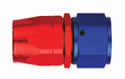
FCM1014 - Fitting, Hose End, Straight, -10 AN, -10 AN Adapter, Aluminum,
(#FBM1014 renamed to FCM1014)
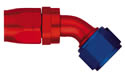
FCM4024 - Fitting, Hose End, 45 Degree, -10 AN, -10 AN Adapter, Aluminum
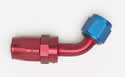
FCM4084 - Fitting, Hose End, 60 Degree, -10 AN, -10 AN Adapter, Aluminum
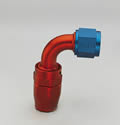
FCM4034 - Fitting, Hose End, 90 Degree, -10 AN, -10 AN Adapter, Aluminum
FCM4044 - Fitting, Hose End, 120 Degree, -10 AN Hose to Female -10 AN
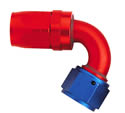
FCM4054 - Fitting, Hose End, 150 Degree, -10 AN, -10 AN Adapter

FCM4064 - Fitting, Hose End, 180 Degree, -10 AN, -10 AN Adapter
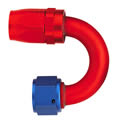
.
Corvette Stories
The Best of Corvette for Corvette Enthusiasts

5 Best & 5 Worst Corvette Daily Drivers
Joe Kucinski
The Headlights of Every Corvette Generation Explained
Joe Kucinski
5 Best & 5 Most Overrated Corvette Track Packages of All Time!
Joe Kucinski
Every 2027 Corvette Engine Explained
Joe Kucinski
Designer Imagines A Corvette That Looks More Like a Corvette Than the Corvette
Verdad Gallardo
10 Ugly Corvettes That We Still Kinda Love
Joe Kucinski
Top 10 Most Expensive Corvettes Ever Sold on Bring A Trailer
Brett Foote
10 Things Every Corvette Owner Needs (2026 Edition)
Michael S. Palmer
8 Most "Only Corvette Owners Understand" Quirks and Problems
Pouria Savadkouei
Le Mans Master
Joined: Jul 2001
Posts: 6,252
Likes: 2
From: Silicon Valley Kalifornia
....
The reason I don't want to use the factory oil cooler is that this cooler had an engine failure and I think that in there are some metal particles on it. These particles are trapped on the internal fins. when the coolant warms the fins can enlarge itself...realesing the particles to the thrust bearing directly...
The reason I don't want to use the factory oil cooler is that this cooler had an engine failure and I think that in there are some metal particles on it. These particles are trapped on the internal fins. when the coolant warms the fins can enlarge itself...realesing the particles to the thrust bearing directly...


 '84
'84
Thread Starter
Melting Slicks
Joined: Jan 2002
Posts: 2,238
Likes: 4
From: Milan
This is what I'm waiting as reply from Tom.
here: http://forums.corvetteforum.com/show...1108862&page=2
Tom, is saying : " ..Our EOC is supplied with a "female" #6 SAE o'ring port. This allows you to install any size hose fitting you desire because these fittings are available with one end #6 SAE and the other end 8AN, 10AN, or 12AN.-...."
... my lack of knoledge on fitting things ..but #6 SAE is maybe misprinting of 6AN ??
-Beppe-
here: http://forums.corvetteforum.com/show...1108862&page=2
Tom, is saying : " ..Our EOC is supplied with a "female" #6 SAE o'ring port. This allows you to install any size hose fitting you desire because these fittings are available with one end #6 SAE and the other end 8AN, 10AN, or 12AN.-...."
... my lack of knoledge on fitting things ..but #6 SAE is maybe misprinting of 6AN ??
-Beppe-
Instructor
Joined: Jun 2006
Posts: 195
Likes: 0
From: Canyon Country CA
This is what I'm waiting as reply from Tom.
here: http://forums.corvetteforum.com/show...1108862&page=2
Tom, is saying : " ..Our EOC is supplied with a "female" #6 SAE o'ring port. This allows you to install any size hose fitting you desire because these fittings are available with one end #6 SAE and the other end 8AN, 10AN, or 12AN.-...."
... my lack of knoledge on fitting things ..but #6 SAE is maybe misprinting of 6AN ??
-Beppe-
here: http://forums.corvetteforum.com/show...1108862&page=2
Tom, is saying : " ..Our EOC is supplied with a "female" #6 SAE o'ring port. This allows you to install any size hose fitting you desire because these fittings are available with one end #6 SAE and the other end 8AN, 10AN, or 12AN.-...."
... my lack of knoledge on fitting things ..but #6 SAE is maybe misprinting of 6AN ??
-Beppe-
Le Mans Master
Joined: Jan 2002
Posts: 9,036
Likes: 13
From: Edmonton AB
This is what I'm waiting as reply from Tom.
here: http://forums.corvetteforum.com/show...1108862&page=2
Tom is saying:
"..Our EOC is supplied with a "female" #6 SAE o'ring port.
This allows you to install any size hose fitting you desire because these fittings
are available with one end #6 SAE and the other end 8AN, 10AN, or 12AN.-...."
... excuse my lack of knowledge on fitting things ..but is #6 SAE
maybe misprinting of 6AN ?
here: http://forums.corvetteforum.com/show...1108862&page=2
Tom is saying:
"..Our EOC is supplied with a "female" #6 SAE o'ring port.
This allows you to install any size hose fitting you desire because these fittings
are available with one end #6 SAE and the other end 8AN, 10AN, or 12AN.-...."
... excuse my lack of knowledge on fitting things ..but is #6 SAE
maybe misprinting of 6AN ?
An adapter can have have SAE O-ring on one side and AN on the other.
The SAE O-Ring fitting has a straight thread with a shoulder and a
'captured' o-ring at the base of the thread. #6 refers to the size.
From Fittings and Flanges at Hydraulics and Pnuematics

.
Le Mans Master
Joined: Jan 2002
Posts: 9,036
Likes: 13
From: Edmonton AB
Originally Posted by Slalom4me
Originally Posted by conv90
I read it somewhehere that DeWitts EOC is supplied with a
female #6 AN o-ring port (if I remember).
female #6 AN o-ring port (if I remember).
plumbing in C4 Tech and in AutoX & RR. IIRC, there was a misunderstanding
about the fittings at first that was later cleared up. I will find the
threads and post links.
not #6.
Here one thread by Corvette Kid.
Paging vendor Tom DeWitt
.
Former Vendor
Joined: Jan 2000
Posts: 5,593
Likes: 631
From: Brighton
This is what I'm waiting as reply from Tom.
here: http://forums.corvetteforum.com/show...1108862&page=2
Tom, is saying : " ..Our EOC is supplied with a "female" #6 SAE o'ring port. This allows you to install any size hose fitting you desire because these fittings are available with one end #6 SAE and the other end 8AN, 10AN, or 12AN.-...."
... my lack of knoledge on fitting things ..but #6 SAE is maybe misprinting of 6AN ??
-Beppe-
here: http://forums.corvetteforum.com/show...1108862&page=2
Tom, is saying : " ..Our EOC is supplied with a "female" #6 SAE o'ring port. This allows you to install any size hose fitting you desire because these fittings are available with one end #6 SAE and the other end 8AN, 10AN, or 12AN.-...."
... my lack of knoledge on fitting things ..but #6 SAE is maybe misprinting of 6AN ??
-Beppe-

Team Owner

Joined: May 2002
Posts: 24,337
Likes: 25
From: San Diego , CA Double Yellow DirtBags 1985..Z51..6-speed
The early L98 oil coolers already lower the filter considerably. With the longer delco or K&Ns it's almost the lowest point on the car. You can get shorter Delco filters if this is a problem.
Thread Starter
Melting Slicks
Joined: Jan 2002
Posts: 2,238
Likes: 4
From: Milan
Reading the reply of Tom... ( " We install an adapter that goes from 3/4-16 to #10 AN male " ), the radiator comes with this adapter installed.
Thanks to the skilled help of Slalom4me,
Reading the forum on several thread (thanks again to Slalom4me for links ),
),
Consulting the Aeroqip catalog ( and again thanks to Slalom4me )
)
I ended with this scheme.
Let me know if I inverted some fitting direction, or if you see something wrong..
thanks
-Beppe-
Thanks to the skilled help of Slalom4me,
Reading the forum on several thread (thanks again to Slalom4me for links
),Consulting the Aeroqip catalog ( and again thanks to Slalom4me
)I ended with this scheme.
Let me know if I inverted some fitting direction, or if you see something wrong..
thanks
-Beppe-
Le Mans Master
Joined: Jan 2002
Posts: 9,036
Likes: 13
From: Edmonton AB
It is difficult for me to read the text for the p/n's, but the parts look
appropriate in general.
You may find that there is interference or less clearance than there
might be if you use straight hose couplings everywhere. For instance,
one FCM4024 Hose End, 45 Degree, -10 AN, -10 AN at the filter
adapter might allow the hoses to come together sooner and run
in parallel the rest of the way to the cooler. (I haven't looked to see
if a 30º is offered.)
.
appropriate in general.
You may find that there is interference or less clearance than there
might be if you use straight hose couplings everywhere. For instance,
one FCM4024 Hose End, 45 Degree, -10 AN, -10 AN at the filter
adapter might allow the hoses to come together sooner and run
in parallel the rest of the way to the cooler. (I haven't looked to see
if a 30º is offered.)
.