






Blown Head Gasket...

Thread Starter
Safety Car


Joined: Oct 2001
Posts: 4,763
Likes: 2
From: Connectivette
 Blown Head Gasket...
About 200 miles after my 383 rebuild I over heated. This is what I discovered...


The gasket(Felpro 1010) distortion looks like something that occurred during the torquing process. This is the Passenger side. I noticed the drivers side head gasket was distorted as well....just not enough to cause a failure. I used a torgue wrench(non Craftsman junk), followed the sequence in the FSM and torqued them down to what ARP recommended, which I believe in 65 ft. lbs.
Any thoughts on what I did wrong
The gasket(Felpro 1010) distortion looks like something that occurred during the torquing process. This is the Passenger side. I noticed the drivers side head gasket was distorted as well....just not enough to cause a failure. I used a torgue wrench(non Craftsman junk), followed the sequence in the FSM and torqued them down to what ARP recommended, which I believe in 65 ft. lbs.
Any thoughts on what I did wrong
Thread Starter
Safety Car
Joined: Oct 2001
Posts: 4,763
Likes: 2
From: Connectivette

Race Director


Joined: Jun 2004
Posts: 13,966
Likes: 710
From: WI
I had one go at 6,000 RPM and 25 PSI of boost one time, it left a HUGE cloud behind me.
How'd it overheat?
Corvette Stories
The Best of Corvette for Corvette Enthusiasts

Every 2027 Corvette Engine Explained
Joe Kucinski
Designer Imagines A Corvette That Looks More Like a Corvette Than the Corvette
Verdad Gallardo
10 Ugly Corvettes That We Still Kinda Love
Joe Kucinski
Top 10 Most Expensive Corvettes Ever Sold on Bring A Trailer
Brett Foote
10 Things Every Corvette Owner Needs (2026 Edition)
Michael S. Palmer
8 Most "Only Corvette Owners Understand" Quirks and Problems
Pouria Savadkouei
10 Reasons the C6 Z06 is Still A Performance Benchmark After 20 Years
Joe Kucinski
How Much Horsepower Every Corvette Engine "LOST" in 1972
Joe Kucinski
Top 10 DOs and DON'Ts for Protecting Your Convertible Top!
Michael S. Palmer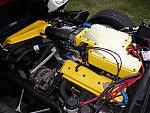
Drifting

Joined: Apr 2007
Posts: 1,339
Likes: 2
From: port charlotte fl
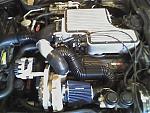
I'm going to go out on a limb and say those are the wrong gaskets.The bolt holes don't look as if they are lined up correctly.Never seen oval holes before.On the bottom picture the far right cylinder the bolt has gone right through the seal itself.Very strange.
Race Director
Joined: Jun 2004
Posts: 13,966
Likes: 710
From: WI
The gasket got smashed up like that and distorted when it let go.
Melting Slicks

Joined: Aug 2003
Posts: 3,407
Likes: 400
From: Lakeville MI
Cylinder pressure is what distorted the gasket.
More pressure (or force) on the inside of the gasket than on the outside of the gasget.
Insufficient clamping force on the gasket between the head and cylinder. Was the head warped? How bad is it warped now?
Were the bolts used the re-torque kind or torque to yield? Were they re-torqued?
More pressure (or force) on the inside of the gasket than on the outside of the gasget.
Insufficient clamping force on the gasket between the head and cylinder. Was the head warped? How bad is it warped now?
Were the bolts used the re-torque kind or torque to yield? Were they re-torqued?

Race Director


Joined: Feb 2004
Posts: 12,518
Likes: 19
Cylinder pressure is what distorted the gasket.
More pressure (or force) on the inside of the gasket than on the outside of the gasget.
Insufficient clamping force on the gasket between the head and cylinder. Was the head warped? How bad is it warped now?
Were the bolts used the re-torque kind or torque to yield? Were they re-torqued?
More pressure (or force) on the inside of the gasket than on the outside of the gasget.
Insufficient clamping force on the gasket between the head and cylinder. Was the head warped? How bad is it warped now?
Were the bolts used the re-torque kind or torque to yield? Were they re-torqued?
Looking at the deck surface, it appears that it was cut prior to assembly. Presumably, it is flat. Assuming the head was also decked, and it is presumed flat, insufficient clamping was the likely cause. If I were a betting man, I would guess that a brand new set of head bolts were used. If so, they need to be "rolled in". This involves torquing and loosening the head bolts 5 times before attempting a final torque on the head. While "rolling in" threads, I substitute a used, precompressed head gasket. Then install the new gasket, lube the head bolt washer (on both sides) with arp lube and thread sealer of choice on threads. Then torque in 3 steps to 65 ft lbs.
If new bolts were not used, then I retract most of my thread.
Thread Starter
Safety Car
Joined: Oct 2001
Posts: 4,763
Likes: 2
From: Connectivette
A tear in the gasket by a water jacket on my intake manifold gasket may have been the culprit for it overheating. Unfortunetly I didn't notice it as I was fixated on my tach. I got the car up to about 6000 rpm's when I noticed it and hit the brakes. The coolant temp hit about 265. The heads were not warped prior to my rebuild....and I haven't had a chance to look at the closely enough to see if there is any damage however, I'm thinkin' I may be okay.
Felpro 1010 are the gaskets recommended by AFR for my heads....So I'm thinkin' they are the right gaskets. I think the oval shape is due to the distortion under pressure as a few of you have pointed out.
The bolts I bought from ARP are the re-usable type...this was their maiden voyage.
Felpro 1010 are the gaskets recommended by AFR for my heads....So I'm thinkin' they are the right gaskets. I think the oval shape is due to the distortion under pressure as a few of you have pointed out.
The bolts I bought from ARP are the re-usable type...this was their maiden voyage.
Race Director
Joined: Feb 2004
Posts: 12,518
Likes: 19
What this means is that the initial torque may click the torque wrench at the proper setting, but stretch the bolts much, much less than they should be for proper clamp. 65 ft lbs may have actually only stretched the bolt enough to yeild a final torque of 1/2 the 65 pounds.
After rolling in the threads, the proper torque will allow for the proper stretch needed to maintain clamping force.
Rest assured, this is not a 1/2 baked, alcohol induced theory, but the correct process as recommended by arp. Contack them for further info.
Working in a machine shop part time, I see this often. I can say from experience that once this bites you, rolling in a new fastener becomes second nature. I had a pro build me a motor years ago that blew up because of it.

Race Director

Joined: Sep 2003
Posts: 16,839
Likes: 341
From: Database Error Indiana
About 3 1/2 years ago there was a similar thread. Somebody suggested that when you install new heads, you need to re torque them due to the new casting moving as it heated. About a week after putting new ones on my C4, I did this. I could not believe how loose the bolts felt at the time. Maybe it was the heads, maybe it was the new bolts, as I had never heard of the rolling in at that time. Anyway, it would seem that new parts need special treatment. Just my 2 cents. 
Burning Brakes

Joined: Jun 2007
Posts: 804
Likes: 0
From: Stockton California
head gasket
I have quit using the bolts and gone to studs only, As said by other members I would use a straight edge on you deck on the block and the heads, if they are straight install the heads with top quality head gaskets, It is important to tork the head in proper sequence three time gradely getting to your 65 lbs. The next important procedure it to retork the head at 50 miles. If you didn't retork you heads last time that is the problem.
I have learned this from the school of hard knocks and 45 years of building hot motors.
I have learned this from the school of hard knocks and 45 years of building hot motors.
Le Mans Master

Joined: Aug 2004
Posts: 5,141
Likes: 7
From: Metairie Louisiana
I blew a head gasket about a year ago. The dealership did not mention anything about re-torquing after the repair. I have the original heads. They were checked out and resurfaced and Fel Pro gaskets were used with factory bolts. Everything has been fine so far. Should I check the torque?
Race Director
Joined: Jun 2004
Posts: 13,966
Likes: 710
From: WI
I have always retorqued them but I have not found them to be loose. Sometimes just one moves a few degrees. Others have mentioned that they have found loose fasteners though.
From what I know about bolts, studs would not have helped this any. They should have their torque rechecked to. Studs only have a minor increase in clamp. They are nice that they do not wear out the blocks threads since they do not get removed. They also cost twice as much or more, then bolts. I generally always use ARP bolts.
From what I know about bolts, studs would not have helped this any. They should have their torque rechecked to. Studs only have a minor increase in clamp. They are nice that they do not wear out the blocks threads since they do not get removed. They also cost twice as much or more, then bolts. I generally always use ARP bolts.
