



Basic thermostat question
Melting Slicks

Joined: Nov 2002
Posts: 2,471
Likes: 2
From: 1993 Quasar Blue 'vert Scottsdale AZ

If your cooling system is in proper working order, run whatever came stock. If it's not in proper working order, you have problems that a lower t-stat will not solve.

Thread Starter
Instructor


Joined: Apr 2007
Posts: 155
Likes: 32
From: Fern Creek Kentucky
Cooling system is in fine working order. Just wondering if a cooler running engine creates more horsepower and/or adds longevity to the life of the engine but by doing so will it create any problems?
Melting Slicks
Joined: Nov 2002
Posts: 2,471
Likes: 2
From: 1993 Quasar Blue 'vert Scottsdale AZ
A lower t-stat will only make your engine run cooler for a few minutes (unless you live in Siberia). Then, your heater will suck.
P.S. STL94LT1, if you keep beating that horse, you will end up in a cell with Michael Vick.
P.S. STL94LT1, if you keep beating that horse, you will end up in a cell with Michael Vick.
Le Mans Master


Joined: May 2005
Posts: 7,362
Likes: 2,281
From: Central Maryland
You'll likely notice little HP difference with lowered coolant temps -- perhaps a bit, but not much if any. There's a bit of a tradeoff to be made there: Lowering the engine temp allows a more dense air/fuel charge into the cylinders, but more heat will be lost into the coolant, so the thermal efficiency goes down a bit.
IMHO, the benefits of lowering coolant temps are:
1. Much more headroom in the cooling system before really bad things begin to happen if something goes wrong. If you lose system pressure when running at, say, 230*F, the coolant will immediately boil and vacate the premises, leading quickly to meltdown of engine parts. If you lose system pressure while running at, say, 180*F, the coolant will not boil away. If you suffer a major coolant loss (blown hose, etc), you'll have more time to react and get the car shut down before meltdown occurs if running at 180*F vs 230*F.
2. Less stress on soft parts under the hood (belts, hoses, seals, gaskets, etc).
Lowering the fan-on/off settings, in combination with a 160*F thermostat also will tend to stabilize coolant temps within a narrower operating range. Mine runs typically no lower than 171*F on the coldest days, and no higher than 200*F on the hottest days, and it tends to remain fairly stable. The stock system allows temps to run anywhere from 190*F to 230*F or more, with a lot of cycling up and down within this range - sloppy engineering, IMHO.
My car's heater works just fine when ECT is at 170*F.
As I see it, the benefits of running at the higher temps generated by a stock C4 cooling system are:
None.
Be well,
SJW
Last edited by SJW; Aug 21, 2007 at 11:14 PM.

Drifting

Joined: Oct 2006
Posts: 1,934
Likes: 3
From: Citrus Heights California

Race Director


Joined: Jan 2002
Posts: 12,263
Likes: 86
From: O'Fallon Missouri
Corvette Stories
The Best of Corvette for Corvette Enthusiasts

Top 10 Most Expensive Corvettes Ever Sold on Bring A Trailer
Brett Foote
10 Things Every Corvette Owner Needs (2026 Edition)
Michael S. Palmer
8 Most "Only Corvette Owners Understand" Quirks and Problems
Pouria Savadkouei
10 Reasons the C6 Z06 is Still A Performance Benchmark After 20 Years
Joe Kucinski
How Much Horsepower Every Corvette Engine "LOST" in 1972
Joe Kucinski
Top 10 DOs and DON'Ts for Protecting Your Convertible Top!
Michael S. Palmer
Top 10 Most Explosive Corvettes Ever Made: Power-to-Weight Ratio Ranked!
Joe Kucinski
150 hp to 1,250 hp: Every Corvette Generation Compared by the Specs That Matter
Joe Kucinski
8 Coolest Corvette Pace Cars (and Replicas) of All Time
Verdad Gallardo
Le Mans Master
Joined: Jan 2003
Posts: 5,858
Likes: 7
From: Santa Maria CA
The stat rating only controls your mininum operating temps. Once it's open, that's it. It does nothing more.
Drilling holes kinda helps. It won't keep the car from still reaching it's normal temps. But because there is always some coolant flowing, it takes the car longer to reach the same temps. This means that you don't have to sweat it as much at stop light, but the trade off it that it takes that much longer for the car to warm up.
Drilling holes kinda helps. It won't keep the car from still reaching it's normal temps. But because there is always some coolant flowing, it takes the car longer to reach the same temps. This means that you don't have to sweat it as much at stop light, but the trade off it that it takes that much longer for the car to warm up.

Le Mans Master

Joined: Apr 2000
Posts: 5,713
Likes: 105
From: Manassas VA
Actually he is justified in asking the profile to be filled out. Without knowing the year of the car makes a difference to the answer. A L98 with a 195 t-stat will run at about the same temp. as a 180 in a LT1. Both temp ranges are factory stock for each motor due to the difference of reverse cooling.
Because of this, a 160 in a L98 will make the motor run 15-20 degrees cooler then in a LT1.

Safety Car


Joined: Jul 2004
Posts: 3,845
Likes: 30
Actually he is justified in asking the profile to be filled out. Without knowing the year of the car makes a difference to the answer. A L98 with a 195 t-stat will run at about the same temp. as a 180 in a LT1. Both temp ranges are factory stock for each motor due to the difference of reverse cooling.
Because of this, a 160 in a L98 will make the motor run 15-20 degrees cooler then in a LT1.
Because of this, a 160 in a L98 will make the motor run 15-20 degrees cooler then in a LT1.

Safety Car
Joined: Feb 1999
Posts: 3,504
Likes: 4
From: Mexico Beach FL
You should at the very least identify what type of motor you have.
The LT1/LT4 has an unconventional reverse-flow cooling system that is not like the L98.
So, on the question of the thermostat, they are entirely different breeds.
The L98 thermostat is located where the coolant exits the engine (coolant on way back to radiator), while the LT1 thermostat is located where the coolant enters the engne (coolant coming from radiator).
So, the L98 thermostat is attempting to regulate the temperature at the hottest point and the LT1 thermostat is attempting to regulate the coolant at the coolest point.
So, 160 degrees on an LT1/LT4 really isn't the same as 160 degrees on an L98.
http://www.theherd.com/articles/lt1_cool.html
Tom Piper
The LT1/LT4 has an unconventional reverse-flow cooling system that is not like the L98.
So, on the question of the thermostat, they are entirely different breeds.
The L98 thermostat is located where the coolant exits the engine (coolant on way back to radiator), while the LT1 thermostat is located where the coolant enters the engne (coolant coming from radiator).
So, the L98 thermostat is attempting to regulate the temperature at the hottest point and the LT1 thermostat is attempting to regulate the coolant at the coolest point.
So, 160 degrees on an LT1/LT4 really isn't the same as 160 degrees on an L98.
http://www.theherd.com/articles/lt1_cool.html
Tom Piper
Last edited by Tom Piper; Aug 22, 2007 at 07:50 AM.

Instructor
Joined: Aug 2007
Posts: 175
Likes: 0
Since you are fairly new here, you don't realize that this issue has been debated hotly many times. The results are still a subject of debate. It gets so heated that some folks lose their manners and have been put in time out. It's not personal.
Race Director
Joined: Jan 2002
Posts: 12,263
Likes: 86
From: O'Fallon Missouri
Yes, I actually started to try to answer his question. Went to his profile to check out what year Vette he owned, and it seems like for some stupid reason he doesn't want us to know what year he has.

Racer
Joined: Dec 2004
Posts: 470
Likes: 0
From: Phoenix Arizona
Ideally, in terms of longevity you want the engine coolant to run somewhere around 180*F. Slightly cooler is fine, slightly warmer is fine. I prefer to keep mine cool. I use a 160* thermostat in my LT1, but only because it allowed me to set my fan-on/off temps lower without forcing the fans to run constantly at idle and low-speed after warm-up. Changing to a 160* 'stat without making any fan setting changes will accomplish nothing toward lowering low-speed and idling coolant temps.
You'll likely notice little HP difference with lowered coolant temps -- perhaps a bit, but not much if any. There's a bit of a tradeoff to be made there: Lowering the engine temp allows a more dense air/fuel charge into the cylinders, but more heat will be lost into the coolant, so the thermal efficiency goes down a bit.
IMHO, the benefits of lowering coolant temps are:
1. Much more headroom in the cooling system before really bad things begin to happen if something goes wrong. If you lose system pressure when running at, say, 230*F, the coolant will immediately boil and vacate the premises, leading quickly to meltdown of engine parts. If you lose system pressure while running at, say, 180*F, the coolant will not boil away. If you suffer a major coolant loss (blown hose, etc), you'll have more time to react and get the car shut down before meltdown occurs if running at 180*F vs 230*F.
2. Less stress on soft parts under the hood (belts, hoses, seals, gaskets, etc).
Lowering the fan-on/off settings, in combination with a 160*F thermostat also will tend to stabilize coolant temps within a narrower operating range. Mine runs typically no lower than 171*F on the coldest days, and no higher than 200*F on the hottest days, and it tends to remain fairly stable. The stock system allows temps to run anywhere from 190*F to 230*F or more, with a lot of cycling up and down within this range - sloppy engineering, IMHO.
My car's heater works just fine when ECT is at 170*F.
As I see it, the benefits of running at the higher temps generated by a stock C4 cooling system are:
None.
Be well,
SJW
You'll likely notice little HP difference with lowered coolant temps -- perhaps a bit, but not much if any. There's a bit of a tradeoff to be made there: Lowering the engine temp allows a more dense air/fuel charge into the cylinders, but more heat will be lost into the coolant, so the thermal efficiency goes down a bit.
IMHO, the benefits of lowering coolant temps are:
1. Much more headroom in the cooling system before really bad things begin to happen if something goes wrong. If you lose system pressure when running at, say, 230*F, the coolant will immediately boil and vacate the premises, leading quickly to meltdown of engine parts. If you lose system pressure while running at, say, 180*F, the coolant will not boil away. If you suffer a major coolant loss (blown hose, etc), you'll have more time to react and get the car shut down before meltdown occurs if running at 180*F vs 230*F.
2. Less stress on soft parts under the hood (belts, hoses, seals, gaskets, etc).
Lowering the fan-on/off settings, in combination with a 160*F thermostat also will tend to stabilize coolant temps within a narrower operating range. Mine runs typically no lower than 171*F on the coldest days, and no higher than 200*F on the hottest days, and it tends to remain fairly stable. The stock system allows temps to run anywhere from 190*F to 230*F or more, with a lot of cycling up and down within this range - sloppy engineering, IMHO.
My car's heater works just fine when ECT is at 170*F.
As I see it, the benefits of running at the higher temps generated by a stock C4 cooling system are:
None.
Be well,
SJW
Good post, at what temps do your fan come on and shut off, I guess I missed that part.
Thanks

Racer
Joined: Dec 2004
Posts: 470
Likes: 0
From: Phoenix Arizona
Thread Starter
Instructor
Joined: Apr 2007
Posts: 155
Likes: 32
From: Fern Creek Kentucky
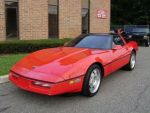
Excuse me for not being as smart as some of you people, but couldn't you have just politely said "What year is your vette Corvette brother?" By the way, if any one cares this lazy idiots corvette is a 1989 L98 automatic.

 I wouldn't even start, others should make up their own minds.