


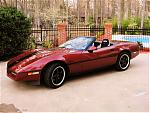






FIRST INJECTION pics

Thread Starter
Racer


Joined: Oct 2001
Posts: 311
Likes: 2
From: Roseburg OR
 FIRST INJECTION pics
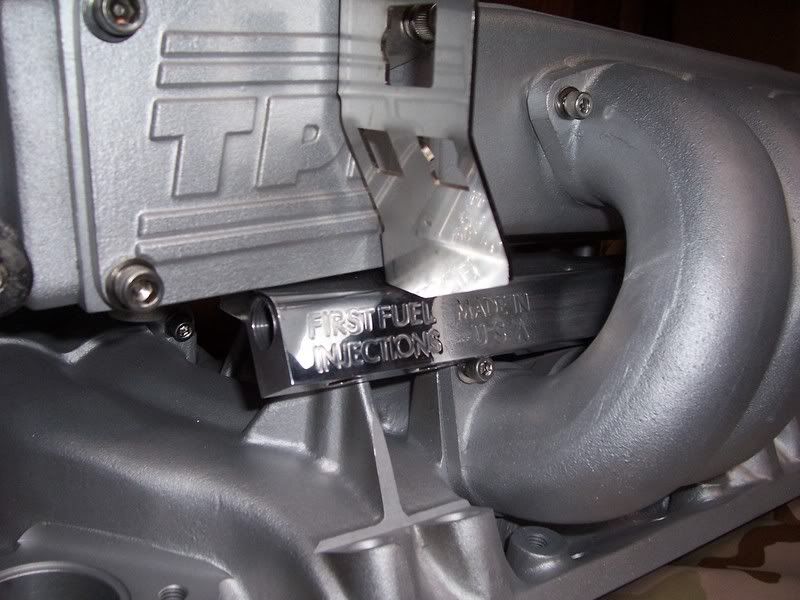
Some pics to help you all out as I did not find many pics when I was comparing manifolds.
Pics are how it came out of the box.
Just not a lot of info out there, here is a reply to a couple questions.
Yes, Carson it will fit under the hood we have quite a few out there on the 84 and newer corvettes. However, if for some reason it does not work out for you we will take it back and give you a full refund. The reason there is not a lot of info out there on the first intake, is that the first intake has only been back out for 5 yrs now. The first intake was actually developed in 1989 and there were many mag articles out there in the early 90's. We purchased the tooling in 2002 and began producing it again. The other intakes you refer to have had the luxury of being around for a long time, the companies are much larger than we are and have a lot of connections in the media, not to mention a way bigger advertising budget. The first is 100% American made and we back our intake up with a life time warranty and a satisfaction guarantee, which is in writing on our web site. We do accept credit cards from the link on our web site through paypal, which is how they take them. We will have a pic of the fuel rail set up on the web site this week. If you have any other questions, please feel free to ask.
Thanks Ken


Pics are how it came out of the box.
Just not a lot of info out there, here is a reply to a couple questions.
Yes, Carson it will fit under the hood we have quite a few out there on the 84 and newer corvettes. However, if for some reason it does not work out for you we will take it back and give you a full refund. The reason there is not a lot of info out there on the first intake, is that the first intake has only been back out for 5 yrs now. The first intake was actually developed in 1989 and there were many mag articles out there in the early 90's. We purchased the tooling in 2002 and began producing it again. The other intakes you refer to have had the luxury of being around for a long time, the companies are much larger than we are and have a lot of connections in the media, not to mention a way bigger advertising budget. The first is 100% American made and we back our intake up with a life time warranty and a satisfaction guarantee, which is in writing on our web site. We do accept credit cards from the link on our web site through paypal, which is how they take them. We will have a pic of the fuel rail set up on the web site this week. If you have any other questions, please feel free to ask.
Thanks Ken
Last edited by carson; Jan 15, 2008 at 12:08 AM.
Thread Starter
Racer
Joined: Oct 2001
Posts: 311
Likes: 2
From: Roseburg OR
I posted the pics on Third Gen if you can't see them here. http://www.thirdgen.org/techboard/tp...=1#post3597030
The inside of the ports are as cast, and the port narrows as it reached the head, so it would not take much material out to take to a larger gasket.


The inside of the ports are as cast, and the port narrows as it reached the head, so it would not take much material out to take to a larger gasket.
Thread Starter
Racer
Joined: Oct 2001
Posts: 311
Likes: 2
From: Roseburg OR
Hate to say I'm going to have to wait to put it on, as the buy came at a bad time of year. Wait for the refund, gather more parts and hopefully someone would have gotten thiers on and shared thier experience. Another Thank You to all you Gear Heads out there!
It's tough to be on the bleeding edge, kind of nice to learn from others experience. Hopes this helps some, Carson
http://forums.corvetteforum.com/show....php?t=1871126
http://forums.corvetteforum.com/show....php?t=1904601
It's tough to be on the bleeding edge, kind of nice to learn from others experience. Hopes this helps some, Carson
http://forums.corvetteforum.com/show....php?t=1871126
http://forums.corvetteforum.com/show....php?t=1904601
Last edited by carson; Jan 12, 2008 at 12:38 PM.

Racer

Joined: Sep 2000
Posts: 374
Likes: 0
From: Amarillo Tx
[QUOTE=carson;1563590216]I posted the pics on Third Gen if you can't see them here. http://www.thirdgen.org/techboard/tp...=1#post3597030
TGO picts don't come up, cuz I'm not a member
TGO picts don't come up, cuz I'm not a member

Pro


Joined: Feb 2005
Posts: 658
Likes: 1
From: Centerville OH
I got my FIRST today. I have to say that pictures do not do this thing justice in the slightest. The fit and casting quality of the parts is very, very good and the flow passages are HUGE! This manifold should have no problem at all feeding a hungry 383, especially after some porting work. There is a ton of meat to work with so I would expect it could be hogged out to work with big cube motors fairly easily.
I won't have a chance for a week or so, but I will take some pictures of the FIRST prior to porting side by side with my ACCEL/AS&M/plenum/52mm combo and post them up.
I won't have a chance for a week or so, but I will take some pictures of the FIRST prior to porting side by side with my ACCEL/AS&M/plenum/52mm combo and post them up.
Corvette Stories
The Best of Corvette for Corvette Enthusiasts

5 Best & 5 Worst Corvette Daily Drivers
Joe Kucinski
The Headlights of Every Corvette Generation Explained
Joe Kucinski
5 Best & 5 Most Overrated Corvette Track Packages of All Time!
Joe Kucinski
Every 2027 Corvette Engine Explained
Joe Kucinski
Designer Imagines A Corvette That Looks More Like a Corvette Than the Corvette
Verdad Gallardo
10 Ugly Corvettes That We Still Kinda Love
Joe Kucinski
Top 10 Most Expensive Corvettes Ever Sold on Bring A Trailer
Brett Foote
10 Things Every Corvette Owner Needs (2026 Edition)
Michael S. Palmer
8 Most "Only Corvette Owners Understand" Quirks and Problems
Pouria Savadkouei
Drifting

Joined: Apr 2007
Posts: 1,339
Likes: 2
From: port charlotte fl
Looking at the pix of that set up it looks like my original Lingenfelter TPI with big bore accel runners.The runner length is going to cause the same pulse problems that led them to develop the superam.Tons of low down torque but you will run out of steam above 4750rpm.If you want to increase the HP you have to shorten those runners and let the thing breathe properly.Use the search function and see what others have to say about this.Don't want to knock these guy's but as they admit they are selling twenty year old technology.


 Same here.
Racer
Joined: Sep 2000
Posts: 374
Likes: 0
From: Amarillo Tx
Looking at the pix of that set up it looks like my original Lingenfelter TPI with big bore accel runners.The runner length is going to cause the same pulse problems that led them to develop the superam.Tons of low down torque but you will run out of steam above 4750rpm.If you want to increase the HP you have to shorten those runners and let the thing breathe properly.Use the search function and see what others have to say about this.Don't want to knock these guy's but as they admit they are selling twenty year old technology.


Pro
Joined: Feb 2005
Posts: 658
Likes: 1
From: Centerville OH
The FIRST looks like a TPI, sure, but there is quite a bit of difference when you start to compare them closely. The FIRST is still a long runner intake, and as such it is never going to make big power numbers at high RPM, but the runner length is only part of the equation regarding flow dynamics. The flow area, passage shape, and the radius of the bends have just as much effect. The flow area in the FIRST is much larger than an ACCEL piece plus the intake base passages are raised for a much straighter shot into the intake port. Compared to traditional TPI parts, the differences in the FIRST combine to make the runners "act" shorter than what they really are. My goal with the intake was to get peak power in the 5000-5500 range with a 383 but maximize the area under the torque curve in the 2000-5000 RPM range. That is the range where I use the car the most.
After asking a bunch of questions of people who have experience with the intake, I feel comfortable that I can achieve my goals.
After asking a bunch of questions of people who have experience with the intake, I feel comfortable that I can achieve my goals.

Race Director


Joined: May 2003
Posts: 10,749
Likes: 41
The FIRST looks like a TPI, sure, but there is quite a bit of difference when you start to compare them closely. The FIRST is still a long runner intake, and as such it is never going to make big power numbers at high RPM, but the runner length is only part of the equation regarding flow dynamics. The flow area, passage shape, and the radius of the bends have just as much effect. The flow area in the FIRST is much larger than an ACCEL piece plus the intake base passages are raised for a much straighter shot into the intake port. Compared to traditional TPI parts, the differences in the FIRST combine to make the runners "act" shorter than what they really are. My goal with the intake was to get peak power in the 5000-5500 range with a 383 but maximize the area under the torque curve in the 2000-5000 RPM range. That is the range where I use the car the most.
After asking a bunch of questions of people who have experience with the intake, I feel comfortable that I can achieve my goals.
After asking a bunch of questions of people who have experience with the intake, I feel comfortable that I can achieve my goals.
Do it then!
 For my motor it would heavily choke it up, but for a 383 it should work. Or you could go with the other 3 proven intakes.

Safety Car


Joined: May 2006
Posts: 4,290
Likes: 140
From: Salem NH
Race Director
Joined: May 2003
Posts: 10,749
Likes: 41
The FIRST looks like a TPI, sure, but there is quite a bit of difference when you start to compare them closely. The FIRST is still a long runner intake, and as such it is never going to make big power numbers at high RPM, but the runner length is only part of the equation regarding flow dynamics. The flow area, passage shape, and the radius of the bends have just as much effect. The flow area in the FIRST is much larger than an ACCEL piece plus the intake base passages are raised for a much straighter shot into the intake port. Compared to traditional TPI parts, the differences in the FIRST combine to make the runners "act" shorter than what they really are. My goal with the intake was to get peak power in the 5000-5500 range with a 383 but maximize the area under the torque curve in the 2000-5000 RPM range. That is the range where I use the car the most.
After asking a bunch of questions of people who have experience with the intake, I feel comfortable that I can achieve my goals.
After asking a bunch of questions of people who have experience with the intake, I feel comfortable that I can achieve my goals.
Last edited by 88BlackZ-51; Jan 14, 2008 at 09:48 PM.
Racer
Joined: Sep 2000
Posts: 374
Likes: 0
From: Amarillo Tx


Drifting
Joined: Apr 2007
Posts: 1,339
Likes: 2
From: port charlotte fl
this whole system sure looks better than anything i've seen before but as they say you don't win money betting on the best looking horse in the race. I'm going to quote from Lingenfelters book;
"During the TPI development process I began experimenting with shorter runners in an attempt to improve top end power.Even with the larger runner diameters the length of the runners prevented even a healthy small block from making power above 5000rpm especially on larger small blocks like the 383.Shortening the runners by roughly 25% allowed the resonant pressure wave(which produces the ram effect that increase power at certain engine speeds) to occur at higher rpm.Our dyno testing compared a 383 fitted with a superam base and high flow TPI runners to the same base with the superam runner and plenum kit.Torque from 1600 to 3000 remained the same,at 3500 it increased and from 4000 up torque increased dramatically.At 5800 the superam was up by 65HP."
I'm not going to argue with the guru RIP.
RIP.
Buy the damn book-modifying small block chevy engines-for $15 and read all about it.
"During the TPI development process I began experimenting with shorter runners in an attempt to improve top end power.Even with the larger runner diameters the length of the runners prevented even a healthy small block from making power above 5000rpm especially on larger small blocks like the 383.Shortening the runners by roughly 25% allowed the resonant pressure wave(which produces the ram effect that increase power at certain engine speeds) to occur at higher rpm.Our dyno testing compared a 383 fitted with a superam base and high flow TPI runners to the same base with the superam runner and plenum kit.Torque from 1600 to 3000 remained the same,at 3500 it increased and from 4000 up torque increased dramatically.At 5800 the superam was up by 65HP."
I'm not going to argue with the guru
RIP.Buy the damn book-modifying small block chevy engines-for $15 and read all about it.
Drifting
Joined: Apr 2007
Posts: 1,339
Likes: 2
From: port charlotte fl
Not to argue; "But", when I look at the dyno pages done on the FIRST site, it appears their TPI looses steam at about 5200rpm, and I believe that is w/o being ported. Admittedly, this is not a high HP intake, and IS 20 year old technology. I do think this intake will perform on par with a superram (which is also 15 year old technology)and is more useful as a true "street" intake than some others. I think alot of people are assuming this is nothing more than large tube runners and a marginally better flowing manifold. It may look like a GM TPI, but if u look into it, it's much more. One thing we do agree on is "use the search function and see what other people "who have hands on experience" with this intake have to say. Just one opinion out of I'm sure, many.