


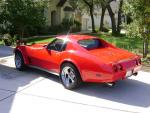


Engine Trouble?

Thread Starter
4th Gear

Joined: Jun 2008
Posts: 4
Likes: 0
 Engine Trouble?
I'm having a few problems which may be related:
Occasionaly when I start the car, (cold start only) white smoke comes out the exhaust. Not every time, maybe 1 out of 5 cold starts. The car doesn't burn or leak oil as far as I can tell and the smoke clears shortly after starting.
Almost every time I drive the car after a cold start it rumbles when I go to shift and press in the clutch. It almost sounds like it's going to backfire, but today for the first time it actually did. After a few minutes of driving this goes away completely.
When in neutral the RPMs do not hold steady, regardless of the AC being on or off. The variations seem to change intervals at consistent times, maybe every 5 seconds or so. The range is around 580-750. (ex. 610, 690, 620, 710, 610, 720, 640, 700, 650, 730... etc.)
I'm concerned with these issues and want to take immediate corrective action, but I'm not sure what needs to be done. Can anyone help me figure out what's going on??
Thanks!
Occasionaly when I start the car, (cold start only) white smoke comes out the exhaust. Not every time, maybe 1 out of 5 cold starts. The car doesn't burn or leak oil as far as I can tell and the smoke clears shortly after starting.
Almost every time I drive the car after a cold start it rumbles when I go to shift and press in the clutch. It almost sounds like it's going to backfire, but today for the first time it actually did. After a few minutes of driving this goes away completely.
When in neutral the RPMs do not hold steady, regardless of the AC being on or off. The variations seem to change intervals at consistent times, maybe every 5 seconds or so. The range is around 580-750. (ex. 610, 690, 620, 710, 610, 720, 640, 700, 650, 730... etc.)
I'm concerned with these issues and want to take immediate corrective action, but I'm not sure what needs to be done. Can anyone help me figure out what's going on??
Thanks!

Pro


Joined: Nov 2005
Posts: 602
Likes: 0
From: North Bay Ontario
If you are certain that what you're seeing is white smoke - I'd be thinking that there is some coolant getting into your intake/cylinders. How's the coolant level and check to see if the engine oil is appearing milky. You might be able to smell a sweet kind of smell in the white smoke if it is coolant too. Maybe a head gasket or an intake manifold gasket...

Safety Car


Joined: Sep 2001
Posts: 4,157
Likes: 554
From: Glenbeulah Wi
I'm having a few problems which may be related:
Occasionaly when I start the car, (cold start only) white smoke comes out the exhaust. Not every time, maybe 1 out of 5 cold starts. The car doesn't burn or leak oil as far as I can tell and the smoke clears shortly after starting.
Almost every time I drive the car after a cold start it rumbles when I go to shift and press in the clutch. It almost sounds like it's going to backfire, but today for the first time it actually did. After a few minutes of driving this goes away completely.
When in neutral the RPMs do not hold steady, regardless of the AC being on or off. The variations seem to change intervals at consistent times, maybe every 5 seconds or so. The range is around 580-750. (ex. 610, 690, 620, 710, 610, 720, 640, 700, 650, 730... etc.)
I'm concerned with these issues and want to take immediate corrective action, but I'm not sure what needs to be done. Can anyone help me figure out what's going on??
Thanks!
Occasionaly when I start the car, (cold start only) white smoke comes out the exhaust. Not every time, maybe 1 out of 5 cold starts. The car doesn't burn or leak oil as far as I can tell and the smoke clears shortly after starting.
Almost every time I drive the car after a cold start it rumbles when I go to shift and press in the clutch. It almost sounds like it's going to backfire, but today for the first time it actually did. After a few minutes of driving this goes away completely.
When in neutral the RPMs do not hold steady, regardless of the AC being on or off. The variations seem to change intervals at consistent times, maybe every 5 seconds or so. The range is around 580-750. (ex. 610, 690, 620, 710, 610, 720, 640, 700, 650, 730... etc.)
I'm concerned with these issues and want to take immediate corrective action, but I'm not sure what needs to be done. Can anyone help me figure out what's going on??
Thanks!
The idle issue may be a dirty IAC and that you may have to clean out. Over time the IAC passages and valve can become clogged.
Thread Starter
4th Gear
Joined: Jun 2008
Posts: 4
Likes: 0
valve stem leak
I suspect that it's a valve stem leak... the smoke does smell somewhat like an oil burn and I suppose the color is more blue/white than strictly white. There are no bubbles or anything in the oil.
The car only has 60K on it so I'd be pretty devastated if it was a head gasket... I was wondering if a valve stem leak would contribute to the rumbling/backfire that occurs when I press the clutch in and shift. Again, it only happens for the first minute or so of driving and then it runs like a champ.
What is an SBC issue and what is an IAC? (Sorry, but I'm a noob...)
Thanks for all your comments and suggestions thus far!
The car only has 60K on it so I'd be pretty devastated if it was a head gasket... I was wondering if a valve stem leak would contribute to the rumbling/backfire that occurs when I press the clutch in and shift. Again, it only happens for the first minute or so of driving and then it runs like a champ.
What is an SBC issue and what is an IAC? (Sorry, but I'm a noob...)
Thanks for all your comments and suggestions thus far!
Pro
Joined: Nov 2005
Posts: 602
Likes: 0
From: North Bay Ontario
It could be your valve seals...if the smoke is more blue than white. Having just changed the valve seals on my 85 this spring, I can say that it made a big difference in several ways - the worst is the embarassing puff of smoke at start up, of course, there is definitely a higher level of oil consumption, premature catalytic converter failure, and a rougher running engine with the 23 year old seals in there. I did the job myself over a couple of days vacation, taking my time, cleaning and inspecting along the way. The rubber o-ring seals were brittle and cracked, the umbrella seals on the towers were also hard and doing nothing to stop the oil from leaking down the valve stem. The car runs noticably smoother too. This is a good time to check your valve guides, for wear as well. I found a couple of broken damper springs while I was doing the job too.
Last edited by pletzvet; Jun 17, 2008 at 12:53 AM.
Thread Starter
4th Gear
Joined: Jun 2008
Posts: 4
Likes: 0
Valve stems
Thanks for all the info, yeah, that seems like the way to go. I just picked up a Hayes shop manual the other day and was looking through the section on how to replace the seals. Unfortunately I think this is a bit over my head and I wouldn't trust myself to do this job. I don't have the right tools either so it looks like I may have to take it in to the shop.
Does anyone know a good Corvette mechanic in southern NJ? I wish I knew someone who does this kind of work that would let me work with them so I could learn something.
While making this repair is there anything else that you would suggest I do at the same time?
Thanks!
Does anyone know a good Corvette mechanic in southern NJ? I wish I knew someone who does this kind of work that would let me work with them so I could learn something.
While making this repair is there anything else that you would suggest I do at the same time?
Thanks!
Corvette Stories
The Best of Corvette for Corvette Enthusiasts

Top 10 Most Expensive Corvettes Ever Sold on Bring A Trailer
Brett Foote
10 Things Every Corvette Owner Needs (2026 Edition)
Michael S. Palmer
8 Most "Only Corvette Owners Understand" Quirks and Problems
Pouria Savadkouei
10 Reasons the C6 Z06 is Still A Performance Benchmark After 20 Years
Joe Kucinski
How Much Horsepower Every Corvette Engine "LOST" in 1972
Joe Kucinski
Top 10 DOs and DON'Ts for Protecting Your Convertible Top!
Michael S. Palmer
Top 10 Most Explosive Corvettes Ever Made: Power-to-Weight Ratio Ranked!
Joe Kucinski
150 hp to 1,250 hp: Every Corvette Generation Compared by the Specs That Matter
Joe Kucinski
8 Coolest Corvette Pace Cars (and Replicas) of All Time
Verdad Gallardo
Burning Brakes


Joined: Feb 2008
Posts: 988
Likes: 7
From: Sarasota Fl
Well, if you find a good mechanic, they will let you learn from them. Make sure you tell them you're trying to learn from them and not watching them to make sure its done right. For some reason people don't respond well to that. 
Jonathan
Jonathan
Pro
Joined: Nov 2005
Posts: 602
Likes: 0
From: North Bay Ontario
Unfortunately I think this is a bit over my head and I wouldn't trust myself to do this job. I don't have the right tools either so it looks like I may have to take it in to the shop.
While making this repair is there anything else that you would suggest I do at the same time?
Thanks!
While making this repair is there anything else that you would suggest I do at the same time?
Thanks!
Last edited by pletzvet; Jun 17, 2008 at 05:21 PM.


Thread Starter
4th Gear
Joined: Jun 2008
Posts: 4
Likes: 0
Well I can certainly get the hose adapter and I have an air compressor... A valve compressor can't cost much...
I'd still prefer to have someone with me who knows what they're doing. Yeah, the Haynes manual is pretty flimsy but it's better than the Chilton's that I had. It described the procedure pretty well it seems, but there's nothing like seeing it and doing it...
I'll have to pick up a FSM, I need another doorstop anyhow!
Thanks!
I'd still prefer to have someone with me who knows what they're doing. Yeah, the Haynes manual is pretty flimsy but it's better than the Chilton's that I had. It described the procedure pretty well it seems, but there's nothing like seeing it and doing it...
I'll have to pick up a FSM, I need another doorstop anyhow!
Thanks!