



e brake strength

Drifting


Joined: Sep 2003
Posts: 1,363
Likes: 7
From: 1994 LT1 Coupe 6-speed with FX3 & 2000 LS1 Vert 6-Speed with F45 Hunterdon County, NJ

The parking brake do not have their own shoes/pads, they use the rear brakes, so doubtful you need to replace pads (as otherwise the brakes would be a problem too).
However, most often the problem is one of the wheel cables which rust internally and prevent the cable from moving within its sheath to pull the caliper/piston actuating arm which pushes the brake pad against the rotor.
Suggest removing the plastic cover over the parking brake mechanism and inspect the parking brake mechanism for rust (water leaks often get to it). Then refer to the FSM and release the self-adjuster's tension.
If the tension doesn't release, either the mechanism is rusted/stuck or the cables are rusted and stuck.
If you are able to release some of the tension, suggest removing the rear wheels, and get underneath the car and release the cables and then see which cable(s) is stuck and needs to be replaced.
Pro


Joined: Apr 2008
Posts: 539
Likes: 0
From: Wichita Kansas
Whereas the cables (3 of them) are not adjustable, the parking brake mechanism (inside car next to seat) automatically adjusts, if it is working correctly.
The parking brake do not have their own shoes/pads, they use the rear brakes, so doubtful you need to replace pads (as otherwise the brakes would be a problem too).
However, most often the problem is one of the wheel cables which rust internally and prevent the cable from moving within its sheath to pull the caliper/piston actuating arm which pushes the brake pad against the rotor.
Suggest removing the plastic cover over the parking brake mechanism and inspect the parking brake mechanism for rust (water leaks often get to it). Then refer to the FSM and release the self-adjuster's tension.
If the tension doesn't release, either the mechanism is rusted/stuck or the cables are rusted and stuck.
If you are able to release some of the tension, suggest removing the rear wheels, and get underneath the car and release the cables and then see which cable(s) is stuck and needs to be replaced.
The parking brake do not have their own shoes/pads, they use the rear brakes, so doubtful you need to replace pads (as otherwise the brakes would be a problem too).
However, most often the problem is one of the wheel cables which rust internally and prevent the cable from moving within its sheath to pull the caliper/piston actuating arm which pushes the brake pad against the rotor.
Suggest removing the plastic cover over the parking brake mechanism and inspect the parking brake mechanism for rust (water leaks often get to it). Then refer to the FSM and release the self-adjuster's tension.
If the tension doesn't release, either the mechanism is rusted/stuck or the cables are rusted and stuck.
If you are able to release some of the tension, suggest removing the rear wheels, and get underneath the car and release the cables and then see which cable(s) is stuck and needs to be replaced.

Le Mans Master

Joined: Jan 2006
Posts: 5,620
Likes: 206
From: Orlando FL
The only emergency you will have if you have to use it in a emergency stop. I just don’t think the pads are big enough for the rears as we all know the rears don’t brake very much.
One answer I got from another Forum member is that it is not an emergence brake, it is a parking brake.
Want another shock, pick the rear of the car up, run the engine and put the car in drive. Then step on the brake and see if you can stop the rear wheels.
Melting Slicks

Joined: Feb 2008
Posts: 3,286
Likes: 6
From: Palm Beach
It does make a diff. Very early C4s used a separate drum and shoes. Yours uses the existing pads.
First of all, it is a parking brake, not an E brake. To apply it properly you must first apply the brakes then pull up on the handle.
Pull one of the rear wheels and have a buddy apply the brake while you watch the caliper. The caliper pads should remain applied when the pedal is released.
First of all, it is a parking brake, not an E brake. To apply it properly you must first apply the brakes then pull up on the handle.
Pull one of the rear wheels and have a buddy apply the brake while you watch the caliper. The caliper pads should remain applied when the pedal is released.
Corvette Stories
The Best of Corvette for Corvette Enthusiasts

2027 Corvette vs The World: Every Model vs Closest Competitor
Joe Kucinski
10 Most Common Corvette Problems of the Last 20 Years!
Joe Kucinski
5 MOST and 5 LEAST Popular Corvette Model Years in History!
Joe Kucinski
2027 Corvette Buyer's Guide: Everything You Need to Know!
Joe Kucinski
10 Things C8 Corvette Owners Hate (But Won't Tell You)
Joe Kucinski
10 Best Corvettes Coming to Barrett-Jackson Palm Beach 2026!
Brett Foote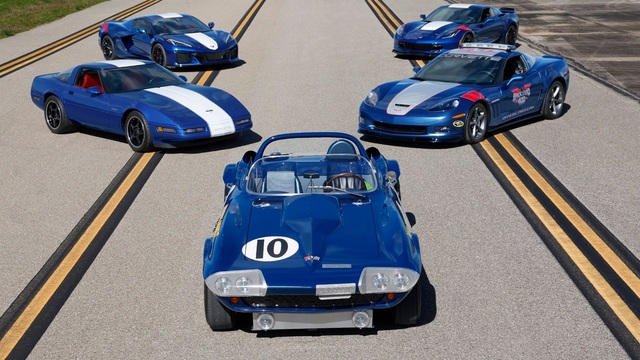
Every Corvette Grand Sport Explained! (C2, C4, C6, C7, & C8)
Joe Kucinski
Grand Sport & Grand Sport X Launch Alongside All-New 535hp LS6 V8!
Michael S. Palmer