






Aluminum Block: Pros/Cons

Pro


Joined: Oct 2001
Posts: 682
Likes: 23
From: loxahatchee fla

aluminum's FAR easier to repair once damaged as TIG welding ALUMINUM is far simpler than nickle brazing cast iron, aluminum dissipates heat faster, aluminum,s far easier to machine, and if your doing some mods you can weld stuff too aluminum far easier
but the cast iron blocks USUALLY got an edge in stiffness
the big problem is COST,
http://www.brodix.com/blocks/5inchblock.html
http://www.brodix.com/blocks/4.500block.html
http://www.dartheads.com/products/en...vy-big-blocks/
http://www.dartheads.com/products/en...ig-blocks.html
http://www.cnblocks.com/
http://www.jegs.com/p/World-Products...53923/10002/-1
but the cast iron blocks USUALLY got an edge in stiffness
the big problem is COST,
http://www.brodix.com/blocks/5inchblock.html
http://www.brodix.com/blocks/4.500block.html
http://www.dartheads.com/products/en...vy-big-blocks/
http://www.dartheads.com/products/en...ig-blocks.html
http://www.cnblocks.com/
http://www.jegs.com/p/World-Products...53923/10002/-1
Last edited by grumpyvette; Aug 3, 2009 at 05:52 PM.

Pro
Joined: Jan 2009
Posts: 686
Likes: 4
From: Austin Texas

Team Owner


Joined: Oct 2006
Posts: 20,393
Likes: 431
St. Jude Donor '08-'09-'10-'11-'12-'13-'14-'15-'16-'17
NCM Member '09
Pro
Joined: Jan 2009
Posts: 686
Likes: 4
From: Austin Texas
aluminum's FAR easier to repair once damaged as TIG welding ALUMINUM is far simpler than nickle brazing cast iron, aluminum dissipates heat faster, aluminum,s far easier to machine, and if your doing some mods you can weld stuff too aluminum far easier
but the cast iron blocks USUALLY got an edge in stiffness
the big problem is COST,
http://www.brodix.com/blocks/5inchblock.html
http://www.brodix.com/blocks/4.500block.html
http://www.dartheads.com/products/en...vy-big-blocks/
http://www.dartheads.com/products/en...ig-blocks.html
http://www.cnblocks.com/
http://www.jegs.com/p/World-Products...53923/10002/-1
but the cast iron blocks USUALLY got an edge in stiffness
the big problem is COST,
http://www.brodix.com/blocks/5inchblock.html
http://www.brodix.com/blocks/4.500block.html
http://www.dartheads.com/products/en...vy-big-blocks/
http://www.dartheads.com/products/en...ig-blocks.html
http://www.cnblocks.com/
http://www.jegs.com/p/World-Products...53923/10002/-1
Off topic, but I just want to thank you for sharing your knowledge and experience --- I learned a lot from some of your postings on another board, can't remember which. But thanks.
Pro
Joined: Oct 2001
Posts: 682
Likes: 23
From: loxahatchee fla
ALWAYS GLAD TO HELP!
probably my home data base, where IVE started a few months ago to complile my various hard drives full of info for everyone's easy access to data
http://grumpysperformance.com/
probably my home data base, where IVE started a few months ago to complile my various hard drives full of info for everyone's easy access to data
http://grumpysperformance.com/
Corvette Stories
The Best of Corvette for Corvette Enthusiasts

Top 10 Most Expensive Corvettes Ever Sold on Bring A Trailer
Brett Foote
10 Things Every Corvette Owner Needs (2026 Edition)
Michael S. Palmer
8 Most "Only Corvette Owners Understand" Quirks and Problems
Pouria Savadkouei
10 Reasons the C6 Z06 is Still A Performance Benchmark After 20 Years
Joe Kucinski
How Much Horsepower Every Corvette Engine "LOST" in 1972
Joe Kucinski
Top 10 DOs and DON'Ts for Protecting Your Convertible Top!
Michael S. Palmer
Top 10 Most Explosive Corvettes Ever Made: Power-to-Weight Ratio Ranked!
Joe Kucinski
150 hp to 1,250 hp: Every Corvette Generation Compared by the Specs That Matter
Joe Kucinski
8 Coolest Corvette Pace Cars (and Replicas) of All Time
Verdad Gallardo
Pro
Joined: Jan 2009
Posts: 686
Likes: 4
From: Austin Texas
ALWAYS GLAD TO HELP!
probably my home data base, where IVE started a few months ago to complile my various hard drives full of info for everyone's easy access to data
http://grumpysperformance.com/
probably my home data base, where IVE started a few months ago to complile my various hard drives full of info for everyone's easy access to data
http://grumpysperformance.com/
Stock LT1 heads, as far as I was able to measure have a CSA of about 1.8 squ. in. I put mine at 2.0, removing only from the top half of the port, some call it the roof. Did it according to Vizard's diagrams but using the equations in your link(s) and what else you wrote freehand.
The frickin stock heads don't have the exhaust seats completely seated in the heads, they had sharp exposed edges. So I ground them flush with the chamber as they should have been, and then did a 3-angle cut using Neway tools 31/46/60. In the chambers, there was a big wall around the intake seats courtesy of GM, which I meticulously removed, smoothing the seat to the chamber walls. Hand sanded the SSR to smoothness and bowl blended. To top it off I had the faces on the intakes cut so the total 45 seat is just 60 wide and the seating surface is at 45. Talk about time-intensive. Managed to punch a hole in one of the walls at PR pinch point, had to learn about patching that up. Hell, I'm a chemist by trade but now write patents for 15 years but really always enjoyed engine work since the days of my buddies long ago back when none of us knew squat and would have fallen for TB airfoils as ways to improve perf. I think these LT1's can run circles around even an LS6 ----- the secret is in the reverse cooling but from the factory, they screwed it up --- probably intentioanlly so as to not compete with LS5. They made LT1 run hot and that exhaust seat rim and other sharps in the chambers killed timing advance. A properly done LT1 is worth 425-475 HP @ 6000 without much more than paying attention to details. thanks again you grumpy young vetteman.
Pro
Joined: Oct 2001
Posts: 682
Likes: 23
From: loxahatchee fla
IM always amazed at the seeming majority of guys who it seems would rather poke their own eyes out with a burning stick than actually READ and research the basic math, basic port flow and cam timing , exhaust scavenging and compression data to figure out the way an engine functions correctly, and then read thru some bogus magazine article and repeat obviously erroneous info from some clown who used weather strip adhesive to stop leaks in his intake manifold gaskets in the same article, as if its gospel
Pro
Joined: Jan 2009
Posts: 686
Likes: 4
From: Austin Texas
Its not easy, there's a lot to it, plus a lot of mis-info out there to sift through, which makes it next to impossible for most of the consumers in the market to figure out.
Last edited by ChrisWhewell; Aug 4, 2009 at 08:24 AM.

Melting Slicks


Joined: Oct 2006
Posts: 2,238
Likes: 10
From: College Station TX
LS1 based aluminum blocks are amazing. I don't know of any that have broken due and some guys are making tons of power. Personally, I wouldn't bother with an aluminum SBC block and would just do an LSx swap.
Pro
Joined: Oct 2001
Posts: 682
Likes: 23
From: loxahatchee fla
half the guys on the tech desks read from scripts on computer screens with FAQ menus , and if you've got a question they can,t locate they ignore or try to B.S. you, or sell you something rather than give you answers.
ERSON AND CROWER ARE good , CRANE GUYS WERE GOOD(I HEAR THEY WILL RE-OPEN SOON WITH SOME OF THE OLD STAFF) IF YOU KNEW WHO TO TALK TO AT EACH COMPANY,
http://www.competitionplus.com/index...11154&Itemid=6
I GAVE UP dealing with some of the others because of the consistent b.s.
ERSON AND CROWER ARE good , CRANE GUYS WERE GOOD(I HEAR THEY WILL RE-OPEN SOON WITH SOME OF THE OLD STAFF) IF YOU KNEW WHO TO TALK TO AT EACH COMPANY,
http://www.competitionplus.com/index...11154&Itemid=6
I GAVE UP dealing with some of the others because of the consistent b.s.



Team Owner
Joined: Aug 2005
Posts: 34,988
Likes: 515
From: Riverside County Southern California
Co-winner 2020 C4 of the Year - Modified
2018 Corvette of Year Finalist
2017 C4 of Year
2016 C7 of Year Finalist
St. Jude Donor '09 thru '20
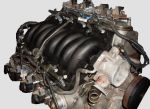
It is an improvement, all new Corvette engines are aluminum. If you got the money, go for it.
Me and a friend with a LS1 went driving on the mountains. My LT1 temp got to 240, his never made it to 220. Both Vettes are automatics now, the C5 A4 heats up more than the 4L60.
Me and a friend with a LS1 went driving on the mountains. My LT1 temp got to 240, his never made it to 220. Both Vettes are automatics now, the C5 A4 heats up more than the 4L60.
Instructor


Joined: Jul 2007
Posts: 220
Likes: 0
From: NY
Wouldn't an aluminum block change the handling of the car. Since the GM engineers designed the car to have the iron block I would thing that it would throw off the handling. I'm not sure if it is a pro or con since im not sure if it will improve or worsen. I think it will worsen since the weight distribution would be changed but im no engineer, just a kid that took a physics class. 

Team Owner
Joined: Oct 2004
Posts: 81,241
Likes: 3,063
From: altered state
St. Jude Donor '05
The LSx blocks have a much stronger structure than the Gen 1 especially around the mains. I approached a few machinists back when I built the motor I have now and all refused to do one for a street/strip car. (aluminum block)
Melting Slicks
Joined: Oct 2006
Posts: 2,238
Likes: 10
From: College Station TX
Wouldn't an aluminum block change the handling of the car. Since the GM engineers designed the car to have the iron block I would thing that it would throw off the handling. I'm not sure if it is a pro or con since im not sure if it will improve or worsen. I think it will worsen since the weight distribution would be changed but im no engineer, just a kid that took a physics class.

Melting Slicks
Joined: Mar 2008
Posts: 3,022
Likes: 3
From: Chandler Arizona
the traditional SBC alloy blocks will cost a good amount to get the machine work done. I wouldn't trust just any shop to do the machine work either. It's easy to heat up the aluminum and get the measurements wrong when machining. So it's got to be a skilled precision shop that has worked with alloy blocks before.
This is a major problem for the ford modular guys (with the 4-v mod blocks) since they are alloy, and require certain temperature purameters for given machine work (as the alloy expands and contracts much easier than iron).
This is a major problem for the ford modular guys (with the 4-v mod blocks) since they are alloy, and require certain temperature purameters for given machine work (as the alloy expands and contracts much easier than iron).
Melting Slicks
Joined: Oct 2006
Posts: 2,238
Likes: 10
From: College Station TX
the traditional SBC alloy blocks will cost a good amount to get the machine work done. I wouldn't trust just any shop to do the machine work either. It's easy to heat up the aluminum and get the measurements wrong when machining. So it's got to be a skilled precision shop that has worked with alloy blocks before.
This is a major problem for the ford modular guys (with the 4-v mod blocks) since they are alloy, and require certain temperature purameters for given machine work (as the alloy expands and contracts much easier than iron).
This is a major problem for the ford modular guys (with the 4-v mod blocks) since they are alloy, and require certain temperature purameters for given machine work (as the alloy expands and contracts much easier than iron).
