







HELP! Overheating problem in an '87

Thread Starter
Racer

Joined: Nov 2010
Posts: 316
Likes: 2
From: Fayetteville Arkansas
 HELP! Overheating problem in an '87
Here's what happened  :
:
One day I changed the antifreeze. I didn't start it that day, or drive it. A few days later I let it idle for maybe 5 minutes, but didn't drive it. I noticed that the radiator was steaming / smoking a little.
A few days later (today), I drove it for 10 minutes. In the last 2 minutes of driving I noticed that the COOLANT TEMP (on the speedometer display) was high (250ish). It was slowly creeping up to 290, but when it got there, it went back down to about 250, then slowly creeped up again - then back down. Then, it went up to 299 and stayed there for 30sec-1min till I arrived back at my house and turned it off.
I then opened up the hood. The radiator was steaming like before. I pulled the red handle up on the radior cap to relieve pressure. It steamed / shot out a bit of antifreeze for a few minutes.
When it stopped steaming, I added a gallon of distilled water, started the car, and pulled it into the garage. The COOLANT TEMP was lower than before. I opened the hood, then turned off the car. Almost immediately, all of the water I had just put in the radiator was being pushed out of the coolant reservoir (under the passenger headlight assy). Even with the lid screwed on, a mix of the antifreeze that was in the reserve and the water that was in the radiator gushed out onto the floor.
It stopped a minute later. I drained the radiator from the valve at the bottom, and siphened out what was in the reserve. I then detached the hose that runs from the engine to the radiator to drain it, but there was nothing in it.
And.. that's how it remains until tomorrow morning at least. I don't know FOR SURE that it's the thermostat, but that's my best guess right now. And, I really HOPE that's what it is because it's a cheap and easy fix.
If you think it sounds like something else, I'd love to hear input!
:One day I changed the antifreeze. I didn't start it that day, or drive it. A few days later I let it idle for maybe 5 minutes, but didn't drive it. I noticed that the radiator was steaming / smoking a little.
A few days later (today), I drove it for 10 minutes. In the last 2 minutes of driving I noticed that the COOLANT TEMP (on the speedometer display) was high (250ish). It was slowly creeping up to 290, but when it got there, it went back down to about 250, then slowly creeped up again - then back down. Then, it went up to 299 and stayed there for 30sec-1min till I arrived back at my house and turned it off.
I then opened up the hood. The radiator was steaming like before. I pulled the red handle up on the radior cap to relieve pressure. It steamed / shot out a bit of antifreeze for a few minutes.
When it stopped steaming, I added a gallon of distilled water, started the car, and pulled it into the garage. The COOLANT TEMP was lower than before. I opened the hood, then turned off the car. Almost immediately, all of the water I had just put in the radiator was being pushed out of the coolant reservoir (under the passenger headlight assy). Even with the lid screwed on, a mix of the antifreeze that was in the reserve and the water that was in the radiator gushed out onto the floor.
It stopped a minute later. I drained the radiator from the valve at the bottom, and siphened out what was in the reserve. I then detached the hose that runs from the engine to the radiator to drain it, but there was nothing in it.
And.. that's how it remains until tomorrow morning at least. I don't know FOR SURE that it's the thermostat, but that's my best guess right now. And, I really HOPE that's what it is because it's a cheap and easy fix.
If you think it sounds like something else, I'd love to hear input!
Thread Starter
Racer
Joined: Nov 2010
Posts: 316
Likes: 2
From: Fayetteville Arkansas
Other things to note about the car:
I picked up the car in Dayton, TN two weeks ago, and drove it 11 hours back to Fayetteville, AR. It did not have an overheating problem on the trip. It was only driven once (for 10 minutes the day after the trip) and then not again until today.
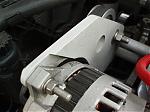
The A/C Compressor seems to be making a noise and the metal part right next to the belt is scratched to bits.
The oil and filter were changed last night with an AC DELCO filter and 5 quarts of Royal Purple 5w30 synthetic. The old oil looked terrible and the filter was a FRAM.
The air filter needs replaced, and the top part that covers the filter is broken (not sealed completely) on the driver's side.
The heater worked on the trip, but not this morning when I drove it.
Some of the hoses obviously need replaced.
I picked up the car in Dayton, TN two weeks ago, and drove it 11 hours back to Fayetteville, AR. It did not have an overheating problem on the trip. It was only driven once (for 10 minutes the day after the trip) and then not again until today.
The A/C Compressor seems to be making a noise and the metal part right next to the belt is scratched to bits.
The oil and filter were changed last night with an AC DELCO filter and 5 quarts of Royal Purple 5w30 synthetic. The old oil looked terrible and the filter was a FRAM.
The air filter needs replaced, and the top part that covers the filter is broken (not sealed completely) on the driver's side.
The heater worked on the trip, but not this morning when I drove it.
Some of the hoses obviously need replaced.
Le Mans Master


Joined: Sep 2006
Posts: 6,050
Likes: 147
From: Phoenix AZ
2021 C4 of the Year - Modified Finalist
It is common if you don't burp the radiator for it to act this way.
The engine will have a big air bubble in it and it's up to you to get it out. THis air bubble will be at the back of the block and heads and the air will cause hot spots and steam. THis steam boils the water near it, and the water that is near begins to boil, pushing the water out of the radiator as it expands.
TO BURP THE RADIATOR:
First, go get a new gallon of antifreeze and open it. Make sure the car is cold, Place the antifreeze at the right side of the car within reach if you were looking into the radiator.
Start the car, then immediately go remove the radiator cap. Reach over, and increase the throttle to about 1220 RPM. Grab the OPEN jug of antifreeze. THen pour the antifreeze into the radiator, and when it's full, then put the cap back on. THEN LET GO OF THE THROTTLE. But not until the cap is back on.
You need to drive it or let it idle till you experience a complete fan cycle, cold to 232, then back to 215, up to 232, and when the fan shuts off, turn off the car.
Let the car sit until the car is cold. THen start the car and drive the car. The low coolant light shouldn't come on. If it does, let it go through a cooling cycle till stone cold. THen start it up and all should be good.
THe big problem is that the engine is not lower than the radiator.
There is a cold check valve on the radiator cap that allows the antifreeze to be drawn back into the engine on a cold cycle. That is why you start it, get it all toasty, and then let it cool off. THe water contracts with temperature and creates a suction in the cooling system that sucks the water out of the reservoir under the headlight.
If it doesn't suck the water out, it could be the cap, the hose or hose clamps on the hose that go to the reservoir, or a cracked reservoir inlet tube the hose goes on.
The engine will have a big air bubble in it and it's up to you to get it out. THis air bubble will be at the back of the block and heads and the air will cause hot spots and steam. THis steam boils the water near it, and the water that is near begins to boil, pushing the water out of the radiator as it expands.
TO BURP THE RADIATOR:
First, go get a new gallon of antifreeze and open it. Make sure the car is cold, Place the antifreeze at the right side of the car within reach if you were looking into the radiator.
Start the car, then immediately go remove the radiator cap. Reach over, and increase the throttle to about 1220 RPM. Grab the OPEN jug of antifreeze. THen pour the antifreeze into the radiator, and when it's full, then put the cap back on. THEN LET GO OF THE THROTTLE. But not until the cap is back on.
You need to drive it or let it idle till you experience a complete fan cycle, cold to 232, then back to 215, up to 232, and when the fan shuts off, turn off the car.
Let the car sit until the car is cold. THen start the car and drive the car. The low coolant light shouldn't come on. If it does, let it go through a cooling cycle till stone cold. THen start it up and all should be good.
THe big problem is that the engine is not lower than the radiator.
There is a cold check valve on the radiator cap that allows the antifreeze to be drawn back into the engine on a cold cycle. That is why you start it, get it all toasty, and then let it cool off. THe water contracts with temperature and creates a suction in the cooling system that sucks the water out of the reservoir under the headlight.
If it doesn't suck the water out, it could be the cap, the hose or hose clamps on the hose that go to the reservoir, or a cracked reservoir inlet tube the hose goes on.
Drifting


Joined: Oct 2003
Posts: 1,594
Likes: 0
From: CALGARY ab
the engine will stream becuz air gets trapped in the system.. to eliminate this simple park the car ona steep drive way. put the rad higher then the motor and will eliminate air lock . another way is to drill small hole into the themastat, this allows air to balance while at idle , then you fil fill before it gets, hot!!
if the problem persists, now that temperators have hit the high end ,, check for headgasket failure,, usually on the rear cylinders between 5, 7 & 6,8..
if the problem persists, now that temperators have hit the high end ,, check for headgasket failure,, usually on the rear cylinders between 5, 7 & 6,8..
Thread Starter
Racer
Joined: Nov 2010
Posts: 316
Likes: 2
From: Fayetteville Arkansas
It is common if you don't burp the radiator for it to act this way.
The engine will have a big air bubble in it and it's up to you to get it out. THis air bubble will be at the back of the block and heads and the air will cause hot spots and steam. THis steam boils the water near it, and the water that is near begins to boil, pushing the water out of the radiator as it expands.
TO BURP THE RADIATOR:
First, go get a new gallon of antifreeze and open it. Make sure the car is cold, Place the antifreeze at the right side of the car within reach if you were looking into the radiator.
Start the car, then immediately go remove the radiator cap. Reach over, and increase the throttle to about 1220 RPM. Grab the OPEN jug of antifreeze. THen pour the antifreeze into the radiator, and when it's full, then put the cap back on. THEN LET GO OF THE THROTTLE. But not until the cap is back on.
You need to drive it or let it idle till you experience a complete fan cycle, cold to 232, then back to 215, up to 232, and when the fan shuts off, turn off the car.
Let the car sit until the car is cold. THen start the car and drive the car. The low coolant light shouldn't come on. If it does, let it go through a cooling cycle till stone cold. THen start it up and all should be good.
THe big problem is that the engine is not lower than the radiator.
There is a cold check valve on the radiator cap that allows the antifreeze to be drawn back into the engine on a cold cycle. That is why you start it, get it all toasty, and then let it cool off. THe water contracts with temperature and creates a suction in the cooling system that sucks the water out of the reservoir under the headlight.
If it doesn't suck the water out, it could be the cap, the hose or hose clamps on the hose that go to the reservoir, or a cracked reservoir inlet tube the hose goes on.
The engine will have a big air bubble in it and it's up to you to get it out. THis air bubble will be at the back of the block and heads and the air will cause hot spots and steam. THis steam boils the water near it, and the water that is near begins to boil, pushing the water out of the radiator as it expands.
TO BURP THE RADIATOR:
First, go get a new gallon of antifreeze and open it. Make sure the car is cold, Place the antifreeze at the right side of the car within reach if you were looking into the radiator.
Start the car, then immediately go remove the radiator cap. Reach over, and increase the throttle to about 1220 RPM. Grab the OPEN jug of antifreeze. THen pour the antifreeze into the radiator, and when it's full, then put the cap back on. THEN LET GO OF THE THROTTLE. But not until the cap is back on.
You need to drive it or let it idle till you experience a complete fan cycle, cold to 232, then back to 215, up to 232, and when the fan shuts off, turn off the car.
Let the car sit until the car is cold. THen start the car and drive the car. The low coolant light shouldn't come on. If it does, let it go through a cooling cycle till stone cold. THen start it up and all should be good.
THe big problem is that the engine is not lower than the radiator.
There is a cold check valve on the radiator cap that allows the antifreeze to be drawn back into the engine on a cold cycle. That is why you start it, get it all toasty, and then let it cool off. THe water contracts with temperature and creates a suction in the cooling system that sucks the water out of the reservoir under the headlight.
If it doesn't suck the water out, it could be the cap, the hose or hose clamps on the hose that go to the reservoir, or a cracked reservoir inlet tube the hose goes on.
I'll try this. Thanks!
Corvette Stories
The Best of Corvette for Corvette Enthusiasts

Top 10 Most Expensive Corvettes Ever Sold on Bring A Trailer
Brett Foote
10 Things Every Corvette Owner Needs (2026 Edition)
Michael S. Palmer
8 Most "Only Corvette Owners Understand" Quirks and Problems
Pouria Savadkouei
10 Reasons the C6 Z06 is Still A Performance Benchmark After 20 Years
Joe Kucinski
How Much Horsepower Every Corvette Engine "LOST" in 1972
Joe Kucinski
Top 10 DOs and DON'Ts for Protecting Your Convertible Top!
Michael S. Palmer
Top 10 Most Explosive Corvettes Ever Made: Power-to-Weight Ratio Ranked!
Joe Kucinski
150 hp to 1,250 hp: Every Corvette Generation Compared by the Specs That Matter
Joe Kucinski
8 Coolest Corvette Pace Cars (and Replicas) of All Time
Verdad Gallardo
Burning Brakes

Joined: Oct 2009
Posts: 773
Likes: 2
From: Minneapolis MN
As a professional,I only way I bleed a cooling system is with a spill-free funnel.It costs about $26.00,sits higher than anywhere the coolant flows,so the air can travel to the highest point-the spill-free funnel.Directions are straight forward on the box & if you do purchase one I can tell you how to do it.Some cars don't need this funnel to bleed the cooling system but,I always use this to bleed the cooling systems on cars I work on & never have problems.I also open the bleeder screws if the cooling system has them.Invest in this tool guys if you are gonna work on your own car(s).That way you are 100% sure you properly bleed the cooling system.Or without tool you can hope you get it bleed & hope the engine don't overheat & cause engine damage.Most modern cars NEED this tool to properly bleed cooling system.I wouldn't try bleeding my cooling system without this or a vacuum bleeder(my professional opinion)
Thread Starter
Racer
Joined: Nov 2010
Posts: 316
Likes: 2
From: Fayetteville Arkansas
Fixed it today! 
What was actually wrong:
1.) The thermostat was stuck shut. Replacing it fixed that. Added a gasket to seal it all up (it didn't have one when I took it off).
2.) There was an air pocket problem. Fixed it by following the instructions on the forum. Thanks! It worked!
3.) The radiator had developed a leak. Luckily it was fixable with some stuff I poured in the antifreeze. Completely stopped the dripping, but I will moniter it tonight before assuming that it is totally fixed.
What was actually wrong:
1.) The thermostat was stuck shut. Replacing it fixed that. Added a gasket to seal it all up (it didn't have one when I took it off).
2.) There was an air pocket problem. Fixed it by following the instructions on the forum. Thanks! It worked!
3.) The radiator had developed a leak. Luckily it was fixable with some stuff I poured in the antifreeze. Completely stopped the dripping, but I will moniter it tonight before assuming that it is totally fixed.
