


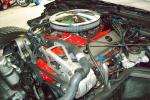




Caloway B2K engine specs
Thread Starter
Melting Slicks


Joined: Dec 2008
Posts: 2,772
Likes: 64
From: Mystic CT
 Callaway B2K engine specs
Callaway B2K engine mods as I am able to recall them.
Please understand it has been 20+ years since I was involved with this project.
Disassemble and acid dip engine
Block
magnaflux
remove any casting flash that was thin and might fall off
remove cam bearings and oil gallery plugs
check decks
install billet 4 bolt main caps with splayed outer bolts on center 3 positions
line bore
line hone
bore block +0.005 with stress plates in Sunnen CK10
pressure wash bock
hand wash with soap and water
install Speed pro cam bearing and hand fit
install new oil gallery plugs
Heads
disassemble and degrease
visually inspect for casting flaws
check and correct guide clearances as needed
3 angle valve job
lightly surface the head to insure flatness
assemble with Speed Pro intake valves and valve springs keepers and valve seals.
I think 130 lbs on the seat and forget what they were open spring height was checked on every valve and spring.
Rotating assembly
Early crankshafts were Scat and later changed to Callies I think after the the first 25 or 50 all forged steel
Pistons forged Cosworth with Cosworth pins dished with pressed pins and guessing around 8.5 /1 compression but that is from memory only
Speed pro plasma moly rings file fit to each bore
All cranks and rods were magnafluxed
Connecting rods new rod bolts and big and small end bore honed for correct fit
Rotating assembly balanced to .2 gram flywheel damper and clutch each balanced separately to .2 gram
pistons and rods were hand sorted into sets initially to minimize metal removal and within .1 grams as the scale we used could easily read that
Cleveite delta wall bearings hand fitted to each journal using selective fit shells
All engines assembled by a team of 3 people and resopnsible for their engine on a signed build sheet that is unfortunately long gone now as they were for in house use should there be a warrentee claim of any kind. It has been 20+ years and forget how and where they were numbered or initialed but if you see some non GM stampings on your B2K engine we probably put them there. My guess we used our production number.
Miscellaneous
Intake plenums were machined for a Calloway logo on each side
Plenums intake runners throttle body top cover and valve covers were painted with black wrinkle finish and baked under heat lamps.
Timing chains and gears were new HD parts and remember Cloyes though could have been branded through Speed Pro at the time.
Gaskets were Fel-Pro though pan and valve cover gaskets were reused GM parts
Oil pumps escape me right now if I happen to think of it will add to this post.
All engines were pressure tested the coolant system with compressed air with soapy water sprayed on by hand and I can not imagine that we would have not pressurized the oiling system to check for oil to lifters rockers etc. but that is a hunch based on our standard shop practices.
Please understand it has been 20+ years since I was involved with this project.
Disassemble and acid dip engine
Block
magnaflux
remove any casting flash that was thin and might fall off
remove cam bearings and oil gallery plugs
check decks
install billet 4 bolt main caps with splayed outer bolts on center 3 positions
line bore
line hone
bore block +0.005 with stress plates in Sunnen CK10
pressure wash bock
hand wash with soap and water
install Speed pro cam bearing and hand fit
install new oil gallery plugs
Heads
disassemble and degrease
visually inspect for casting flaws
check and correct guide clearances as needed
3 angle valve job
lightly surface the head to insure flatness
assemble with Speed Pro intake valves and valve springs keepers and valve seals.
I think 130 lbs on the seat and forget what they were open spring height was checked on every valve and spring.
Rotating assembly
Early crankshafts were Scat and later changed to Callies I think after the the first 25 or 50 all forged steel
Pistons forged Cosworth with Cosworth pins dished with pressed pins and guessing around 8.5 /1 compression but that is from memory only
Speed pro plasma moly rings file fit to each bore
All cranks and rods were magnafluxed
Connecting rods new rod bolts and big and small end bore honed for correct fit
Rotating assembly balanced to .2 gram flywheel damper and clutch each balanced separately to .2 gram
pistons and rods were hand sorted into sets initially to minimize metal removal and within .1 grams as the scale we used could easily read that
Cleveite delta wall bearings hand fitted to each journal using selective fit shells
All engines assembled by a team of 3 people and resopnsible for their engine on a signed build sheet that is unfortunately long gone now as they were for in house use should there be a warrentee claim of any kind. It has been 20+ years and forget how and where they were numbered or initialed but if you see some non GM stampings on your B2K engine we probably put them there. My guess we used our production number.
Miscellaneous
Intake plenums were machined for a Calloway logo on each side
Plenums intake runners throttle body top cover and valve covers were painted with black wrinkle finish and baked under heat lamps.
Timing chains and gears were new HD parts and remember Cloyes though could have been branded through Speed Pro at the time.
Gaskets were Fel-Pro though pan and valve cover gaskets were reused GM parts
Oil pumps escape me right now if I happen to think of it will add to this post.
All engines were pressure tested the coolant system with compressed air with soapy water sprayed on by hand and I can not imagine that we would have not pressurized the oiling system to check for oil to lifters rockers etc. but that is a hunch based on our standard shop practices.
Last edited by ddahlgren; Dec 26, 2010 at 12:09 PM.

Melting Slicks
Joined: Nov 2008
Posts: 2,765
Likes: 5
Callaway B2K engine mods as I am able to recall them.
Please understand it has been 20+ years since I was involved with this project.
Disassemble and acid dip engine
Block
magnaflux
remove any casting flash that was thin and might fall off
remove cam bearings and oil gallery plugs
check decks
install billet 4 bolt main caps with splayed outer bolts on center 3 positions
line bore
line hone
bore block +0.005 with stress plates in Sunnen CK10
pressure wash bock
hand wash with soap and water
install Speed pro cam bearing and hand fit
install new oil gallery plugs
Heads
disassemble and degrease
visually inspect for casting flaws
check and correct guide clearances as needed
3 angle valve job
lightly surface the head to insure flatness
assemble with Speed Pro intake valves and valve springs keepers and valve seals.
I think 130 lbs on the seat and forget what they were open spring height was checked on every valve and spring.
Rotating assembly
Early crankshafts were Scat and later changed to Callies I think after the the first 25 or 50 all forged steel
Pistons forged Cosworth with Cosworth pins dished with pressed pins and guessing around 8.5 /1 compression but that is from memory only
Speed pro plasma moly rings file fit to each bore
All cranks and rods were magnafluxed
Connecting rods new rod bolts and big and small end bore honed for correct fit
Rotating assembly balanced to .2 gram flywheel damper and clutch each balanced separately to .2 gram
pistons and rods were hand sorted into sets initially to minimize metal removal and within .1 grams as the scale we used could easily read that
Cleveite delta wall bearings hand fitted to each journal using selective fit shells
All engines assembled by a team of 3 people and resopnsible for their engine on a signed build sheet that is unfortunately long gone now as they were for in house use should there be a warrentee claim of any kind. It has been 20+ years and forget how and where they were numbered or initialed but if you see some non GM stampings on your B2K engine we probably put them there. My guess we used our production number.
Miscellaneous
Intake plenums were machined for a Calloway logo on each side
Plenums intake runners throttle body top cover and valve covers were painted with black wrinkle finish and baked under heat lamps.
Timing chains and gears were new HD parts and remember Cloyes though could have been branded through Speed Pro at the time.
Gaskets were Fel-Pro though pan and valve cover gaskets were reused GM parts
Oil pumps escape me right now if I happen to think of it will add to this post.
All engines were pressure tested the coolant system with compressed air with soapy water sprayed on by hand and I can not imagine that we would have not pressurized the oiling system to check for oil to lifters rockers etc. but that is a hunch based on our standard shop practices.
Please understand it has been 20+ years since I was involved with this project.
Disassemble and acid dip engine
Block
magnaflux
remove any casting flash that was thin and might fall off
remove cam bearings and oil gallery plugs
check decks
install billet 4 bolt main caps with splayed outer bolts on center 3 positions
line bore
line hone
bore block +0.005 with stress plates in Sunnen CK10
pressure wash bock
hand wash with soap and water
install Speed pro cam bearing and hand fit
install new oil gallery plugs
Heads
disassemble and degrease
visually inspect for casting flaws
check and correct guide clearances as needed
3 angle valve job
lightly surface the head to insure flatness
assemble with Speed Pro intake valves and valve springs keepers and valve seals.
I think 130 lbs on the seat and forget what they were open spring height was checked on every valve and spring.
Rotating assembly
Early crankshafts were Scat and later changed to Callies I think after the the first 25 or 50 all forged steel
Pistons forged Cosworth with Cosworth pins dished with pressed pins and guessing around 8.5 /1 compression but that is from memory only
Speed pro plasma moly rings file fit to each bore
All cranks and rods were magnafluxed
Connecting rods new rod bolts and big and small end bore honed for correct fit
Rotating assembly balanced to .2 gram flywheel damper and clutch each balanced separately to .2 gram
pistons and rods were hand sorted into sets initially to minimize metal removal and within .1 grams as the scale we used could easily read that
Cleveite delta wall bearings hand fitted to each journal using selective fit shells
All engines assembled by a team of 3 people and resopnsible for their engine on a signed build sheet that is unfortunately long gone now as they were for in house use should there be a warrentee claim of any kind. It has been 20+ years and forget how and where they were numbered or initialed but if you see some non GM stampings on your B2K engine we probably put them there. My guess we used our production number.
Miscellaneous
Intake plenums were machined for a Calloway logo on each side
Plenums intake runners throttle body top cover and valve covers were painted with black wrinkle finish and baked under heat lamps.
Timing chains and gears were new HD parts and remember Cloyes though could have been branded through Speed Pro at the time.
Gaskets were Fel-Pro though pan and valve cover gaskets were reused GM parts
Oil pumps escape me right now if I happen to think of it will add to this post.
All engines were pressure tested the coolant system with compressed air with soapy water sprayed on by hand and I can not imagine that we would have not pressurized the oiling system to check for oil to lifters rockers etc. but that is a hunch based on our standard shop practices.
Like you were building and engine to run the Indy 500, NASCAR circuit, 24 hours of Lemans Racing in France, or to run the Bonnevillesatlflats flat out for 5-10 miles each run. LOL
Callaway definately strived for perfection.
No deviations or faults allowed into each engine build.
Tells me that there was many Years of Racing experience by each team member many years prior to the Callaway TT Corvette.
GM - Corvette made the right choice to subcontract each TT Corvette build to Callaway motors and trust 100% to deliver a World Class Performance Driving Machine.
And the 87 - 88 Blew away every other exoctic cars potential performance in that era.
Why were DELTA WALL CLEVITE BEARINGS CHOSEN ?
I have always used Clevite "P" series bearings in my engines or Now Rare Vandervell Bearings made in England.
I have seen the Delta wall bearings listed in the Clevite master paperback catalouge in the past. I have never tried using them in a small block Chevy Engine.
Most modern racers I know have to have the "H" bearing. I choose not to use them. A short life drag race only engine bearing style from my own experience racing.
Do You remember how the Black Wrinkle paint was applied to the Tuned Port Runners, upper and lower plenum, and factory magnesium valve covers?
I love the black crinkle- low semi gloss finish.
Were they painted in house ? Or did you subcontract the refinish operation elsewhere?
Can the wrinkle black paint finish be duplicated at home?
I have some painting experience with a spray gun an mixing up single stage and basecoat-clear coat paints. Painting up engines or other small parts.
I would love to refinish the entire TPI system and valvecovers on my 87 Vert in the same manner as did with the Callaway TT Corvettes, sans the Special Callaway Badging present on your cars.
Its not a Callway Car of course.
Thank You for your contributions Dave,
Brian R.
Last edited by 87 vette 81 big girl; Dec 26, 2010 at 12:28 PM.
Thread Starter
Melting Slicks
Joined: Dec 2008
Posts: 2,772
Likes: 64
From: Mystic CT
That is quite a list of modifications, machine shop operations, QC checks and parts used.
Like you were building and engine to run the Indy 500, NASCAR circuit, 24 hours of Lemans Racing in France, or to run the Bonnevillesatlflats flat out for 5-10 miles each run. LOL
Callaway definately strived for perfection.
No deviations or faults allowed into each engine build.
Tells me that there was many Years of Racing experience by each team member many years prior to the Callaway TT Corvette.
GM - Corvette made the right choice to subcontract each TT Corvette build to Callaway motors and trust 100% to deliver a World Class Performance Driving Machine.
And the 87 - 88 Blew away every other exoctic cars potential performance in that era.
Why were DELTA WALL CLEVITE BEARINGS CHOSEN ?
I have always used Clevite "P" series bearings in my engines or Now Rare Vandervell Bearings made in England.
I have seen the Delta wall bearings listed in the Clevite master paperback catalouge in the past. I have never tried using them in a small block Chevy Engine.
Most modern racers I know have to have the "H" bearing. I choose not to use them. A short life drag race only engine bearing style from my own experience racing.
Do You remember how the Black Wrinkle paint was applied to the Tuned Port Runners, upper and lower plenum, and factory magnesium valve covers?
I love the black crinkle- low semi gloss finish.
Were they painted in house ? Or did you subcontract the refinish operation elsewhere?
Can the wrinkle black paint finish be duplicated at home?
I have some painting experience with a spray gun an mixing up single stage and basecoat-clear coat paints. Painting up engines or other small parts.
I would love to refinish the entire TPI system and valvecovers on my 87 Vert in the same manner as did with the Callaway TT Corvettes, sans the Special Callaway Badging present on your cars.
Its not a Callway Car of course.
Thank You for your contributions Dave,
Brian R.
Like you were building and engine to run the Indy 500, NASCAR circuit, 24 hours of Lemans Racing in France, or to run the Bonnevillesatlflats flat out for 5-10 miles each run. LOL
Callaway definately strived for perfection.
No deviations or faults allowed into each engine build.
Tells me that there was many Years of Racing experience by each team member many years prior to the Callaway TT Corvette.
GM - Corvette made the right choice to subcontract each TT Corvette build to Callaway motors and trust 100% to deliver a World Class Performance Driving Machine.
And the 87 - 88 Blew away every other exoctic cars potential performance in that era.
Why were DELTA WALL CLEVITE BEARINGS CHOSEN ?
I have always used Clevite "P" series bearings in my engines or Now Rare Vandervell Bearings made in England.
I have seen the Delta wall bearings listed in the Clevite master paperback catalouge in the past. I have never tried using them in a small block Chevy Engine.
Most modern racers I know have to have the "H" bearing. I choose not to use them. A short life drag race only engine bearing style from my own experience racing.
Do You remember how the Black Wrinkle paint was applied to the Tuned Port Runners, upper and lower plenum, and factory magnesium valve covers?
I love the black crinkle- low semi gloss finish.
Were they painted in house ? Or did you subcontract the refinish operation elsewhere?
Can the wrinkle black paint finish be duplicated at home?
I have some painting experience with a spray gun an mixing up single stage and basecoat-clear coat paints. Painting up engines or other small parts.
I would love to refinish the entire TPI system and valvecovers on my 87 Vert in the same manner as did with the Callaway TT Corvettes, sans the Special Callaway Badging present on your cars.
Its not a Callway Car of course.
Thank You for your contributions Dave,
Brian R.
First I managed a sub-contractor shop and never worked for Callaway. We were contracted because we built engines for various classes of NASCAR from the bottom to the top and quite familiar with quality control and personal responsibility from each memeber of the team they had to sign off on everything being done correctly no excuses allowed at any step. It might sound hard azz but everyone got paid well to do it right from the guy doing assembly to the guy running the cleaning tanks it all matters. At the time we were doing everything from NASCAR Modifieds to Bush cars to Winston Cup cars the top of the pile at the time. The same crew assembled all of them.
At the time the delta wall bearings were the current hot setup and have some features worth noteing. They were basically a standard tri-metal bearing but with more taper from center to parting line. The reasoning behind them was the rods will pinch at the sides when under large stresses and made sense for a stock rod and 530 ft/lbs or so.
The black krinckle was easy degrease every thing then wash in soap and water and dry really well a heat gun or heat lamps a big help there. I can not remember the brand other than sure it was not a krylon sort of thing but made for electronics at the time we sprayed 2 coats with tack time in between and then used the heat lamps to force the crinkle and shorten drying time it was no big deal and something easily duplicated in anyones garage. We never did the lower manifold section. For what it is worth we did everything we signed on for in house and developed jigs fixtures and procedures that was my job along with romancing vendors for a best price, troublesooting various work cells to get it done right and price on target. Hope this helps.
Dave

Former Vendor
Joined: May 2001
Posts: 6,125
Likes: 739
From: Callaway Cars - Old Lyme, Connecticut
Corvette Stories
The Best of Corvette for Corvette Enthusiasts

Top 10 Most Expensive Corvettes Ever Sold on Bring A Trailer
Brett Foote
10 Things Every Corvette Owner Needs (2026 Edition)
Michael S. Palmer
8 Most "Only Corvette Owners Understand" Quirks and Problems
Pouria Savadkouei
10 Reasons the C6 Z06 is Still A Performance Benchmark After 20 Years
Joe Kucinski
How Much Horsepower Every Corvette Engine "LOST" in 1972
Joe Kucinski
Top 10 DOs and DON'Ts for Protecting Your Convertible Top!
Michael S. Palmer
Top 10 Most Explosive Corvettes Ever Made: Power-to-Weight Ratio Ranked!
Joe Kucinski
150 hp to 1,250 hp: Every Corvette Generation Compared by the Specs That Matter
Joe Kucinski
8 Coolest Corvette Pace Cars (and Replicas) of All Time
Verdad Gallardo
Le Mans Master


Joined: Oct 2004
Posts: 5,841
Likes: 19
From: CLT, North Carolina
Regular production style bearings will squeegee the oil off the crankpins at high RPM and overheat and fail when the sides of the stock rods pinch in as ddahlgren correctly mentioned above. The Sealed Power Delta Wall bearing was actually invented out of necessity in the mid seventies when NASCAR teams were making the changeover to small block engines from the lower RPM big blocks. Teams modified bearings available at the time by hand to convert them to delta wall style. This was actually a key development at the time in learning how to build high winding small blocks to survive 500 miles on the big tracks.

Team Owner


Joined: Oct 2004
Posts: 81,241
Likes: 3,063
From: altered state
St. Jude Donor '05
Laycock overdrive for Turbo 400....
That something similar to a Gear Vendor Overdrive or something similar to what GM offered many years ago it was a simple OD?
Never heard that term, curious as to what Callaway did with it.
Thanks for sharing some history on these cars btw
That something similar to a Gear Vendor Overdrive or something similar to what GM offered many years ago it was a simple OD?
Never heard that term, curious as to what Callaway did with it.
Thanks for sharing some history on these cars btw
Former Vendor
Joined: May 2001
Posts: 6,125
Likes: 739
From: Callaway Cars - Old Lyme, Connecticut
Laycock overdrive for Turbo 400....
That something similar to a Gear Vendor Overdrive or something similar to what GM offered many years ago it was a simple OD?
Never heard that term, curious as to what Callaway did with it.
Thanks for sharing some history on these cars btw
That something similar to a Gear Vendor Overdrive or something similar to what GM offered many years ago it was a simple OD?
Never heard that term, curious as to what Callaway did with it.
Thanks for sharing some history on these cars btw
Thread Starter
Melting Slicks
Joined: Dec 2008
Posts: 2,772
Likes: 64
From: Mystic CT
Thanks Chris that sheet filled in my memory a bit I had thought we were using Mellings M55HV pumps and your spec sheet lists the high volume pump. I did forget the compression ratio but do know the dish in the piston was substancial.
I do remember we had a fixture to set oil pump pick-up height and took each pump apart to check clearances relief spring and valve for burrs and binding and welded the pickup on before reassembling them.
Before the delta wal bearings were available the trick was to shim the rods and caps between 0.0012 to 0002 after grinding .002 off each hone them to 0.002 oversize ID then remove the shims giving the correct vertical clearance and additional at the parting line. I had thought it was originally a Bill jenkins trick that that trickled down to other forms of racing. i do know we worried a lot less about it with engines running Carrillo or Crower rods.
Now if I could get the moderator to fix the mis spelled subject heading it would be helpful. lol I did do an advanced edit but that did nothing to fix it.
I do remember we had a fixture to set oil pump pick-up height and took each pump apart to check clearances relief spring and valve for burrs and binding and welded the pickup on before reassembling them.
Before the delta wal bearings were available the trick was to shim the rods and caps between 0.0012 to 0002 after grinding .002 off each hone them to 0.002 oversize ID then remove the shims giving the correct vertical clearance and additional at the parting line. I had thought it was originally a Bill jenkins trick that that trickled down to other forms of racing. i do know we worried a lot less about it with engines running Carrillo or Crower rods.
Now if I could get the moderator to fix the mis spelled subject heading it would be helpful. lol I did do an advanced edit but that did nothing to fix it.

Drifting

Joined: May 2002
Posts: 1,581
Likes: 2
From: The Motor City
This is a lot of GREAT Callaway information - thanks very much for posting it.
However, I have to ask: what connecting rods were used in the original B2K cars? You've mentioned that "...rods were magnafluxed..." and that "...rods were hand sorted into sets..." but no mention if the rods were sourced from the aftermarket or if stock GM/L98 rods were used.
Also, I've always wondered whether the splayed 4-bolt main caps were sourced from outside suppliers (ie. GM Performance Parts) or if they were designed/machined in-house by Callaway?
However, I have to ask: what connecting rods were used in the original B2K cars? You've mentioned that "...rods were magnafluxed..." and that "...rods were hand sorted into sets..." but no mention if the rods were sourced from the aftermarket or if stock GM/L98 rods were used.
Also, I've always wondered whether the splayed 4-bolt main caps were sourced from outside suppliers (ie. GM Performance Parts) or if they were designed/machined in-house by Callaway?
Melting Slicks
Joined: Nov 2008
Posts: 2,765
Likes: 5
Thanks Chris that sheet filled in my memory a bit I had thought we were using Mellings M55HV pumps and your spec sheet lists the high volume pump. I did forget the compression ratio but do know the dish in the piston was substancial.
I do remember we had a fixture to set oil pump pick-up height and took each pump apart to check clearances relief spring and valve for burrs and binding and welded the pickup on before reassembling them.
Before the delta wal bearings were available the trick was to shim the rods and caps between 0.0012 to 0002 after grinding .002 off each hone them to 0.002 oversize ID then remove the shims giving the correct vertical clearance and additional at the parting line. I had thought it was originally a Bill jenkins trick that that trickled down to other forms of racing. i do know we worried a lot less about it with engines running Carrillo or Crower rods.
Now if I could get the moderator to fix the mis spelled subject heading it would be helpful. lol I did do an advanced edit but that did nothing to fix it.
I do remember we had a fixture to set oil pump pick-up height and took each pump apart to check clearances relief spring and valve for burrs and binding and welded the pickup on before reassembling them.
Before the delta wal bearings were available the trick was to shim the rods and caps between 0.0012 to 0002 after grinding .002 off each hone them to 0.002 oversize ID then remove the shims giving the correct vertical clearance and additional at the parting line. I had thought it was originally a Bill jenkins trick that that trickled down to other forms of racing. i do know we worried a lot less about it with engines running Carrillo or Crower rods.
Now if I could get the moderator to fix the mis spelled subject heading it would be helpful. lol I did do an advanced edit but that did nothing to fix it.
And it is a reminder that you cant build a racing level engine with long term durability from shopping from a favorite mail order catalouge with cheapest and shiny offshore parts available. Build it in your garage.
And then try to compare it to a Callaway Engine build.
I remember reading elsewhere that MAHLE pistons were also used in the TT Callaway Corvettes. Is that correct?
Why did you choose to use pressed piston pins and not a full floating connecting rod pin ? I don't think it was because it was because of a cost saving measure.
Was there bad experiences using a full floating pin on the street?
The retaining locks came loose? I know the damage that can result 1st hand. A destroyed cylinder wall.
Detonation is a very destructive force that will work piston pin locks out of the machined groove(s) in the piston also without notice.
I am ready to order a set of Crower sportsman connecting rods for a high performance street Pontiac 455 engine I am building.
Undecided on pressed or full floating pins. Pressed pins are always safe on the street I know.
I dont trust the offshore connecting rods available today. Seen many break prematurely. A few broke in 2 in the middle of the connecting rod beams.
Last edited by 87 vette 81 big girl; Dec 26, 2010 at 10:21 PM.


Thread Starter
Melting Slicks
Joined: Dec 2008
Posts: 2,772
Likes: 64
From: Mystic CT
This is a lot of GREAT Callaway information - thanks very much for posting it.
However, I have to ask: what connecting rods were used in the original B2K cars? You've mentioned that "...rods were magnafluxed..." and that "...rods were hand sorted into sets..." but no mention if the rods were sourced from the aftermarket or if stock GM/L98 rods were used.
Also, I've always wondered whether the splayed 4-bolt main caps were sourced from outside suppliers (ie. GM Performance Parts) or if they were designed/machined in-house by Callaway?
However, I have to ask: what connecting rods were used in the original B2K cars? You've mentioned that "...rods were magnafluxed..." and that "...rods were hand sorted into sets..." but no mention if the rods were sourced from the aftermarket or if stock GM/L98 rods were used.
Also, I've always wondered whether the splayed 4-bolt main caps were sourced from outside suppliers (ie. GM Performance Parts) or if they were designed/machined in-house by Callaway?
The rods were L98 rods so if anyone is wondering how much they can take as far as torque goes I guess the question is answered as long as you are willing to magnaflux them to make sure they are not flawed in any way put in better rod bolts and properly size the top and bottom ends. The rods were sorted for weights to minimize metal removal to get a balanced set. In house we had a standard bob weight for the cranks and sorted components for 6 or 8 engines at a time so if there were some rods that were + a couple of grams they would be sorted to make a set of 8 the same for the pistons and in the end the piston set that was 1 gram heavy met up with the rods 1 gram light or the other way around with heavy rods and light pistons, it is the only way to get it done in a production environment. So engine 300 could have rods in it that came from what came in the door as 296 or 305 they were just connecting rods if that makes sense. To put this in perspective a dollar bill weighs a gram or at least it used to so we are not talking about very much here. It is just much quicker to weigh and sort than weigh grind clean and weigh and hope you did not miss on the grind part.
The splayed caps were made by an aftermarket company, Pro-Gram. they were very nice pieces to be honest. They never needed to be tweaked or fixed in any way and do not remember ever sending one back. the bearing bore was semi finished and we fitted them to the block then bored them to within 0.001 of the finished bearing bore then line honed the block and it took a fair amount of talent to hone part steel and part iron with different metal removal rates and end up with a round hole that was in line with all the others. How to do it is a story for another day.
Dave
Thread Starter
Melting Slicks
Joined: Dec 2008
Posts: 2,772
Likes: 64
From: Mystic CT
Why did you choose to use pressed piston pins and not a full floating connecting rod pin ? I don't think it was because it was because of a cost saving measure.
Was there bad experiences using a full floating pin on the street?
The retaining locks came loose? I know the damage that can result 1st hand. A destroyed cylinder wall.
Was there bad experiences using a full floating pin on the street?
The retaining locks came loose? I know the damage that can result 1st hand. A destroyed cylinder wall.
Dave
Melting Slicks
Joined: Nov 2008
Posts: 2,765
Likes: 5
[QUOTE=ddahlgren;1576330236]Pressed pins were a simple choice. There is not enough metal in a L98 rod to bore the small end and fit a bushing and running steel on steel for a piston pin is a loser in anything long term. In my mind floating pins have their place in high rpm engines with very light weight pistons and pins. Their benefit is if the piston pin boss was to deflect and pinch the pin it can still move in the rod and not pull the pin boss out of the piston. But the rod bushings are usually bronze and will wear out so another wear point as well to keep in mnd. If I was to build a 450 or so ft/lb engine and not rev it past 6000 rpm I would use a GM rod with better bolts and bottom ends sized with the rods being magnafluxed first. The GM Fastburn 383 does this with a factory warrentte go figure. The real determining factor would probably be how light are the pistons and pins and how likely are they to flex and bind the pin in the piston pin bore?
Dave[/QUOT
The pistons are not real lightweight I chose to use in my 455 Pontiac street engine Build.
Keith Black Hypereutectic pistons and supplied pins.
After reading your advice and experience, I think a pressed pin in the connecting rod small eye may best for my application on the street.
Despite the Keith Black pistons have locks machined in and locks supplied with them.
Pontiac 455's have a very high piston speed- 4.21" crank stroke.
Compared to most other engines.
6,000- 6,200 is top operating RPM's I want.
Most of the time I will operate the engine off idle to 5,200 RPM's on the street.
Let the engine live a long and happy life.
455's make 500+ ft/lbs of torque easily with a very mild camshaft and a decent set of low compression stock properly prepped cylinder heads.
Just what I need to move a 4,200lb 1963 Pontiac Grand Prix around of mine in a hurry if I choose to do so.
Crower Sporstman Pontiac Rods with pressed pins I will Buy then.
Thanks, Brian
Dave[/QUOT
The pistons are not real lightweight I chose to use in my 455 Pontiac street engine Build.
Keith Black Hypereutectic pistons and supplied pins.
After reading your advice and experience, I think a pressed pin in the connecting rod small eye may best for my application on the street.
Despite the Keith Black pistons have locks machined in and locks supplied with them.
Pontiac 455's have a very high piston speed- 4.21" crank stroke.
Compared to most other engines.
6,000- 6,200 is top operating RPM's I want.
Most of the time I will operate the engine off idle to 5,200 RPM's on the street.
Let the engine live a long and happy life.
455's make 500+ ft/lbs of torque easily with a very mild camshaft and a decent set of low compression stock properly prepped cylinder heads.
Just what I need to move a 4,200lb 1963 Pontiac Grand Prix around of mine in a hurry if I choose to do so.
Crower Sporstman Pontiac Rods with pressed pins I will Buy then.
Thanks, Brian